Boating Party
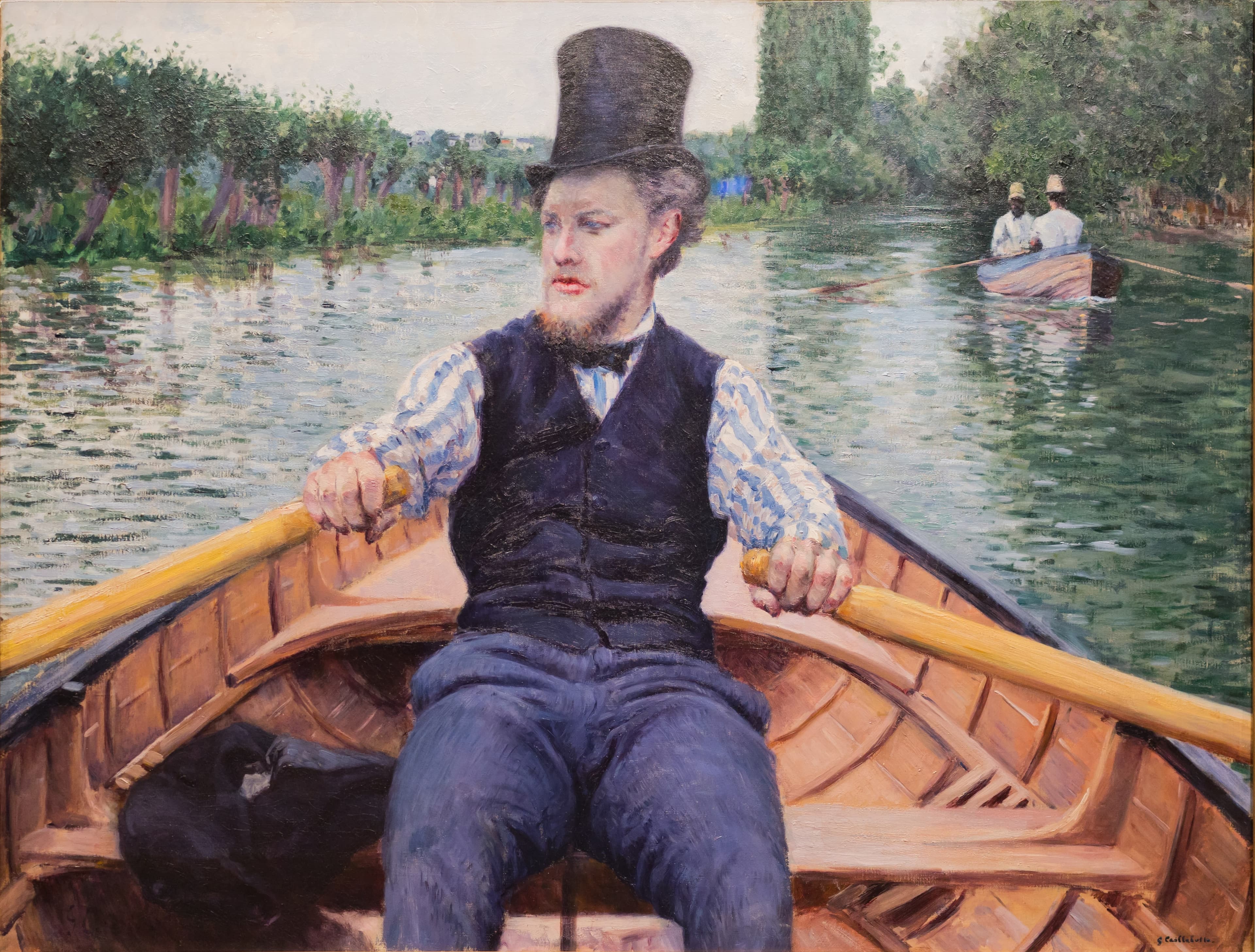
A man in a top hat rows a skiff on the Yerres, in shirtsleeves, oars mid-pull, so close that the viewer sits in the boat with him. France classed the painting a national treasure in 2020 and it entered the Musée d'Orsay in 2022, bought for the state with LVMH's patronage at a reported €43 million.
- c. 1877–78
- Oil on canvas
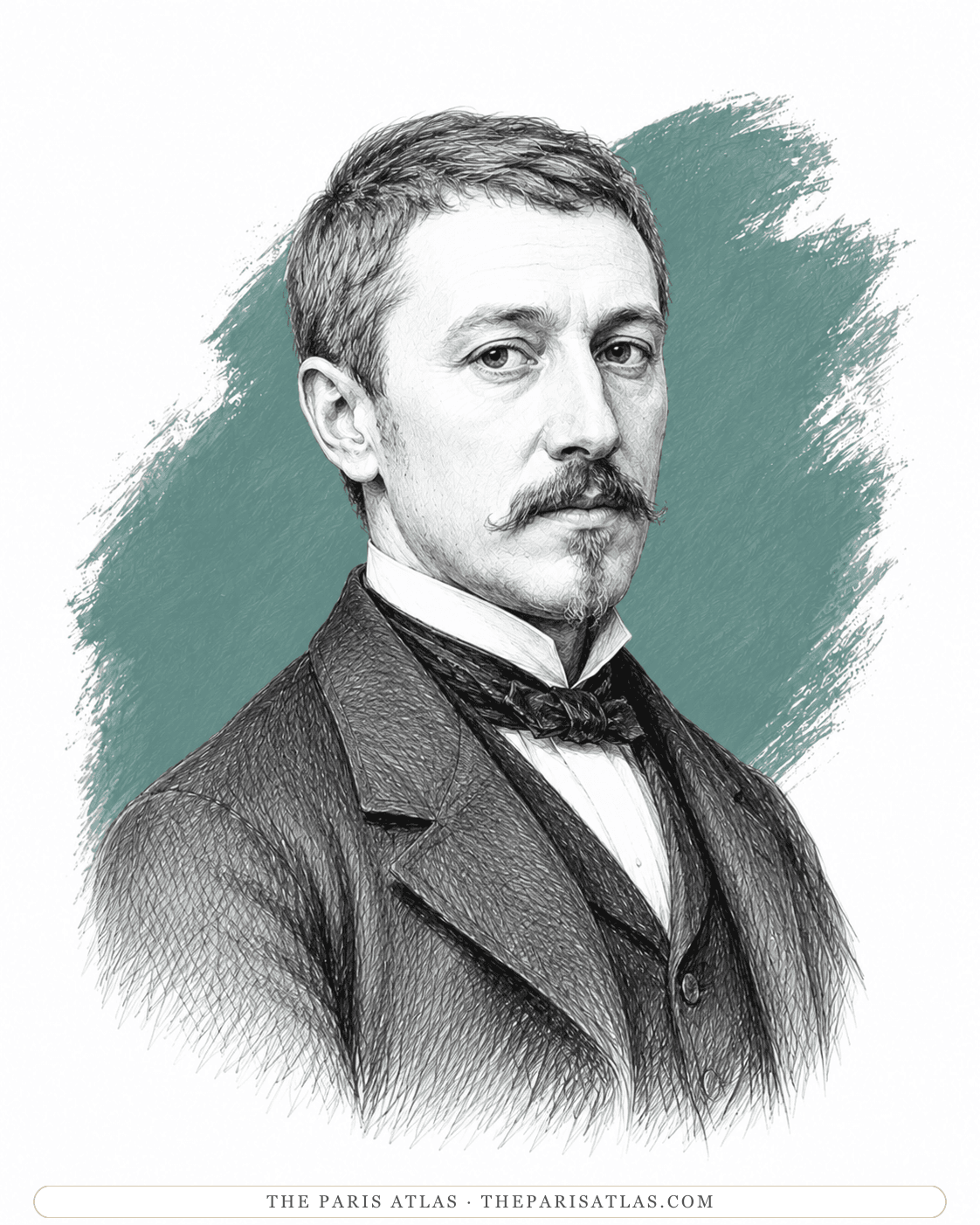
About Gustave Caillebotte
What the painting shows
A rower fills the canvas, mid-stroke. He has taken off his jacket — it lies behind him in the stern — and rows in shirtsleeves, waistcoat and a black top hat, city formality half-shed for the river. The horizon sits high, the banks of the Yerres closing the top of the picture, and the viewpoint is the seat facing him: the viewer is his passenger, close enough to take the second pair of oars.
The river is the one at the bottom of the family's garden. The Caillebottes' summer estate at Yerres, southeast of Paris, had eleven hectares running down to the water, and Gustave spent his summers there from the age of twelve until the family sold the property in 1879. The boating pictures he showed in 1879 — thirty-five paintings and pastels, his largest showing at any Impressionist exhibition — came out of those summers.
Number 8, 1879
The painting hung at the fourth Impressionist exhibition, which ran April to May 1879 at 28 avenue de l'Opéra, as number 8 in the catalogue, plainly titled Partie de bateau. It has carried other names since — the 1894 memorial retrospective listed it as Promenade en bateau, and English writing long knew it as Oarsman in a Top Hat — but the Orsay's inventory keeps the 1879 title.
It then did what much of Caillebotte's best work did: it disappeared into the family. His brother Martial kept it until 1910, Martial's daughter Geneviève until 1986, and a private collection after that. For a century and a half the picture was almost never publicly owned, which is how one of the movement's signature images stayed in private hands into the 2020s.
The €43 million rescue
On 30 January 2020 the Ministry of Culture classed the painting a trésor national, refusing it an export certificate and starting the thirty-month clock the law gives the state to raise the purchase. LVMH funded the acquisition as exclusive patron, the state acquired it for the Musée d'Orsay in 2022 — inventory RF MO P 2022 5 — and the picture was unveiled on 30 January 2023. The ministry and LVMH announced no figure; the press reported €43 million, which would make it among the most expensive acquisitions ever made for a French museum.
At the time of the purchase the national collections held only thirteen Caillebottes. The culture ministry's announcement noted what the painter would have appreciated: he owned thirty-two boats and drew plans for more. The canvas then did something no national treasure had done before — it toured France, to Lyon, Marseille and Nantes, for Impressionism's 150th anniversary, before settling into room 30 at Orsay, and the 2024 retrospective it helped inspire.
Close reading
Reading the work, detail by detail
Caillebotte puts the viewer inside the boat, close enough to become the rower's passenger. The details show how dress, foreshortening, and the oars turn a leisure scene into a direct physical encounter.
1.The rower meets us at working distance
His top hat belongs to the city, but his jacket has been dropped behind him and his sleeves are engaged in work. Caillebotte makes modern leisure look improvised rather than ceremonially picturesque.
2.The hands make the boat move toward us
Both hands tighten around the crossing oars at the center of the picture. Their angle converts the broad body into a mechanism of pull and places the next stroke almost in the viewer's lap.
3.The boat's edges assign the viewer a seat
The gunwales converge around the figure while the water rises high behind him. With no painted passenger visible, the empty facing seat becomes ours and the composition completes itself outside the canvas.
4.The top hat keeps city life inside the outing
A formal city hat sits above a body doing strenuous work. That combination prevents the excursion from becoming a timeless rural scene and keeps the rower tied to modern bourgeois leisure.
5.The wake makes recent movement visible
Broken reflections and spreading ripples record where the boat has just passed. The water supplies a short history of movement that the still image cannot show directly.
6.The distant bank sets a calm measure against the rower
The low bank remains horizontal and relatively quiet while the rower's body and oars press toward the viewer. That contrast makes the boat's forward motion feel stronger.
Timeline
c. 1877–78
Painted on the Yerres, the river at the family's summer estate southeast of Paris.
1879
Number 8 at the fourth Impressionist exhibition, 28 avenue de l'Opéra, as Partie de bateau — part of Caillebotte's thirty-five-work showing.
1894
Shown as Promenade en bateau, number 60, in the Durand-Ruel memorial retrospective; kept by his brother Martial.
1910–1986
With Martial's daughter Geneviève Caillebotte, then a private collection — a century-plus in family and private hands.
2020
Classed a trésor national by the Ministry of Culture on 30 January; export refused.
2022
Acquired for the state with the exclusive patronage of LVMH — Musée d'Orsay inventory RF MO P 2022 5; the press reports €43 million.
2023
Unveiled at Orsay on 30 January, then tours Lyon, Marseille and Nantes — the first national tour organized for a trésor national.
2024–25
A pillar of Gustave Caillebotte: Painting Men at the Orsay, the Getty, and the Art Institute of Chicago.
Where to see it
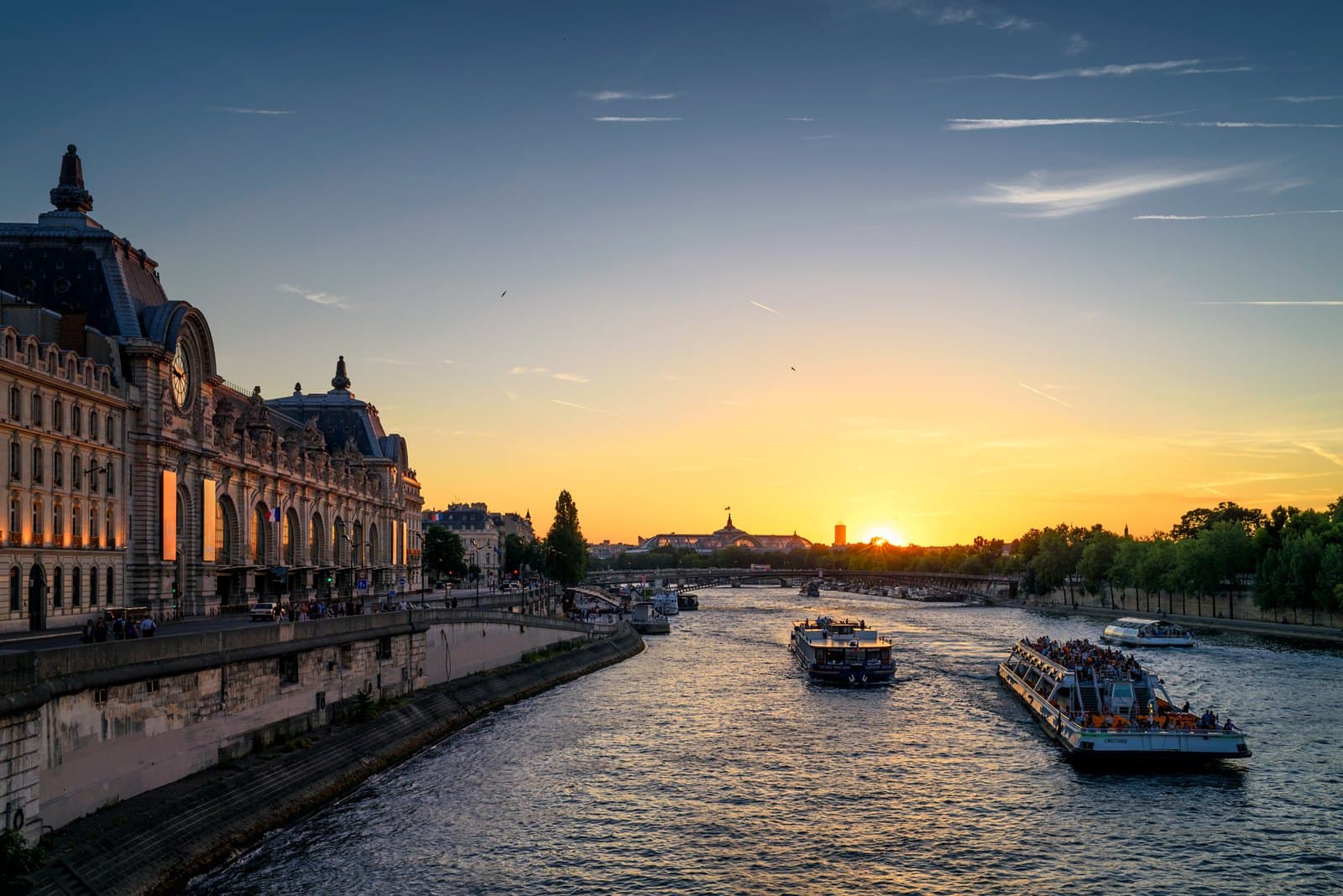
Musée d'Orsay, Paris
Esplanade Valéry Giscard d’Estaing, 75007 Paris, France
Displays and loans can change. Check whether this work is on view before making a special trip.
Plan your visitFrequently asked questions
Where is Boating Party?
The Musée d'Orsay in Paris — inventory RF MO P 2022 5, upper level, room 30. It entered the museum in 2022, bought for the state with LVMH's exclusive patronage after being classed a national treasure.
How much did Boating Party cost?
The press reported €43 million; neither the Ministry of Culture nor LVMH published a figure. The state acquired it in 2022 after the trésor national classification of January 2020 blocked its export.
What river is in Boating Party?
The Yerres, southeast of Paris, at the bottom of the Caillebotte family's summer estate, where Gustave spent his summers from the age of twelve. The property is open to the public today as the Maison Caillebotte.
Why is the rower wearing a top hat?
He is a Parisian gentleman on the water, not an athlete: jacket off and folded behind him, waistcoat and hat still on. The half-shed formality is the picture's subject — the modern city man at leisure — and one reason the 2024 retrospective built around images of men opened with it.
When was Boating Party first shown?
At the fourth Impressionist exhibition, April–May 1879, as number 8 in the catalogue under the title Partie de bateau.
More by Gustave Caillebotte
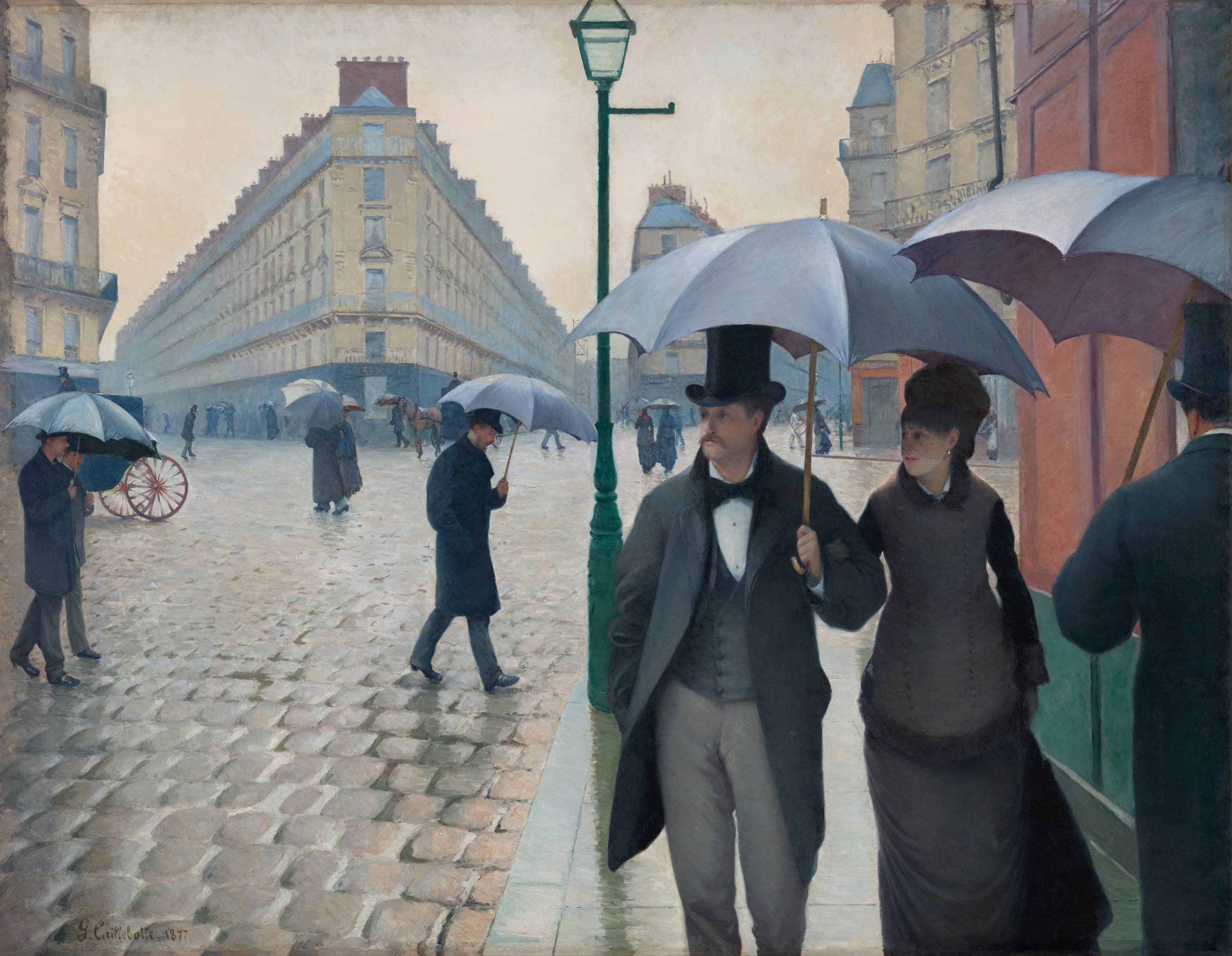
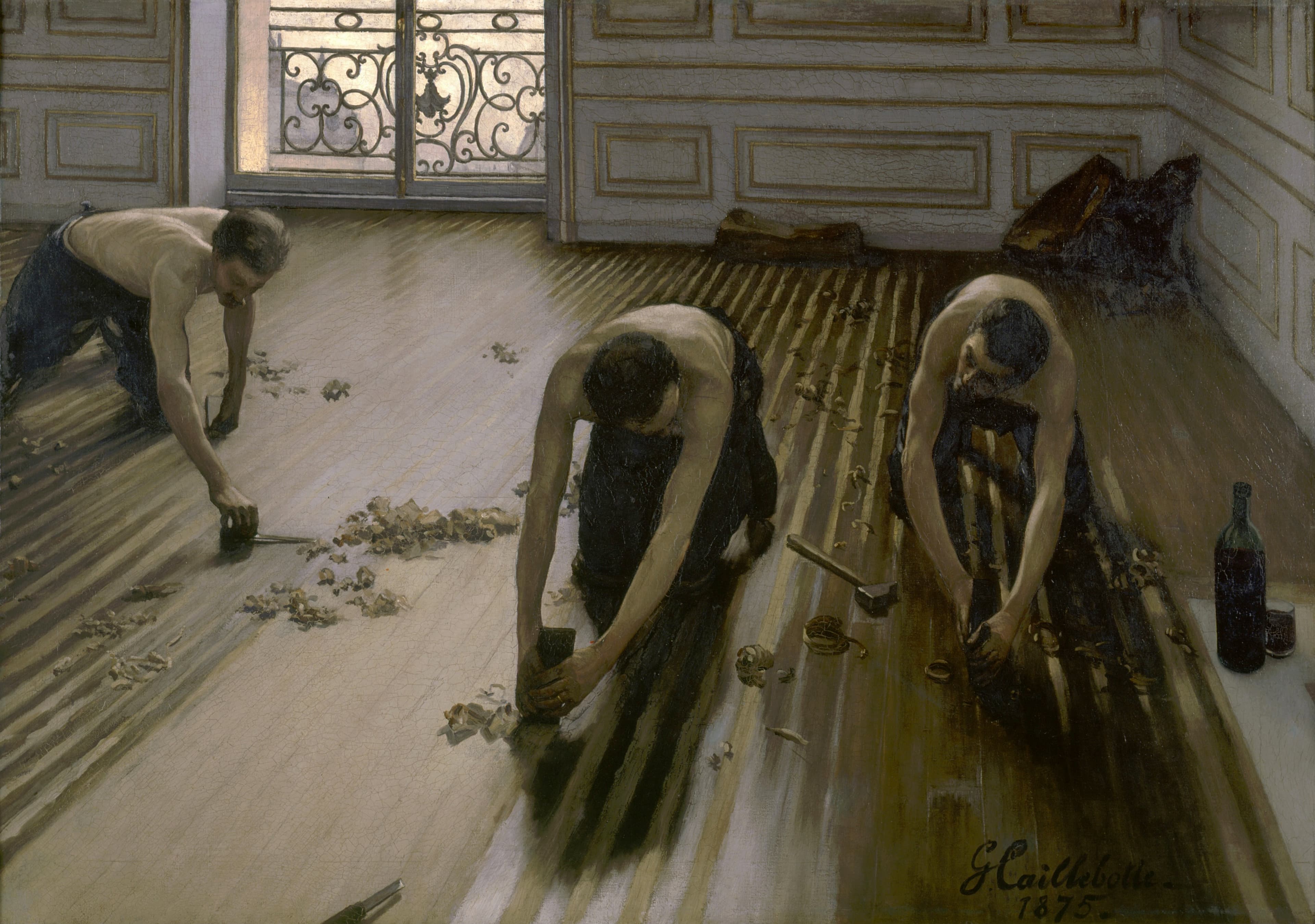
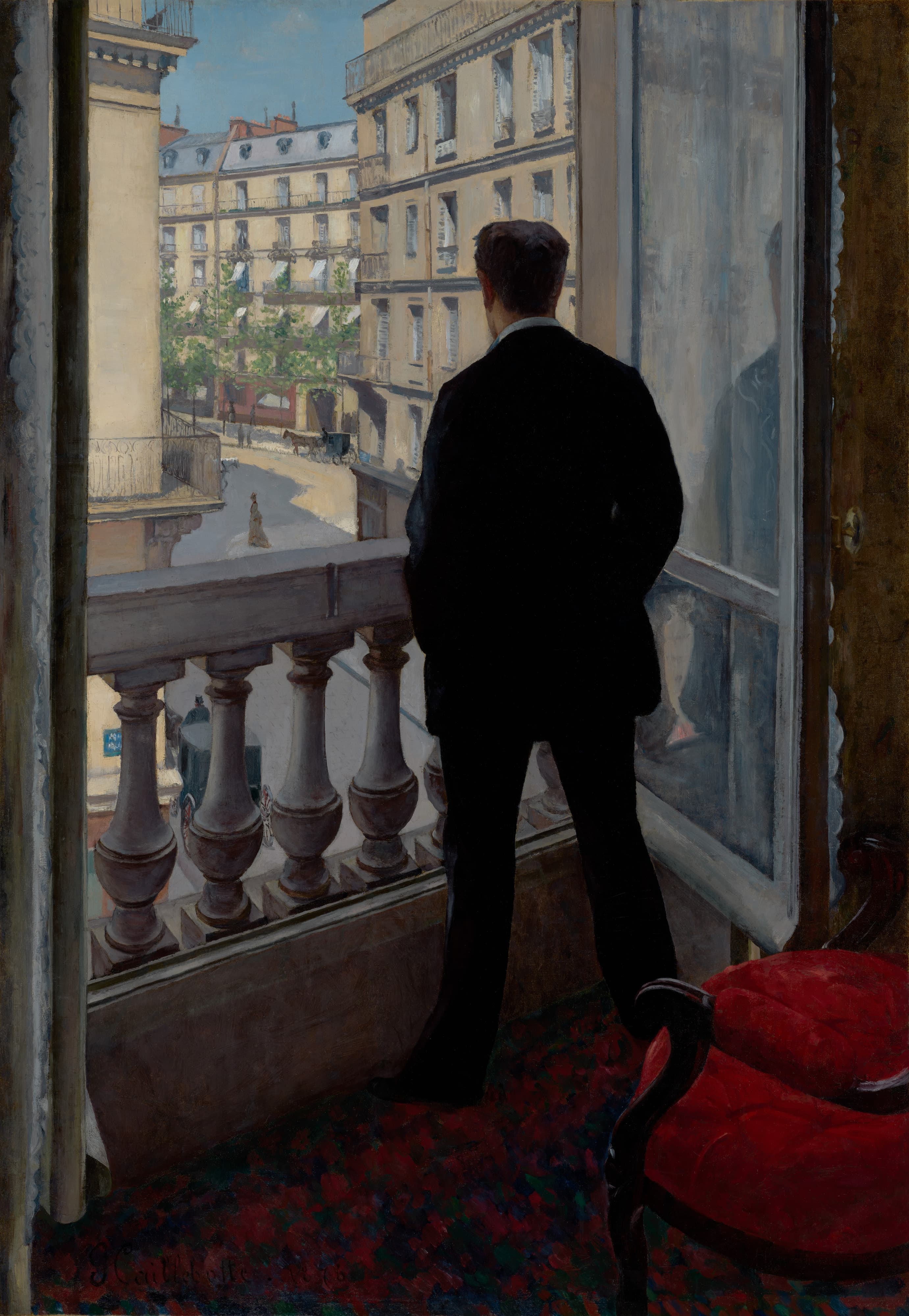
If you like Gustave Caillebotte
Explore painters from the same movements and circles.
Mary Cassatt
Mary Cassatt was an American painter and printmaker known for her depictions of women and children. Based in France for the last fifty-two years of her life, she was the only American to exhibit with the original French Impressionist group, participating in four of its eight exhibitions. Edgar Degas invited her to exhibit with the group in 1877 after the Salon jury rejected her submissions.
View artist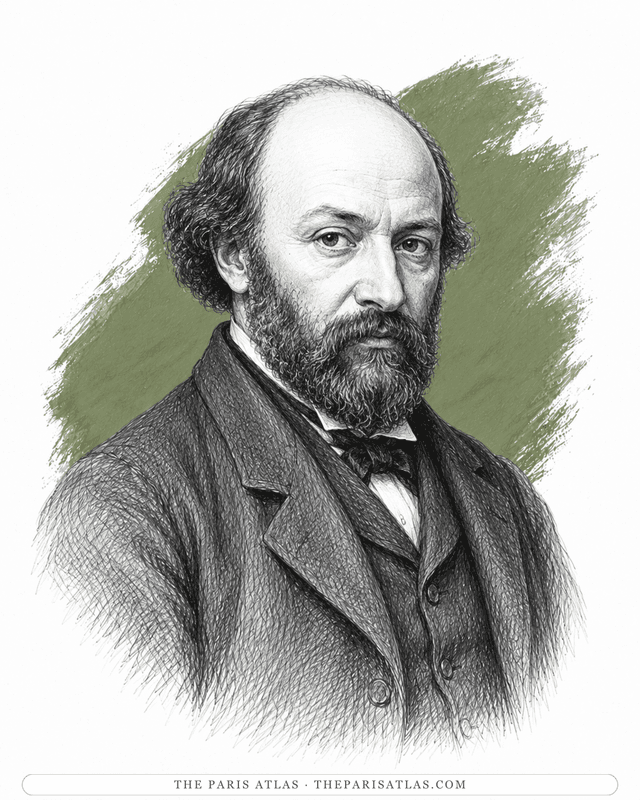
Paul Cézanne
Painter between Impressionism and everything after — shown in the independents' exhibitions, emulated by the Cubists, and present at the Orangerie through 15 works in the Walter-Guillaume collection.
View artist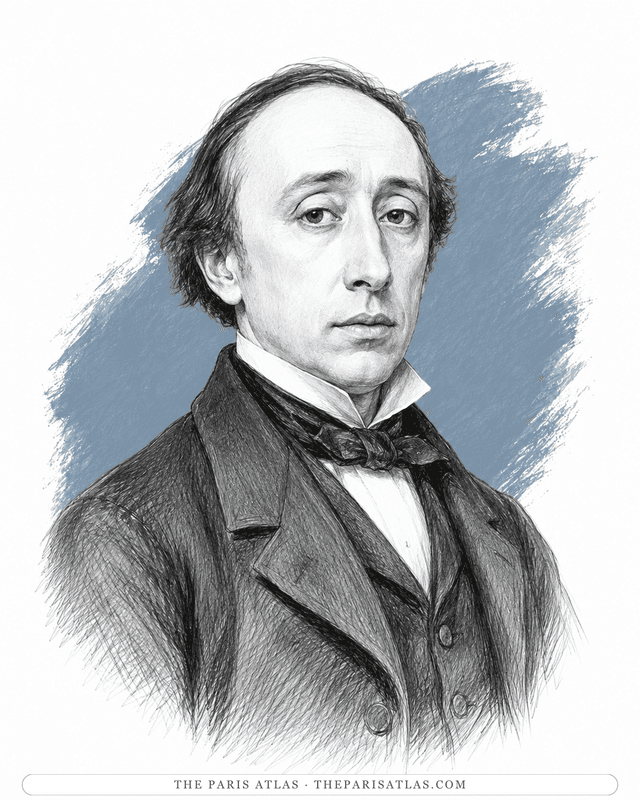
Edgar Degas
Painter of dancers, racecourses, and café interiors — among the founders of the independent exhibitions that became Impressionism, though he preferred the word 'independent' himself.
View artist
References
The sources below include collection records, catalogues, scholarly research, and primary materials that informed this page. They document Boating Party, its making, and its place in cultural history.


1Partie de bateau (Gustave Caillebotte) — Musée d'Orsay
WebsiteMusée d'OrsayUsed forWeb source consulted for documented facts and historical context presented on the Boating Party page.
2La Partie de bateau, un Trésor national qui accoste au musée d'Orsay — Ministère de la Culture
WebsiteMinistère de la CultureUsed forWeb source consulted for documented facts and historical context presented on the Boating Party page.
3Gustave Caillebotte: Painting Men — exhibition presentation, Musée d'Orsay
WebsiteMusée d'OrsayUsed forWeb source consulted for documented facts and historical context presented on the Boating Party page.

4Partie de bateau by Gustave Caillebotte
Exhibition catalogueMusée d’arts de NantesUsed forMuseum exhibition context for the painting and its national tour.
These references provide the documented foundation for this work's history and interpretation. Claim-level citations remain attached to the specific claims they support.
 Explore more resources