Le Pont de l'Europe
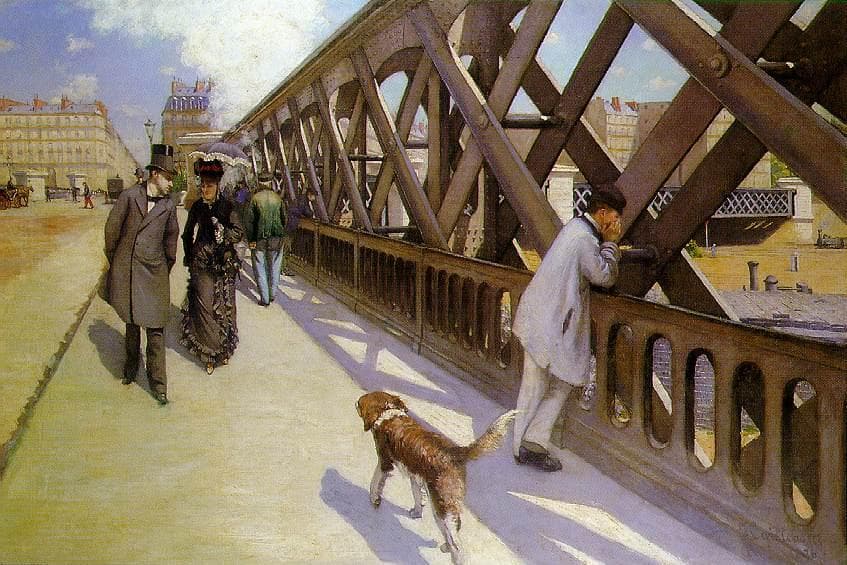
A man in a top hat strides across the iron bridge above the Gare Saint-Lazare rail cutting, glancing back at a woman in black; a workman leans on the girders; a dog trots ahead into the picture. Gustave Caillebotte painted the Pont de l'Europe in 1876 and showed it beside Paris Street; Rainy Day the following spring. The bridge he painted was demolished in 1931.
- 1876
- Oil on canvas
About Gustave Caillebotte
What the painting shows
The place de l'Europe is not a square at all but a star of six iron bridges meeting above the open rail cutting of the Gare Saint-Lazare, its streets named for the capitals of Europe. The span Caillebotte painted, built in the 1860s by the engineer Adolphe Jullien, carried great X-braced trusses of riveted iron, and he runs them away down the right of the canvas like a machine the pedestrians happen to live inside.
Three figures and a dog share the pavement. A well-dressed man strides toward the viewer, glancing back at the woman in black walking behind him — in the literature the man is often identified as Caillebotte himself; his brother photographed him in the same pose. A man in worker's clothes leans on the rail, looking down into the smoke of the station. The dog walks away from us into the picture. Steam drifts up through the girders. Whatever these people are to each other, the painting does not say, and a century and a half of writing has not settled it.
The bridge in the painting no longer exists. The iron star was replaced with a modern structure in 1931, so the canvas is now also a document: the only way to stand on the Pont de l'Europe of 1876 is here.
One of the two 'immense pictures' of 1877
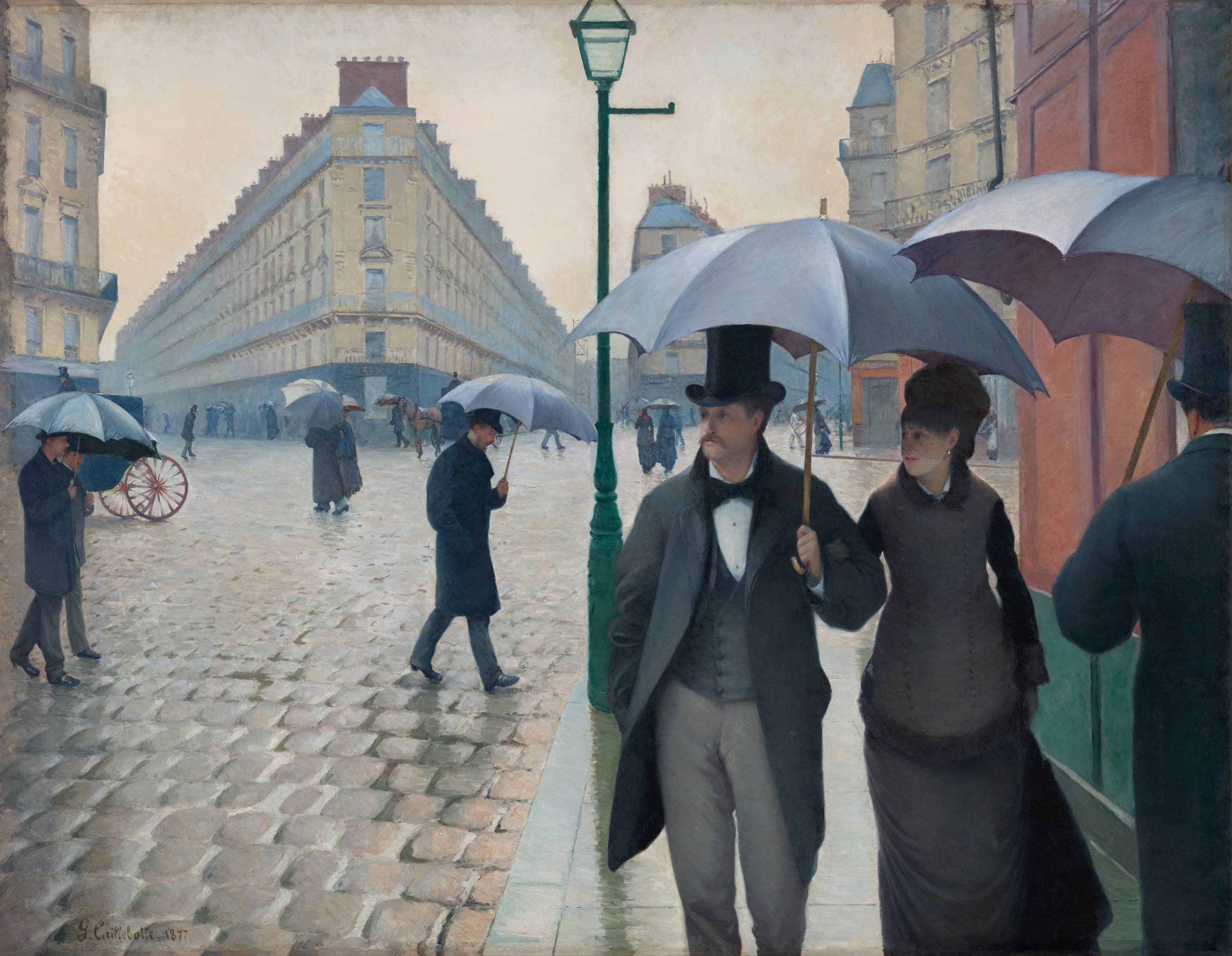
Caillebotte showed the painting at the third Impressionist exhibition in April 1877, in the apartment at 6 rue Le Peletier he had helped organize, beside the even larger Paris Street; Rainy Day. The press called the two canvases his 'immenses tableaux' — both set in the rebuilt quarter around the Gare Saint-Lazare, both drawn with a rigor that unsettled critics who expected Impressionism to be loose.
The same rooms held Claude Monet's paintings of the Gare Saint-Lazare itself, made that winter under the very bridge Caillebotte had painted. The two projects face each other: Monet dissolving the station into steam, Caillebotte bolting it together. Caillebotte bought three of Monet's station pictures, and one of them — La Gare Saint-Lazare, now at the Musée d'Orsay — carries the credit line of his bequest.
Two paintings, one bridge
There are two finished Pont de l'Europe paintings, and they are routinely confused. This one — the strolling figures, the dog, the receding girders — belongs to the Association des Amis du Petit Palais in Geneva, the collection assembled by Oscar Ghez. The second, On the Pont de l'Europe at the Kimbell Art Museum in Fort Worth, is a nearly monochrome blue canvas of two men in identical dress seen from behind at the trusses, the iron filling the frame like a wall. The Kimbell suggests Caillebotte may have held it back from the 1877 exhibition to avoid competing with Monet's station pictures. When both travel to the same retrospectives, even wall labels have tangled them.
Close reading
Reading the work, detail by detail
The Pont de l'Europe is both promenade and machine: pedestrians occupy one edge while iron latticework opens onto the railway below. The close views show how Caillebotte makes modern structure govern bodies, distance, and sight.
1.The passerby and dog enter at different speeds
The man's measured stride and the dog's quicker diagonal animate the pavement without creating a story. Both are caught as ordinary users of a new piece of city infrastructure.
2.Ironwork becomes the picture's largest figure
Riveted beams cross the right side in emphatic diagonals, larger than any person. Engineering is not background here; its repeated triangles determine how the entire scene is seen.
3.The bridge opens onto another modern system
Through the lattice, tracks and station space recede below street level. Walking, looking, and rail travel occupy the same frame, stacked into separate but connected layers of movement.
4.The couple walks together without meeting our gaze
Their parallel movement suggests companionship, but their faces and attention do not form a sentimental exchange. Caillebotte presents modern public life as shared space with private thoughts intact.
5.The dog's shadow doubles its quick movement
The small animal advances close to the ground while its shadow stretches across the paving. Together they create a burst of speed beneath the slower human figures.
6.A worker beneath the bridge reveals its scale
The view through the girders opens onto tracks and labor at a lower level. Human scale makes the bridge's iron structure feel even larger and connects elegant pedestrians to the industrial city beneath them.
Timeline
1876
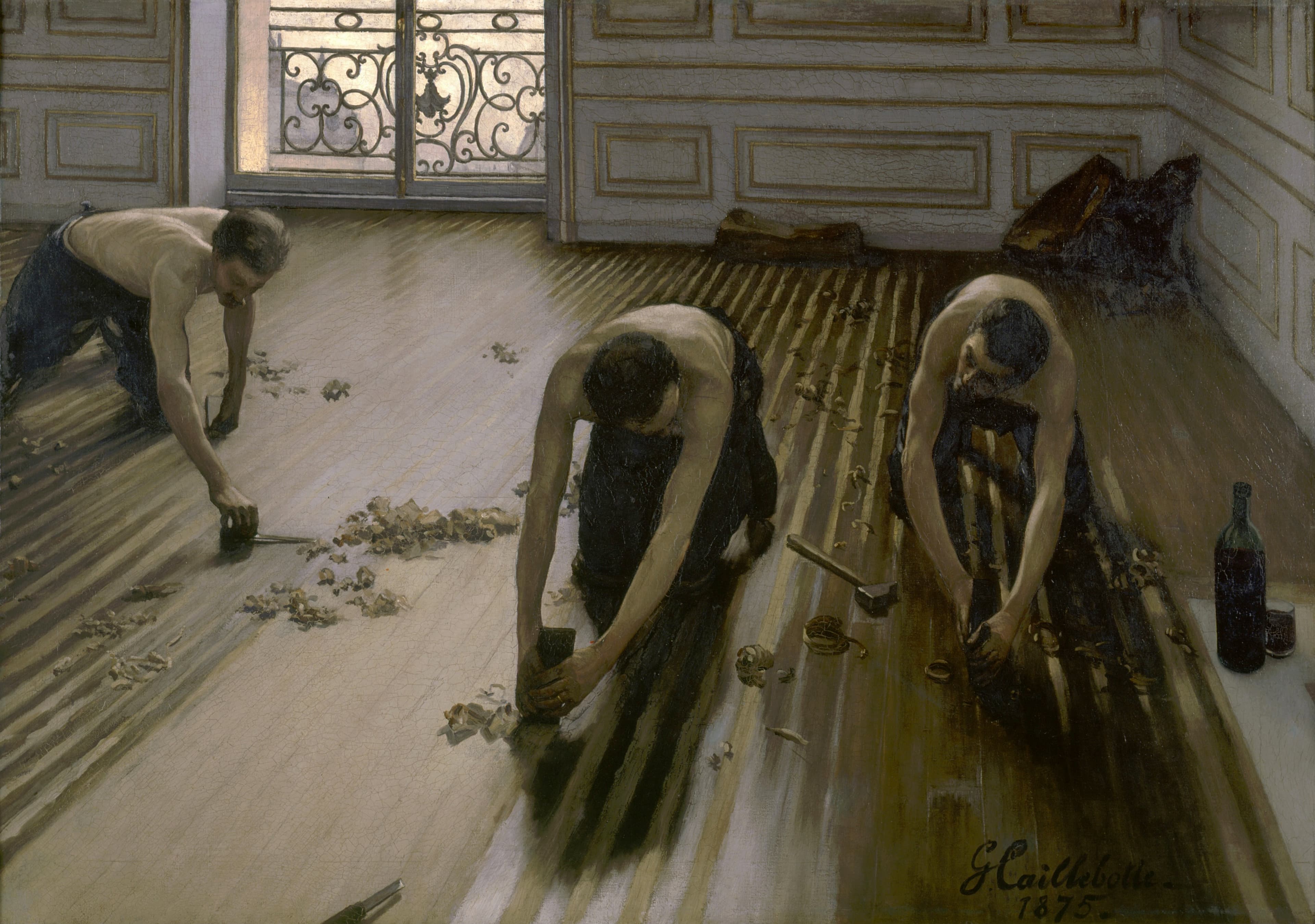
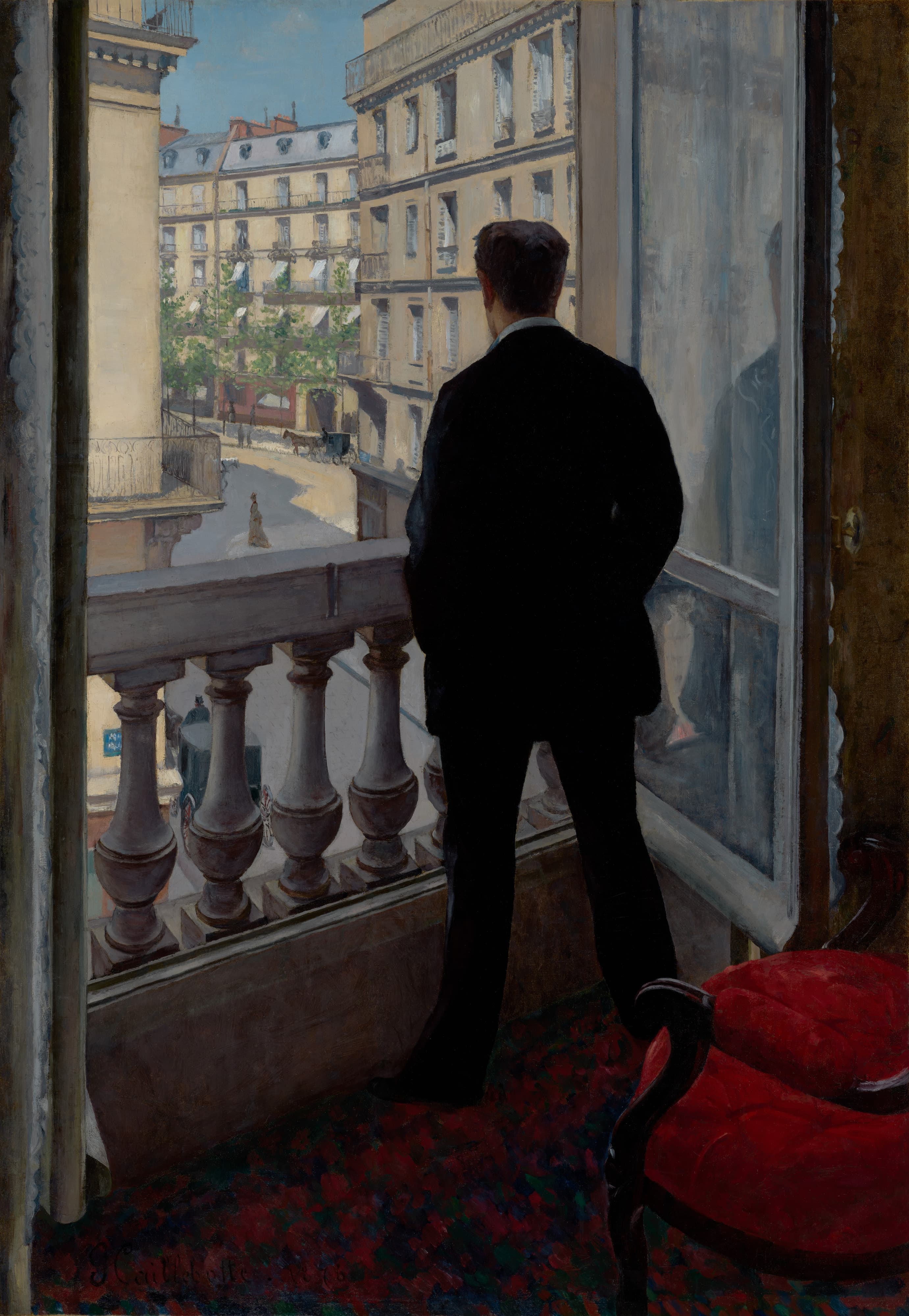
Painted — the year the family's Young Man at His Window was shown and René Caillebotte died.
1877
Shown at the third Impressionist exhibition, 6 rue Le Peletier, beside Paris Street; Rainy Day — the press's two 'immense pictures.'
1878
Given by Caillebotte to the painter Eugène Lami, as the provenance is usually told; it descended in Lami's family.
1931
The iron bridge itself is demolished and replaced; the painting outlives its subject.
1956
Bought at auction by the collector Oscar Ghez, whose Petit Palais collection in Geneva still holds it.
2024–25
Travels with the Caillebotte retrospective to the Musée d'Orsay, the Getty, and the Art Institute of Chicago.
Where to see it
Association des Amis du Petit Palais, Geneva
A public viewing address has not yet been confirmed for this holding.
Frequently asked questions
Where is Le Pont de l'Europe?
In the collection of the Association des Amis du Petit Palais, Geneva — the collection formed by Oscar Ghez, whose Geneva museum closed in 2000; the painting now appears mainly on loan, most recently in the 2024–25 Caillebotte retrospective tour.
Is the Pont de l'Europe a real bridge?
It was — the star of iron bridges above the Gare Saint-Lazare rail cutting in the 8th arrondissement, built in the 1860s. The iron structure Caillebotte painted was replaced in 1931, so the painting shows a Paris that no longer exists. The square above is today the place de l'Europe-Simone-Veil.
Is the man in Le Pont de l'Europe Caillebotte himself?
He is often read that way in the scholarship, and a photograph by the painter's brother Martial shows Caillebotte in the same pose. The identification is a standing interpretation rather than a documented fact, and the painting itself names nobody.
What is the difference between Le Pont de l'Europe and On the Pont de l'Europe?
Two separate finished paintings of the same bridge. Le Pont de l'Europe (1876, Geneva) shows the strolling couple, the leaning workman and the dog. On the Pont de l'Europe (1876–77, Kimbell Art Museum, Fort Worth) is a nearly monochrome blue view of two men at the trusses, seen from behind. They are frequently confused, including on exhibition labels.
How big is Le Pont de l'Europe?
125 by 180 centimetres, as recent exhibition captions give it — oil on canvas, painted in 1876.
More by Gustave Caillebotte
If you like Gustave Caillebotte
Explore painters from the same movements and circles.
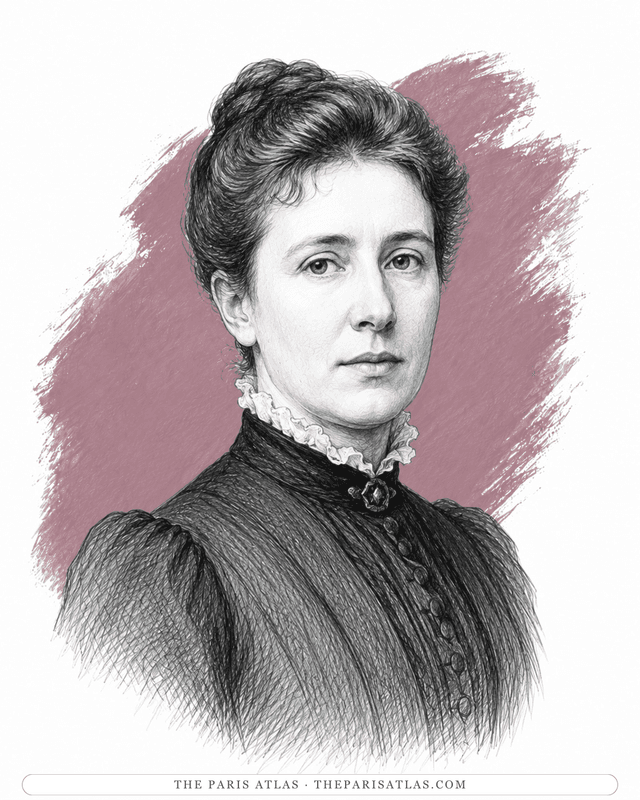
Mary Cassatt
Mary Cassatt was an American painter and printmaker known for her depictions of women and children. Based in France for the last fifty-two years of her life, she was the only American to exhibit with the original French Impressionist group, participating in four of its eight exhibitions. Edgar Degas invited her to exhibit with the group in 1877 after the Salon jury rejected her submissions.
View artist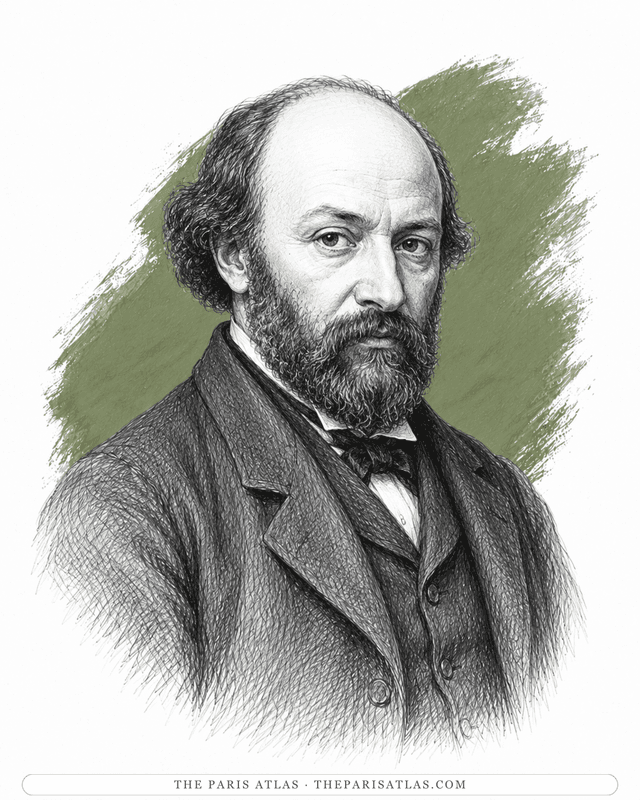
Paul Cézanne
Painter between Impressionism and everything after — shown in the independents' exhibitions, emulated by the Cubists, and present at the Orangerie through 15 works in the Walter-Guillaume collection.
View artist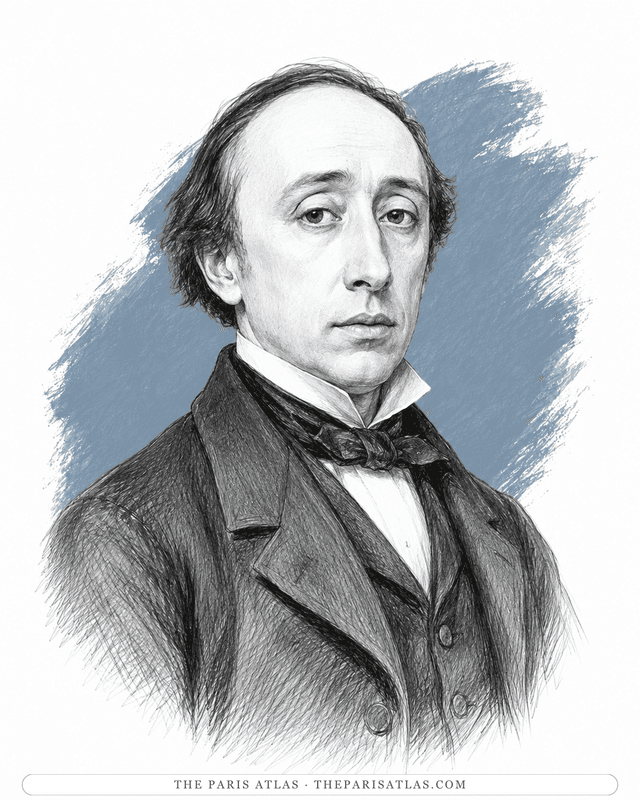
Edgar Degas
Painter of dancers, racecourses, and café interiors — among the founders of the independent exhibitions that became Impressionism, though he preferred the word 'independent' himself.
View artist
References
The sources below include collection records, catalogues, scholarly research, and primary materials that informed this page. They document Le Pont de l'Europe, its making, and its place in cultural history.


1Gustave Caillebotte: Painting Men — exhibition presentation, Musée d'Orsay
WebsiteMusée d'OrsayUsed forWeb source consulted for documented facts and historical context presented on the Le Pont de l'Europe page.
2Gustave Caillebotte exhibition explores the artist's fascination with masculinity — Getty news
WebsiteJ. Paul Getty MuseumUsed forWeb source consulted for documented facts and historical context presented on the Le Pont de l'Europe page.
3Cat. 2: Paris Street; Rainy Day, 1877 — Caillebotte Paintings and Drawings at the Art Institute of Chicago (Gloria Groom and Kelly Keegan)
WebsiteArt Institute of ChicagoUsed forWeb source consulted for documented facts and historical context presented on the Le Pont de l'Europe page.

4Gustave Caillebotte: Impressionniste et moderne
Exhibition catalogueFondation Pierre Gianadda, 2021Used forExhibition record for the finished Geneva painting, its date, medium, dimensions, and lender.
5Esquisse pour Le Pont de l'Europe, 1876
Official recordMusée Carnavalet / Paris MuséesUsed forOfficial record used to verify names, dates, institutional details, or other factual information on this page.
These references provide the documented foundation for this work's history and interpretation. Claim-level citations remain attached to the specific claims they support.
 Explore more resources