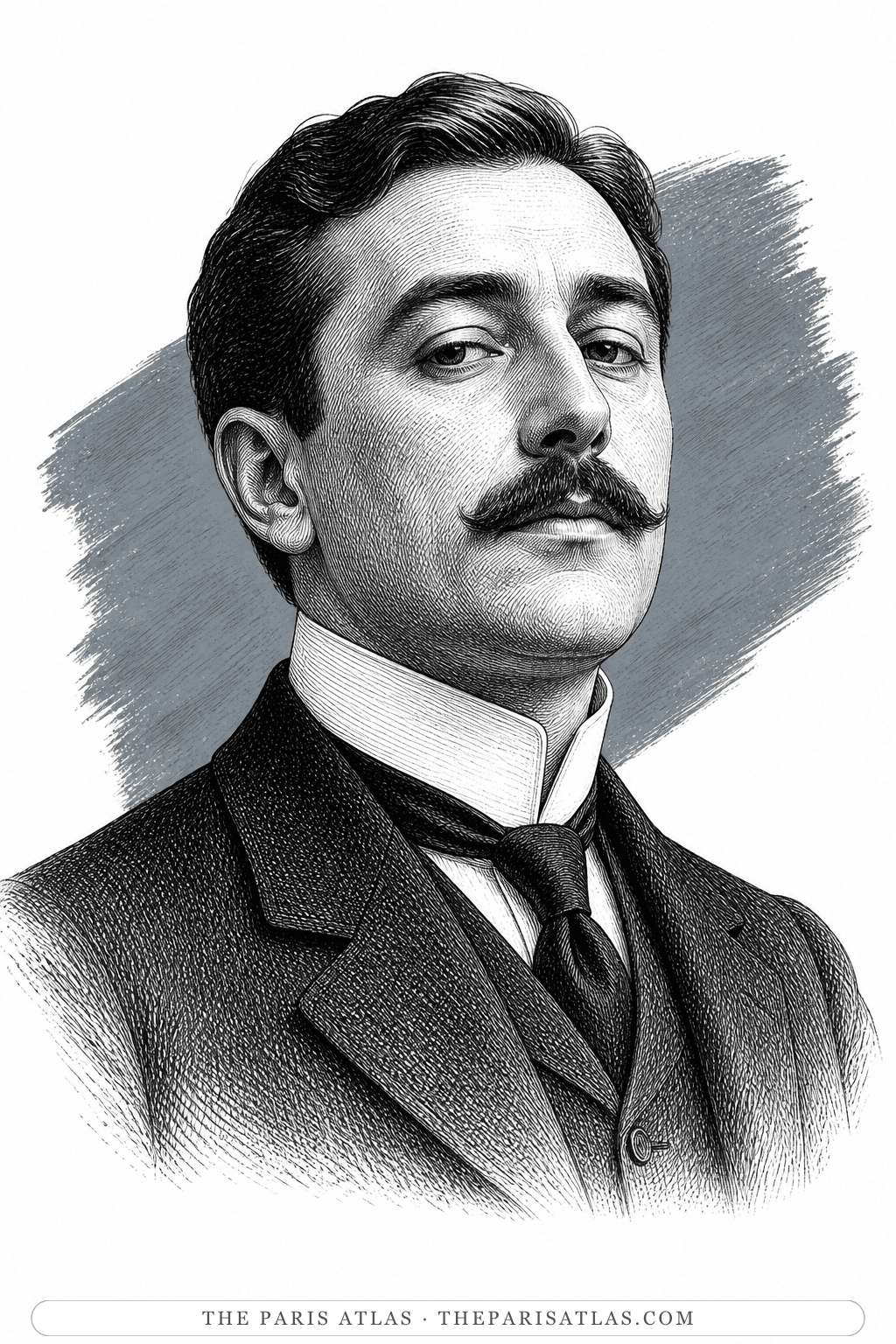
Alain
Annie's exacting husband, who has directed her whole life and leaves her a schedule of instructions when he sails.
To be correct, and to be seen to be: he tells Annie in a letter not to thank him for his compliments, because the irreproachable young woman she has become is partly his own work, and it is that work he is admiring.
The book

At a glance
- Annie's husband. He sails in the first chapter and appears afterwards in letters, in a photograph, and in the rules his wife is still keeping
- Alain Samzun. He signs his telegrams and his letters home with the surname
- Four years older than Annie; sixteen to her twelve when they met, twenty-four when he decided they would marry
- Brother of Marthe, who is married to the novelist Léon Payet. Alain holds the marriage against her, well known though the husband is
- An uncle, Etchevarray, vanished fifteen years ago and died rich in Argentina, leaving estancias where bulls are bred. Alain goes to Buenos Aires to turn them into cash
- Winds his chronometer, takes an ice-cold tub, keeps every hour of his life in order, and professes a horror of pointless quarrels
Who they are in the book
Spoiler-freeAlain Samzun is the husband of Annie, the young woman who narrates Claudine and Annie, and he is absent from almost every page of the book he governs. An uncle of Annie's disappeared fifteen years ago and has died rich in Argentina, leaving cattle ranches, so Alain sails for Buenos Aires to turn bulls into money. After the opening chapter he exists in letters, in a photograph on the mantelpiece, and in the habits he has trained into his wife.
He is four years older than Annie and has been arranging her life since she was twelve. There was no courtship. They grew up side by side through eleven summers with no kisses and no declarations, and then, at twenty-four, he told her they were going to get married. Colette prints his announcement as « Maintenant, nous allons nous marier », which means simply that now they are going to get married, and notes that it was the same voice in which he had once said they were going to play at savages.
Nothing in the novel suggests he thinks himself a hard man. He is proud of his marriage, careful with money, punctual, faithful to his own rules, and he believes he has done his wife a kindness by removing every decision from her. His letters home tell her so. What the book measures is the distance between that account of himself and the four years of it that Annie has actually lived.
How Alain Is Portrayed
- What he looks likeRed hair worn short, skin whiter than an egg, blue eyes with five or six freckles under them, square teeth, and a way of standing with the knee braced and the eye haughty. Annie has thought him beautiful since she was twelve and still does.
- His sister says he looks like a roosterMarthe stands at the chimneypiece studying his photograph and announces it. Annie picks the picture up to defend him, looks, and has to agree: a red rooster, glossy, crested and spurred. She bursts into tears, and cannot admit that what she is crying about is having seen it.
- The instructions he leaves in writingPay the upholsterer without haggling, because he supplies our friends and might talk. Order Annie's summer clothes, nothing too tailored, and let her stop insisting that red or bright orange brightens her complexion. Do not read too many novels. Jules is a decent enough boy but soft, and will do his work carelessly unless Annie watches him herself.
- He decides which women she may knowClaudine and her husband are ruled too fanciful a household for a young woman whose husband is abroad, so one visit is permitted. Miss Flossie, an American at his sister's tea table, Annie is not to know at all, and she is never told why. Valentine Chessenet and the girl the set calls the Rose-Chou, who are neither of them respectable, he raises no objection to.
- He decides what she wearsFor an evening of music at a painter's studio he specifies the white dress with the tightly gathered belt, and great simplicity, since there will be a certain excess of theatrical hairdressing there and nothing in her clothes should invite confusion. Stay exactly as you are, he tells her: reserved, plain in your gestures, nothing added and nothing changed. He asks whether that is not a handsome compliment, and Annie feels the full worth of it.
- The dogShown the bull terrier his wife has bought, Alain asks whether she pictures a stable dog on the Louis XV furniture, or on the lace of her bed. He offers instead a small silky Havanese for the drawing room, or a sloughi, on the grounds that sloughis go with every style. He rings for the servant, has the dog carried down to the coachman, and gives orders that it be kept clean and reported on as a ratter.
- He forbids the etherFinding Annie half-fainting on her bed with the bottle in her hand, he speaks to her very seriously and very clearly about the dangers of ether, his horror of hysterics' remedies, and the essential harmlessness of migraine, since all women have them. She is left with scalding compresses and cold baths, which do not work.
- His lettersHe signs them Samzun, which Annie minds, since she does not sign her maiden name. He is pleased to find her so brave and so attached to what makes up the life of a simple woman of good society: her husband, her family, her neat well-run house. From Dakar on the way home he promises her a sable fur as fine as Madame Chessenet's.
- What other people say about himClaudine calls him clumsy, a fool and a brute, and says that somebody handed that redhead a wife without the instructions for using her. Her verdict on his manner is coarser: snobbery in the heart and a curtain rod up the backside. Marthe, who is his sister, offers Annie the opinion that her delicious brother must be a rotten lover.
Marthe, caught in her own affair three quarters of the way through the book, tells Annie what everyone else in the drawing room already knows: Alain spent eighteen months with Valentine Chessenet, the pale, spiteful woman who has been sniping at Annie all season, with letters and meetings twice a week, as regular as a piano lesson. It ended the Christmas before last.
Back in Paris, Annie breaks open his desk and finds the proof filed with the household accounts. Valentine's letters are bundled with the paid bills and the deeds, and Alain has written on the margin or the back of each one the date he received it and the date he answered it by sealed telegram. Her salutations vary and the letters do not: my darling redhead, my little white man, my red copper coffee pot.
He never learns any of this on the page. His last letter reaches Annie from Dakar on the voyage home, telling her he will be there in days, promising the sable fur, and mentioning a girl sewing in a courtyard whose bent silhouette and knotted black hair remind him singularly of his wife. Perhaps, he writes, living out here would have changed a good many things between them. Annie leaves the country before he lands, and the novel ends without showing his face when he opens the study door.
If you like Claudine and Annie


If you like Colette
Explore authors with a similar voice, perspective, and influence.
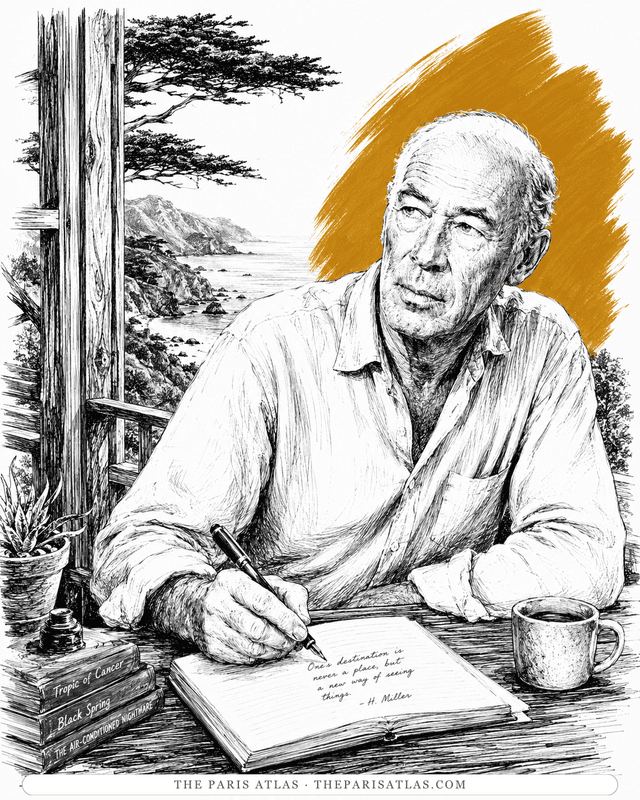
Henry Miller
The Brooklyn dropout who arrived in Paris broke at thirty-eight and wrote the exuberant, banned books that ended American censorship.
View author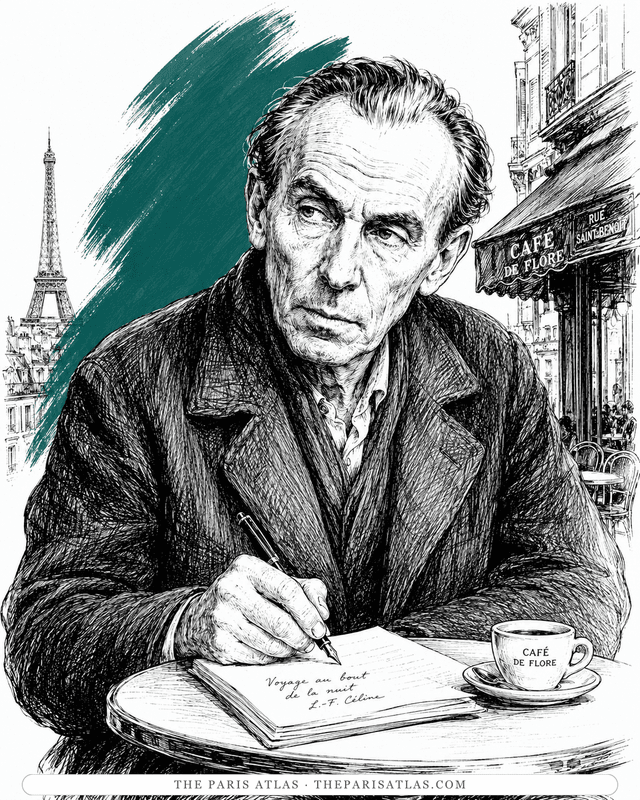
Louis-Ferdinand Céline
The doctor of the Paris slums who wrote the century's blackest, funniest novel — and changed the sound of French prose.
View author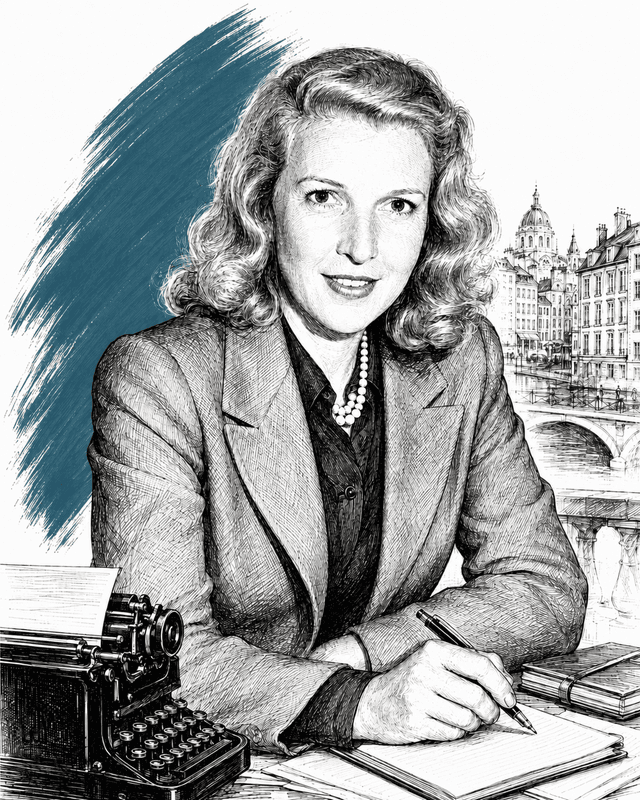
Martha Gellhorn
War correspondent who covered the Spanish Civil War, D-Day, and conflicts across five more decades; Hemingway's third wife, 1940–1945.
View author