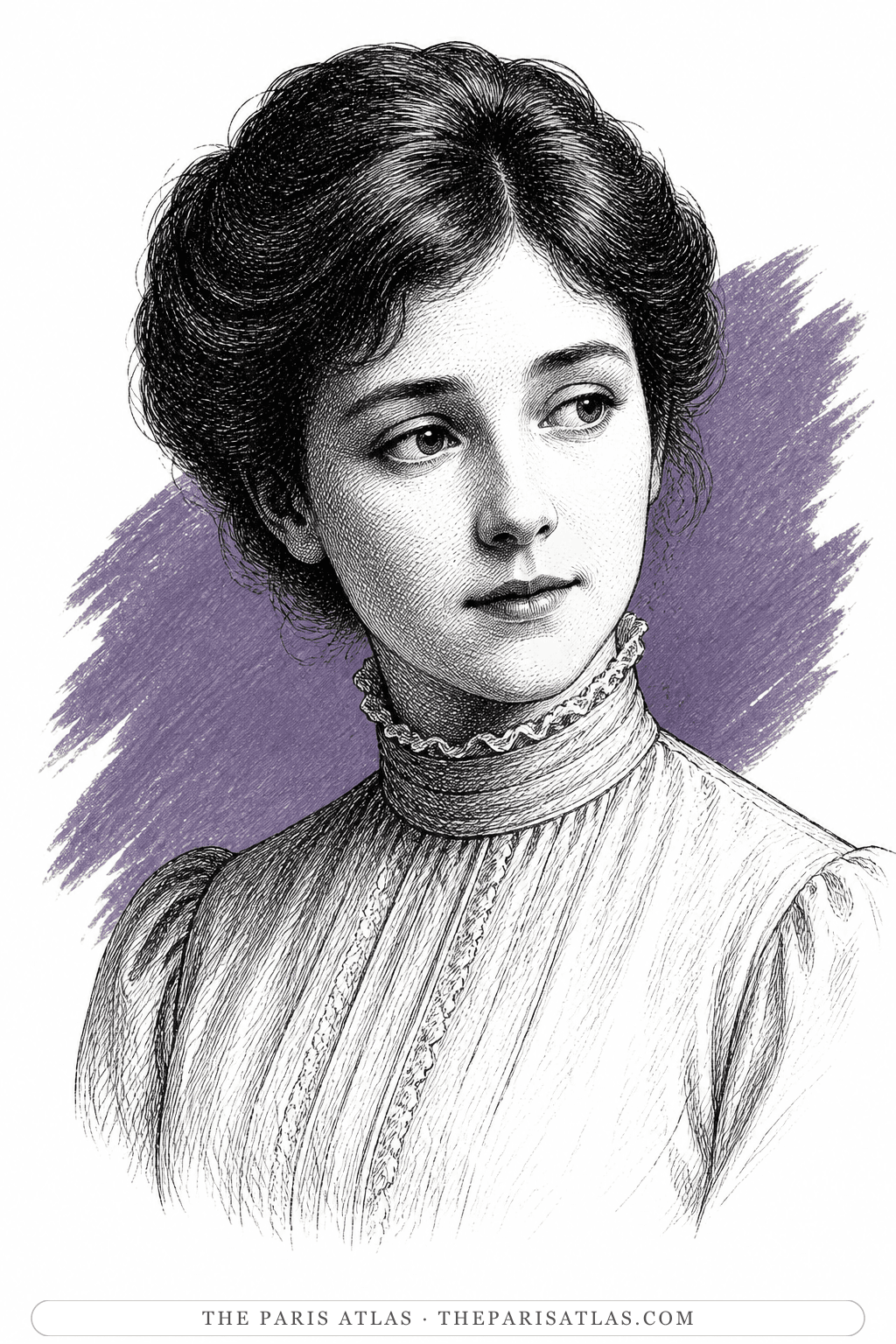
Annie
Married young to a controlling husband, and — left alone when he travels — slowly learning to see her marriage clearly and leave it.
Not to be left behind: she asks Alain to send someone else to Argentina in his place, then asks him to take her with him, and he refuses both.
The book

At a glance
- The narrator. The novel is her diary, from the day her husband sails to the day she decides what to do about it
- Four years, to Alain Samzun, who is four years older and has settled things for her since she was twelve
- Raised by her grandmother, Madame Lajarrisse. Her father she knew only as an old blind man; of her mother there is no photograph and no letter, and her grandmother would say only that she should pray for her
- A narrow Paris house Alain bought without consulting her, and Casamène, her grandmother's country place, whose picturesque grounds Alain thought thoroughly ridiculous
- Paris, then the sulphur spa at Arriège in the Pyrenees, then the Wagner festival at Bayreuth in Germany
- Léonie, her maid since the wedding, who prescribes a glass of brandy for every complaint; Toby, the black bull terrier
Who they are in the book
Spoiler-freeAnnie is the narrator of Claudine and Annie, which will surprise anyone who picks the book up for the name in the title. It is the fourth and last novel Colette wrote about Claudine, a quick, funny young woman who tells her own story in the first three. This one is handed to somebody else. The French edition prints a subtitle under the title, Journal d'Annie, Annie's diary, and that is exactly what the novel is: the private notebook of a young married woman, written day by day. Claudine turns up in it as a friend Annie has been instructed not to visit more than once.
Annie has known her husband since she was a small girl. Alain Samzun spent his long school holidays at the house of the grandmother who was raising her; he was sixteen and she was twelve, and he already settled what the two of them would do with each afternoon. When he was twenty-four he informed her that they were going to get married, in the same voice he had used years earlier to announce that they were going to play at savages. They have been married four years when the book opens, and on its first page he sails for Argentina to collect an inheritance, leaving her a written timetable for the months he will be gone.
The diary is the record of what she notices once he is at sea. Alone for the first time in her life, Annie begins to see her marriage from the outside: the instructions, the small corrections, the friends chosen for her, the four years in which she has not had to decide anything at all. She is not a defiant woman and the novel does not make her one quickly. She keeps to the timetable, calls on the people she has been told to call on, and writes dutiful letters to Buenos Aires, while the notebook fills with everything she does not say out loud.
How Annie Is Portrayed
- The diary is the whole novelThere is no narrator but Annie. She writes in a handsome notebook Alain gave her so that she could keep a journal of his voyage, and within a day she is writing in it secretly, in her bedroom, things she means to keep from him.
- She has done what Alain says since she was twelveOn those childhood holidays he would announce the plan and hand her a job in it: hold the foot of the ladder, hold your apron out for the apples I throw down. He would put an arm round her shoulders and look about him with a hard face, as though daring anyone to come and take her.
- The timetable he leaves for his absenceBefore sailing, Alain writes out her months for her. Pay the upholsterer and do not haggle. Order light, simple summer dresses. Check the servants' account books every Saturday morning. Walk in the avenues. One visit only to Claudine and her husband. See a great deal of my sister Marthe. Annie keeps the sheet of paper by her and reads it over.
- The name her husband gives herAlain calls her his petite esclave, his little slave, and Annie notes that he says it without unkindness, with only a slight contempt for her dark colouring. She signs her first letter to him that way. Of her own use in the household she writes: « Je ne sais rien, — qu'obéir. » She knows nothing except how to obey.
- What she looks likeThin and brown-skinned, with heavy black hair and pale, watery blue eyes under lashes so long that her sister-in-law says she has hair growing out of her eyes. Annie thinks the eyes absurd in a face as dark as hers. Claudine calls them wild chicory flowers, and Annie cannot see them in a mirror afterwards without hearing it.
- The marriage bedAnnie writes about it directly. Alain's caress was simple and vigorous and finished too early, and she would lie stiff with her throat full of tears, waiting for something she had no name for. When he once found out that she had given herself the pleasure he had not, he spoke of a vicious child, of nightclothes tied at the ankles, of a stinging punishment, and then never referred to it again.
- The dog sent to the stableShe buys a black bull terrier called Toby for a hundred francs from a stableman, and brings him home rather proud of herself. Alain prices him approvingly and sends him out to kill rats, offering to find her a silky little Havanese for the drawing room instead, or a sloughi, which he says goes with any style of furniture. For a year she sees her dog only from an upstairs window.
- Ether for her migrainesHeadaches flatten her for a day at a time. She used to breathe ether until Alain found her half-fainting on the bed with the bottle in her hand and forbade it, calling ether a hysteric's remedy and observing that all women have headaches. With him at sea, her maid Léonie fetches a new bottle from her own room, and Annie discovers that she is capable of deliberate disobedience.
- She writes another woman's love letterCalliope van Langendonck, a Cypriot widow at the spa, asks Annie to compose her love letters for her, since she speaks four languages and writes none of them well. Annie gets one paragraph down — a house left without its master, where a forgotten lamp still burns, so that passers-by think it lived in, though the flame will sink and die within the hour unless another hand feeds it — and then puts her head on her arm and cries.
- The name Claudine gives herIn a park at Bayreuth, Claudine tells Annie there is a slender grass in the fields at home whose heavy head of seed bends the whole stem over, and that she has privately named Annie after it: la mélique penchée, the drooping melic. Colette gives the rest as « Elle tremble au vent, elle a peur ; elle ne se redresse que lorsque ses grains sont vides… » — it trembles in the wind, it is frightened, and it stands up straight only when its seeds are empty.
At Bayreuth she opens the wrong door and finds her sister-in-law Marthe sitting on the lap of Maugis, the drunken music critic who has been paying for their dinners. Cornered, Marthe hits back with the thing she knows: Alain spent eighteen months with Valentine Chessenet, a woman from her own drawing room, letters and meetings twice a week, as regular as a piano lesson, broken off the Christmas before last. Annie packs that afternoon and leaves for Paris with her maid and her dog.
In Paris she levers open the locked drawer of Alain's desk with an iron ruler until the wood splits. Inside are neat bundles under rubber bands: paid bills, deeds, letters from Marthe, three letters from Annie, letters from a woman called Andrée, and a thick packet from Valentine, every one of them annotated in Alain's hand with the date received and the date answered by sealed telegram. Annie takes back her own three letters and leaves everything else lying on the floor for him to find.
Then she goes shopping. Flat laced yellow walking shoes on English heels, a russet tweed suit, stitched men's gloves, a felt hat with an eagle feather, a waterproof coat — all of it chosen because Alain preferred her in Louis XV heels — and a small black revolver from Alain's own gunsmith, which she calls her second Toby. She moves into a hotel two streets from the house and tells Léonie the house is being repaired.
Claudine, who happened to see her through the gunsmith's window and feared the obvious, calls at the hotel and tells her plainly to go. Annie takes the night express towards Carlsbad, expecting the divorce to be pronounced against her and not minding, and noting that Alain does not speak German. She does not know where she is going. The last page is her list of the woman she expects to become: the solitary traveller who intrigues the hotel dining room for a week, the woman in black whose pallor gossip builds a tragedy out of.
If you like Claudine and Annie


If you like Colette
Explore authors with a similar voice, perspective, and influence.

Henry Miller
The Brooklyn dropout who arrived in Paris broke at thirty-eight and wrote the exuberant, banned books that ended American censorship.
View author
Louis-Ferdinand Céline
The doctor of the Paris slums who wrote the century's blackest, funniest novel — and changed the sound of French prose.
View author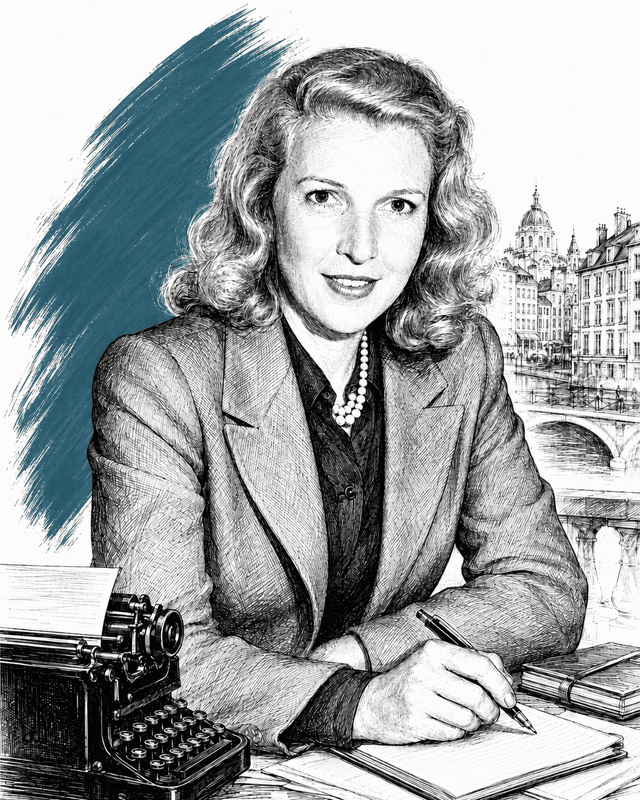
Martha Gellhorn
War correspondent who covered the Spanish Civil War, D-Day, and conflicts across five more decades; Hemingway's third wife, 1940–1945.
View author