Elvis 2 Times
by Andy Warhol
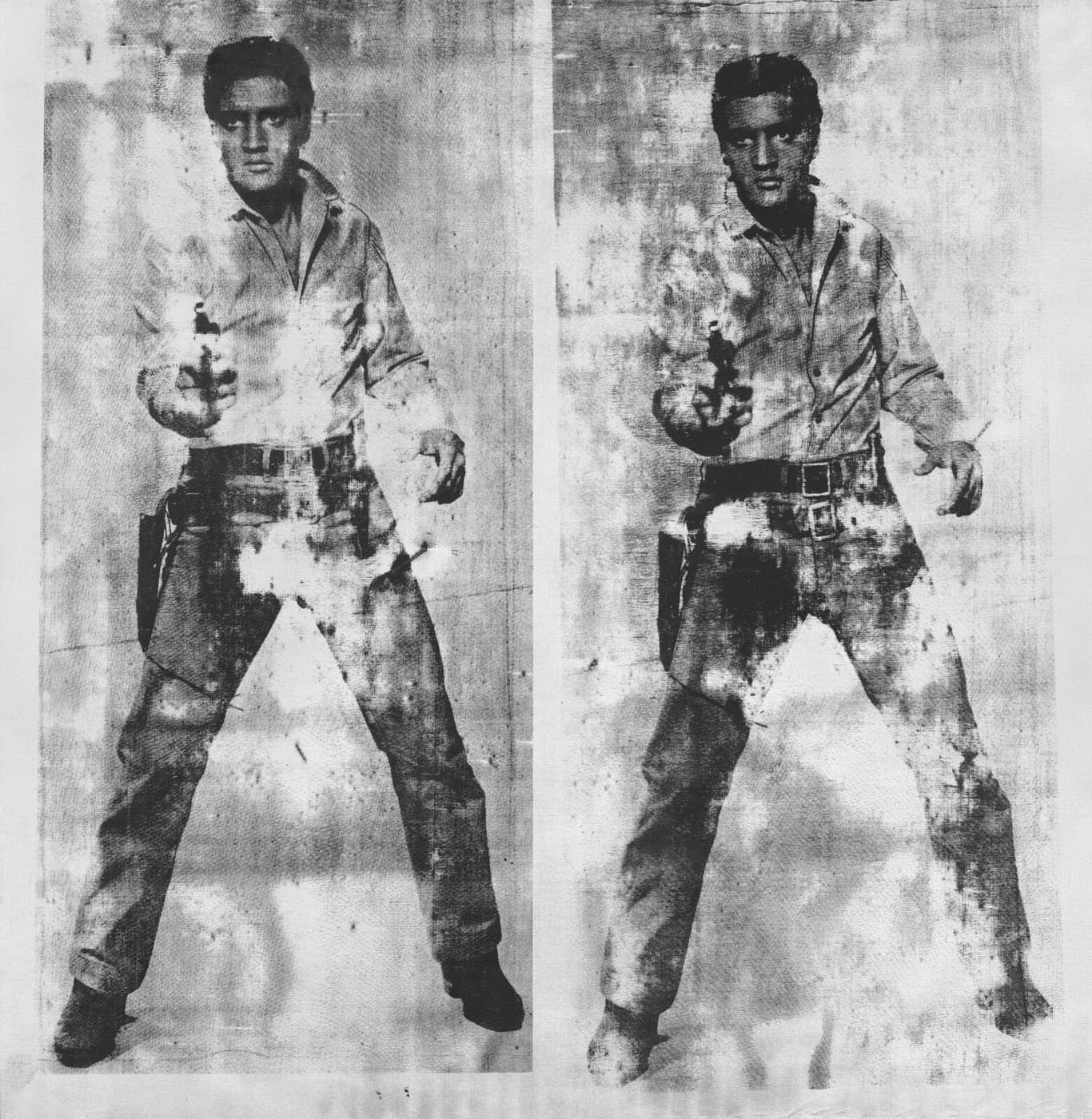
Elvis Presley stands twice on a canvas painted silver, nearly seven feet tall, in film costume, holding a revolver out towards the viewer. Both figures came off the same screen and the same photograph. Andy Warhol made it in 1963, and the two pulls came out so differently that one figure keeps its boots and its belt buckle while the other loses both. The Whitney Museum of American Art received it in 2002.
- 1963
- Screenprint and aluminum paint on linen
- Whitney Museum of American ArtNew York, United States
About Andy Warhol
What the painting shows
Two full-length figures of Elvis Presley, side by side, each inside its own printed rectangle with a strip of bare silver-painted canvas running floor to ceiling between them. He stands with his legs wide, in a light western shirt worn open at the collar and dark jeans with a wide belt. A holster hangs low on his right hip, laced down the outer seam. His right arm is extended and he holds a revolver pointing out of the picture, so foreshortened that the barrel almost disappears.
The canvas is 210 by 205.1 centimetres, nearly square, about six foot eleven each way. The figure fills almost the whole height, so each printed Presley stands close to seven feet. The ground is aluminium paint brushed onto linen; the weave of the cloth shows through it and the brush marks run in visible bands.
One screen, two results
The interest of the painting is that both figures came from one photograph and one screen, and they are not the same. The left head keeps its detail: the eyes read as eyes, the nostrils are separate marks, the line between the lips survives. The right head took more ink. The hair has spread into a larger black mass, a solid bar has closed across the brow, and the eyes have shrunk to two white notches.
The same divergence runs down both figures. On the right figure the belt buckle prints as a clear rectangle with a bright outline; in the same place on the left figure it has collapsed into the black of the belt. The left figure stands on a solid black boot with a pointed toe and a distinct heel. The right figure has almost no boot at all — the foot fades into the ground and the leg appears to stop above the ankle.
Where the screen printed nothing, the painted ground shows through. Between the left figure's legs it leaves a hard-edged white triangle with sharp sides. The same area on the right figure is smaller and ragged, with pale blotches spreading into the trouser leg. In the pale parts of the shirt the photograph's conversion is visible directly: a lattice of dots coarse enough to count.
The photograph underneath
The image is a film still. Presley is in costume, armed, and posed for a camera, and the printed rectangle around him is the edge of the screen's image area rather than anything Warhol drew.
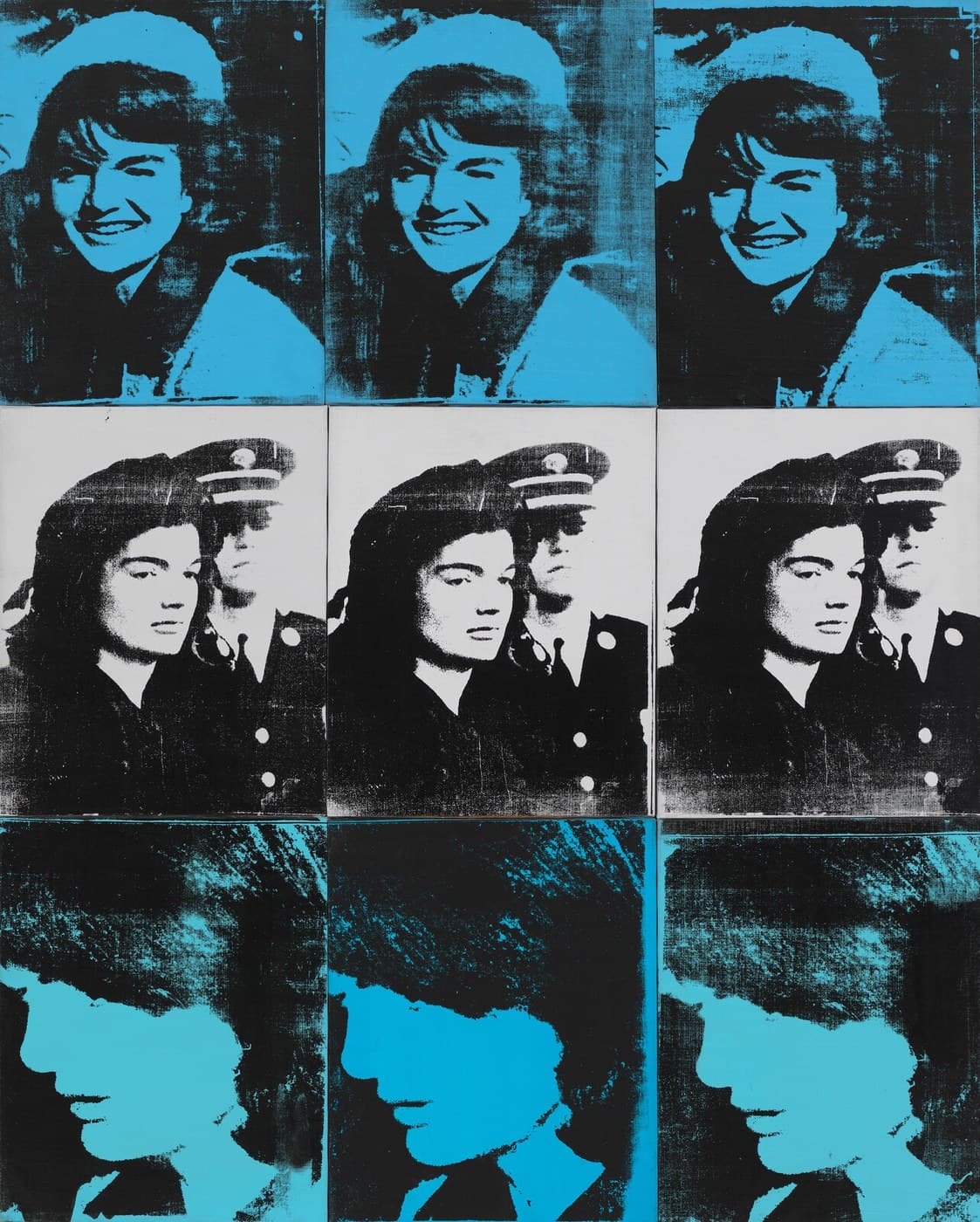
Whoever took that photograph is its author, and the Whitney Museum of American Art's record for the painting names no photographer. The museum does describe Warhol's usual practice elsewhere: on its label for Nine Jackies it contrasts that work's newspaper sources with "the glossy publicity stills that the artist typically used as the basis for his work". A publicity still is issued by a studio to be reprinted, which is part of why it was available to him and part of why the authorship question is easy to lose.
That question is not academic. In 2023 the Supreme Court decided Andy Warhol Foundation for the Visual Arts, Inc. v. Goldsmith on exactly this ground, over a photograph of the musician Prince taken by Lynn Goldsmith and a Warhol silkscreen made from it.
Los Angeles, autumn 1963
The silver Elvis paintings were made for a show at the Ferus Gallery in Los Angeles, where the director Irving Blum had exhibited the Campbell's Soup Cans the year before. It opened under the title Andy Warhol and ran across September and October 1963.
Warhol's own account of the room is in POPism, the memoir he wrote with Pat Hackett. It was thrilling, he says, to see the Ferus Gallery with the Elvises in the front room and the Liz paintings in the back. Then he adds the part usually left out: very few people on the West Coast knew or cared about contemporary art, and "the press for my show wasn't good".
Which Elvis this is
Warhol made a group of Elvis paintings in 1963, and they are catalogued by how many times the figure appears: single, double, triple, eight. The titles repeat and the sizes vary, so naming one requires care.
The catalogue raisonné of his paintings separates them into two families. Canvases made on silver grounds for the Los Angeles show are designated Ferus Type; earlier ones, printed over illusionistic painted backgrounds, are Studio Type. The Whitney uses the first of those brackets in its own captions. The installation photographs from its 2018–19 retrospective list "Triple Elvis [Ferus Type], 1963" and "Single Elvis [Ferus Type], 1963".
Its own painting carries no bracket at all. It is catalogued simply as Elvis 2 Times, 1963, accession number 2002.272. The aluminium ground puts it with the silver group rather than with the illusionistic ones, but the museum does not say so, and another painting is in circulation under the same title.
How it reached the Whitney
The painting came to the Whitney Museum of American Art in 2002 as a gift of The American Contemporary Art Foundation, Inc., Leonard A. Lauder, President. It went on show almost at once, in An American Legacy, A Gift to New York, which ran from 24 October 2002 to 26 January 2003.
The museum has shown it five times since. Those were Pop/Concept: Highlights from the Permanent Collection in 2004, Full House: Views of the Whitney's Collection at 75 in 2006, and Shaping a Collection: Five Decades of Gifts in 2014. Then came Human Interest: Portraits from the Whitney's Collection in 2016–17, and The Whitney's Collection: Selections from 1900 to 1965, which ran from 28 June 2019 to 1 May 2025. In that last display it hung beside Rosalyn Drexler's Marilyn Pursued by Death of 1963, Jackson Pollock's Number 27, 1950, and Edward Clark's Winter Bitch of 1959.
The Whitney lists it as not on view. Andy Warhol died in 1987 and the painting is in copyright; the museum prints "© The Andy Warhol Foundation for the Visual Arts, Inc. / Licensed by Artists Rights Society (ARS), New York" on its record. The reproduction here is the museum's own photograph, shown reduced under fair use for commentary and excluded from commercial reuse.
Close reading
Reading the work, detail by detail
Elvis Presley printed twice, life size, on canvas painted silver. The two figures come from one screen and one photograph, and the interest is in how differently the two pulls came out. Start with the two heads, then compare the hands, the belts and the boots.
1.The head on the left
The left impression holds its detail. The eyes read as eyes, the nostrils are separate marks, and the line between the lips survives. The hair is a solid black mass with a hard edge along the forehead.
2.The head on the right
The right impression took more ink. The hair has grown, a black bar has closed across the brow, and the eyes have shrunk to two white notches. The mouth is a smear. Nothing about the screen changed between the two pulls.
3.The revolver, left figure
Presley holds the revolver out towards the viewer, foreshortened so the barrel is almost lost. The hammer, the cylinder and the trigger guard each survive as a separate shape, and the knuckles print as a curved row of dashes.
4.The revolver, right figure
In the second pull the gun has closed up. The hammer and cylinder run together and the hand loses its knuckles. A thin dark line drops through the silver to the right of the hand, drawn or scratched rather than printed.
5.The holster and its lacing
The holster hangs low on his right hip, tied down at the thigh. Its outer edge is a row of short pale dashes, which is how the lacing that closes a holster's seam came through the screen.
6.The belt buckle, right figure
The buckle is legible in the second impression and not in the first, where the same passage has collapsed into the black of the belt. A second square shape sits beside it on the belt. One screen, two results.
7.The wedge between the legs
No ink went down between his legs, so the painted ground shows through as a clean triangle. Its edges are sharp because the screen blocked there, not because anything was masked off afterwards.
8.The same wedge, right figure
The triangle is smaller in the second figure and its edges are ragged. Pale blotches spread into the trouser leg on its left, where the ink lifted rather than printed. The same area on the left figure is unbroken.
9.The boot on the left
The left figure stands on a boot that printed completely: a pointed toe, a distinct heel, and a rolled jean cuff above it. A faint straight line runs across the ground beside it, marking the bottom of the printed area.
10.The boot on the right
The second figure has almost no boot. The toe and the heel have gone and the foot fades into the ground, so the figure appears to stop above the ankle. Only the cuff of the jeans holds its shape.
11.The gap between the two impressions
Each figure sits inside its own printed rectangle, and the rectangles do not touch. A strip of bare painted ground runs between them from top to bottom, with hard straight edges on both sides.
12.The edge of the first rectangle
A margin of plain painted canvas runs down the left side before the printing starts. The boundary is straight and abrupt, which is the edge of the screen's image area rather than anything drawn.
13.The painted ground
The ground is aluminium paint brushed onto linen. The weave of the cloth shows through it, the brush marks run in visible bands, and small dark specks sit in the surface. It was painted before anything was printed on it.
14.The dots in the shirt
The pale areas of the shirt are built from a lattice of dots. The photograph was converted to a coarse halftone before the screen was made, and at this size the individual dots are separable by eye.
15.Scratches across the field
Thin lines cross the printed field in several places, running straight through both ink and ground. They sit on top of the printing. At the right of the same view the printed rectangle stops at a hard vertical edge.
Timeline
1963
Andy Warhol paints Elvis 2 Times in New York: one photographic screen of Elvis Presley pulled twice onto linen painted with aluminium paint.
1963
The silver Elvis paintings are shown at the Ferus Gallery in Los Angeles across September and October, under the title Andy Warhol, with the Liz paintings in the back room. Warhol later wrote that the press for the show was not good.
2002
Given to the Whitney Museum of American Art by The American Contemporary Art Foundation, Inc., Leonard A. Lauder, President. Accession number 2002.272.
2002–03
Shown in An American Legacy, A Gift to New York at the Whitney, 24 October 2002 to 26 January 2003.
2013
Photographed for the museum's collection records on 5 March by Robert Gerhardt and Denis Y. Suspitsyn.
2019–25
Hangs in The Whitney's Collection: Selections from 1900 to 1965, 28 June 2019 to 1 May 2025, beside paintings by Rosalyn Drexler, Jackson Pollock and Edward Clark.
Where to see it
Whitney Museum of American Art
New York, United States
A public viewing address has not yet been confirmed for this holding.
Listed as not on view by the Whitney Museum of American Art. Gallery displays change, so check the museum's own object record before making a special visit.
Frequently asked questions
Why is it called Elvis 2 Times?
Because the figure of Elvis Presley is printed twice on the one canvas. Andy Warhol's 1963 Elvis paintings are named for how many times the figure appears — single, double, triple, eight — which is why the titles in the group are so easily confused.
Are the two figures in Elvis 2 Times identical?
No, and that is the point of looking at it. Both came from the same photographic screen, but the right impression took more ink: its hair spreads, a solid bar closes across the brow and the eyes shrink to two white notches. The right figure's belt buckle prints clearly while the left one's does not, and the left figure's boot is solid black while the right one's has almost dissolved.
Were the Elvis paintings shown in Los Angeles?
The silver ones were. They filled the front room of the Ferus Gallery in Los Angeles across September and October 1963, under the title Andy Warhol, with the Liz paintings in the back. Warhol wrote in POPism that very few people on the West Coast then cared about contemporary art and that the press for the show was not good. Whether the Whitney's canvas was among them is not recorded.
What is the silver in Elvis 2 Times?
Aluminium paint, brushed onto linen before anything was printed. The Whitney Museum of American Art records the medium as screenprint and aluminum paint on linen. The weave of the cloth shows through the metallic layer and the brush marks are visible as bands across it.
Where did the image of Elvis Presley come from?
A film still: he is in costume, holding a revolver towards the camera. The Whitney's record does not name the photographer who took it. On its label for Nine Jackies the museum describes Warhol as typically working from "the glossy publicity stills" issued by studios, as distinct from the newspaper pictures he used for the Jackie paintings.
How big is Elvis 2 Times?
210 by 205.1 centimetres, or 82 11/16 by 80 3/4 inches — close to square, and about six foot eleven each way. The figure fills nearly the full height, so each printed Presley stands close to seven feet.
Where is Elvis 2 Times?
The Whitney Museum of American Art in New York, accession number 2002.272, given in 2002 by The American Contemporary Art Foundation, Inc., Leonard A. Lauder, President. The museum lists it as not on view, and gallery displays change, so check its own object record before making a special visit.
More by Andy Warhol
If you like Andy Warhol
Explore painters from the same movements and circles.
Marcel Duchamp
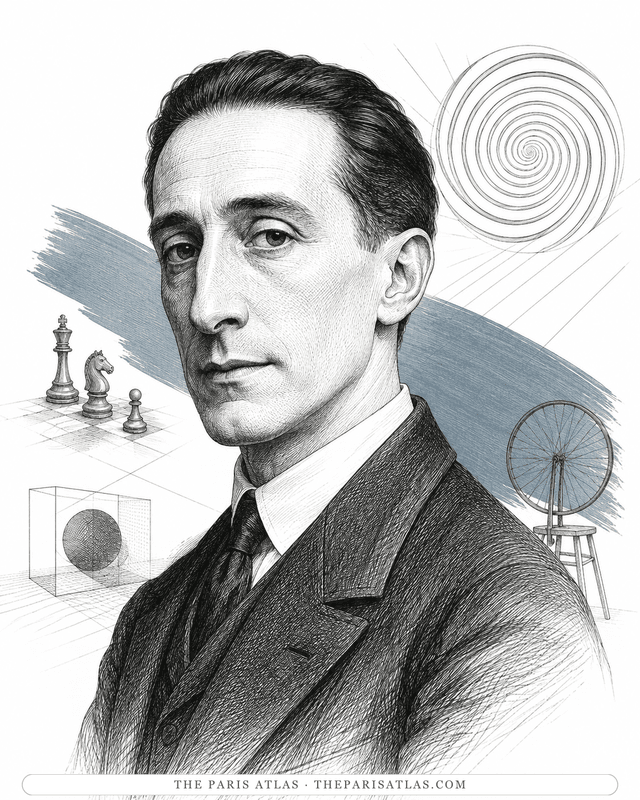
The century's quietest revolutionary — readymades, the abandonment of painting, chess on a Paris rooftop in Entr'acte, and one anemic film of spinning puns signed Rrose Sélavy.
View artist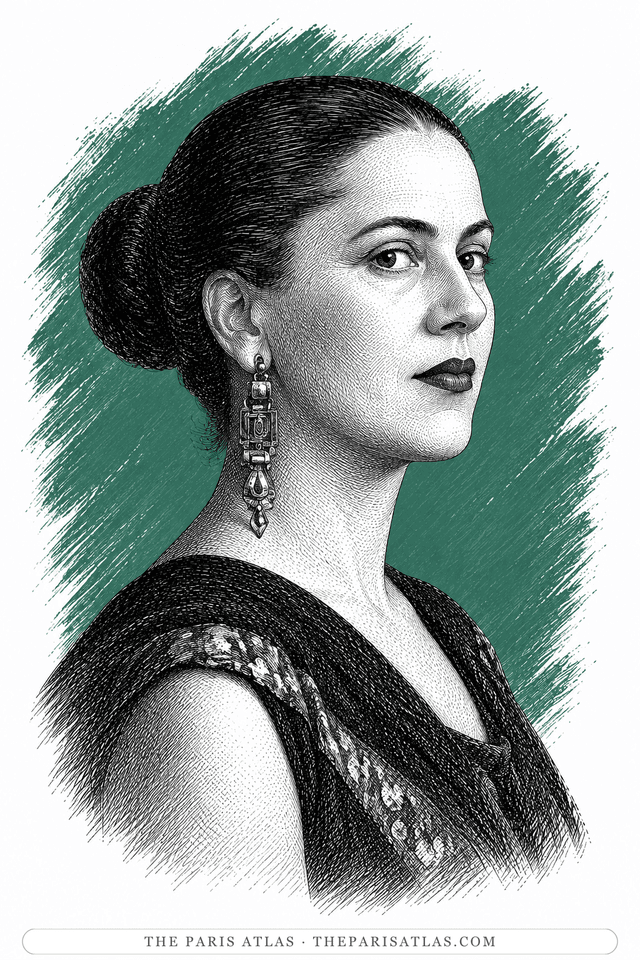
Tarsila do Amaral
Brazilian painter who spent the 1920s moving between São Paulo and Paris, studied Cubism under André Lhote, Albert Gleizes and Fernand Léger, and used what she learned to paint Brazilian towns, railways, plants and bodies. Her 1928 painting Abaporu prompted the manifesto that gave the Anthropophagic movement its name.
View artist
Vincent van Gogh
Dutch painter who lived in Montmartre with his brother Theo from March 1886 to February 1888 — the two years in which his dark Dutch palette turned into colour. He painted more than 200 pictures in Paris and died at Auvers-sur-Oise, north of the city, in 1890.
View artist
References
The sources below include collection records, catalogues, scholarly research, and primary materials that informed this page. They document Elvis 2 Times, its making, and its place in cultural history.


1Andy Warhol, Elvis 2 Times (1963) — object record, 2002.272
Official recordWhitney Museum of American Art, New YorkUsed forThe holding museum's object record: the 1963 date, the medium, the dimensions, the accession number, the credit line, the not-on-view status, the Artists Rights Society notice, and the six exhibitions with their dates.
2Andy Warhol, Nine Jackies (1964) — object record, 2002.273
Official recordWhitney Museum of American Art, New YorkUsed forThe Whitney's label on another Warhol painting, which states that he typically worked from glossy publicity stills.

3Andy Warhol—From A to B and Back Again (12 November 2018 – 31 March 2019)
WebsiteWhitney Museum of American Art, New YorkUsed forThe Whitney's 2018–19 retrospective, whose installation captions distinguish Triple Elvis [Ferus Type] and Single Elvis [Ferus Type], both 1963, from the museum's own plainly titled painting.
4Images and permissions
WebsiteWhitney Museum of American Art, New YorkUsed forThe Whitney's requirement that clearance be obtained from Artists Rights Society before it will agree to publication of an image carrying that credit.
5Represented artists
WebsiteArtists Rights Society, New YorkUsed forWeb source consulted for documented facts and historical context presented on the Elvis 2 Times page.
6Andy Warhol Foundation for the Visual Arts, Inc. v. Goldsmith, No. 21-869, decided 18 May 2023
Official recordSupreme Court of the United StatesUsed forThe 2023 decision on what an artist owes the photographer whose image he copies.
7POPism: The Warhol Sixties
MemoirHarcourt Brace Jovanovich, 1980Used forWarhol's own account of the 1963 Ferus Gallery show in Los Angeles: the Elvis paintings in the front room, the Liz paintings in the back, and his verdict that the press for it was not good.
8Andy Warhol's Life — the museum's biography
WebsiteThe Andy Warhol Museum, PittsburghUsed forThe Andy Warhol Museum's biography, for the celebrity silkscreens begun in 1962.
These references provide the documented foundation for this work's history and interpretation. Claim-level citations remain attached to the specific claims they support.
 Explore more resources