
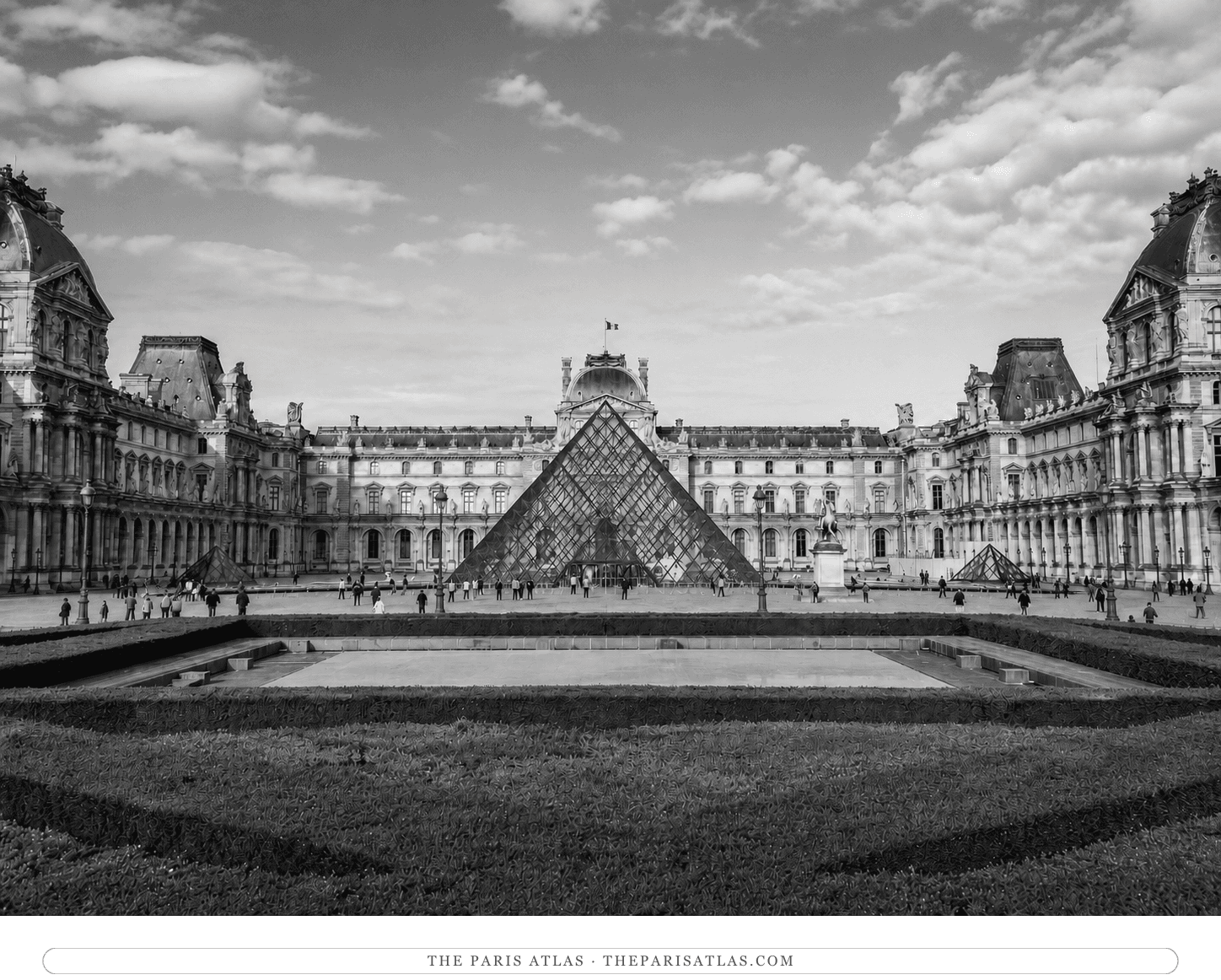
Displayed at · 1899
Musée du Louvre
In the Louvre's collection since 1899, and hung with the museum's great nineteenth-century French paintings.
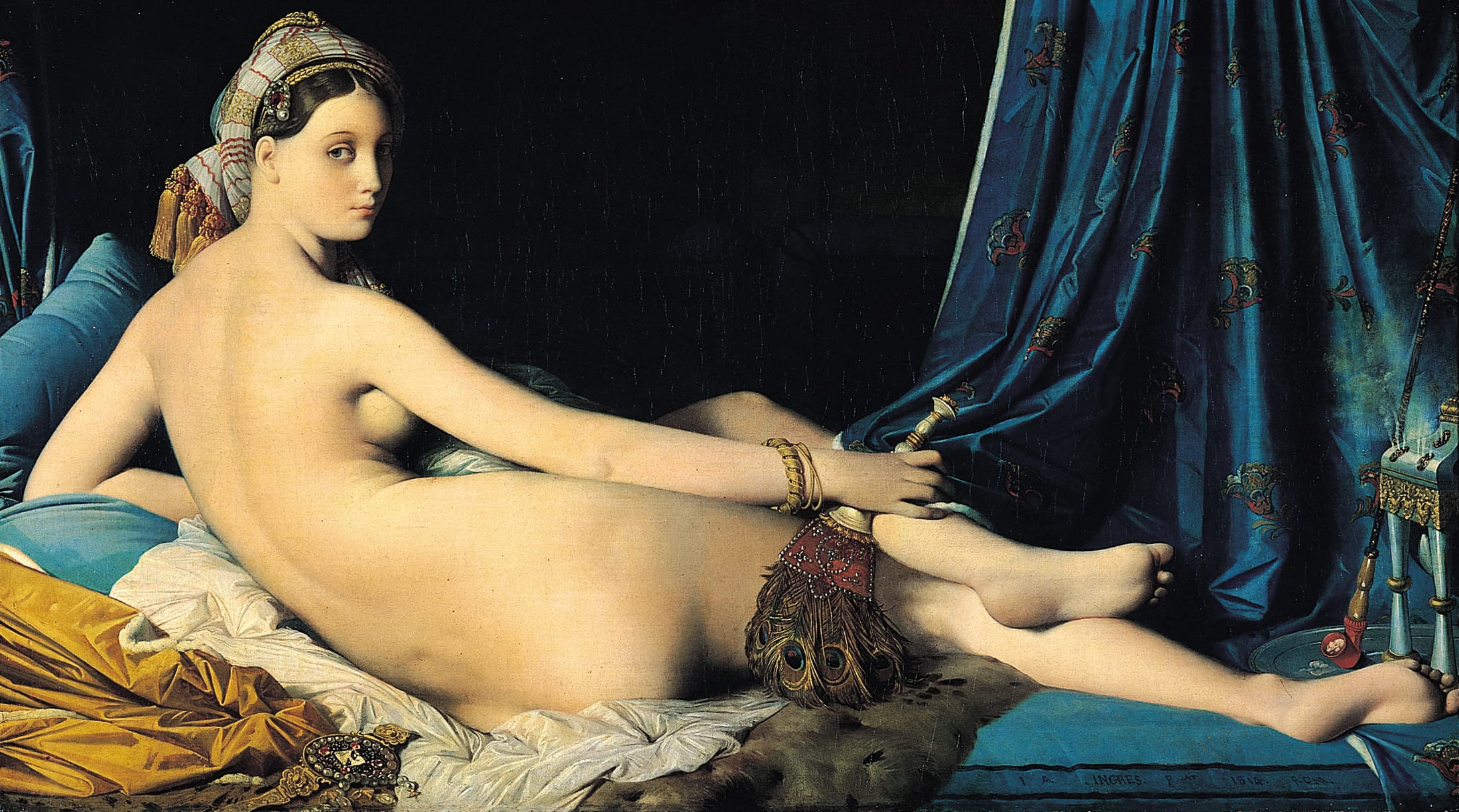
by Jean-Auguste-Dominique Ingres
Ingres's reclining nude of 1814, painted for Caroline Murat, Queen of Naples, and now in the Louvre. Its impossibly long back, mocked at the Salon of 1819, became one of the most argued-over anatomies in art.
Jean-Auguste-Dominique Ingres painted the Grande Odalisque in Rome in 1814, on commission from Caroline Murat, Napoleon's sister and Queen of Naples. The subject is an odalisque — a woman of an Ottoman harem — reclining on blue silk with her back to the viewer, turning her head to look over her shoulder. A peacock fan, a turban and a hookah pipe furnish the fantasy of the East that French painting was then building.
Napoleon's kingdom of Naples collapsed within the year, and the painting was never delivered or paid for. Ingres showed it at the Paris Salon of 1819, where it was savaged.
Critics attacked the anatomy. The figure's spine runs too long, the pelvis sits too far from the ribcage, and the left leg attaches at an angle no skeleton allows; one reviewer wrote that the picture had neither bones nor muscles nor blood nor life. The complaint hardened into legend as a count of extra vertebrae, and later medical writers have amused themselves measuring exactly how many the odalisque would need.
The distortion was a choice, not a slip. Ingres, trained on Raphael and on line above all, stretched the body into one continuous arabesque from neck to heel: the curve mattered more than the skeleton. What the Salon read as incompetence, later painters read as permission — the licence to bend anatomy for design that runs forward to Picasso and Matisse.
The Grande Odalisque entered the Louvre in 1899 and hangs in the museum's grand nineteenth-century painting galleries. It shares the building with the Turkish Bath, the circular harem scene Ingres finished at eighty-two, so the beginning and end of his lifelong Orient can be seen in one visit.
Close reading
Ingres makes the reclining body persuasive by violating anatomy in favor of one continuous line. The details show the turned face, extended back, and luxurious attributes transforming distortion into controlled design.
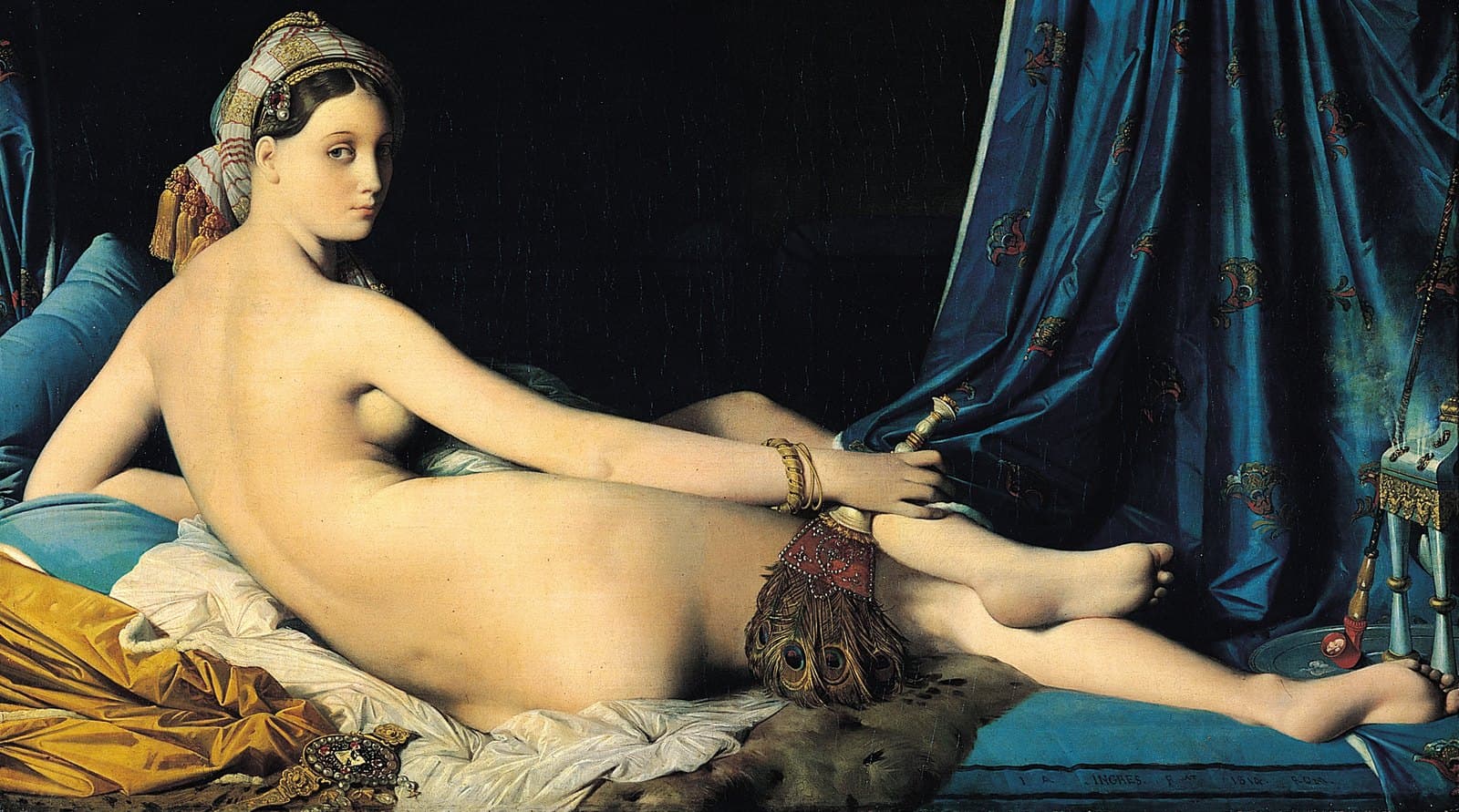
1.The face turns back without breaking the body's flow
Her head rotates toward the viewer while the shoulders remain turned away. The calm gaze and tightly wrapped turban cap the long curve rather than interrupting it with dramatic expression.
2.The impossible back is the composition's main line
The spine stretches beyond natural proportion and the pelvis shifts to preserve an unbroken arabesque. Ingres sacrifices skeletal plausibility so that contour can govern the entire figure.
3.Objects manufacture the imagined harem
Feathers, patterned cloth, and the hookah supply an invented Ottoman setting around a European studio nude. Their luxury is specific, but the culture they claim to represent is a French fantasy.
4.The head covering concentrates color and ornament
The patterned turban and jewelry frame a cool, controlled face. These carefully chosen accessories establish the imagined setting more quickly than the nearly empty background could.
5.The long arm ends in an unusually quiet hand
The arm follows the body's extended curve before the hand rests with little visible effort. That calm ending makes the anatomical exaggeration feel elegant at first glance rather than immediately impossible.
6.The fan adds another surface meant to be touched
Soft feathers, polished skin, cloth, and jewelry invite the eye to compare textures. The fan is decorative, but it also reinforces the painting's presentation of the room as a collection of luxurious surfaces.
A viewing location has not yet been listed for this work.
Jean-Auguste-Dominique Ingres, in 1814, working in Rome. Caroline Murat, Napoleon's sister and Queen of Naples, commissioned it, but her kingdom fell before the painting was delivered or paid for.
Ingres stretched it deliberately. He prized the continuous curving line of the figure over anatomical correctness, extending the spine and pelvis so the whole body reads as one arabesque. Salon critics in 1819 called the anatomy lifeless and wrong; the elongation later became the painting's fame.
A female attendant or concubine of an Ottoman harem — in nineteenth-century French painting, a stock figure of the imagined East. Ingres never travelled to the Ottoman world; the turban, hookah and peacock fan are studio fantasy, which is part of what the painting documents.
In the Musée du Louvre in Paris, which acquired it in 1899. It hangs with the museum's great nineteenth-century French paintings.
Badly. Shown at the Salon of 1819, it was attacked for its anatomy — one critic wrote that it had neither bones nor muscle nor blood nor life. The mockery about extra vertebrae stuck to the picture permanently, and so, eventually, did admiration for the line the distortion serves.
Displayed at · 1899
In the Louvre's collection since 1899, and hung with the museum's great nineteenth-century French paintings.
Explore painters from the same movements and circles.
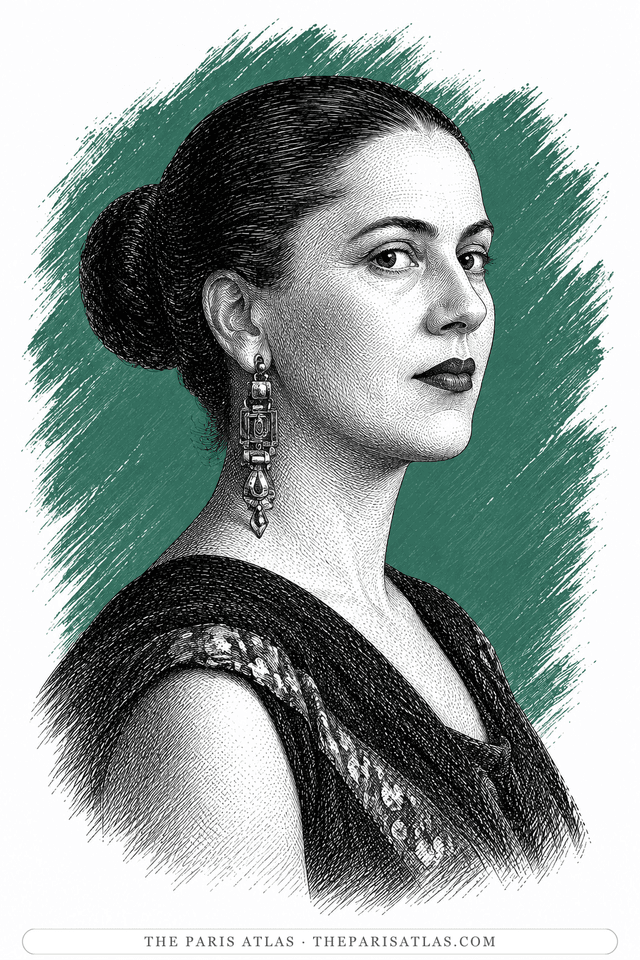
Brazilian painter who spent the 1920s moving between São Paulo and Paris, studied Cubism under André Lhote, Albert Gleizes and Fernand Léger, and used what she learned to paint Brazilian towns, railways, plants and bodies. Her 1928 painting Abaporu prompted the manifesto that gave the Anthropophagic movement its name.
View artist
French-American artist, lifelong friend of Yves Klein, and a founder of New Realism.
View artist
Strasbourg-born sculptor and poet — Hans in German, Jean in French, both all his life — who co-founded Dada at the Cabaret Voltaire in 1916, composed collages by dropping torn paper 'according to the laws of chance', and settled at Meudon outside Paris in a house his wife Sophie Taeuber-Arp designed.
View artistThe sources below include collection records, catalogues, scholarly research, and primary materials that informed this page. They document Grande Odalisque, its making, and its place in cultural history.


Web source consulted for documented facts and historical context presented on the Grande Odalisque page.
Web source consulted for documented facts and historical context presented on the Grande Odalisque page.
Web source consulted for documented facts and historical context presented on the Grande Odalisque page.
Web source consulted for documented facts and historical context presented on the Grande Odalisque page.
These references provide the documented foundation for this work's history and interpretation. Claim-level citations remain attached to the specific claims they support.
 Explore more resources