

Intermittent Journal
by Colette
A collectible late volume that is not, despite its title, a diary — a mixed gathering of chronicles and tales, printed in a small run.
- 1949
About Colette
The story, briefly
Spoiler-freeIntermittent Journal is a late collection of Colette's prose, published in 1949 as one of the fine, collectible volumes overseen by her editor Maurice Goudeket. Its French title, Journal intermittent, promises a diary, but the book is not one: it is a mixed gathering of chronicles and tales. It first appeared in a luxury edition limited to 480 copies, then expanded slightly when it was taken into Volume XIV of Colette's Œuvres complètes in 1950. (What's inside is described below.)
The story, in more detail
The title is a small misdirection. Despite calling itself a journal, the book is not a diary and keeps no running dated record; it is a collection of late chronicles and tales, gathered under a title that suggests something more private than the pieces actually are. That gap between title and contents is itself characteristic of the late, curated way these volumes were assembled.
It was made as an object as much as a text. The first edition was a luxury printing limited to 480 copies, part of Goudeket's effort to position Colette as an author of rare, collectible books. The following year it was absorbed into Volume XIV of her Œuvres complètes, gaining a few more pieces in the process.
Intermittent Journal belongs with The Flower of Youth and Stroke by Stroke among the late Le Fleuron volumes, and with At Hand among the collections drawn into the fourteenth volume of the collected works.
What's inside
There is no plot, and — despite the title — no actual diary. The book is a mixed gathering of late chronicles and tales rather than a running dated record. It first appeared in 1949 in a luxury edition limited to 480 copies, with thirteen pieces.
The following year it was taken into Volume XIV of Colette's Œuvres complètes, where it expanded slightly. Like the other late Le Fleuron volumes, it was made as a collectible object as much as a book to read, part of the effort to turn Colette's scattered late prose into finished volumes.
Themes and analysis
The last butterflies
The opening of “Papillons” offers an apparently generous invitation, then makes it depend on exact conditions: midday sun, a gentle breeze and a night without rain. The last butterflies are not available whenever the observer wishes. Colette guides the reader to the remaining flowers near Auteuil, where scents of honey, almond and wax make a small planting seem richly provisioned. But the scarcity of other flowers limits that abundance. The passage turns close observation into an encounter with timing: this ordinary place becomes exceptional because its pleasures are both local and temporary.
Blue lights at departure
“Lumières bleues” uses a repeated color to connect different moments of wartime waiting. The orderly embarkation at Dieppe recalls earlier blacked-out cities, yet the narrator distinguishes the crowd's practical composure from the older generation's memories and forebodings. Her recollection of Proust makes public history intimate through a vulnerable body and an awkward act of courtesy. Returning home barefoot, she learns the dark through touch. The closing address to women shifts attention again, from the visible departure to the endurance demanded of those left waiting. The blue light holds these differences together without erasing them.
Why we recommend it
A title that misleads on purpose
Not a diary at all, but a curated gathering — a small lesson in how Colette's late books were made.
A collectible object
First printed in just 480 copies, part of the effort to make Colette a rare, collectible author.
Late chronicles and tales
A mixed late gathering, close kin to The Flower of Youth and Stroke by Stroke.
What this book explores
Bring it to book club
- The book is called a journal but isn't one. Why might Colette, or her editor, choose a title that misleads?
- It was printed in only 480 copies as a collectible object. How does that intention sit with the idea of a book to be read?
- Read beside The Flower of Youth and Stroke by Stroke, what do these late gatherings tell you about Colette's final years of publishing?
Timeline
1949
Journal intermittent is published by Le Fleuron in a luxury edition limited to 480 copies.
1950
It is taken into Volume XIV of Colette's Œuvres complètes, expanded to seventeen pieces.
1986
Fayard includes the collection in a combined volume led by En pays connu.
Book editions
Hardcover
- Hardcover
- 1949
Hardcover
- Hardcover
- 1950
Reader reviews
Readers may also like


At Hand
The other late collection drawn, like this one, into Volume XIV of the Œuvres complètes.
Read our takeIntermittent Journal: frequently asked questions
Who wrote Intermittent Journal?
Colette. Journal intermittent was published in 1949, one of the collectible late volumes overseen by her editor Maurice Goudeket.
Is it really a diary?
No. Despite the title, it is not a dated journal but a mixed gathering of late chronicles and tales.
What is the book about?
It collects late chronicles and tales rather than telling a single story, gathered under a title that suggests something more private than the pieces are.
Why was it printed in so few copies?
The first edition was a luxury printing limited to 480 copies, part of the effort to position Colette as an author of rare, collectible books. It was absorbed into her Œuvres complètes the following year.
Is Intermittent Journal available in English?
There is no securely verified standalone English edition of the book.
If you like Colette
Explore authors with a similar voice, perspective, and influence.

Henry Miller
The Brooklyn dropout who arrived in Paris broke at thirty-eight and wrote the exuberant, banned books that ended American censorship.
View author
Louis-Ferdinand Céline
The doctor of the Paris slums who wrote the century's blackest, funniest novel — and changed the sound of French prose.
View author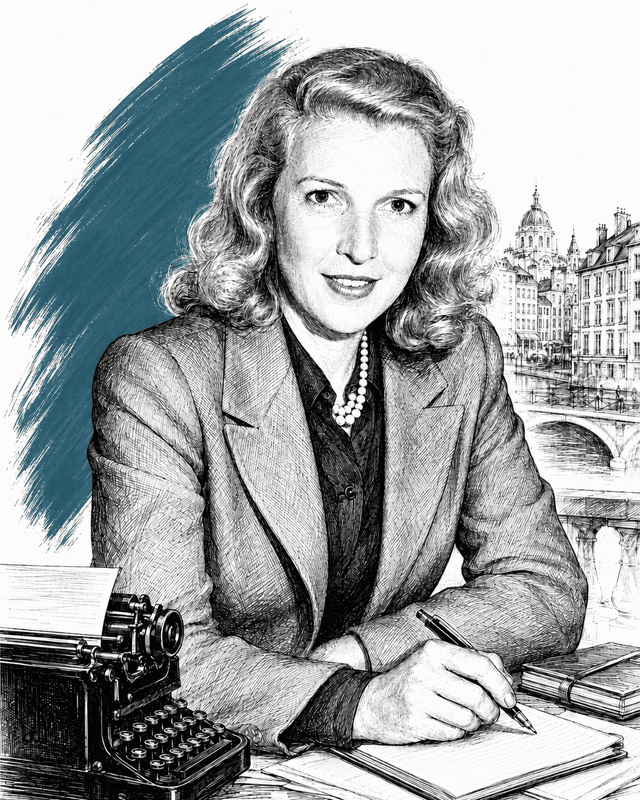
Martha Gellhorn
War correspondent who covered the Spanish Civil War, D-Day, and conflicts across five more decades; Hemingway's third wife, 1940–1945.
View author
References
References
The sources below include the primary text, editions, scholarship, archival materials, and other records that informed this page. They document Intermittent Journal, its publication, and its place in literary history.


1Intermittent Journal
NovelColette, 1949Used forThe primary text represented by this page, used for descriptions of the work’s contents and for any quoted passages shown here.
2Journal intermittent — Le Fleuron 1950 collected text
WebsiteWikisourceUsed forPublicly indexed opening of Papillons, pp. 262–263, and complete Lumières bleues, pp. 277–279, in the French Le Fleuron 1950 collected text; both titles confirmed in its contents. Papillons is a selected-passage reading, not complete-source inspection. No original 1949 edition, whole-volume or independent historical collation.
3Colette — bibliography of original editions
WebsiteSociété des amis de ColetteUsed forThe Société des amis de Colette bibliography verifies the original edition's publisher and publication date.
4Société des amis de Colette — Chronology
WebsiteUsed forUsed to verify Intermittent Journal's bibliographic context and its place within Colette's published work.
5Bibliothèque nationale de France — The Worlds of Colette
Exhibition catalogueUsed forUsed for independent archival, institutional, or historical context surrounding Colette and Intermittent Journal.
6Library of Congress — Colette resource guide
WebsiteUsed forUsed to cross-check chronology, publication history, and the circumstances in which Intermittent Journal appeared.
7Bibliothèque nationale de France — Colette: online resources
WebsiteUsed forUsed for an additional scholarly or biographical perspective on Intermittent Journal and Colette's wider career.
8En pays connu, suivi de Trait pour trait, Journal intermittent, La fleur de l’âge
WebsiteFayardUsed forPublisher’s record for the combined edition issued on 4 June 1986.
i
Why these sources are here
The primary text is the baseline reference for every book page. Additional references document publication history, interpretation, and historical context where that evidence is available.
 Explore more resources