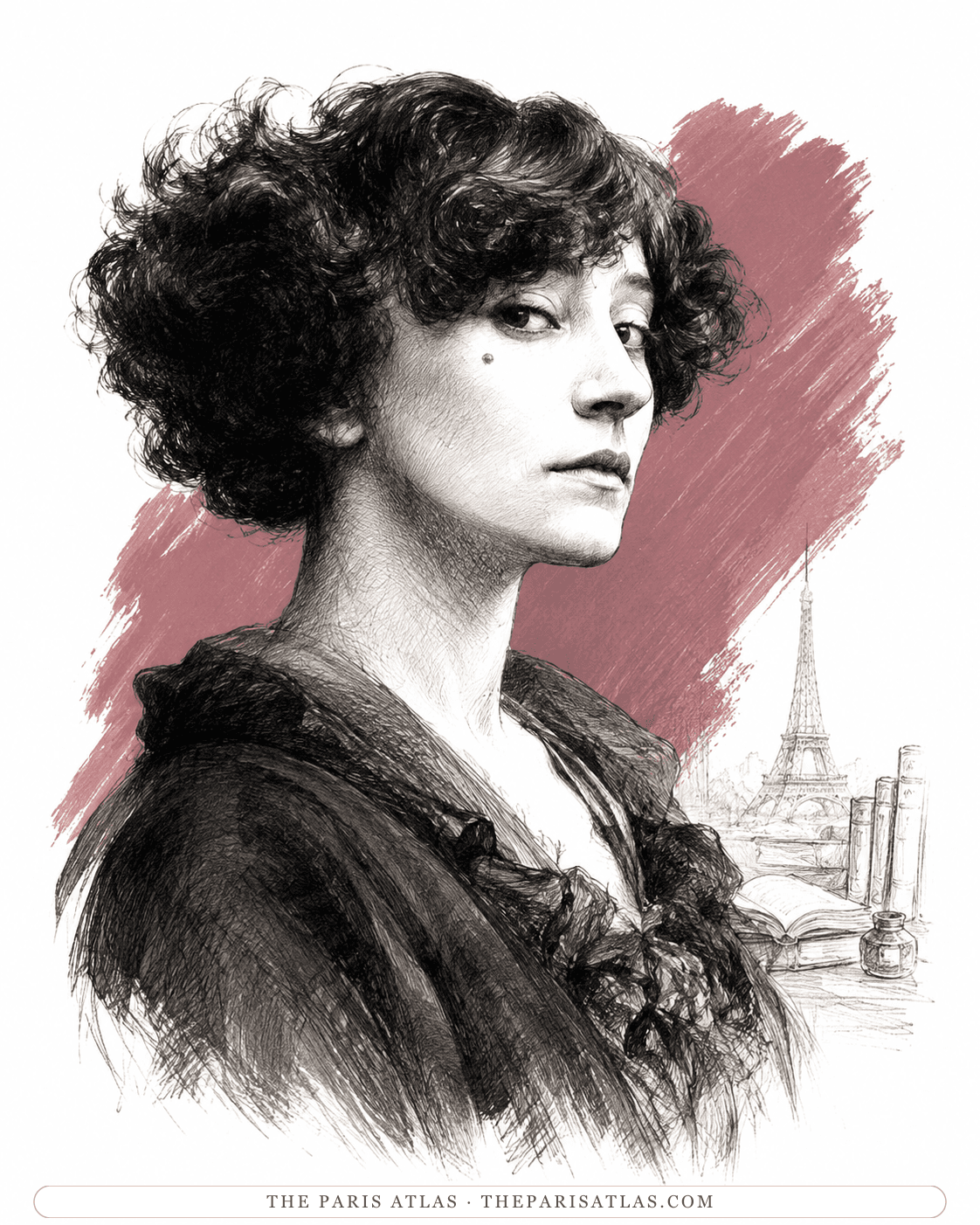


The Flower of Youth
by Colette
A late, deliberately mixed gathering — chronicles, tales, and prefaces bound together as one of Colette's collectible last volumes.
- 1949
About Colette
The story, briefly
Spoiler-freeThe Flower of Youth is a late collection of Colette's prose, published in 1949 as one of a group of fine, collectible volumes brought out by Le Fleuron. Its French title, La Fleur de l'âge, means the prime or flower of life. Unlike a themed collection, this one is deliberately mixed: eight pieces gathering chronicles, tales, prefaces, and even publicity texts that Colette had previously kept apart. That impurity is the point — part of the late effort to turn her scattered short prose into finished 'Colette' objects. (What's inside is described below.)
The story, in more detail
By the late 1940s Colette's companion and editor, Maurice Goudeket, was assembling her late prose into rare, well-made volumes meant to be collected. The Flower of Youth is one of these, and it wears its mixture openly: chronicles sit beside tales, prefaces beside occasional and even promotional writing, brought together into a single book from work Colette had once kept in separate drawers.
The gathering is not accidental or careless. It belongs to a deliberate final stage — the making of citable, collectible 'Colette' out of a lifetime's scattered short prose. Read that way, the book's very unevenness is informative: it shows how a great writer's late miscellany gets shaped, late, into something bookish and lasting.
The Flower of Youth stands with Stroke by Stroke and Intermittent Journal as one of the late Le Fleuron volumes. In English, some of its material is reachable through The Collected Stories of Colette, which carries a section under the title 'In the Flower of Age.'
What's inside
There is no plot, and no single theme. The book gathers eight pieces of deliberately mixed kinds — chronicles, tales, prefaces, and even publicity texts — that Colette had previously kept separate, bound together into one late volume.
That mixture is part of the book's meaning. It belongs to the late effort, guided by Colette's editor Maurice Goudeket, to turn her scattered short prose into finished, collectible volumes. Some of the material is reachable in English through The Collected Stories of Colette, in a section titled 'In the Flower of Age.'
Themes and analysis
Gathering the scattered prose
In the title story's opening, youth and vitality refuse to coincide. Madeleine plans an exhausting sequence of pleasures while her much younger husband, Paul, tries to remain still and postpone answering. Her energy impresses him, yet her dancing also makes him uneasy: movement seems mechanical precisely when it should demonstrate life. The narration stays close enough to his perceptions to expose their mixture of dependence, desire and recoil. Gathered among other kinds of prose, this scene gives the collection's title an ironic pressure. Being in life's prime is not something a birth date can settle.
The book as a crafted object
Placed in a finished volume, “Trésors épars” still carries the urgency of an occasional piece. Reports of drought and shortage interrupt the expectation that autumn must mean abundance. Childhood memories of nuts, fruit and oil become a store of practical knowledge, but recollection cannot simply replenish the present. The speaker finally asks readers to leave some berries for hungry birds rather than turn every available gift into provisions. That restraint complicates the pleasure of gathering. A collection can preserve such writing as a crafted object without smoothing away the material insecurity to which it responds.
Why we recommend it
A window on the late workshop
Its very mixture shows how Colette's scattered short prose was gathered, late, into collectible volumes.
Colette across her registers
Chronicles, tales, and prefaces side by side make a small sampler of what her short prose could do.
One of the fine late books
Part of the Le Fleuron series meant to position Colette as a collectible author.
What this book explores
Bring it to book club
- The book mixes chronicles, tales, prefaces, and publicity texts. Does that variety weaken it or reveal something?
- It was made as a collectible object as much as a book to read. How does that intention shape it?
- What does a great writer's late miscellany tell you that a tightly themed collection cannot?
Timeline
1949
La Fleur de l'âge is published by Le Fleuron — a mixed, collectible late gathering of Colette's short prose.
1950
The collection enters Volume XIV of the Le Fleuron collected works.
1986
Fayard includes it in a combined edition led by En pays connu.
Book editions
Hardcover
- Hardcover
- 1949
Paperback
- Paperback
Ebook
- Ebook
Reader reviews
Readers may also like

Intermittent Journal
The other collectible late gathering from the same series and moment.
Read our take
At Hand
The near-contemporary late collection, likewise assembled into the Œuvres complètes.
Read our takeThe Flower of Youth: frequently asked questions
Who wrote The Flower of Youth?
Colette. La Fleur de l'âge was published in 1949, one of the collectible late volumes brought out by Le Fleuron.
What is the book about?
It has no single subject. It gathers eight deliberately mixed pieces — chronicles, tales, prefaces, and even publicity texts — that Colette had previously kept separate.
Why is it so mixed?
The mixture reflects the late effort, guided by Colette's editor Maurice Goudeket, to turn her scattered short prose into finished, collectible books.
Is it a novel?
No. It is a mixed collection of short prose, without a continuous plot.
Is The Flower of Youth available in English?
There is no securely verified standalone English edition, but some of its material appears in The Collected Stories of Colette, in a section titled 'In the Flower of Age.'
If you like Colette
Explore authors with a similar voice, perspective, and influence.

Henry Miller
The Brooklyn dropout who arrived in Paris broke at thirty-eight and wrote the exuberant, banned books that ended American censorship.
View author
Louis-Ferdinand Céline
The doctor of the Paris slums who wrote the century's blackest, funniest novel — and changed the sound of French prose.
View author
Martha Gellhorn
War correspondent who covered the Spanish Civil War, D-Day, and conflicts across five more decades; Hemingway's third wife, 1940–1945.
View author
References
References
The sources below include the primary text, editions, scholarship, archival materials, and other records that informed this page. They document The Flower of Youth, its publication, and its place in literary history.


1The Flower of Youth
NovelColette, 1949Used forThe primary text represented by this page, used for descriptions of the work’s contents and for any quoted passages shown here.
2La Fleur de l’âge — Le Fleuron 1950 collected text
WebsiteWikisourceUsed forSelected publicly indexed opening of the title story, pp. 303–309, and complete Trésors épars, pp. 356–359, in the Le Fleuron 1950 collected transcription. The title-story reading concerns the opening domestic exchange and recalled dancing, not its ending. No complete-volume, 1949 contents or English-translation collation; the gathering and bindery images remain imagined.
3Colette — bibliography of original editions
WebsiteSociété des amis de ColetteUsed forThe Société des amis de Colette bibliography verifies the original edition's publisher and publication date.
4Société des amis de Colette — Chronology
WebsiteUsed forUsed to verify The Flower of Youth's bibliographic context and its place within Colette's published work.

5Bibliothèque nationale de France — The Worlds of Colette
Exhibition catalogueUsed forUsed for independent archival, institutional, or historical context surrounding Colette and The Flower of Youth.
6Library of Congress — Colette resource guide
WebsiteUsed forUsed to cross-check chronology, publication history, and the circumstances in which The Flower of Youth appeared.
7Bibliothèque nationale de France — Colette: online resources
WebsiteUsed forUsed for an additional scholarly or biographical perspective on The Flower of Youth and Colette's wider career.
8En pays connu, suivi de Trait pour trait, Journal intermittent, La fleur de l’âge
WebsiteFayardUsed forPublisher’s record for the combined edition issued on 4 June 1986.
i
Why these sources are here
The primary text is the baseline reference for every book page. Additional references document publication history, interpretation, and historical context where that evidence is available.
 Explore more resources