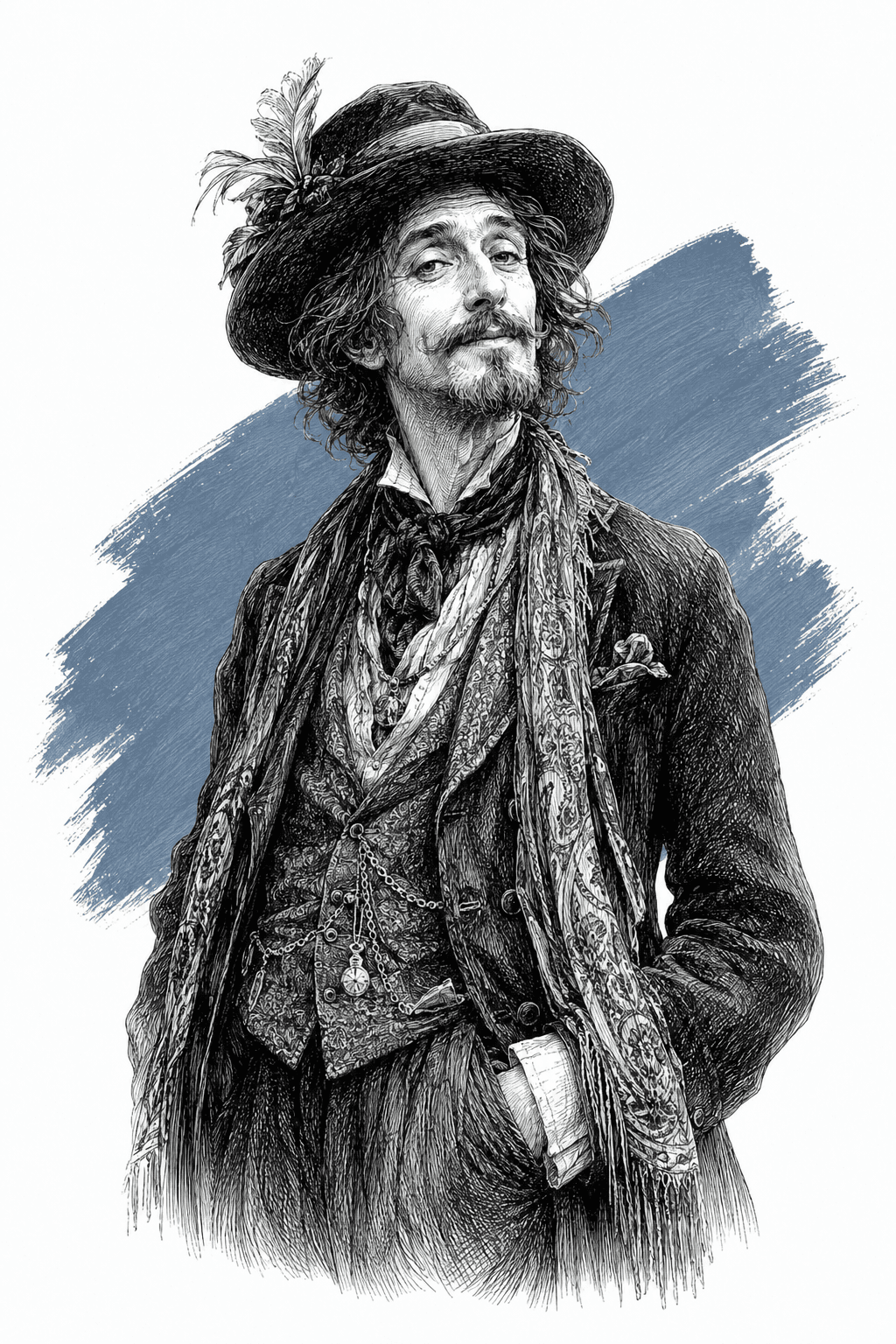
Lady Buck-and-Balk
An Englishwoman with a monocle who believes in spirits, and who wants the House of Lords to make weddings between women legal.
Legal protection. She wants marriage between women recognised so that a woman in love is not exposed to hazards that the law would otherwise cover.
The book

At a glance
- One of two Englishwomen at the March tea table
- A monocle
- Spirits
- Tilly-Tweed-In-Blood, who believes in marriage
- Una, Lady Troubridge · 1887–1963 · London
Who they are in the book
Spoiler-freeLady Buck-and-Balk is an invented character in Ladies Almanack, the 1928 mock almanac by the American writer Djuna Barnes. She appears in the March chapter, one of two Englishwomen who arrive at Dame Evangeline Musset's tea table with a proposal for law reform. She is described in a single sentence that has become the book's most quoted line: she wore a monocle and believed in spirits.
She is generally identified with Una, Lady Troubridge, the English sculptor who was Radclyffe Hall's partner. Troubridge and Hall were the most publicly visible couple in the London and Paris lesbian world of the 1920s, and both were interested in spiritualism. Barnes never confirmed the identification.
How Lady Buck-and-Balk Is Portrayed
- The monocle and the spiritsHer entire physical description is one clause long, paired against her companion's Stetson in the next. Barnes fixes both women in a sentence and then lets them talk for four pages.
- The case for the House of LordsShe and her companion argue that England has done nothing to legalise these passions, that no two women have ever been seen approaching an altar in bridal lace, and that the matter should be put before the Lords — with alimony available if one of them strays.
- Refusing the duelWhen Musset suggests that duels would settle these things faster than legislation, Lady Buck-and-Balk objects that women's hearts are too tender: one trickle of blood on the beloved's torso and she would be less than any man. Women, she concludes, cannot kill each other, having only pity and a wish to revive.
- The proposal she cannot get anyone to take upMade a little callous to nuance by the spirits, she eventually says outright that she wishes they could do away with men altogether. Her companion answers that men are still needed for carrying coals and lifting beams. Nobody returns to the subject.
If you like Ladies Almanack


If you like Djuna Barnes
Explore authors with a similar voice, perspective, and influence.

Henry Miller
The Brooklyn dropout who arrived in Paris broke at thirty-eight and wrote the exuberant, banned books that ended American censorship.
View author
Louis-Ferdinand Céline
The doctor of the Paris slums who wrote the century's blackest, funniest novel — and changed the sound of French prose.
View author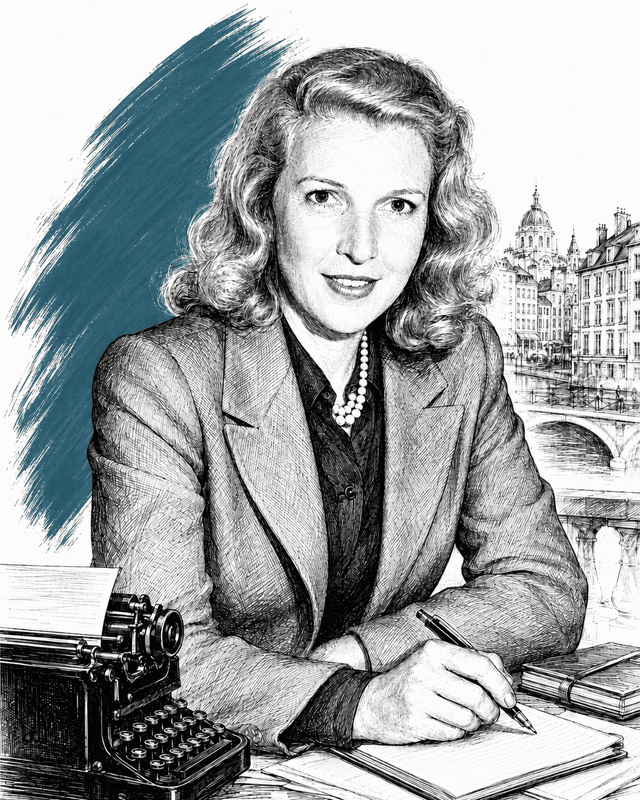
Martha Gellhorn
War correspondent who covered the Spanish Civil War, D-Day, and conflicts across five more decades; Hemingway's third wife, 1940–1945.
View author