Henriette de Nevers
The queen's closest friend, mistress of the Hôtel de Guise while her husband is away, who picks a hero off the pavement and keeps him.
Her freedom, and a hero to watch; she says as much on the way to the Hôtel de Guise.
The book
Queen Margot
Alexandre Dumas
At a glance
- Duchesse de Nevers, sister-in-law of the Duc de Guise
- At the Hôtel de Guise, alone, while her husband is away
- Annibal de Coconnas
- Eros, Cupido, Amor
- Henriette de Clèves, duchesse de Nevers
Who they are in the book
Spoiler-freeHenriette, duchesse de Nevers, is Marguerite's most intimate friend and the Duc de Guise's sister-in-law. With her husband absent she runs the Hôtel de Guise on her own and tells the queen that she is free as air: she goes, she comes, she commands. She has emerald eyes, a taste for fine things and a habit of saying what she thinks, and on the night of the massacre she watches a stranger fight from her balcony and has him carried into her closet.
She and Marguerite make a pact in Chapter XII, respectful servant in public and madcap confidante in private, sealed with the password Eros, Cupido, Amor. Where the queen is grave, Henriette is quick and unsentimental, which is why the last chapters, when she lies unconscious on the queen's carpet after the execution, land so hard.
How Henriette de Nevers Is Portrayed
- Six of the duke's guardsAt the end of Chapter VIII she arrives at Marguerite's door with twelve of the Duc de Guise's guards and leaves six in the corridor. Six of the duke's men, she says, are worth a regiment of the king's that night.
- Free as airIn Chapter XII, in the litter, she tells the queen that with her husband and brother-in-law away she is free as a bird, and proposes an offensive and defensive alliance for the sole purpose of catching happiness on the fly.
- The man on the balconyIn the same chapter she describes watching Coconnas fight in the Rue des Quatre-Fils below her window, a hero, an Ajax Telamon, until an old woman's stone brought him down, and admits that by daylight he has lost a little.
- The war-horseIn Chapter XVI she mounts him for the ride to Montfaucon on the duc de Nevers's charger, a creature as big as an elephant. She then watches the duel from the bushes shouting Courage, hoping he will win as easily as he did against Mercandon's son.
- Goose, impertinent, scoundrelIn Chapter XLIV, told that friendship is a star and love only a candle, she calls Coconnas a goose, then impertinent, then a scoundrel, in three lines. She threatens to detest him if he prefers anything in the world to her.
- The ruby necklaceIn Chapter LXI she goes with the queen to the executioner's cellar, cries Annibal's name over the body, wraps his head in a fold of her cloak, and takes the rubies from her neck to pay Caboche for masses.
Henriette de Nevers quotes
I love you more than any woman, and I love La Mole more than any man.
She stands beside Marguerite in the tower window at the corner of the Rue de la Vannerie while the two men are beheaded, and Coconnas bows to the window as if in a drawing room. That night she faints on the queen's carpet and comes round only when Caboche says that the queen mother wants the heads for her experiments. She goes to the cellar, says she can never do it, and does it.
If you like Queen Margot


If you like Alexandre Dumas
Explore authors with a similar voice, perspective, and influence.
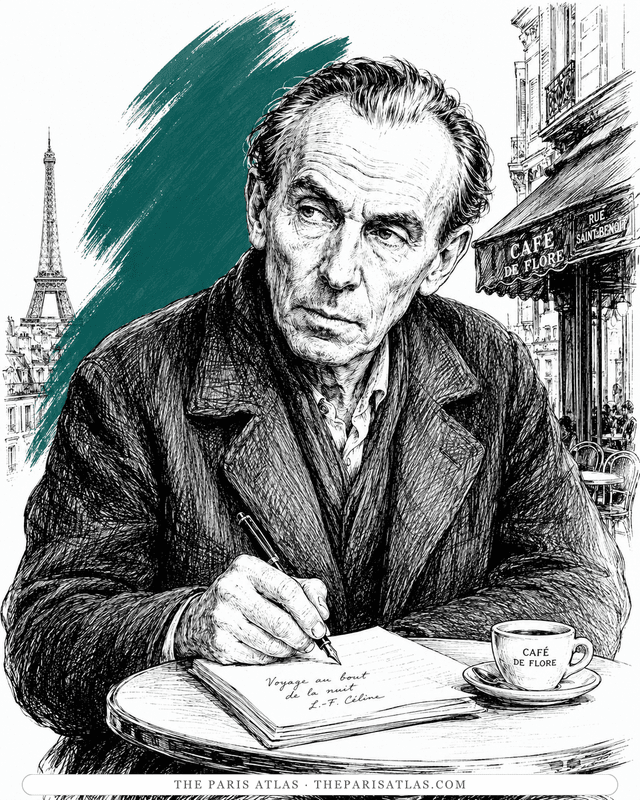
Louis-Ferdinand Céline
The doctor of the Paris slums who wrote the century's blackest, funniest novel — and changed the sound of French prose.
View author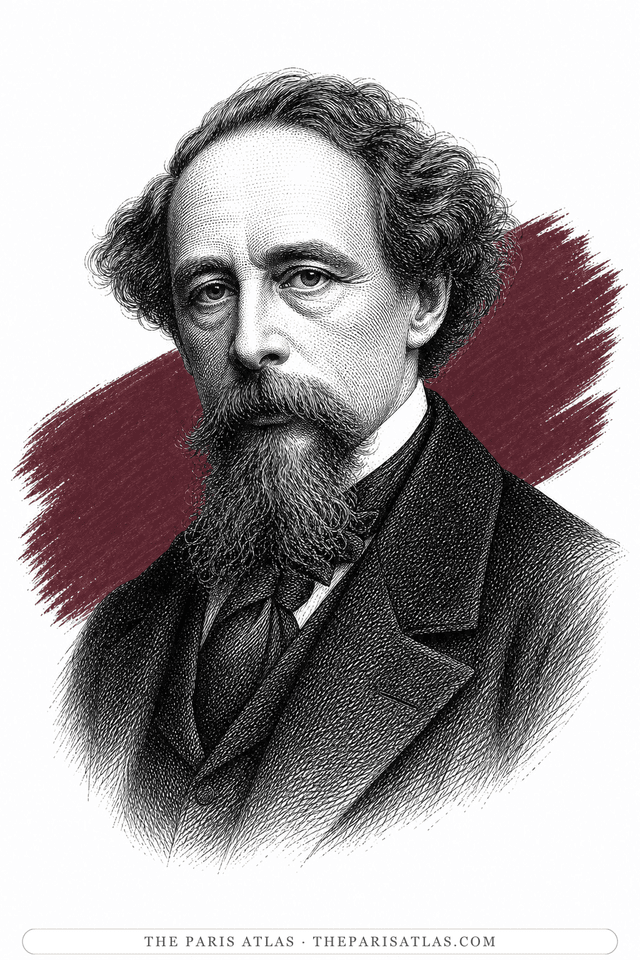
Charles Dickens
The most popular English novelist of the nineteenth century, who was never a Paris resident in the ordinary sense but kept coming back for twenty-five years: one winter in a rented mansion on the rue de Courcelles, a second winter on the Champs-Élysées writing Little Dorrit, repeated compulsive visits to the Paris Morgue — the riverside building where the city displayed its unidentified dead to the public — and a novel of the French Revolution, A Tale of Two Cities, that has shaped how English readers picture Paris ever since.
View author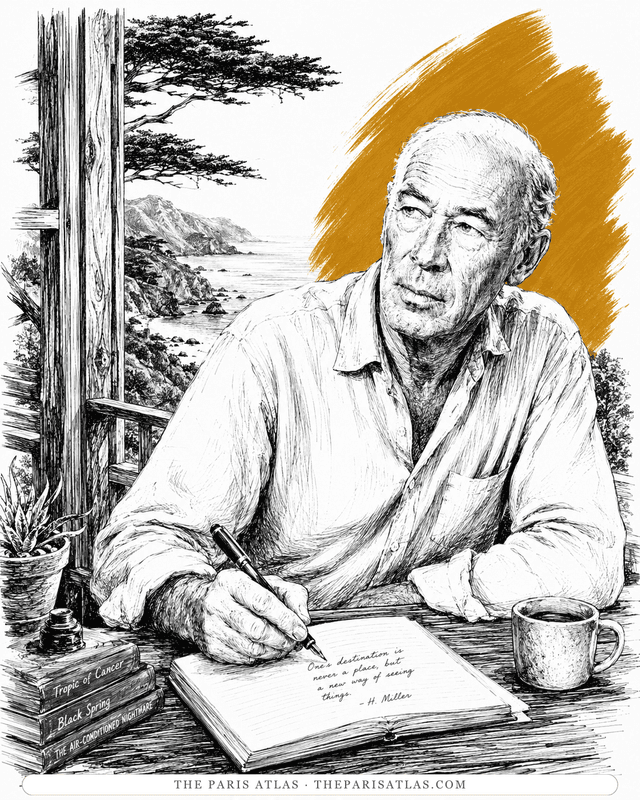
Henry Miller
The Brooklyn dropout who arrived in Paris broke at thirty-eight and wrote the exuberant, banned books that ended American censorship.
View author