Annibal de Coconnas
A red-haired Catholic from Piedmont who joins the massacre on his first night in Paris, stabs La Mole twice, and becomes the friend who carries him up the scaffold.
A good supper, a good fight, and La Mole's company; once he has the friend, everything else, Henriette included, comes second.
The book
Queen Margot
Alexandre Dumas
At a glance
- A Catholic gentleman of Piedmont in the service of the Duc de Guise, later of the duc d'Alençon
- La Belle Étoile, Rue de l'Arbre-Sec, sharing a room with La Mole
- Henriette, duchesse de Nevers
- La Mole, whom he calls Orestes to his Pylades
- By Heaven in the translation; Mordi, in his own speech
- Annibal, comte de Coconnat or Coconas · About 1535–1574 · Piedmont
Who they are in the book
Spoiler-freeAnnibal de Coconnas arrives at the same inn on the same evening as La Mole, with orders to report to the Duc de Guise. He is a tall, broad-shouldered Piedmontese with frizzled red hair, grey eyes that go black when he is crossed, a scanty cloak and old-fashioned boots. He swears by Heaven in the translation and by Mordi in his own tongue. On the night of 24 August he goes out with Maurevel and the landlord to kill Protestants, and enjoys it.
Dumas then spends the rest of the book turning him into its most likeable man without ever making him nicer. He is loud, greedy and brave to the point of stupidity. Once he has made up his mind he is devoted past all reason: to Henriette de Nevers, who picked him up off the pavement, and above all to La Mole, whom he tried twice to kill. He is also funny, which no one else in the Louvre is.
How Annibal de Coconnas Is Portrayed
- The Piedmontese at the innIn Chapter IV he has spent an hour staring up at windows: red frizzled hair under a cocked hat, grey eyes that seem black in anger, a tawny moustache, and what the narrator calls the horrible mountain accent of Piedmont. He threatens to put the landlord on his own spit.
- A battue of menAt the end of Chapter VII, with a white cross on his hat, he says he has only ever hunted bears and wolves and that a battue of men seems more amusing. In Chapter VIII he stabs La Mole at Coligny's gate and again in the queen's bed, his cheek laid open by his enemy's sword.
- Picked up off the streetIn Chapter XII Henriette de Nevers describes watching him fight in the Rue des Quatre-Fils from her balcony, an Ajax with a flashing sword, until an old woman knocked him down with a stone. Her guards carried him into her closet, where the queen later recognises him through the keyhole.
- The man who stayed to admire the gibbetIn Chapter XVI he is the one rider who lingers at Montfaucon after the court leaves, studying the stone pillars and chains as a provincial marvelling at what the capital can build. La Mole finds him there, and the duel begins with an insult about his ugly head.
- Orestes and PyladesIn Chapter XLIV he tells Henriette that friendship is a star and love a candle, and that he loves her more than any woman and La Mole more than any man. He then resigns from the duc d'Alençon's service by a letter signed as the inseparable friend of Monsieur de la Mole.
- Leather wedgesIn Chapter LVIII the executioner Caboche, whom he once shook by the hand, fits the boot with wedges of leather instead of oak. Coconnas howls on request and dictates, between the blows, precise evidence against the duke who betrayed them.
Annibal de Coconnas quotes
I love you more than any woman, and I love La Mole more than any man.
The rescue from the chapel fails, and on the morning of the execution he supports La Mole's head on his knees in the tumbril while the crowd calls him the coward who confessed. He carries his friend up the scaffold like a child, asks the executioner to take La Mole first and to finish with one blow, kisses the severed head, and says Now. Caboche is trembling by the end.
In the cellar beneath the headsman's tower the hangman has laid the two men side by side with their hands joined. Henriette wraps his head in her cloak. The real Coconnat was a captain of the duc d'Anjou's guards, born about 1535, beheaded with La Mole on 30 April 1574; Dumas makes him young and gives him to the Guises.
If you like Queen Margot


If you like Alexandre Dumas
Explore authors with a similar voice, perspective, and influence.

Louis-Ferdinand Céline
The doctor of the Paris slums who wrote the century's blackest, funniest novel — and changed the sound of French prose.
View author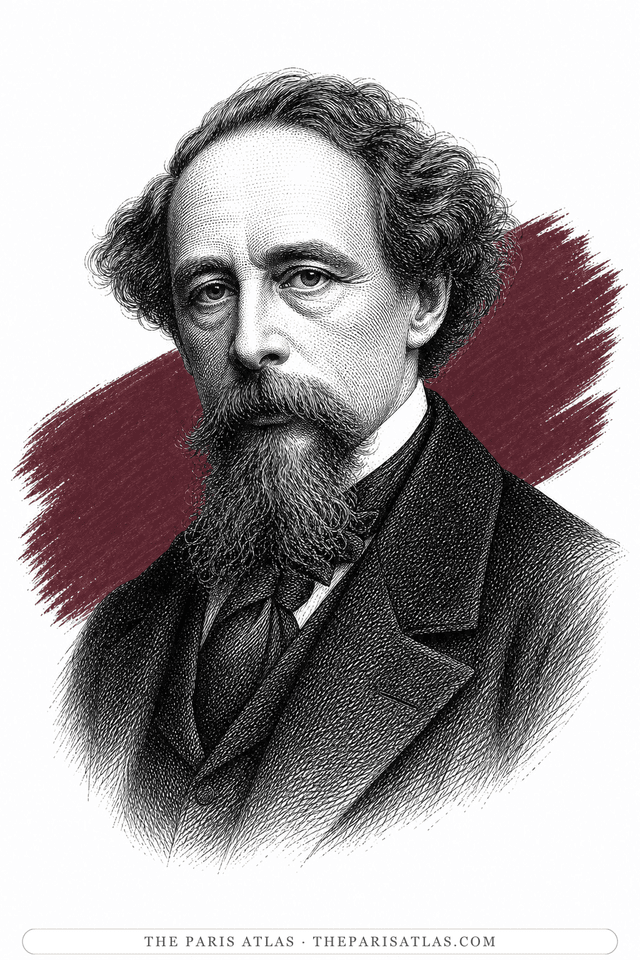
Charles Dickens
The most popular English novelist of the nineteenth century, who was never a Paris resident in the ordinary sense but kept coming back for twenty-five years: one winter in a rented mansion on the rue de Courcelles, a second winter on the Champs-Élysées writing Little Dorrit, repeated compulsive visits to the Paris Morgue — the riverside building where the city displayed its unidentified dead to the public — and a novel of the French Revolution, A Tale of Two Cities, that has shaped how English readers picture Paris ever since.
View author
Henry Miller
The Brooklyn dropout who arrived in Paris broke at thirty-eight and wrote the exuberant, banned books that ended American censorship.
View author