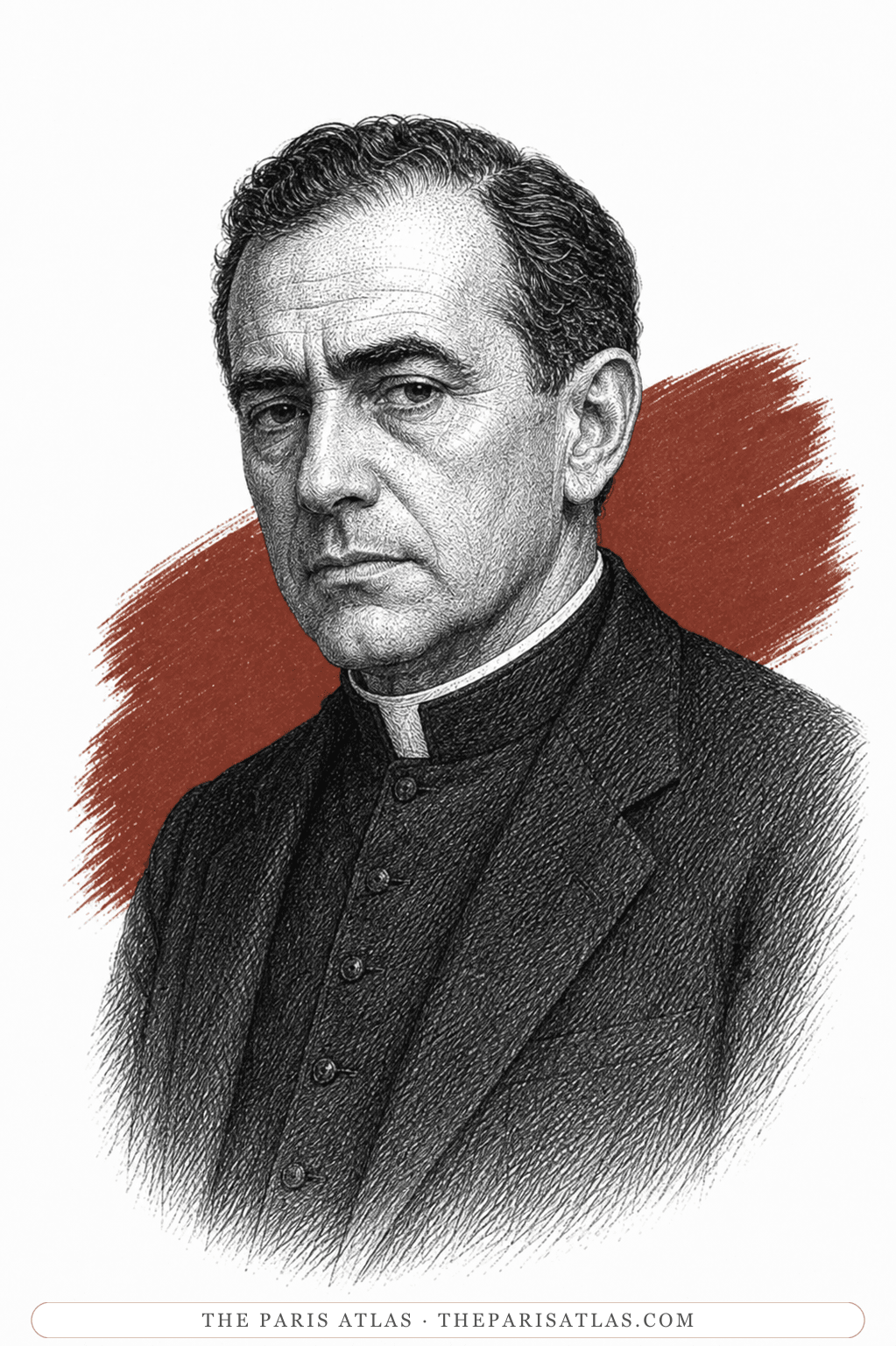
The priest
The Spanish Catholic priest made the victim of the novella’s final sacrilegious violence.
To preserve his safety and sacred role when confronted by people determined to violate both.
The book

At a glance
- Catholic priest
- Spain
- Victim of final sacrilege
Who they are in the book
Spoiler-freeThe priest represents clerical authority and the sacred boundaries the protagonists now seek to destroy. The narrative gives him little personal life before converting his office and body into elements of its symbolic system.
His profile states his victimization directly and does not reproduce the final scene visually.
How The priest Is Portrayed
- Adult Spanish priestHis identity is clear and historically grounded.
- Catholic clerical clothingDress signals office without decorative ritual props.
- Solemn wary expressionHe remains a person rather than a symbol alone.
- Contained postureNo violence is depicted.
- Close engraved bustNo church interior or eye imagery appears.
- Muted brown accentThe earth tone avoids sensational color.
He is subjected to sexual violence and killed during the church sequence. His body is then incorporated into the final transformation of the eye motif.
If you like Story of the Eye


If you like Georges Bataille
Explore authors with a similar voice, perspective, and influence.
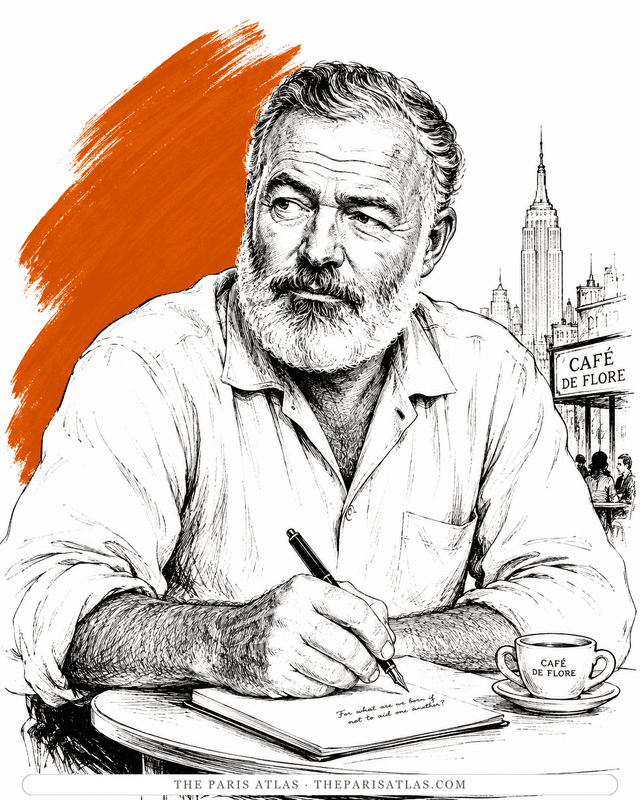
Ernest Hemingway
Author of The Sun Also Rises and A Moveable Feast; his pared-down style, developed in 1920s Paris, became the most imitated in American prose.
View author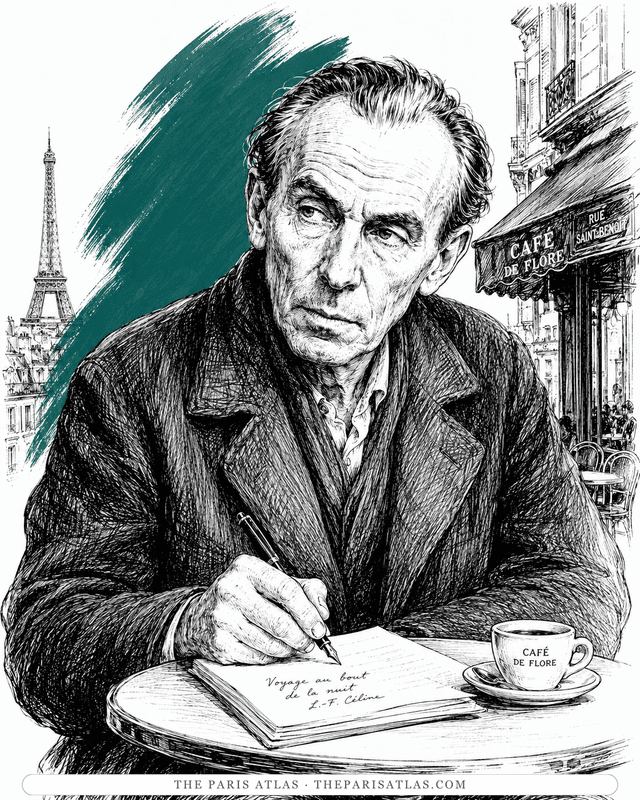
Louis-Ferdinand Céline
The doctor of the Paris slums who wrote the century's blackest, funniest novel — and changed the sound of French prose.
View author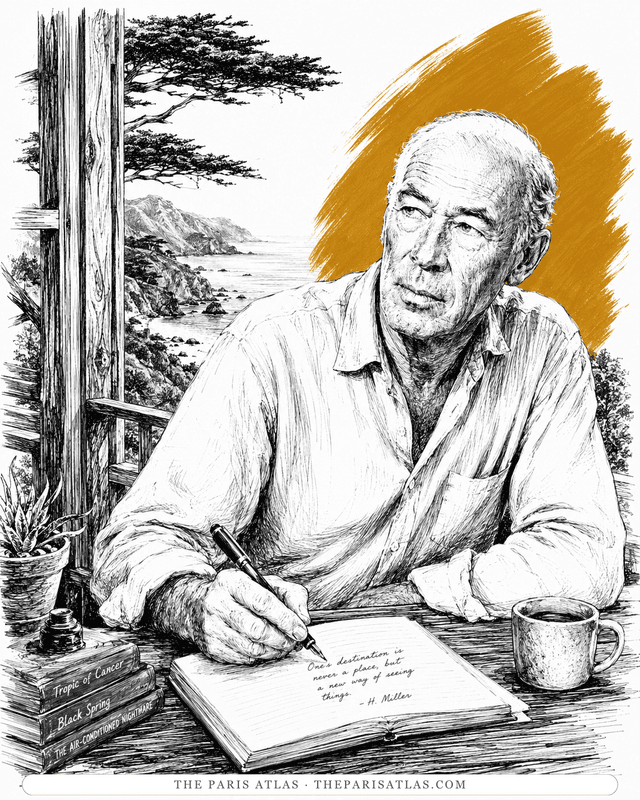
Henry Miller
The Brooklyn dropout who arrived in Paris broke at thirty-eight and wrote the exuberant, banned books that ended American censorship.
View author