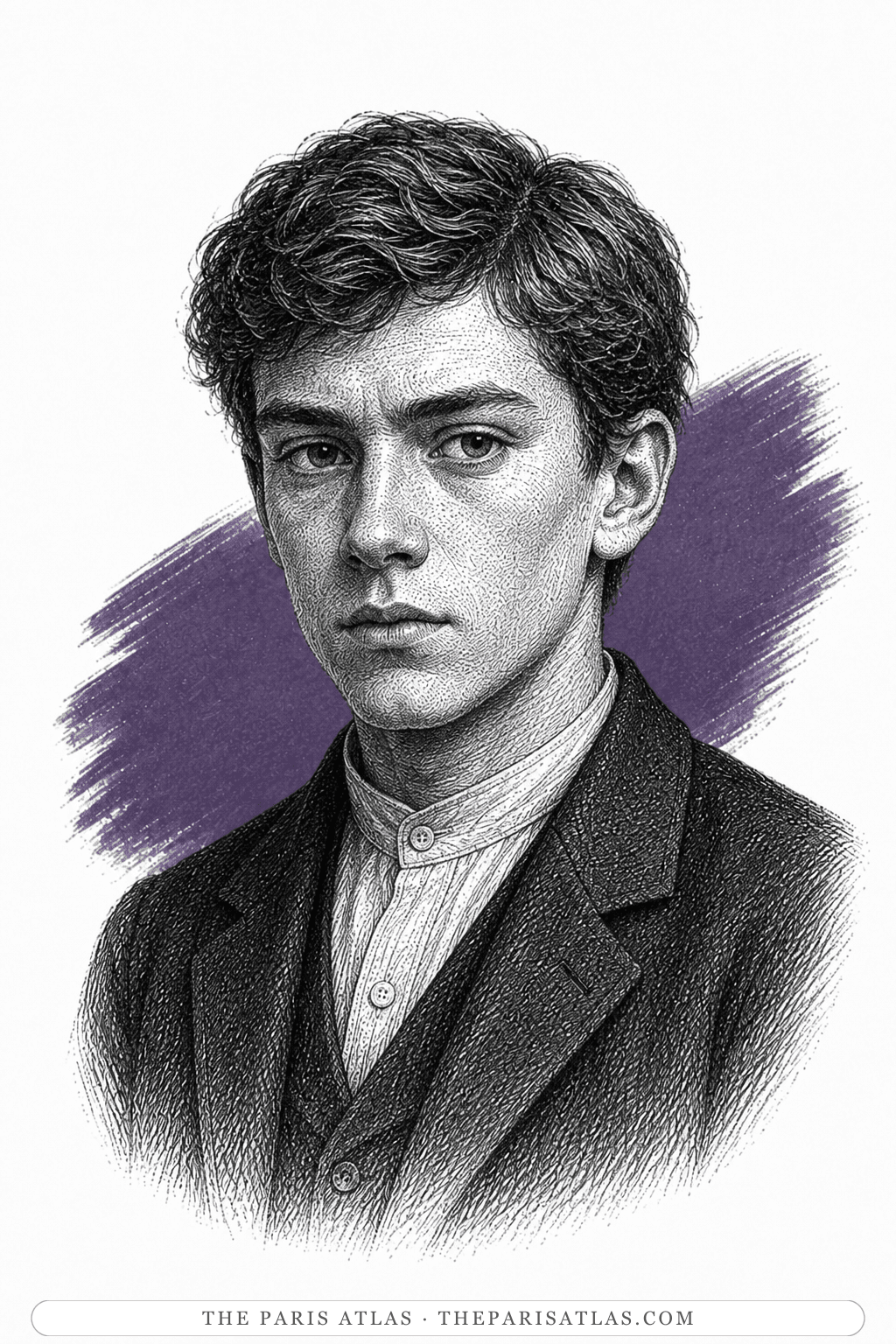
The unnamed narrator
The adolescent boy who participates in Simone’s games and recounts their escalation.
To pursue intensity with Simone and cross every boundary that begins to feel ordinary.
The book

At a glance
- Unnamed teenage narrator
- Simone
- Participant and observer
Who they are in the book
Spoiler-freeThe narrator is both participant and retrospective observer. He gives little conventional moral reflection, describing increasingly violent acts through the same controlled symbolic attention used for objects and bodies.
Because the book filters events through his account, Marcelle’s suffering and Simone’s agency must be reconstructed from actions rather than trusted commentary.
How The unnamed narrator Is Portrayed
- Adolescent maleHis youth is visible without sexualization.
- Late-1920s clothingSimple period dress keeps the portrait historical.
- Emotionally unreadable gazeThe narration supplies little moral reaction.
- Restrained postureNo provocative pose appears.
- Close engraved bustNo sexual objects or scenery appear.
- Muted violet accentA cool color separates him from the book’s ochre cover.
He participates in the priest’s death and the final use of the eye motif, then remains unpunished when the novella stops.
If you like Story of the Eye


If you like Georges Bataille
Explore authors with a similar voice, perspective, and influence.

Ernest Hemingway
Author of The Sun Also Rises and A Moveable Feast; his pared-down style, developed in 1920s Paris, became the most imitated in American prose.
View author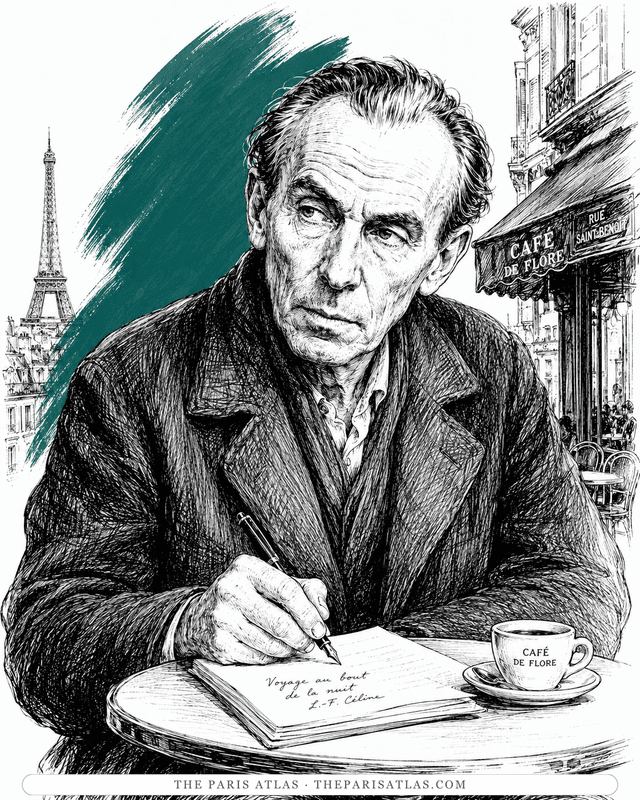
Louis-Ferdinand Céline
The doctor of the Paris slums who wrote the century's blackest, funniest novel — and changed the sound of French prose.
View author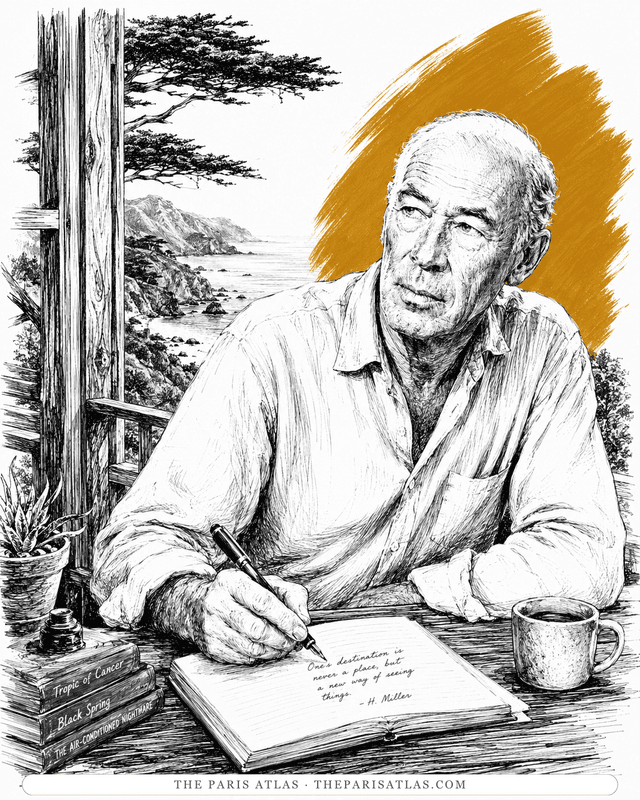
Henry Miller
The Brooklyn dropout who arrived in Paris broke at thirty-eight and wrote the exuberant, banned books that ended American censorship.
View author