Simone
The narrator’s fearless partner and the strongest force behind the escalating transgressions.
To intensify pleasure by violating boundaries until no ordinary prohibition retains its power.
The book

At a glance
- The unnamed narrator
- Principal instigator
- Escalating transgression
Who they are in the book
Spoiler-freeSimone treats taboo as a creative problem and repeatedly invents a more extreme game. Her confidence drives the action, but the book offers little ordinary biography outside the shared pursuit.
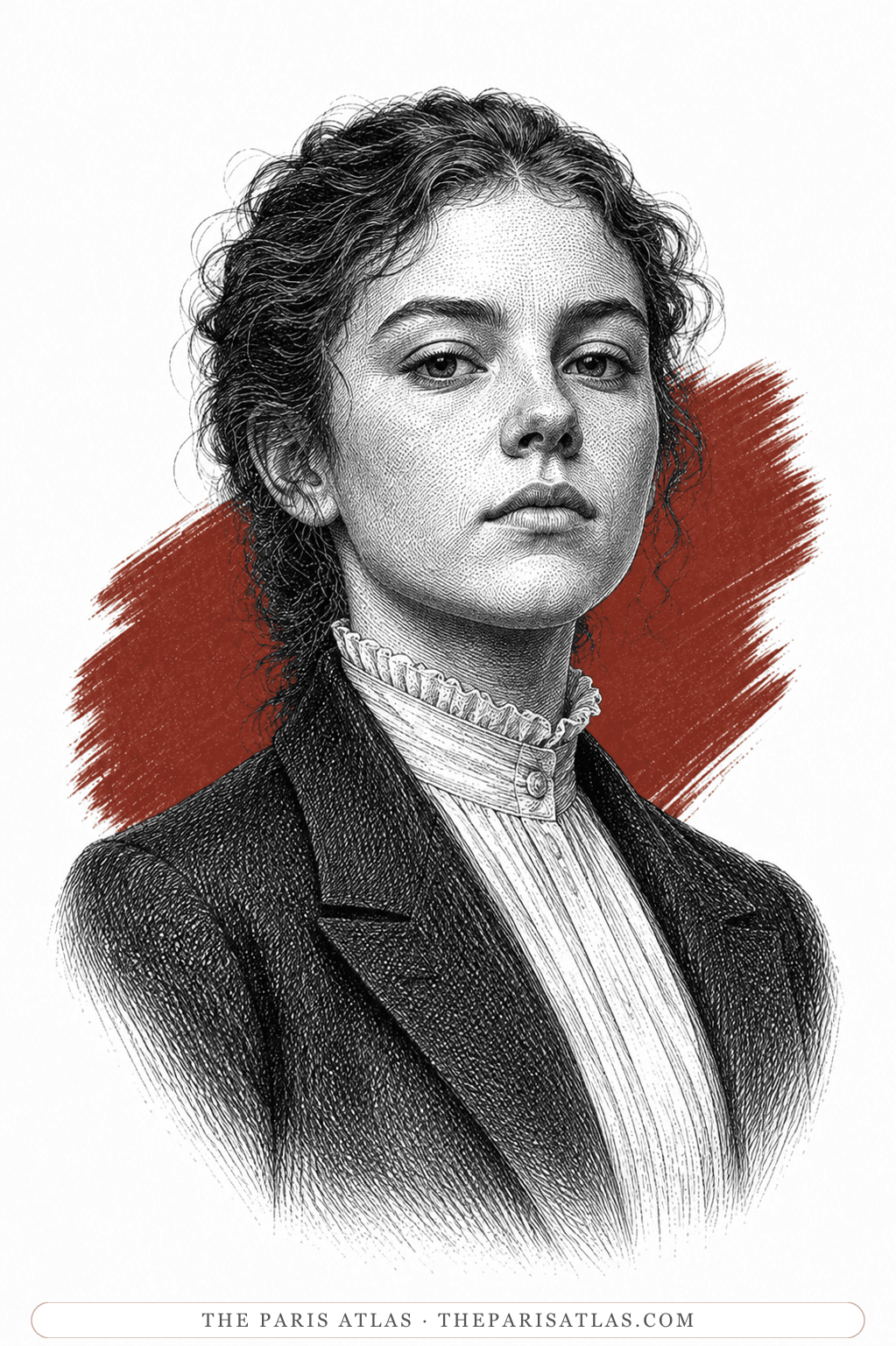
The portrait keeps her adolescent status clear and avoids turning the novel’s explicit material into a sexualized image.
How Simone Is Portrayed
- Adolescent girlShe is represented without adult glamour.
- Simple 1920s clothingClothing is conservative and historically plausible.
- Fierce direct gazeHer agency is unmistakable.
- Upright self-possessionNo erotic pose appears.
- Close engraved bustNo eggs, eyes, or sexual props appear.
- Muted rust accentThe color conveys force without repeating bright red.
Simone participates in the church violence and final grotesque transformation of the eye motif. The story ends without punishing her.
If you like Story of the Eye


If you like Georges Bataille
Explore authors with a similar voice, perspective, and influence.

Ernest Hemingway
Author of The Sun Also Rises and A Moveable Feast; his pared-down style, developed in 1920s Paris, became the most imitated in American prose.
View author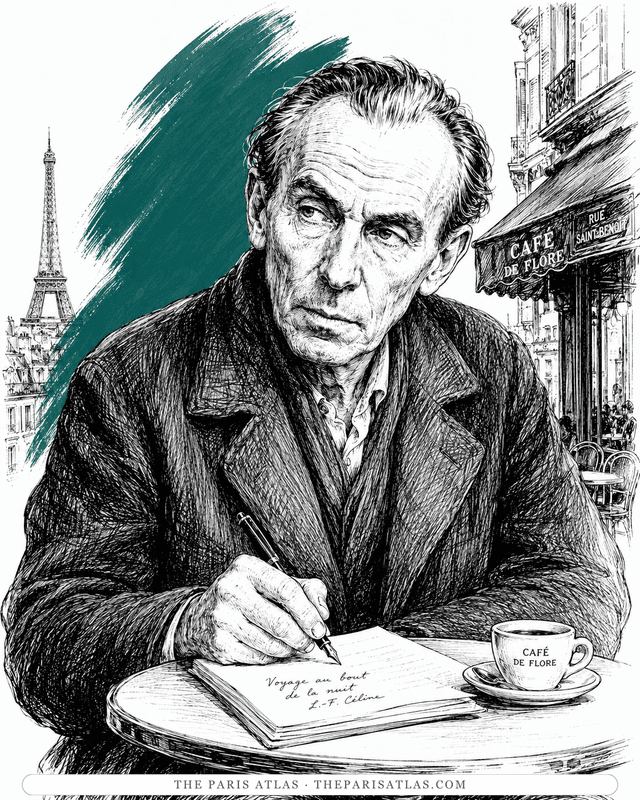
Louis-Ferdinand Céline
The doctor of the Paris slums who wrote the century's blackest, funniest novel — and changed the sound of French prose.
View author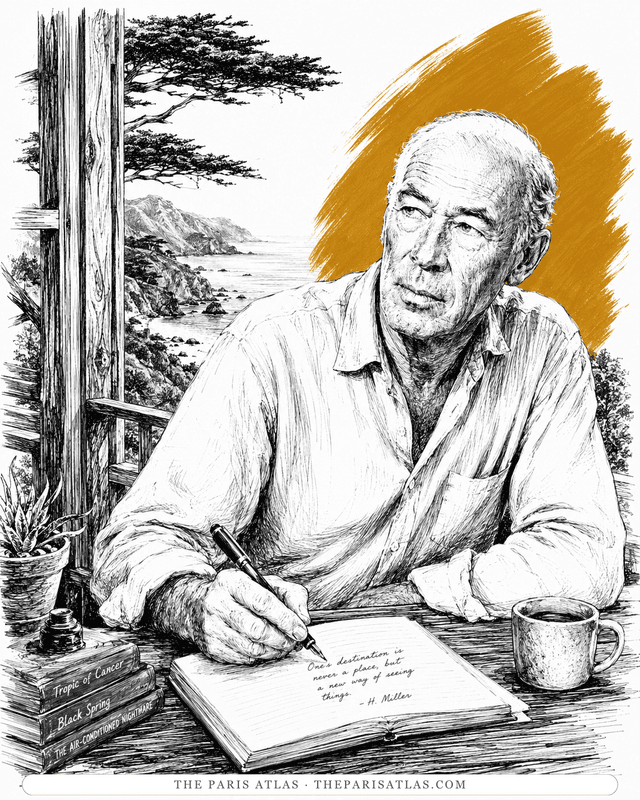
Henry Miller
The Brooklyn dropout who arrived in Paris broke at thirty-eight and wrote the exuberant, banned books that ended American censorship.
View author