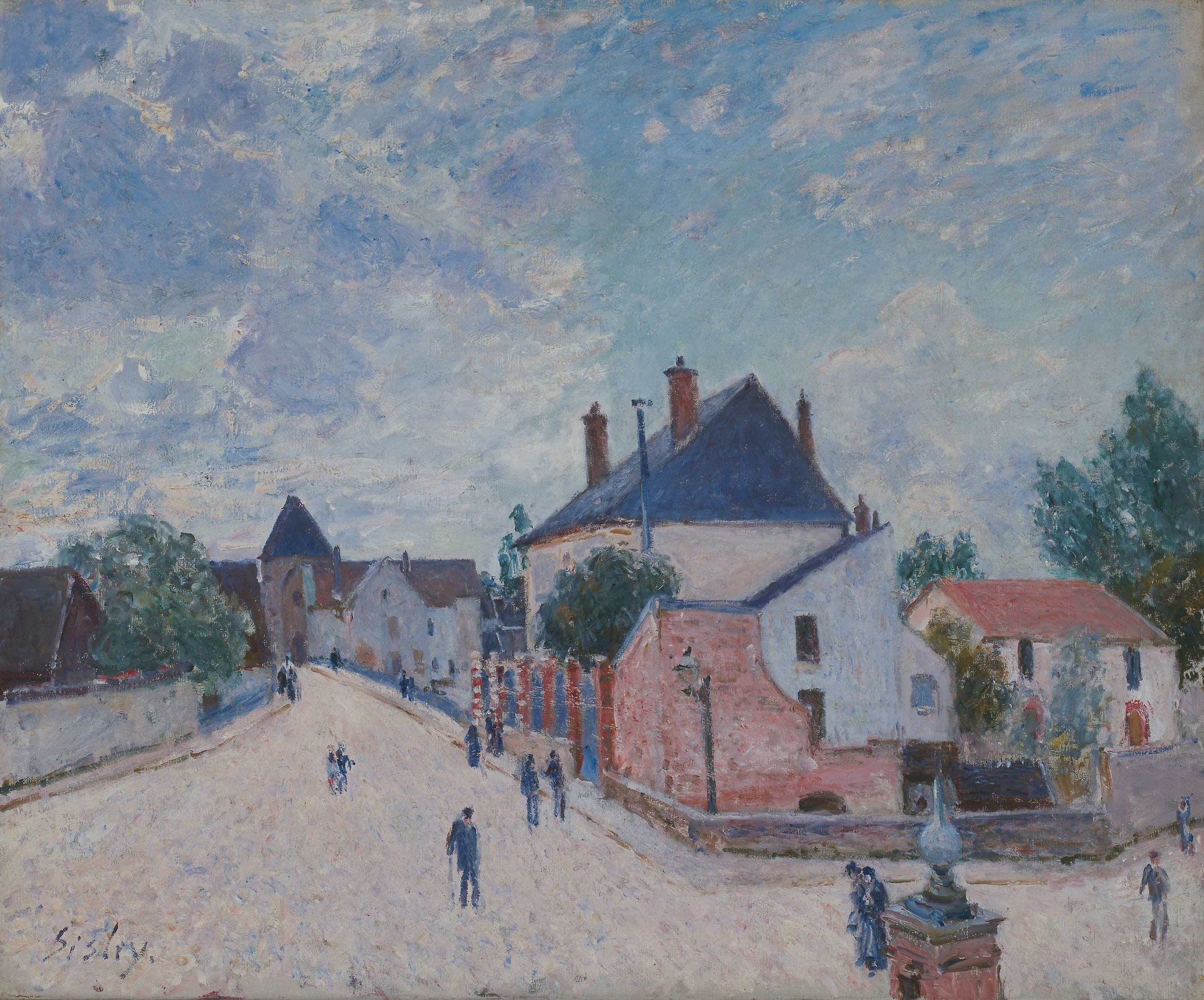
Street in Moret
A broad pale street runs up through the middle of a small town, with a large house under a steep slate roof at its bend and townspeople crossing the open ground. Alfred Sisley painted it at Moret-sur-Loing about 1890, in the town where he spent his last decade. It is at the Art Institute of Chicago.
- c. 1890
- Oil on canvas
- Art Institute of ChicagoChicago, United States
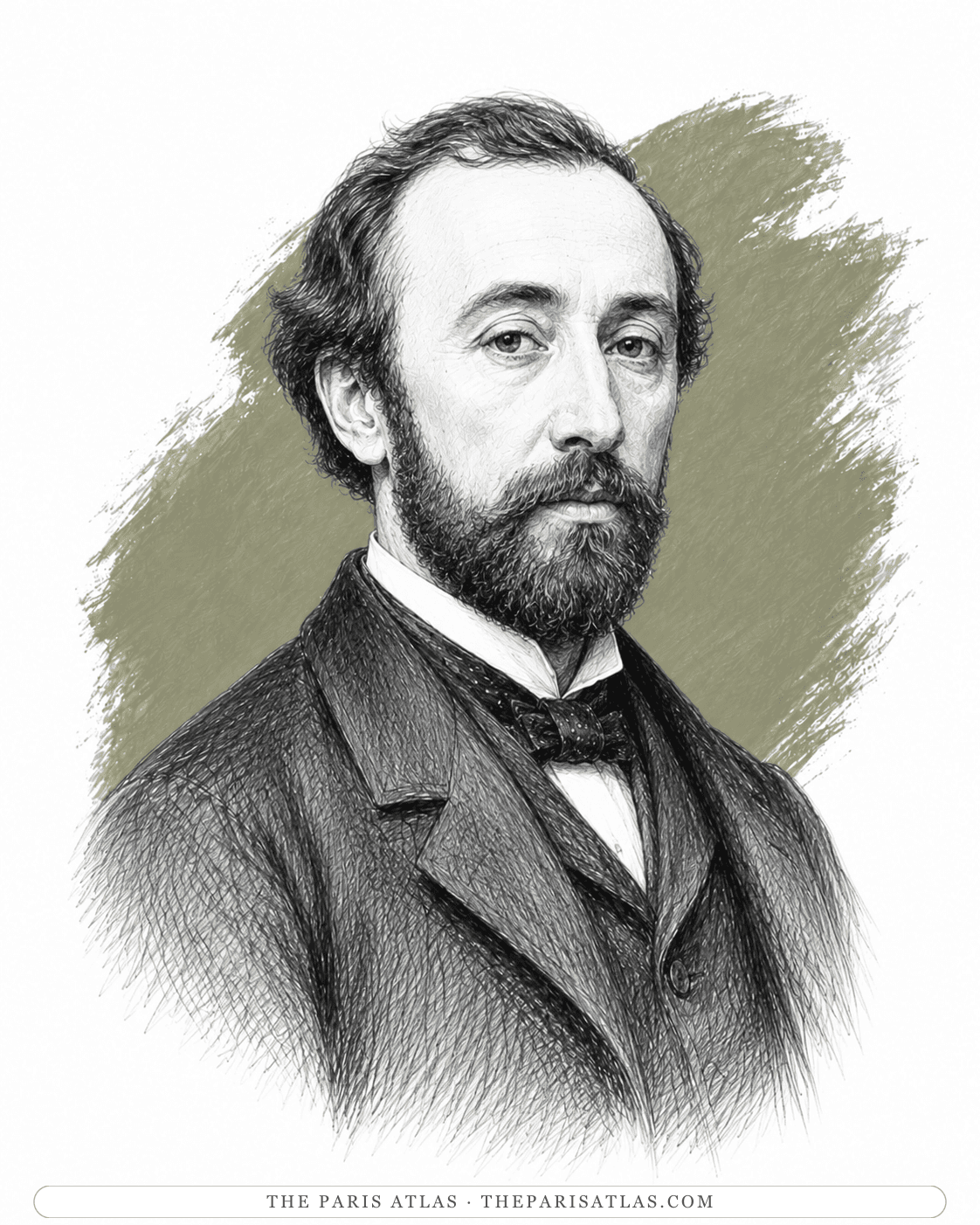
About Alfred Sisley
What the painting shows
The bottom of the canvas is an open street surface, painted almost bare in pale cream and pink. It rises to a crest in the middle distance and runs on to the left, toward the tower. Nothing breaks it but the stone base in the near foreground and the townspeople crossing it. Most of them are two or three strokes of paint each: a man in blue walking toward the viewer, pairs further back, more near the buildings.
To the right stands a large house with pale walls and a steep blue-grey hipped roof, with three red brick chimneys and a slender pale blue-grey pole breaking its roofline. A lower wall of pink-red brick runs in front of it, and a dark lamppost with a lantern head stands against that wall. To the left of that wall a run of upright red, white and blue bands stands along the same side of the street, with a post wound in red and white spirals at its near end.
Further off, where the street runs out of sight, a squat stone tower closes the view. Its roof is a dark blue pyramid, a tall arched opening stands at its foot, and beside it run pale houses under brown-red and grey roofs. A stone base carrying a pale grey finial stands toward the lower right, closer to the viewer than anything else, with two figures beside it. Sisley signed the picture at the lower left.
The empty street surface
The buildings are pushed to the top and the right, and about a quarter of the canvas is bare street. Sisley paints that surface in short flecks of cream, pink and pale blue rather than as a flat tone, so it holds light without holding any detail.
The figures are spaced across it rather than gathered, a dozen or more of them across the whole canvas. None is given a face or an errand. They function as measurements, showing how wide the street actually is, and the red, white and blue bands supply the one run of repeated verticals at street level.
Moret-sur-Loing
Moret-sur-Loing is a small town at the edge of the Fontainebleau forest, south-east of Paris, where the Loing meets the Seine. Alfred Sisley moved his family to the district around 1880, and into the town itself in 1889. He painted it for the rest of his life: the stone bridge, the church, the poplars, the canal, and streets like this one.
He was in his fifties, and almost nothing was selling. The Salon went on refusing him, his prices barely moved, and he watched Claude Monet's and Pierre-Auguste Renoir's reputations pull away from his own. He died at Moret on 29 January 1899, aged fifty-nine, of throat cancer.
Moret-sur-Loing still looks much as it does in his paintings, which is unusual for the places the Impressionists worked in.
What the museum does and does not know
The Art Institute of Chicago displays the date as about 1890, and the range behind that display is wide: its catalogue record brackets the painting between 1885 and 1895. The canvas is signed at the lower left but carries no date. It is number 660 in François Daulte's 1959 catalogue of Sisley's paintings.
The museum publishes no provenance and no exhibition history for the picture. That is an absence in the record rather than an omission here, and the only ownership information it gives is the credit line, the Potter Palmer Collection.
Potter Palmer of Chicago also owned View of Marly-le-Roi from Coeur-Volant, now at the Metropolitan Museum of Art, between 1892 and 1894, bought from Durand-Ruel's New York gallery. He was buying Sisley in quantity in exactly those years.
Where it is
The Art Institute of Chicago, accession number 1922.441, in the Potter Palmer Collection. The accession number records the year it entered the museum, 1922. At the last check of the museum's record the painting was not on view.
The Art Institute holds a second Sisley, Sand Heaps. Its catalogue record for Street in Moret marks the painting public domain, so the museum's photograph of it may be reused without restriction.
Close reading
Reading the work, detail by detail
Sisley lived at Moret-sur-Loing for the last decade of his life and painted its streets repeatedly. Here he takes a high, wide view of an open street, and gives about a quarter of the canvas to its pale unbroken surface.
1.The large house anchors the right
The house is blocked in as a pale wall under a steep blue-grey roof. Sisley gives it the strongest tonal contrast in the painting, and every other building is measured against it. Its near corner sits where the open street meets the brick wall in front of it.
2.Red brick chimneys against the sky
Three red brick chimneys and a slender pale blue-grey pole break the roofline, and two smaller chimneys stand on the lower wing to their right. The brick is the warmest color in the upper half of the canvas, and it keeps the roof from reading as a single flat shape against the sky.
3.A squat tower closes the far end
A squat stone tower stands where the street runs out of sight, its roof a dark blue pyramid and a tall arched opening at its foot. Sisley uses it to stop the recession, so the street reads as a place with an end rather than a road to somewhere else. The dark roof and the dark arch are the strongest tones on that side of the canvas.
4.A line of red, white and blue bands along the street
A run of upright red, white and blue bands stands along the right side of the street, and a post wound in red and white spirals marks its near end. They are the most saturated color in the painting, set against a street surface that is otherwise almost bare.
5.Townspeople scattered across the open ground
Most figures are two or three strokes each — a man in blue coming toward the viewer, pairs further back, more near the buildings. A dozen or more are scattered across the canvas, and none is given a face or a task. They are spaced to measure the width of the street.
6.A stone base and finial in the near foreground
A pink-red masonry base carrying a pale grey finial stands toward the lower right, with two figures in dark blue beside it. Sisley puts it nearer the viewer than anything else in the picture, and it gives the flat expanse of the street a measurable near edge.
Where to see it
Art Institute of Chicago
111 South Michigan Avenue, Chicago, IL 60603, United States
The Art Institute's record last listed the painting as not currently on view.
Plan your visit on the museum’s official website (opens in a new tab)Frequently asked questions
Where is Sisley's Street in Moret?
The Art Institute of Chicago, accession number 1922.441, in the Potter Palmer Collection. It entered the museum in 1922, and the Art Institute also holds Sisley's Sand Heaps.
When did Alfred Sisley paint it?
About 1890, which is how the Art Institute of Chicago dates it, though the museum's own record allows anything between 1885 and 1895. The canvas is signed but not dated. Sisley moved into Moret-sur-Loing itself in 1889, after about a decade living in the surrounding district.
Who owned the painting before the museum?
The Art Institute of Chicago publishes no provenance for it, and no exhibition history. The only ownership on record is its credit line, the Potter Palmer Collection, and the 1922 accession number that dates its arrival at the museum.
Where is Moret-sur-Loing?
South-east of Paris, at the edge of the Fontainebleau forest, where the river Loing runs down to meet the Seine. Sisley lived there from 1889 until his death in 1899 and painted the town constantly.
How big is the painting?
60 by 73.2 centimetres, about 23 7/8 by 28 7/8 inches. The Art Institute records the framed size as 86.1 by 100.1 by 10.5 centimetres.
Is this the only Sisley painting called Street in Moret?
It is the canvas that carries that exact title, but Sisley painted the streets of Moret-sur-Loing many times and museums title those pictures differently. The Fitzwilliam Museum in Cambridge has a Street in Moret-sur-Loing of 1892, Kelvingrove in Glasgow a Village Street, Moret-sur-Loing of 1894, and the Metropolitan Museum of Art a Rue Eugène Moussoir at Moret of 1891.
Can I reuse the image of this painting?
Yes. Alfred Sisley died in 1899, so the painting is in the public domain worldwide, and the Art Institute of Chicago publishes its record for the work as public domain.
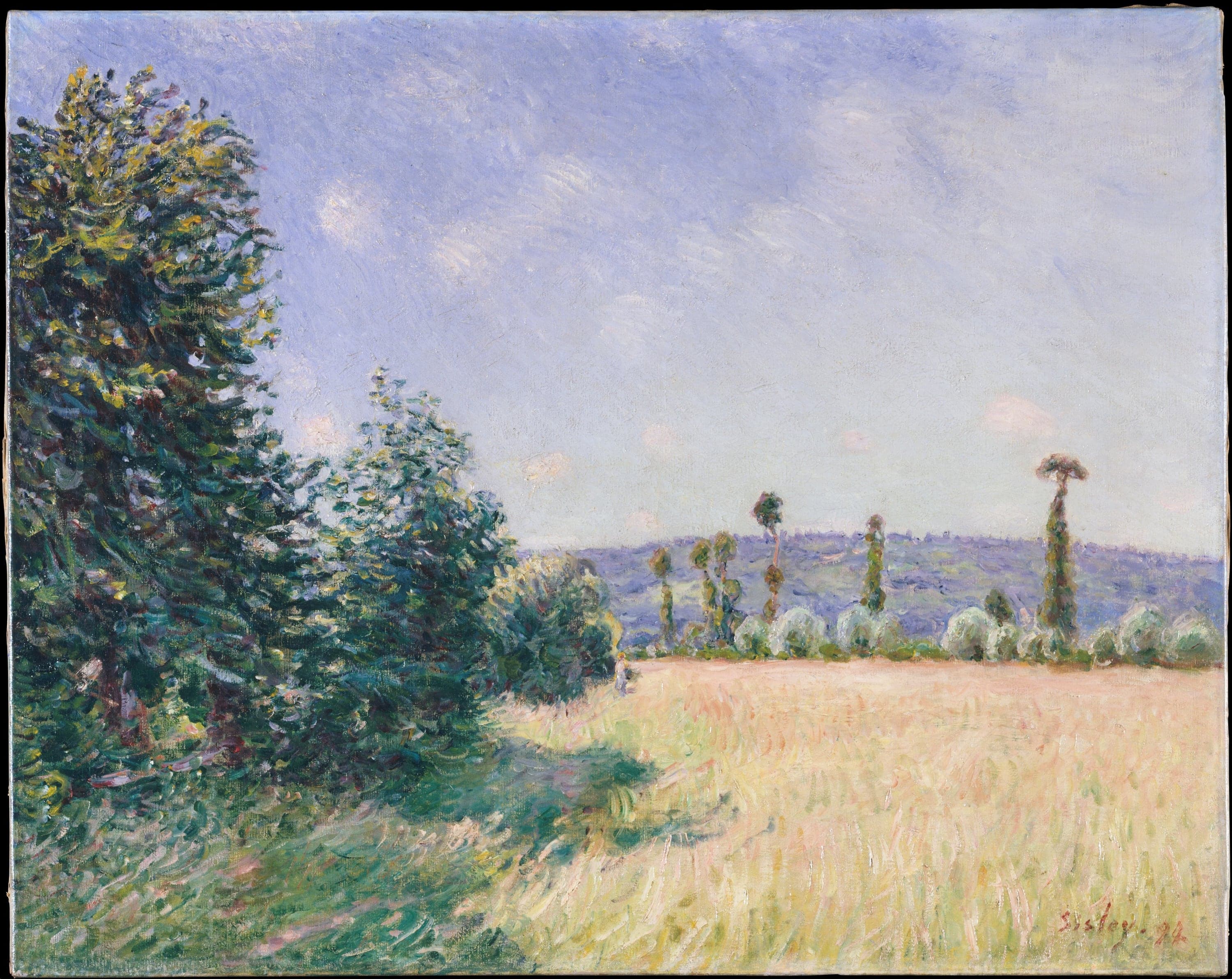
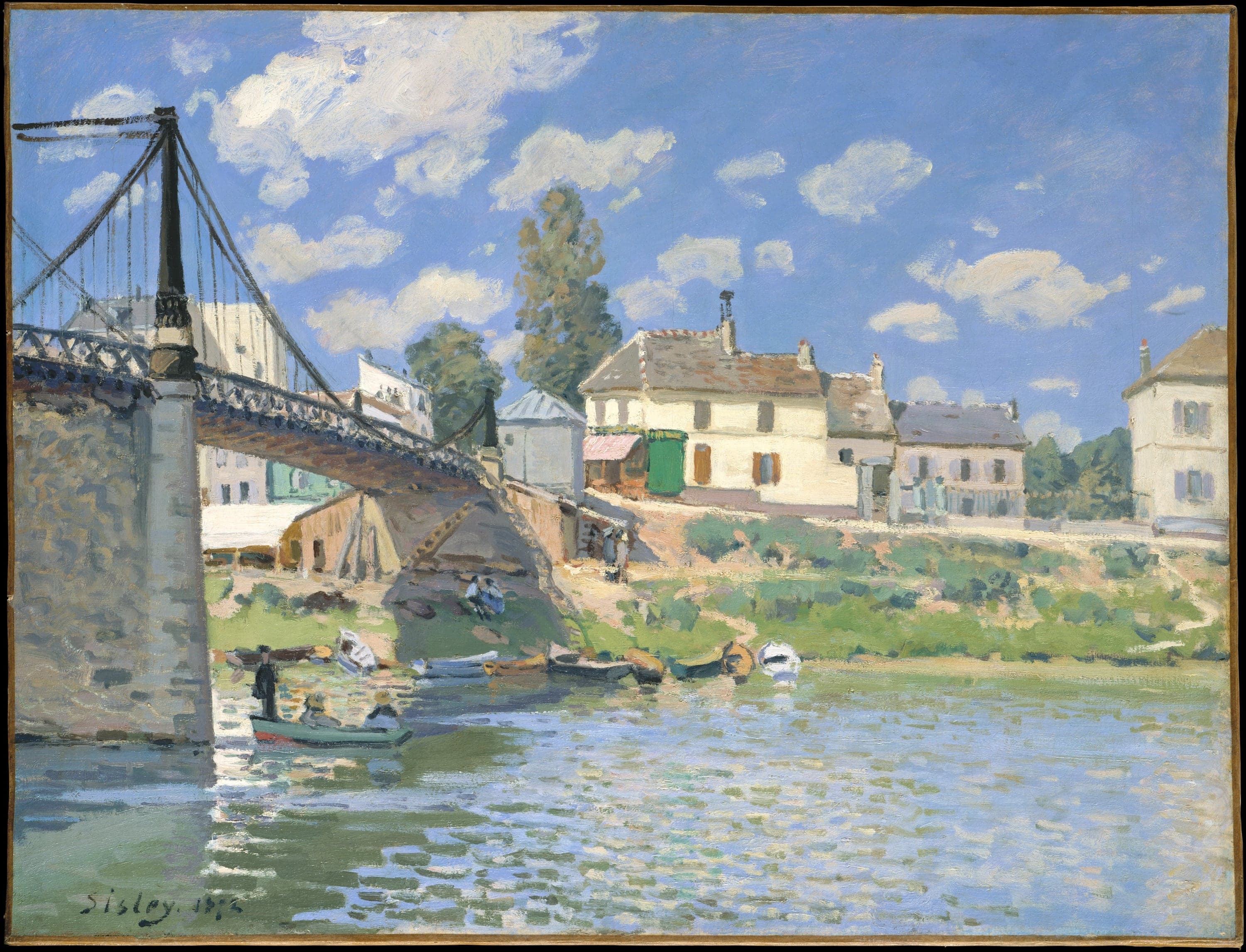
More by Alfred Sisley
If you like Alfred Sisley
Explore painters from the same movements and circles.
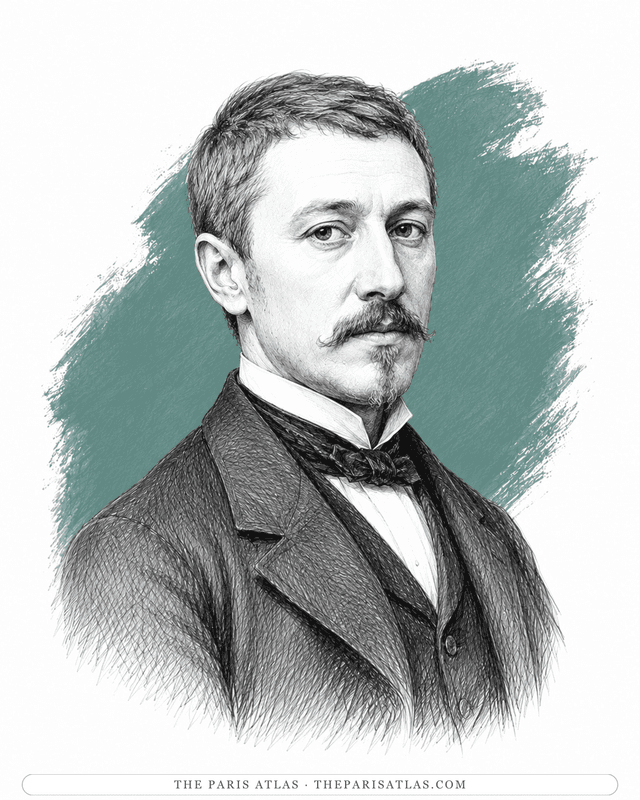
Gustave Caillebotte
Painter of Haussmann's geometry and the group's organizer-financier; his bequest of Impressionist paintings forced the French state to take the movement in.
View artist
Mary Cassatt
Mary Cassatt was an American painter and printmaker known for her depictions of women and children. Based in France for the last fifty-two years of her life, she was the only American to exhibit with the original French Impressionist group, participating in four of its eight exhibitions. Edgar Degas invited her to exhibit with the group in 1877 after the Salon jury rejected her submissions.
View artist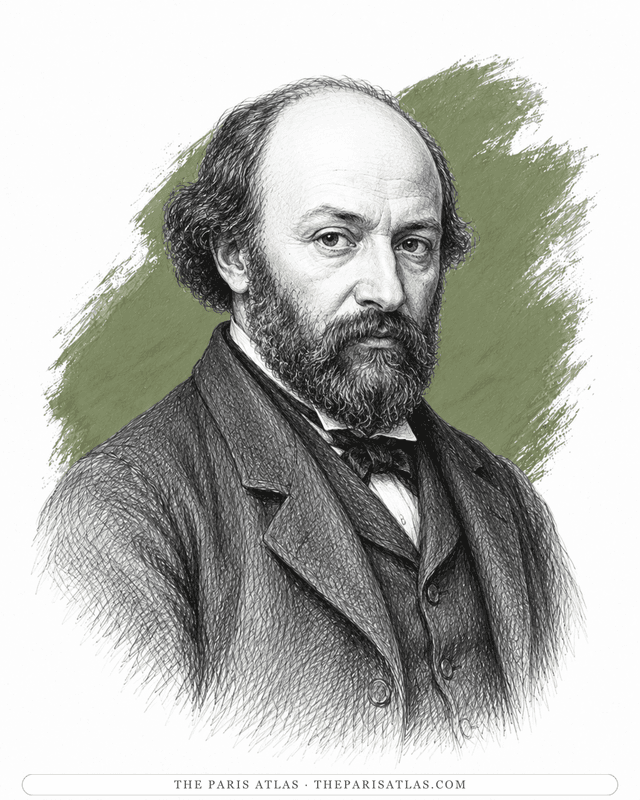
Paul Cézanne
Painter between Impressionism and everything after — shown in the independents' exhibitions, emulated by the Cubists, and present at the Orangerie through 15 works in the Walter-Guillaume collection.
View artist
References
The sources below include collection records, catalogues, scholarly research, and primary materials that informed this page. They document Street in Moret, its making, and its place in cultural history.


1Street in Moret
WebsiteThe Art Institute of ChicagoUsed forWeb source consulted for documented facts and historical context presented on the Street in Moret page.

2Alfred Sisley: catalogue raisonné de l'œuvre peint
NonfictionDurand-Ruel, Lausanne, 1959Used forPublished analysis and historical context used in preparing the Street in Moret page.

31889 : Alfred Sisley s'installe à Moret-sur-Loing
ArchiveArchives départementales de Seine-et-MarneUsed forArchival evidence used to document the historical record connected to Street in Moret.
4Alfred Sisley 1839–1899
WebsiteTateUsed forWeb source consulted for documented facts and historical context presented on the Street in Moret page.
5Sisley
BiographyG. Crès et Cie, 1927Used forBiographical evidence used to verify chronology, relationships, and historical context connected to Street in Moret.
These references provide the documented foundation for this work's history and interpretation. Claim-level citations remain attached to the specific claims they support.
 Explore more resources