The Road from Versailles to Louveciennes
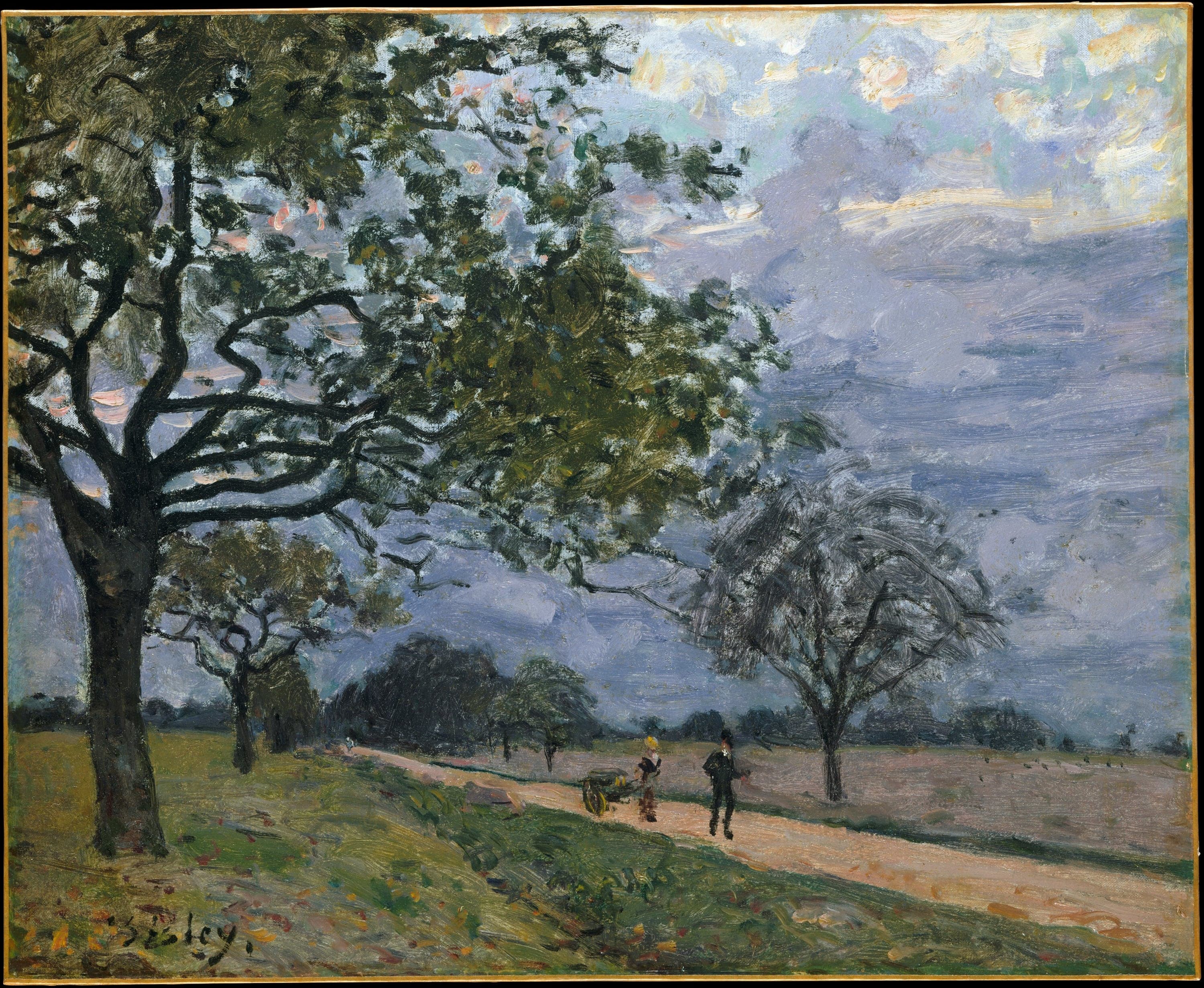
A country road runs out of the lower right corner under a heavy grey sky, with a large tree filling the left of the canvas and two walkers and a handcart standing on the road itself. The Metropolitan Museum of Art dates it probably 1879, from the years Alfred Sisley worked in the villages west of Paris.
- probably 1879
- Oil on canvas
- The Metropolitan Museum of ArtNew York, United States
About Alfred Sisley
What the painting shows
A large tree occupies the left half of the canvas. Its trunk rises from the bottom left in near-black paint, and its branches spread across the top in dark green and olive foliage streaked with pink and pale blue where sky shows through. Smaller trees stand behind it, receding toward a low tree line.
The road runs from the middle of the canvas diagonally out of the lower right corner, painted in pale pink and buff. Two figures stand on it. One is a woman in a dark cape and skirt under a bright yellow hat, holding the shaft of a small handcart with yellow wheels. The other is a man in a dark coat and top hat, walking toward the viewer with a white shirt front showing. A third figure is much further up the road, reduced to a few pale marks.
To the right of the road lies a flat open field of bare pinkish-mauve earth, scattered with small dark dabs and running back to trees on the horizon. The grassy verge in the foreground is flecked with orange, red and yellow. Above all of it the sky is lavender-grey, with streaks of cream and pale yellow breaking along the top right. Sisley signed the picture at the lower left.
More sky than anything else
The sky takes up more of this canvas than the road, the field and the figures together. That proportion is habitual in Sisley's work. Weather is the subject of the picture rather than its background, and the light here is overcast and breaking rather than settled.
The handling matches. Sisley works wet paint into wet paint in the canopy, so the edge of the tree dissolves into cloud instead of ending against it. The cart's wheels and the woman's hat carry the same yellow, the strongest color in the picture, and they sit close to where the road turns.
The title and the date are both modern
Almost nothing about this painting's identity comes from Sisley. The canvas is signed but not dated, and it carries no building or landmark that would fix the spot. The Metropolitan Museum of Art's catalogue entry sets out how the present title was arrived at.
When the picture was first exhibited, at Durand-Ruel in New York in 1927, it was called Une route près de Louveciennes — a road near Louveciennes. François Daulte used the same title in his 1959 catalogue of Sisley's paintings, where it is number 381, and assigned it to 1879 on the evidence of its style. Daulte confirmed that reasoning in a letter to the museum in June 1965.
The road itself was named only in 1979. Jacques Laÿ, a local resident, wrote to the museum identifying the stretch as the road from Versailles to Louveciennes, on the approach to the former royal park of Marly. That road is now the Route Nationale 186. The title the painting carries is therefore about fifty years old, not a hundred and fifty.
One further detail complicates the setting. The museum notes that by 1879 Sisley was living in the busy suburb of Sèvres, having left Louveciennes two years earlier. If the date is right, he painted this on ground he had already moved away from.
The roads that look like this one
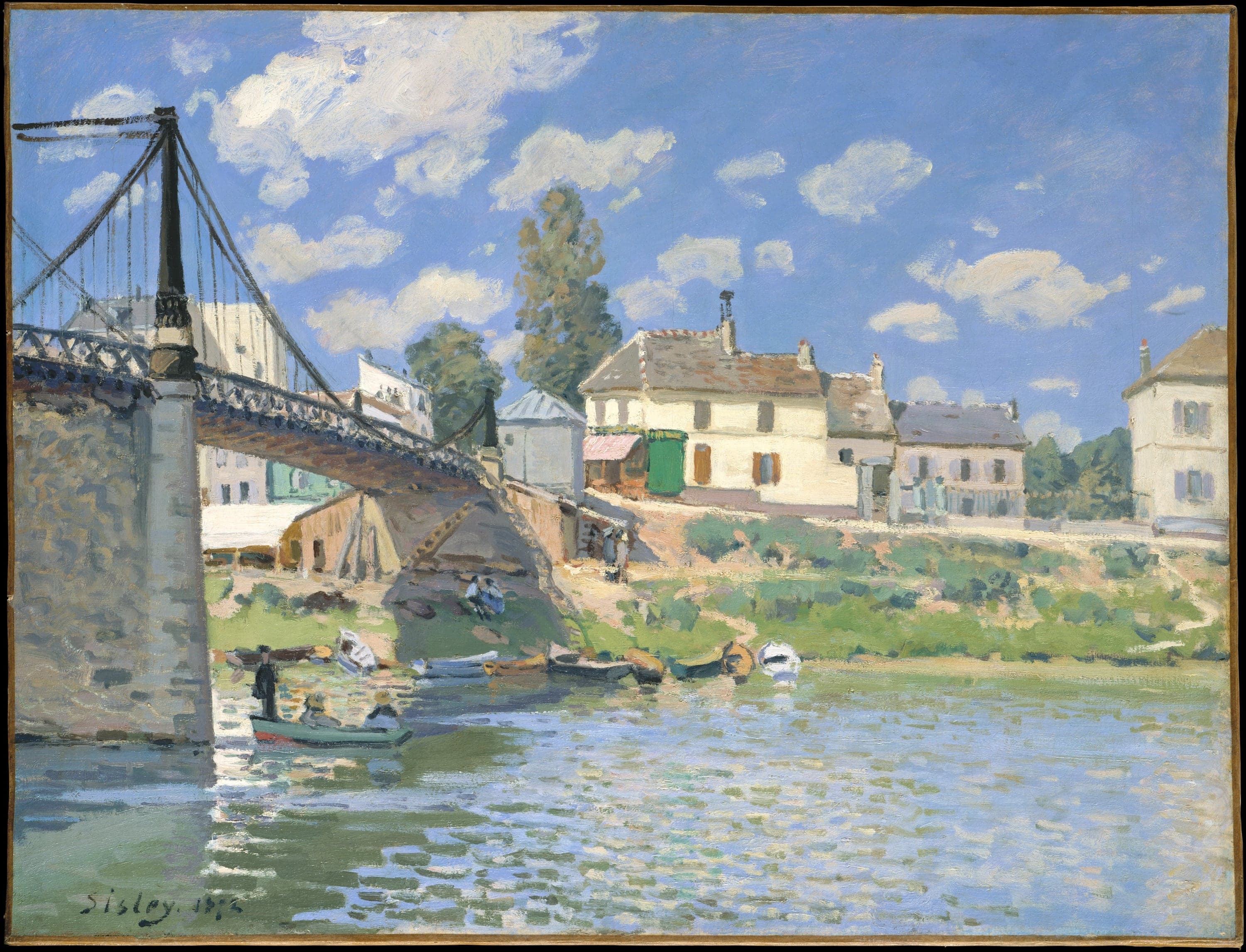
Louveciennes is a village west of Paris, above the Seine, near Marly-le-Roi and Port-Marly. Sisley painted the roads around it repeatedly through the 1870s, and the canvases carry titles that differ by a few words. The Road to Louveciennes is in Brussels and in Pittsburgh. The Road from Montbuisson to Louveciennes is at the Musée de l'Orangerie in Paris, The Road from Versailles to Saint-Germain at the J. Paul Getty Museum, and La Route de Versailles at the Musée d'Orsay.
The National Gallery of Art in Washington has a further near-twin, The Road in the Woods, also dated 1879 and within a centimetre of the same size. The pictures are easy to confuse and are separate works.
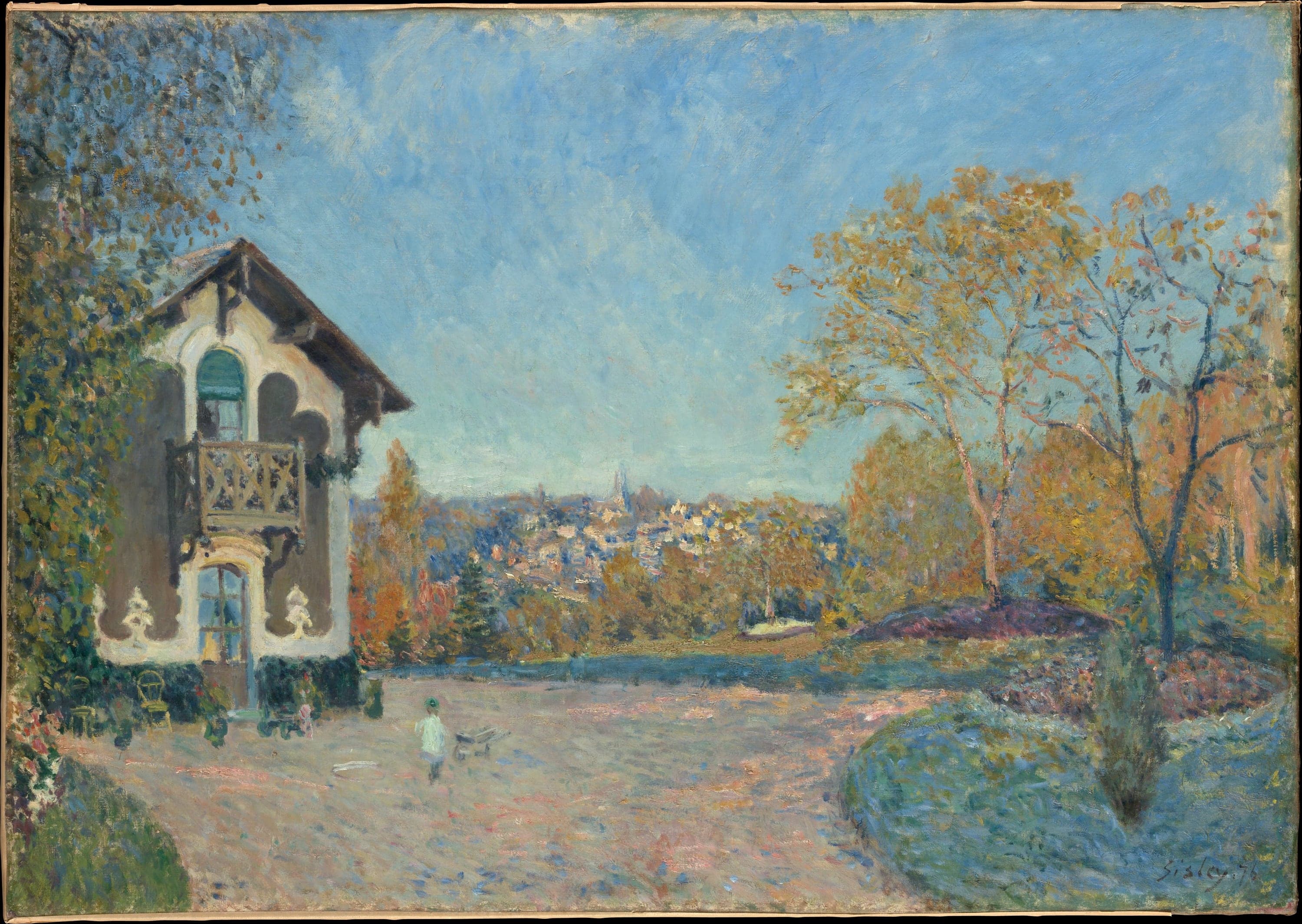
That repetition is the shape of his career. Alfred Sisley painted more than 900 oils, nearly all of them landscape. He returned to the same few districts over and over: Louveciennes and Marly in the 1870s, the Thames at Hampton Court in 1874, Moret-sur-Loing from the 1880s until his death in 1899.
Where it is
The Metropolitan Museum of Art in New York, accession number 64.154.2, given to the museum in 1964 by the composer Richard Rodgers and Dorothy Rodgers. At the last check of the museum's record it was on view in Gallery 824.
It was never shown in any of the eight Impressionist group exhibitions. Its first recorded appearance anywhere is the Durand-Ruel show of 1927, twenty-eight years after Sisley's death.
Close reading
Reading the work, detail by detail
A grey, windy day on a country road. Sisley gives most of the canvas to a single tree and an overcast sky, and puts the human business of the picture — two walkers and a handcart — in a strip near the bottom.
1.The canopy fills the top of the canvas
The foliage is dark green and olive, streaked through with pink and pale blue where the sky shows between the leaves. Sisley works wet paint into wet paint here, so the edges of the canopy dissolve into the cloud rather than ending against it.
2.The trunk is the picture's one firm line
The trunk rises from the bottom left in near-black paint, and the branches spread from it in sharp angles. It is the only firmly drawn shape in a painting otherwise built from soft masses, and it holds the left side of the canvas down.
3.Cream light breaking along the top
The cloud is lavender-grey, and Sisley lays streaks of cream and pale yellow across the top right where the light is breaking through. The sky occupies more of the canvas than the road, the field and the figures together, which is usual in his work.
4.Two walkers and a handcart on the road
A woman in a dark cape and skirt holds the shaft of a small handcart with yellow wheels. A man in a dark coat and top hat walks toward the viewer, a white shirt front showing at his chest. The wheels and her hat carry the same yellow, the strongest color in the painting.
5.The road leaves the frame at the corner
The road is painted in pale pink and buff, and it runs diagonally out of the bottom right corner rather than to a vanishing point. Sisley uses it to pull the eye off the canvas edge, which keeps the flat field on the right from feeling closed.
6.Fallen leaves flecked across the verge
The verge is green, broken up by small touches of orange, crimson, yellow and teal. These read as fallen leaves, and they are the clearest evidence of season in the painting. Sisley applies them as separate dabs on top of the green rather than mixing them in.
Where to see it
The Metropolitan Museum of Art
1000 Fifth Avenue, New York, NY 10028, United States
Displays and loans can change. Check whether this work is on view before making a special trip.
Plan your visit on the museum’s official website (opens in a new tab)Frequently asked questions
Where is The Road from Versailles to Louveciennes?
The Metropolitan Museum of Art in New York, accession number 64.154.2. It was given to the museum in 1964 by Mr. and Mrs. Richard Rodgers, and the museum's record last listed it in Gallery 824.
What year was it painted?
The Metropolitan Museum of Art dates it probably 1879. The signature carries no year, so the date is an attribution: François Daulte assigned the canvas to 1879 on stylistic grounds for his 1959 catalogue, and confirmed that reasoning to the museum in a letter of June 1965.
Is the title original?
No. The painting was exhibited in 1927 and catalogued by François Daulte in 1959 as Une route près de Louveciennes, a road near Louveciennes. The identification of the road as the one from Versailles to Louveciennes was made in 1979 by a local resident, Jacques Laÿ, in a letter to the museum, and the stretch is now the Route Nationale 186.
Where was Sisley living when he painted it?
In Sèvres, if the 1879 date is right. The Metropolitan Museum of Art notes that he had left the village of Louveciennes two years earlier for the busier suburb of Sèvres, so this is a return to earlier ground rather than a view near his door.
How big is the painting?
45.7 by 55.9 centimetres, or 18 by 22 inches. It is among the smaller canvases Sisley worked on outdoors.
Where is Louveciennes?
West of Paris, above the Seine, close to Marly-le-Roi and Port-Marly. Sisley worked in this group of villages through much of the 1870s and painted its roads many times.
Did Sisley paint other versions of this road?
He painted the roads around Louveciennes repeatedly, under closely similar titles now held in different museums. The Road to Louveciennes is in Brussels and Pittsburgh, The Road from Montbuisson to Louveciennes at the Musée de l'Orangerie, and The Road from Versailles to Saint-Germain at the Getty. The National Gallery of Art in Washington also has The Road in the Woods of 1879, within a centimetre of the same size. This exact title belongs to the New York canvas.
Can I reuse the image of this painting?
Yes. Alfred Sisley died in 1899, so the painting is in the public domain worldwide, and the Metropolitan Museum of Art publishes its photograph of the work as Open Access under a CC0 dedication.
More by Alfred Sisley
If you like Alfred Sisley
Explore painters from the same movements and circles.
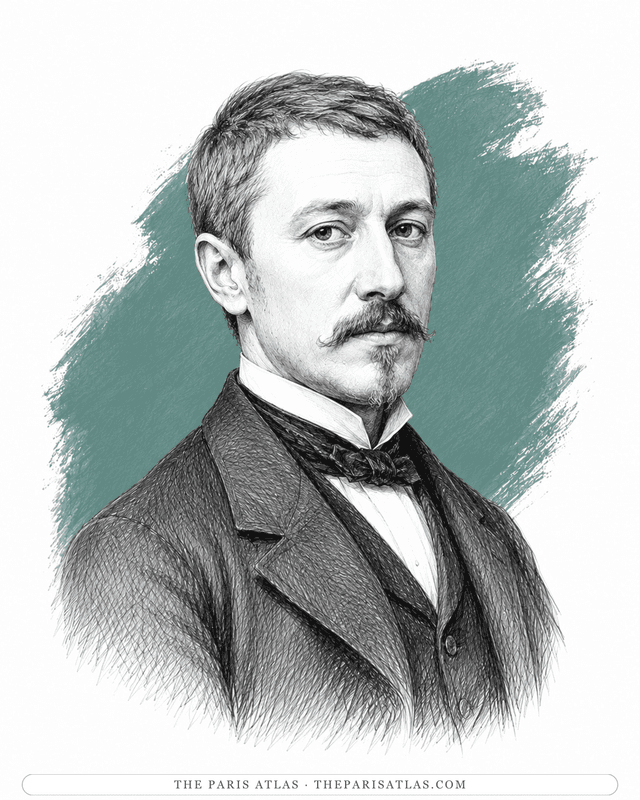
Gustave Caillebotte
Painter of Haussmann's geometry and the group's organizer-financier; his bequest of Impressionist paintings forced the French state to take the movement in.
View artist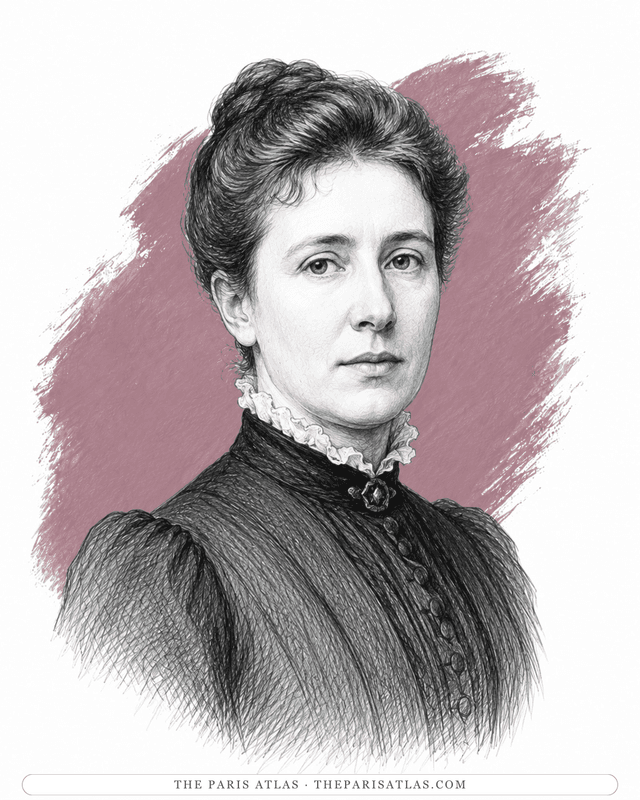
Mary Cassatt
Mary Cassatt was an American painter and printmaker known for her depictions of women and children. Based in France for the last fifty-two years of her life, she was the only American to exhibit with the original French Impressionist group, participating in four of its eight exhibitions. Edgar Degas invited her to exhibit with the group in 1877 after the Salon jury rejected her submissions.
View artist
Paul Cézanne
Painter between Impressionism and everything after — shown in the independents' exhibitions, emulated by the Cubists, and present at the Orangerie through 15 works in the Walter-Guillaume collection.
View artist
References
The sources below include collection records, catalogues, scholarly research, and primary materials that informed this page. They document The Road from Versailles to Louveciennes, its making, and its place in cultural history.


1The Road from Versailles to Louveciennes (Alfred Sisley, probably 1879) — The Metropolitan Museum of Art
WebsiteThe Metropolitan Museum of ArtUsed forWeb source consulted for documented facts and historical context presented on the The Road from Versailles to Louveciennes page.

2Alfred Sisley: catalogue raisonné de l'œuvre peint
NonfictionDurand-Ruel, Lausanne, 1959Used forPublished analysis and historical context used in preparing the The Road from Versailles to Louveciennes page.
3Alfred Sisley 1839–1899
WebsiteTateUsed forWeb source consulted for documented facts and historical context presented on the The Road from Versailles to Louveciennes page.
4Impressionism: Art and Modernity — The Metropolitan Museum of Art
WebsiteThe Metropolitan Museum of ArtUsed forWeb source consulted for documented facts and historical context presented on the The Road from Versailles to Louveciennes page.
5Sisley
BiographyG. Crès et Cie, 1927Used forBiographical evidence used to verify chronology, relationships, and historical context connected to The Road from Versailles to Louveciennes.
These references provide the documented foundation for this work's history and interpretation. Claim-level citations remain attached to the specific claims they support.
 Explore more resources