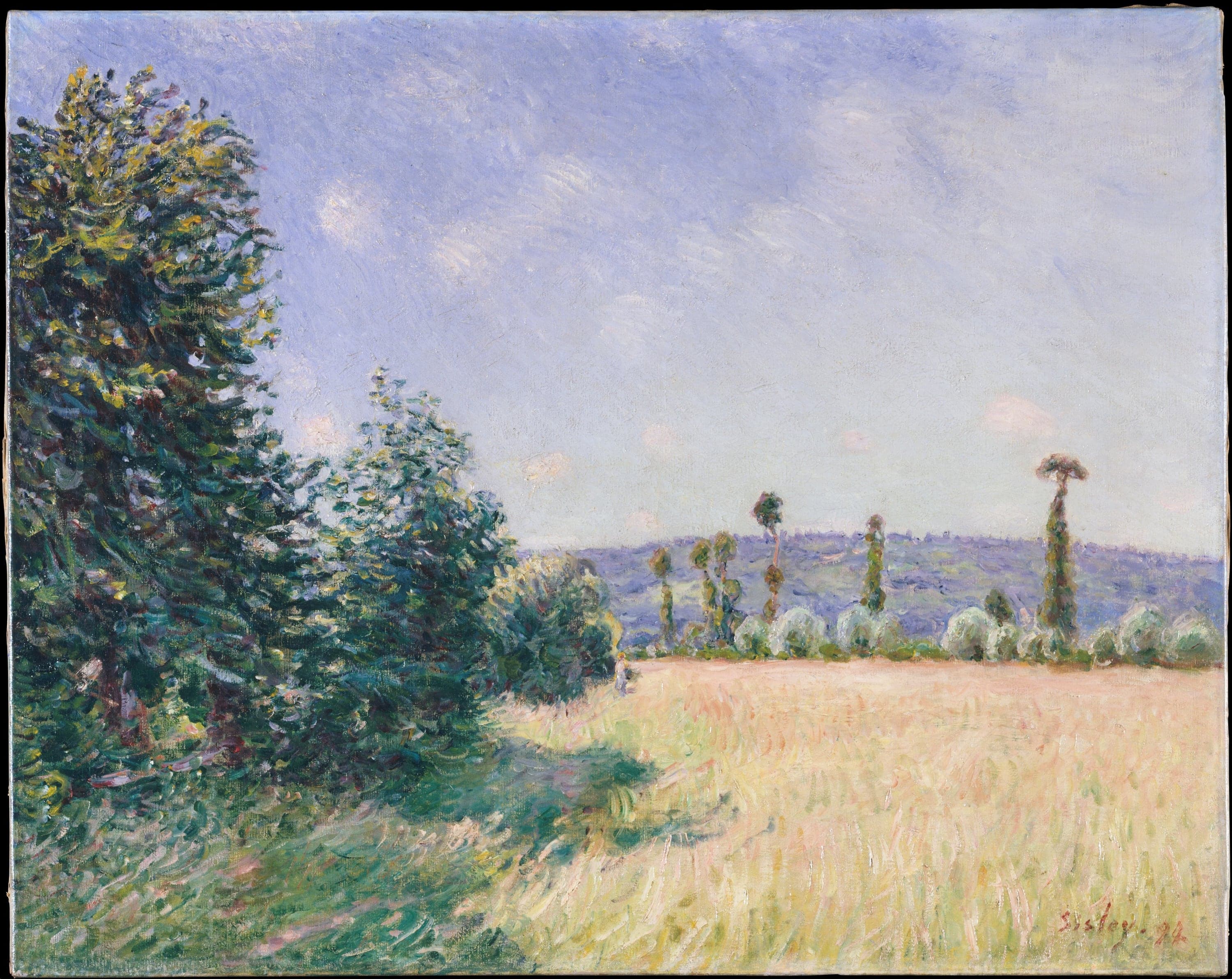
Sahurs Meadows in Morning Sun
Dark trees fill the left of the canvas and an open meadow of pale standing grass runs away to the right, with a line of tall pollarded trees and low blue hills behind it. Alfred Sisley painted it near Rouen in the summer of 1894, while staying with his patron François Depeaux. It is at the Metropolitan Museum of Art.
- 1894
- Oil on canvas
- The Metropolitan Museum of ArtNew York, United States
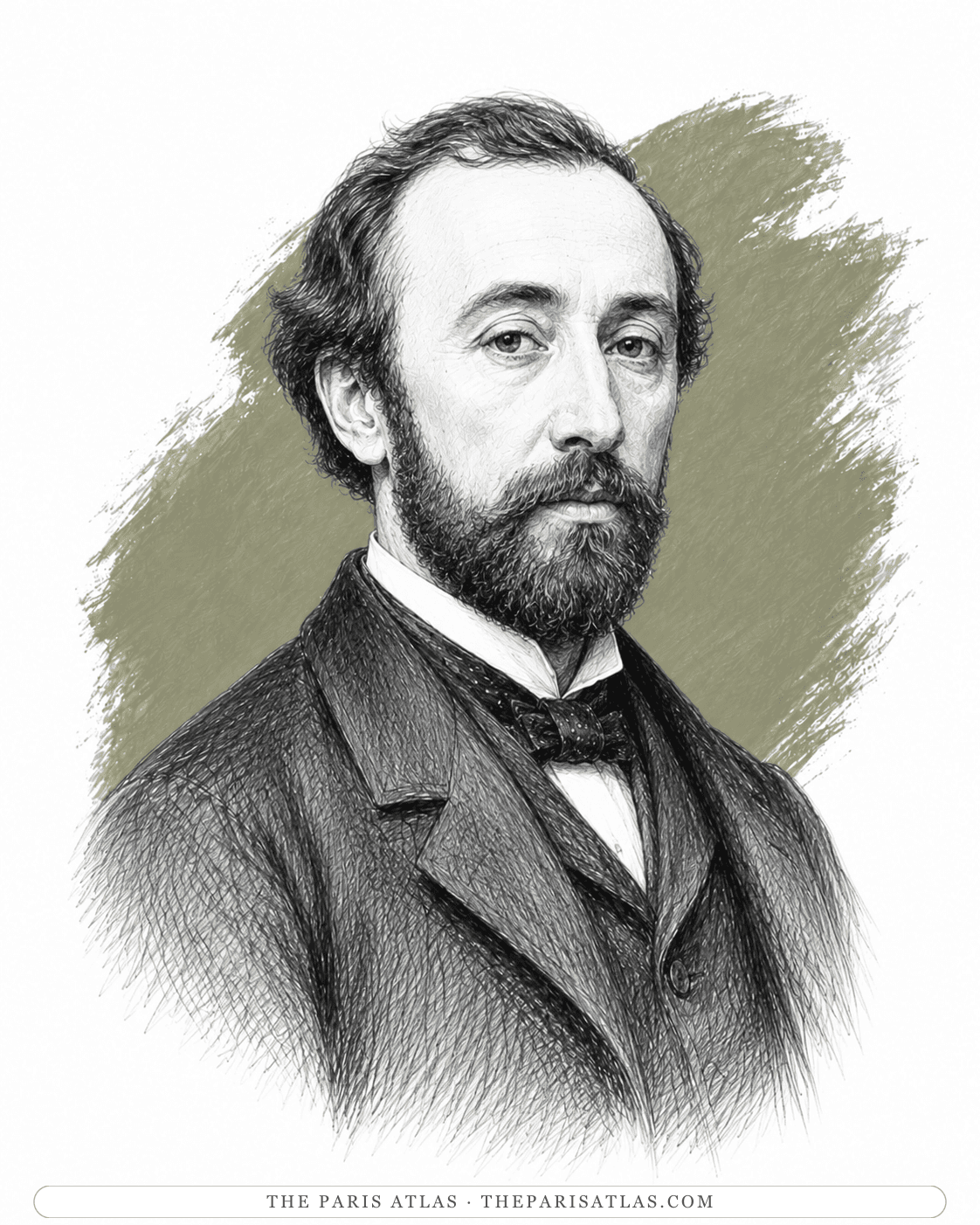
About Alfred Sisley
What the painting shows
The composition is split down the middle. The left is a dense mass of dark green and blue-green trees, flecked with yellow-green along the top where the morning sun reaches them, with a smaller lighter tree in front. There is almost no drawing in this passage at all; the trees are built entirely from separate touches of color.
The right is open meadow, painted in short upward strokes that follow the way the grass grows. Cream, pink, yellow and pale green sit next to each other without blending. One small figure stands where the meadow meets the trees, painted in a few pale lavender strokes under a bright yellow head covering, and is the only person in the picture.
Across the middle distance runs a line of low round bushes in pale silvery green, and behind them tall slender trees with small tufted crowns, the shape repeated pollarding produces. Most of their trunks carry sleeves of new growth, and one stands bare and pink. They are grouped in clusters rather than spaced at even intervals. Behind them a low blue-violet hillside crosses the canvas. The sky above is pale lavender-blue with soft clouds tinged pink near the horizon. Sisley signed and dated the picture at the lower right.
The summer at Le Mesnil-Esnard
The Metropolitan Museum of Art's record sets out the circumstances. Sisley spent the summer of 1894 at Le Mesnil-Esnard, on the estate of François Depeaux, a Norman industrialist who was his friend and patron. While he was there he painted seven views of the Coteaux de la Bouille and the Sahurs meadows, on the Seine just outside Rouen. Depeaux bought five of them, this one included.
The hills in the distance are the ones above La Bouille, on the opposite bank of the Seine. The museum describes the Sahurs pictures as an interrelated group rather than a series: the same wide flat meadow, painted one after another from different viewpoints, rather than one motif tracked through changing light.
Depeaux matters to the record of Sisley's last years. He had made his money in coal, with mining interests in England and Wales, and between the mid-1880s and the end of the 1890s he assembled a collection of more than 650 modern French paintings. The museum notes that Sisley could probably not have afforded the Normandy trip without support from Depeaux and from Eugène Murer, a collector who part-owned the Rouen hotel where he first stayed.
In 1897 Depeaux funded the trip to Britain on which Sisley and Eugénie Lescouezec finally married, at Cardiff Register Office, after thirty-one years together.
Sisley at fifty-four
Alfred Sisley was fifty-four in 1894 and had five years to live. He had been painting landscape, and nothing else, for three decades. The first Impressionist exhibition was twenty years behind him, the group had dispersed, and Claude Monet and Pierre-Auguste Renoir were established in a way he never became.
The handling here is looser and drier than in the canvases of the 1870s, and the color is pushed further. The far hills are blue-violet and the meadow is pink and cream. Sisley pushes the hills back with color as much as with scale, laying them in cooler and paler than the greens in front and leaving no drawn detail in them at all.
Where it is
The Metropolitan Museum of Art in New York, accession number 1991.277.3, given to the museum in 1991 by Janice H. Levin. At the last check of the museum's record it was on view in Gallery 824.
The Met publishes the painting as an Open Access object, so the museum's own photograph of it may be reused without restriction.
Close reading
Reading the work, detail by detail
One of seven canvases Sisley painted near Rouen in the summer of 1894. The composition is split down the middle: dense shaded trees on the left, open sunlit meadow on the right, and the whole difference between them carried by color.
1.The tree mass holds the left in shadow
The trees are laid in as overlapping dark greens and blue-greens, with yellow-green flecks along the top where the morning sun reaches them. Sisley keeps almost no drawing here — the mass is built entirely from separate touches of color.
2.Pollarded trees mark the middle distance
The trees have small tufted crowns, the shape that repeated pollarding produces. Most of the trunks carry sleeves of new growth, and one of the tallest is bare and pink. They cluster in groups rather than standing at even intervals, and a line of low round bushes runs in front of them.
3.Standing grass in cream, pink and pale green
The meadow is painted in short upward strokes that follow the direction the grass grows. Cream, pink, yellow and pale green sit side by side without blending. The field is not painted as a color but as a quantity of separate marks catching light.
4.A single figure at the meadow's edge
One small figure stands where the meadow meets the trees, painted in pale lavender strokes under a stroke of bright yellow at the head. It is easy to miss and it is the only person in the picture. Sisley places it exactly on the seam between the shaded half and the sunlit half.
5.The far bank goes blue with distance
The hills across the background are blue-violet, painted in soft horizontal strokes with no detail. Sisley pushes them back with color as much as with scale, keeping them cooler and paler than the greens in front of them.
6.A pale sky doing the work of the title
The sky is pale lavender-blue with soft white clouds tinged pink near the horizon. This is what makes the painting a morning picture rather than a midday one, and Sisley gives it about two fifths of the canvas to do it in.
Where to see it
The Metropolitan Museum of Art
1000 Fifth Avenue, New York, NY 10028, United States
Displays and loans can change. Check whether this work is on view before making a special trip.
Plan your visit on the museum’s official website (opens in a new tab)Frequently asked questions
Where is Sahurs Meadows in Morning Sun?
The Metropolitan Museum of Art in New York, accession number 1991.277.3. It was given to the museum in 1991 by Janice H. Levin, and the museum's record last listed it in Gallery 824.
Where is Sahurs?
On the Seine just outside Rouen, in Normandy, well north of the country around Paris where Sisley did most of his work. He was there in the summer of 1894 as a guest of his patron François Depeaux.
Who was François Depeaux?
A Norman industrialist who bought Sisley's work and supported him in his last years. Sisley stayed at his estate at Le Mesnil-Esnard in the summer of 1894, and Depeaux bought five of the seven canvases he painted there.
How many paintings did Sisley make on that visit?
Seven, according to the Metropolitan Museum of Art: views of the Coteaux de la Bouille and the Sahurs meadows near Rouen. Depeaux bought five of them, including this one, and two of the group went to the Musée des Beaux-Arts de Rouen as his gift in 1909.
How did the painting leave the Depeaux collection?
Through a divorce. The Metropolitan Museum of Art records that it was sold at the Galerie Georges Petit in Paris on 31 May 1906, for 3,960 francs, in connection with the financial settlement Depeaux made with his estranged wife. Durand-Ruel bought it and resold it in 1923 for 45,000 francs.
How big is the painting?
73 by 92.1 centimetres, about 28 3/4 by 36 1/4 inches. That is at the larger end of Sisley's landscapes, most of which are closer to 50 by 65 centimetres.
Can I reuse the image of this painting?
Yes. Alfred Sisley died in 1899, so the painting is in the public domain worldwide, and the Metropolitan Museum of Art publishes its photograph of the work as Open Access under a CC0 dedication.
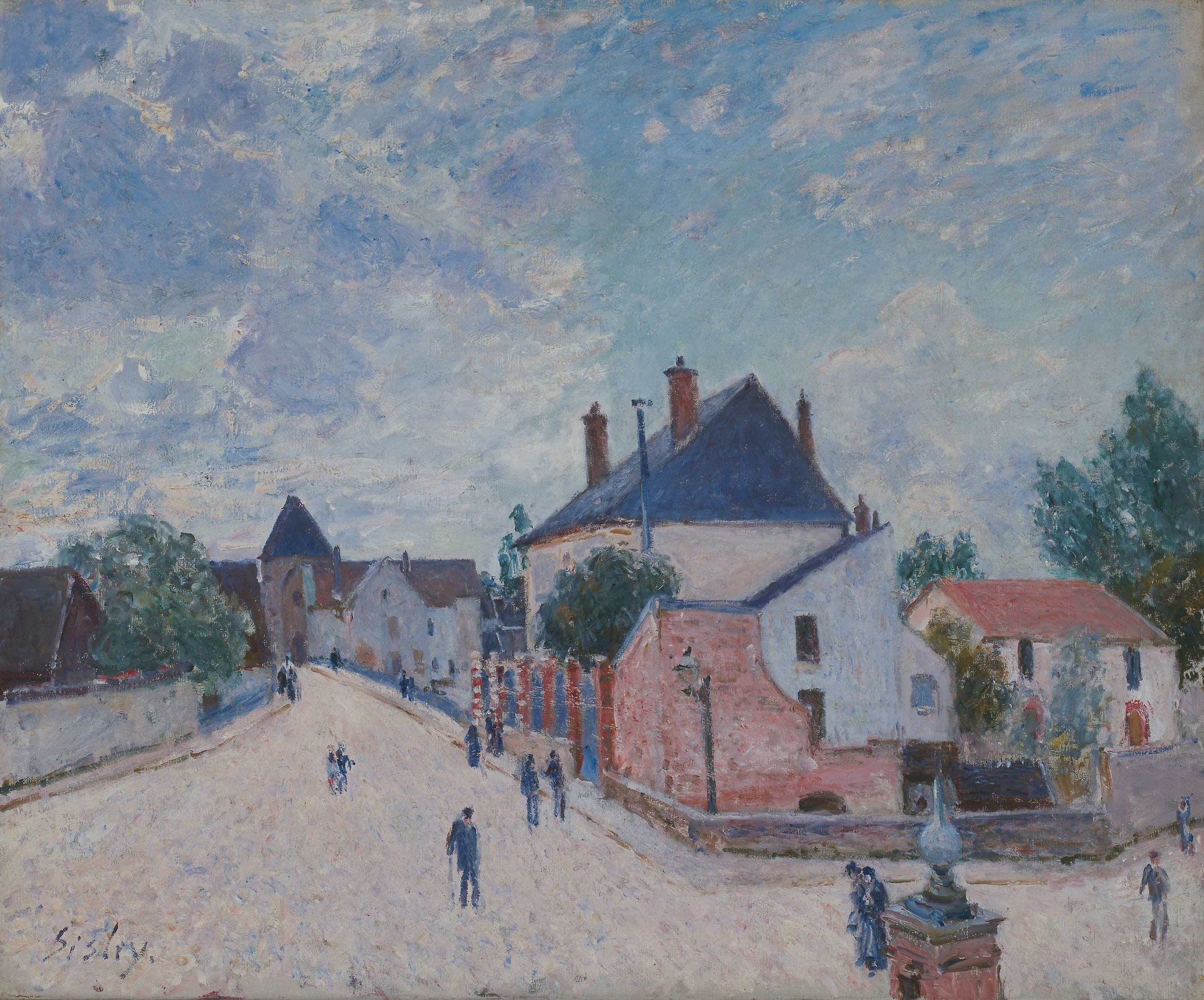
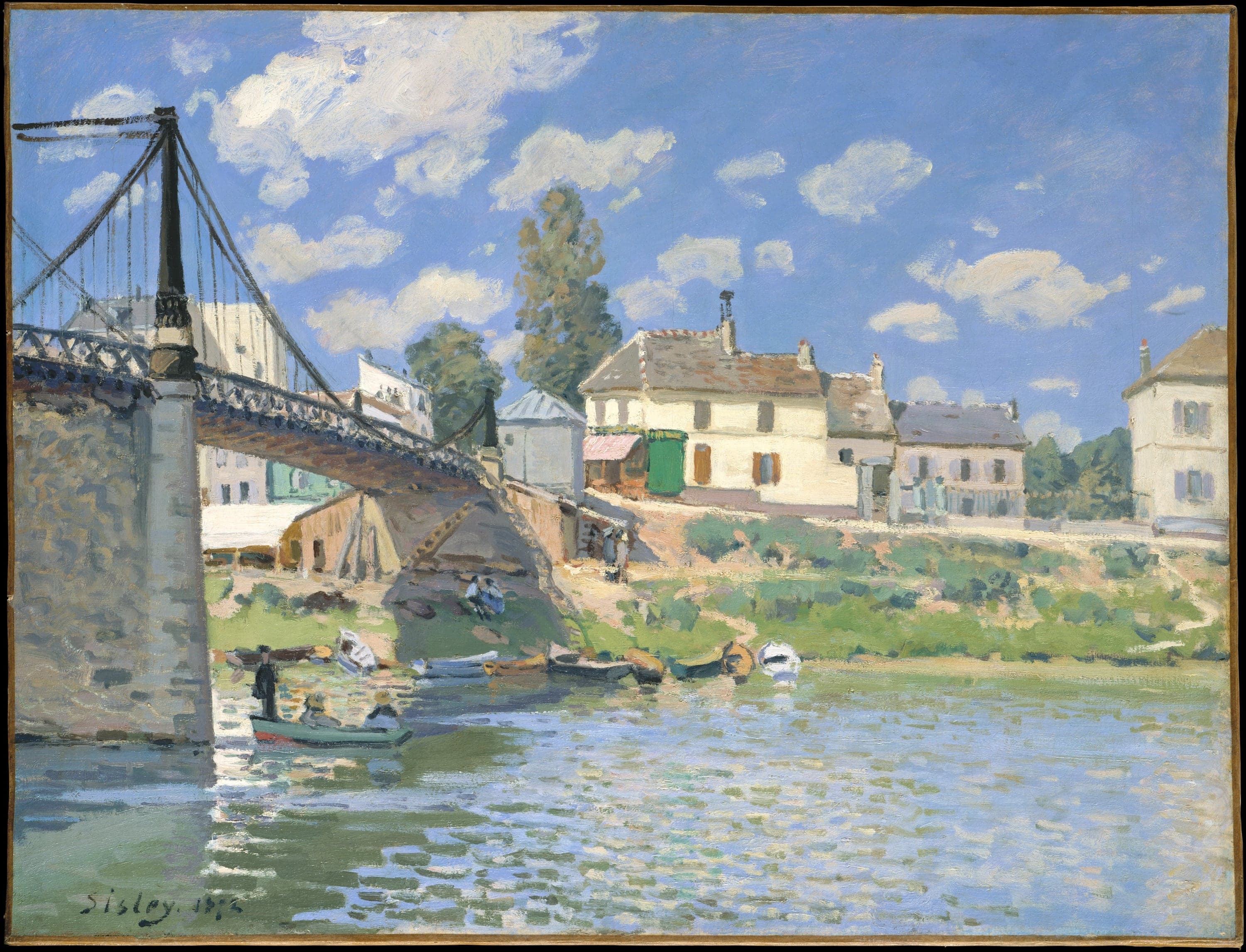
More by Alfred Sisley
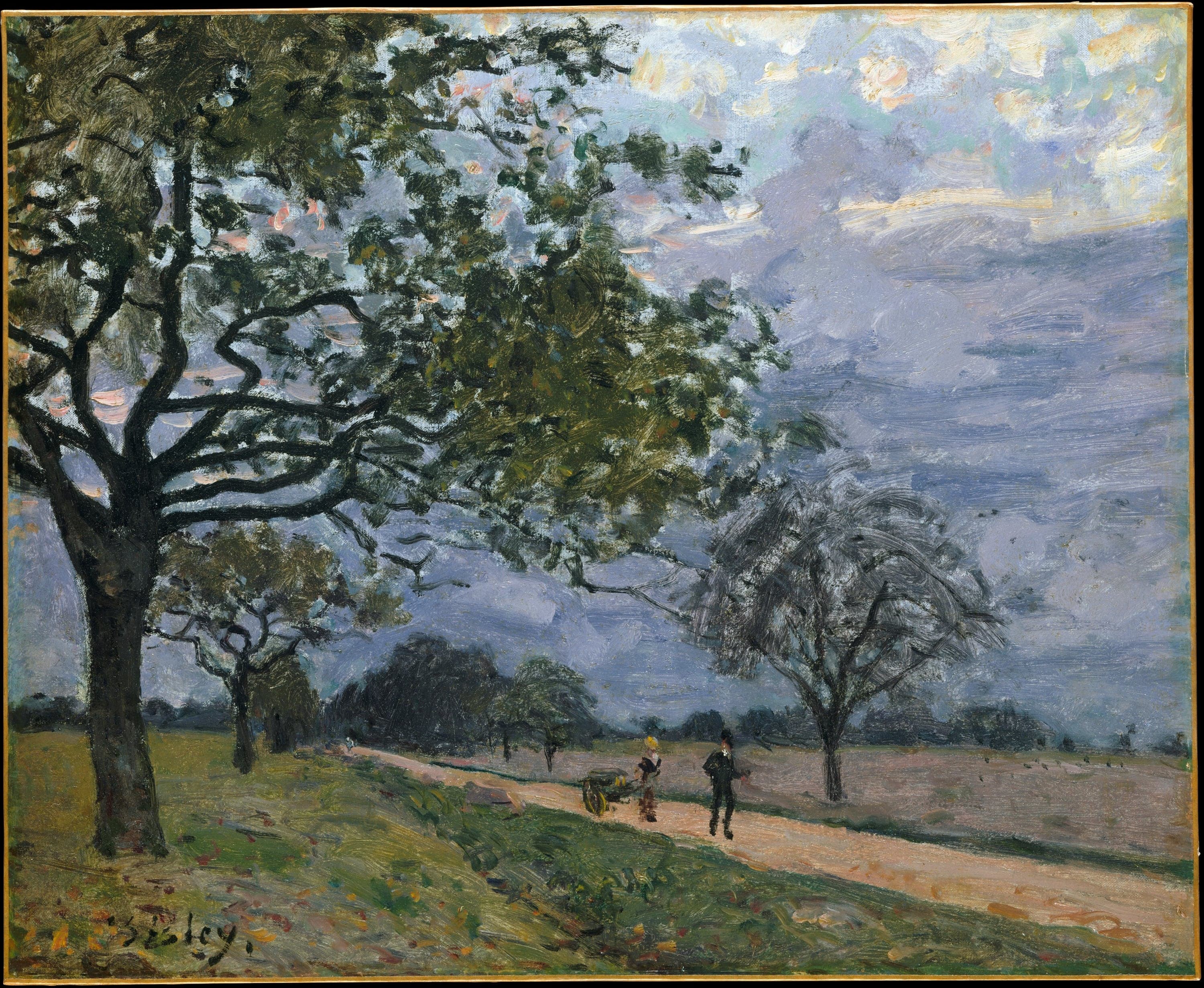
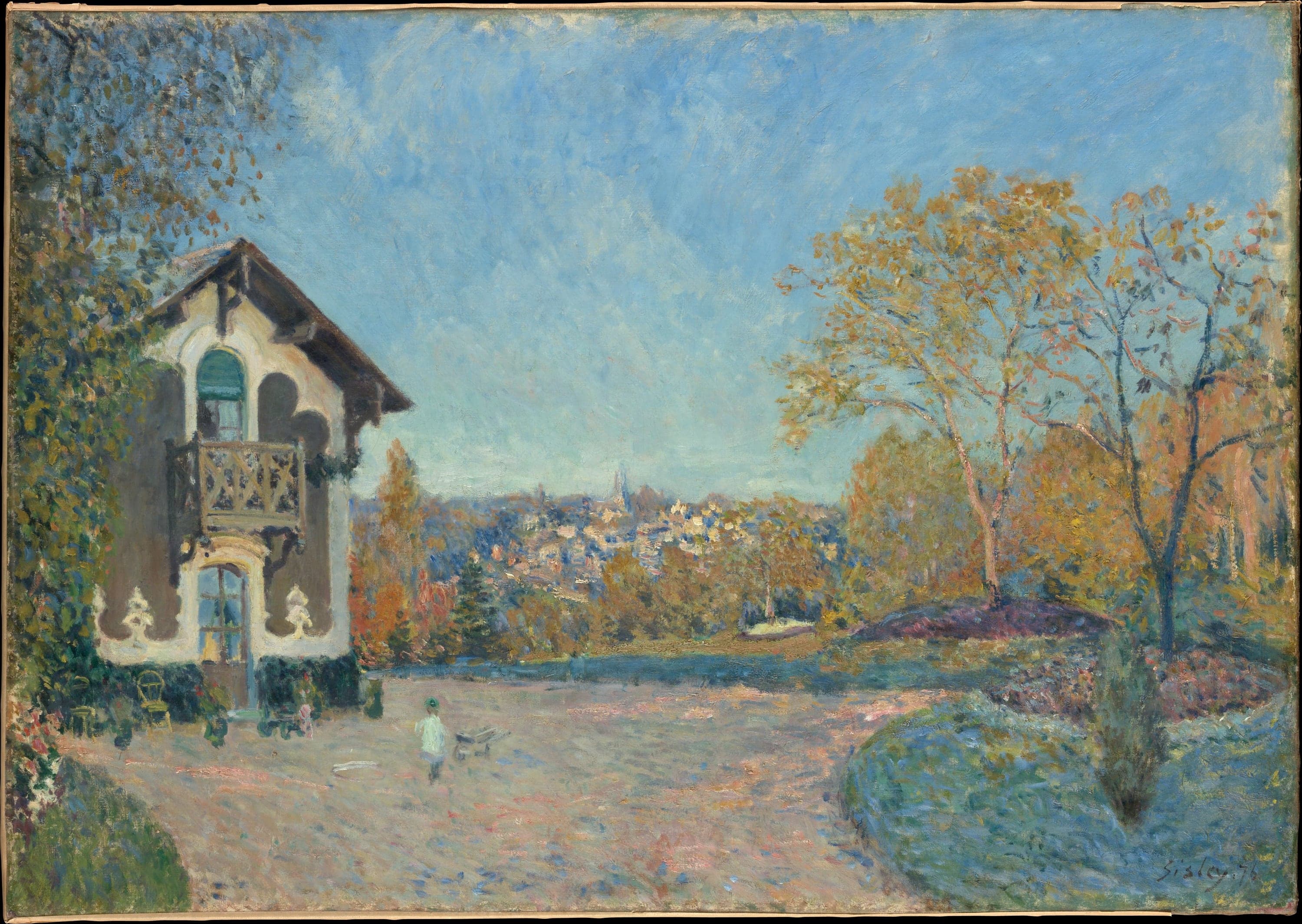
If you like Alfred Sisley
Explore painters from the same movements and circles.
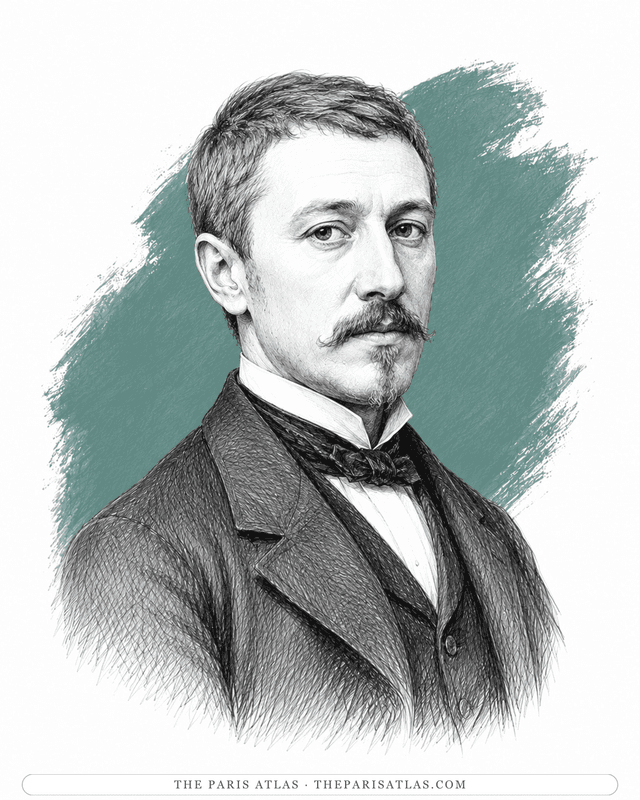
Gustave Caillebotte
Painter of Haussmann's geometry and the group's organizer-financier; his bequest of Impressionist paintings forced the French state to take the movement in.
View artist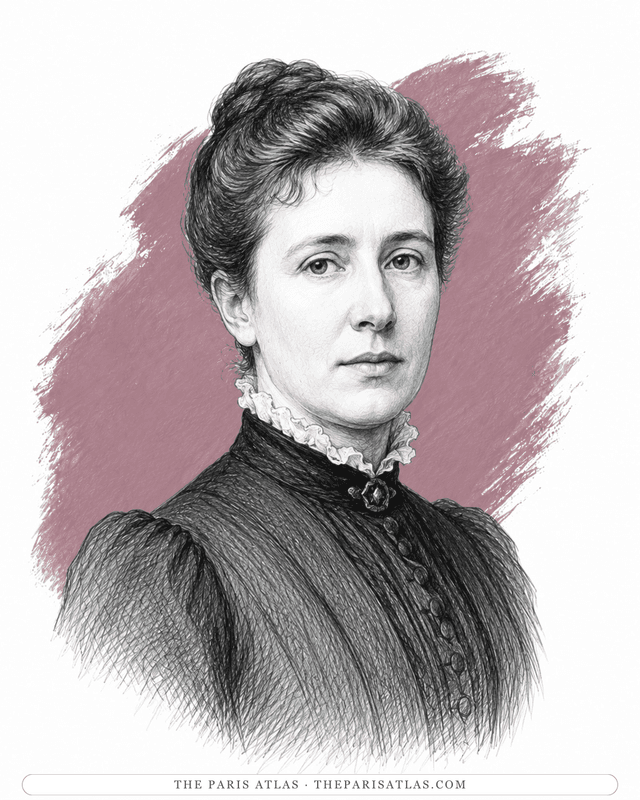
Mary Cassatt
Mary Cassatt was an American painter and printmaker known for her depictions of women and children. Based in France for the last fifty-two years of her life, she was the only American to exhibit with the original French Impressionist group, participating in four of its eight exhibitions. Edgar Degas invited her to exhibit with the group in 1877 after the Salon jury rejected her submissions.
View artist
Paul Cézanne
Painter between Impressionism and everything after — shown in the independents' exhibitions, emulated by the Cubists, and present at the Orangerie through 15 works in the Walter-Guillaume collection.
View artist
References
The sources below include collection records, catalogues, scholarly research, and primary materials that informed this page. They document Sahurs Meadows in Morning Sun, its making, and its place in cultural history.


1Sahurs Meadows in Morning Sun (Alfred Sisley, 1894) — The Metropolitan Museum of Art
WebsiteThe Metropolitan Museum of ArtUsed forWeb source consulted for documented facts and historical context presented on the Sahurs Meadows in Morning Sun page.

2Alfred Sisley: catalogue raisonné de l'œuvre peint
NonfictionDurand-Ruel, Lausanne, 1959Used forPublished analysis and historical context used in preparing the Sahurs Meadows in Morning Sun page.

3Alfred Sisley
Exhibition catalogueRoyal Academy of Arts, London, and Yale University Press, 1992Used forCatalogue scholarship used to verify attribution, provenance, chronology, and interpretive context for Sahurs Meadows in Morning Sun.
4Alfred Sisley 1839–1899
WebsiteTateUsed forWeb source consulted for documented facts and historical context presented on the Sahurs Meadows in Morning Sun page.
5Rue de l'Epicerie, Rouen (Effect of Sunlight), 1898
WebsiteThe Metropolitan Museum of ArtUsed forWeb source consulted for documented facts and historical context presented on the Sahurs Meadows in Morning Sun page.
6Sisley
BiographyG. Crès et Cie, 1927Used forBiographical evidence used to verify chronology, relationships, and historical context connected to Sahurs Meadows in Morning Sun.
These references provide the documented foundation for this work's history and interpretation. Claim-level citations remain attached to the specific claims they support.
 Explore more resources