
Driss
The young Filala merchant whose desert journey becomes the title story’s central victimization.
To complete the desert journey safely with his uncles and remain protected within the family trading group.
The book

At a glance
- The Delicate Prey
- The Delicate Prey and Other Stories
- Mid-twentieth century
Who they are in the book
Spoiler-freeDriss crosses the desert with two older uncles who trade in leather. Their journey has an ordinary commercial purpose before Moungari enters it.
As the youngest traveler, Driss depends on the older men’s knowledge and protection. Their murder isolates him and gives Moungari complete control.
The story subjects Driss to sexual violence, torture, and death. A responsible account must name the brutality without reducing him to a device for displaying cruelty.
How Driss Is Portrayed
- Place in the storyHe begins as a young person traveling with family and work to do.
- How power worksMoungari’s violence removes both family protection and physical autonomy.
- What Bowles showsBowles presents vulnerability without offering a moral reason that would make the attack deserved.
- What remains uncertainThe story gives less access to Driss’s inner life than to the sequence of what is done to him.
- He did not like the stranger’s eyesAt the first meeting Driss dislikes the man’s small, active eyes, which seem to take in everything and give out nothing. The reaction is swallowed by the general relief that he is a Moungari.
- “He trusts us”When the stranger goes off alone after gazelles, leaving his camel, blankets and packs behind, Driss reads the trust as evidence of good faith. Bowles lets the reader see it the other way.
- Hoping for a mechouiIt seems unlikely there are gazelles in the region, but if there are, there is a chance of roast gazelle that evening. That is the whole of his thinking as he waits.
- A hostile presence, too lateHe wakes with the camels stretched along the ground and something already wrong. He has felt mistrust since he first saw those eyes, but his uncles accepted the man, and that pushed suspicion away.
Moungari murders Driss’s uncles, subjects Driss to sexual violence and torture, and kills him; later revenge cannot restore what was destroyed.
If you like The Delicate Prey and Other Stories


If you like Paul Bowles
Explore authors with a similar voice, perspective, and influence.

Louis-Ferdinand Céline
The doctor of the Paris slums who wrote the century's blackest, funniest novel — and changed the sound of French prose.
View author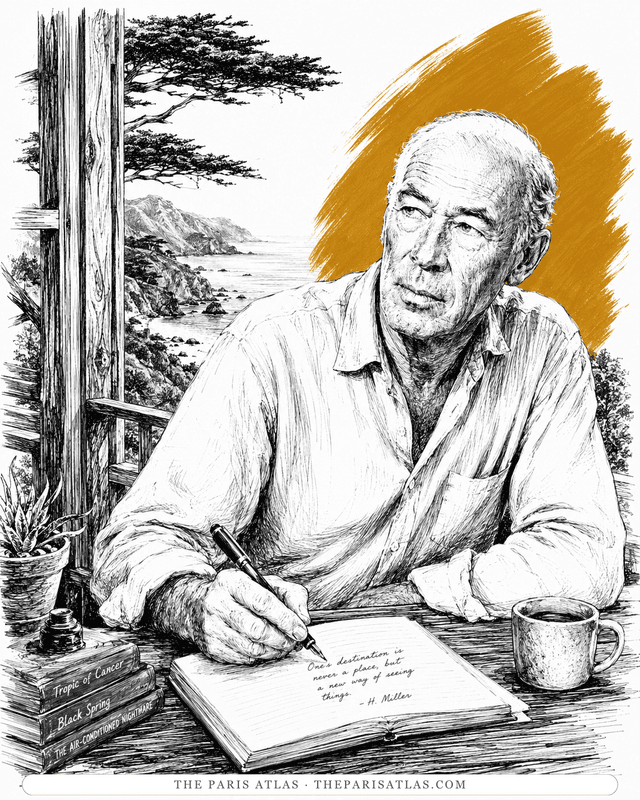
Henry Miller
The Brooklyn dropout who arrived in Paris broke at thirty-eight and wrote the exuberant, banned books that ended American censorship.
View author
Martha Gellhorn
War correspondent who covered the Spanish Civil War, D-Day, and conflicts across five more decades; Hemingway's third wife, 1940–1945.
View author