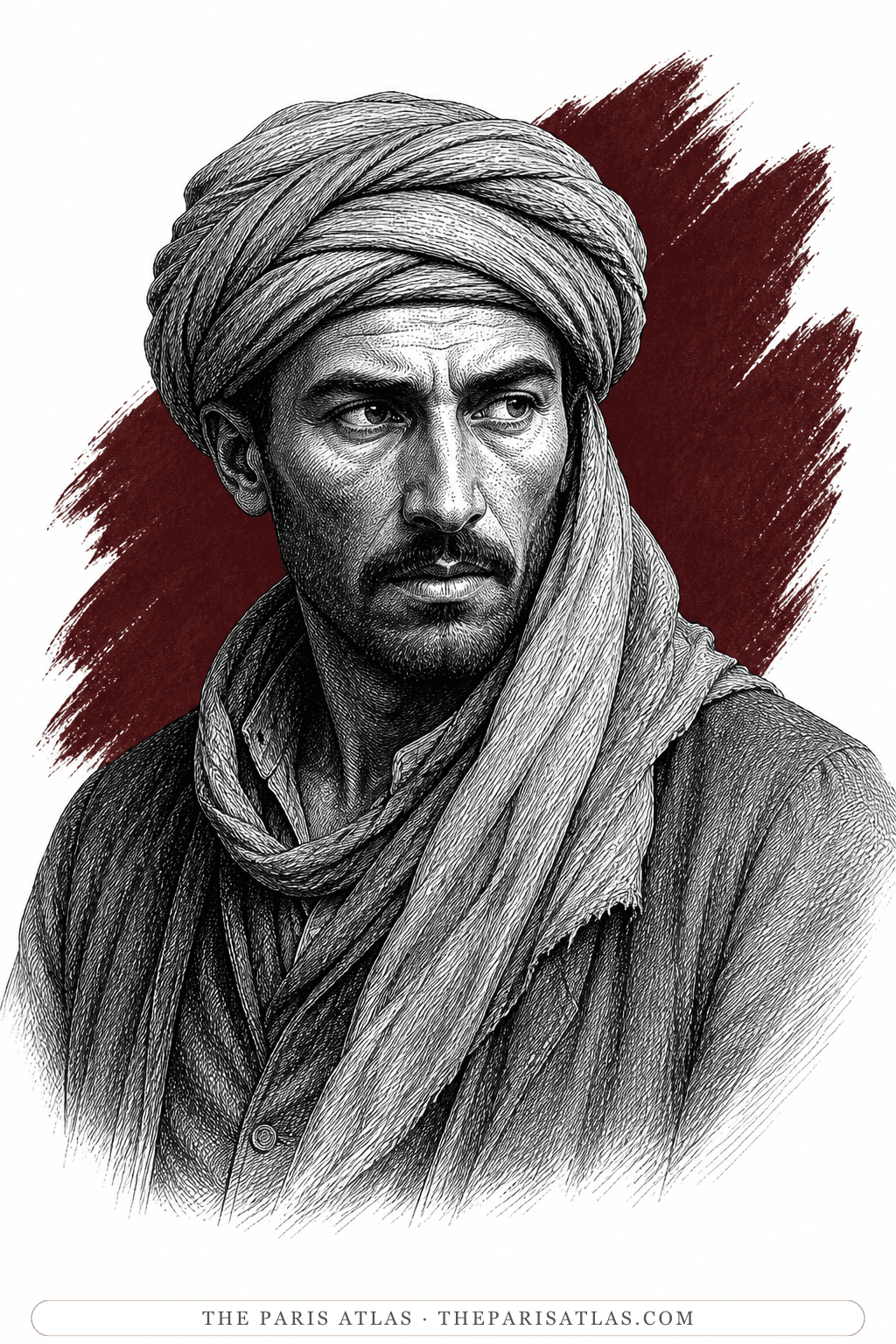
Moungari
The traveler who attacks the Filala merchants and tries to profit from their leather.
To exercise complete power over isolated travelers and convert what he steals into profit.
The book

At a glance
- The Delicate Prey
- The Delicate Prey and Other Stories
- Mid-twentieth century
Who they are in the book
Spoiler-freeMoungari meets or intercepts three Filala leather merchants in the desert. He enters as another traveler before revealing that companionship offers no protection.
He murders the older men, isolates Driss, and commits prolonged sexual and physical violence. Bowles supplies no reassuring history that would convert the acts into a solvable case.
Trying to sell the stolen leather connects violence to ordinary profit. The goods carry evidence into the market where other Filala men recognize them.
How Moungari Is Portrayed
- Place in the storyHe enters through an ordinary encounter between desert travelers.
- How power worksIsolation gives him immediate physical dominance over the merchants.
- What Bowles showsSelling the leather treats victims’ work and lives as things he can simply absorb.
- What remains uncertainHis motive remains deliberately thinner than the detailed account of his actions.
- A holy place, and its useMoungar is a holy place, its few residents treated with respect by pilgrims. The uncles’ distrust dissolves the moment they learn where the stranger is from.
- Quick and jolly, with small active eyesLight-skinned, with very little beard, and cheerful. His eyes take in everything and give out nothing, and only Driss notices.
- Tea to seal friendshipHe makes no secret of having been afraid alone in the region, and they all dismount and make tea, the Moungari furnishing the charcoal.
- “If you hear me shoot”Two mornings later he points at the hills to the east, says he knows this island, and goes off on foot between the boulders. If they hear a shot, it means gazelles.
Filala men recognize the stolen leather, capture Moungari, and kill him slowly in revenge; his death continues the violence rather than making justice clean.
If you like The Delicate Prey and Other Stories


If you like Paul Bowles
Explore authors with a similar voice, perspective, and influence.
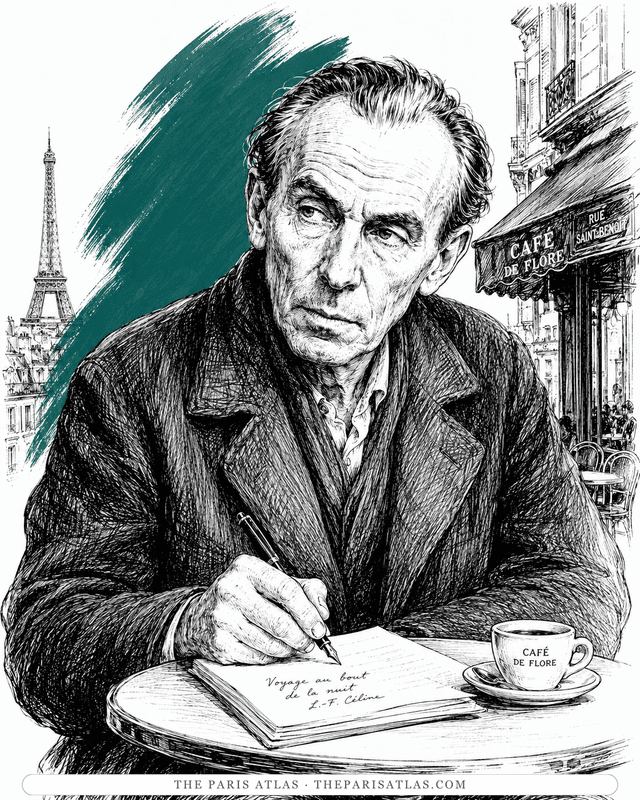
Louis-Ferdinand Céline
The doctor of the Paris slums who wrote the century's blackest, funniest novel — and changed the sound of French prose.
View author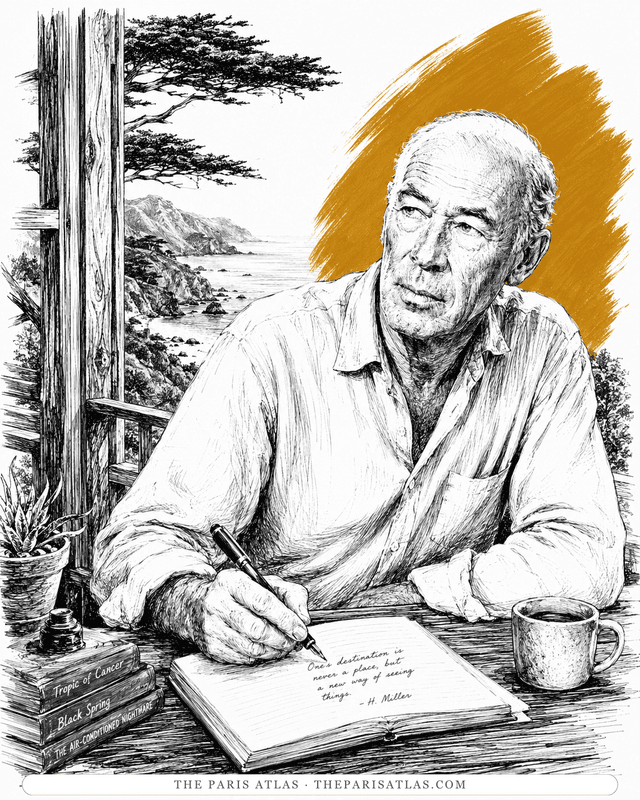
Henry Miller
The Brooklyn dropout who arrived in Paris broke at thirty-eight and wrote the exuberant, banned books that ended American censorship.
View author
Martha Gellhorn
War correspondent who covered the Spanish Civil War, D-Day, and conflicts across five more decades; Hemingway's third wife, 1940–1945.
View author