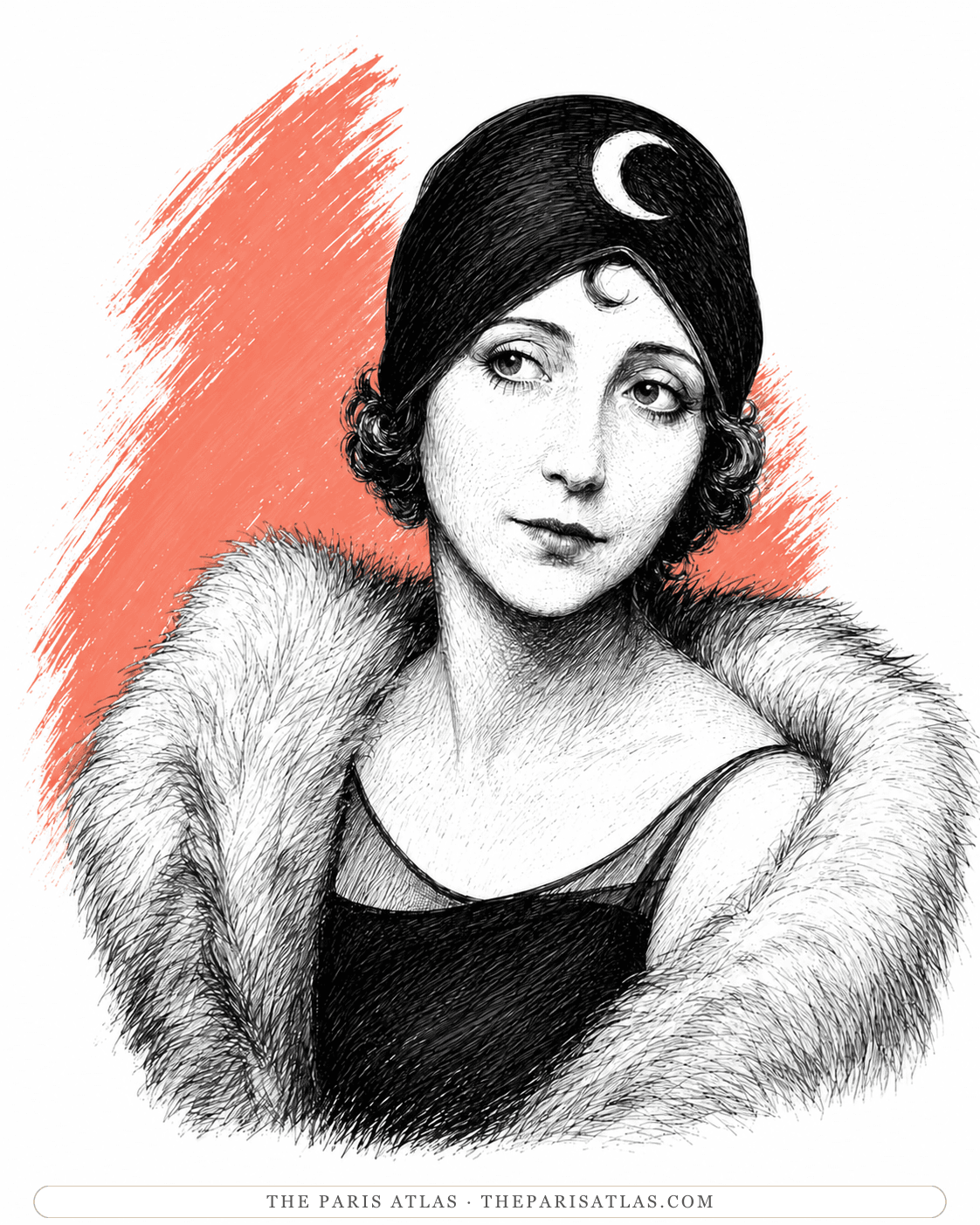


The Early Diary of Anaïs Nin, 1920–1923
by Anaïs Nin
The diary switches to English: work, modeling, a long courtship, and a young woman writing her way toward a marriage and a self.
- 1982
About Anaïs Nin
The story, briefly
Spoiler-freeThe second early volume carries the diary across its great divide — from French into English, the language of the writer she would become — and through the passage from schoolgirl to young woman: leaving formal education behind, posing for painters and illustrators to help the family purse, and conducting, at enormous reflective length, the courtship with the young banker Hugh Guiler that ends the volume at the altar in Havana. Published in 1982, it is the diary's coming-of-age installment in every sense. (An early diary — nothing here to spoil.)
The story, in more detail
The language shift is the volume's quiet landmark: around 1920 the diary moves into English, and readers can watch the future stylist trying her instrument — earnest, literary, overwrought, and improving by the month. The content is a American girlhood on the economic margin: the Richmond Hill household, the family finances, and Nin's stint as an artist's model, the first time her looks and composure became a working asset and the diary's first brush with the observed self she would spend a lifetime writing.
The heart of the volume is the courtship. Hugh Guiler — Hugo — arrives as a neighbor's introduction and becomes the diary's central deliberation: hundreds of pages weighing love, poverty, ambition, and safety with a thoroughness no novelist would dare give a heroine. It ends with their marriage in Havana in 1923. Readers of the famous Diary, where Guiler was edited out at his own request, meet here the man the later silence conceals — and the version of Anaïs who chose him.
What's inside
1920–1923 in New York and Havana: the switch to English; school abandoned for the household economy; modeling for painters and magazine illustrators; the Cuban relatives and the two-country identity; first literary attempts and the diary's growing self-awareness; and the long courtship with Hugh Guiler conducted against money worries and family counsel, closing with the wedding that ends her girlhood and the volume together.
Themes and analysis
Learning to be seen
The July 15 entry turns remarks about Nin's pale appearance into a small drama of being interpreted. Other people call her a ghost and supply an explanation she does not accept. She narrates her response in stages, moving from self-pity through boredom to the mirror and rouge. The comedy gives her some distance from their judgment, even as changing her appearance shows its pressure. The diary's observing voice therefore does something the mirror cannot: it records the gap between what others think they see and the contradictory feelings behind the face.
Finding her own words
The acceptance letter on July 21 does not settle Nin's estimate of her talent. Its immediate effect is physical and practical: she leaps up, struggles to eat and sends out more manuscripts. Then the diary produces a counterargument, imagining that the editor accepted her poem only because nothing better was available. She almost administers disappointment to herself as a restraint on pride. Yet the entry refuses to let this correction cancel happiness. Ambition and self-mockery coexist, making the diary a place to test encouragement without reaching a final verdict on herself.
Why we recommend it
The missing man
The fullest portrait anywhere in Nin's published work of Hugh Guiler and the choice of him.
A stylist in the making
The English prose starts earnest and gawky and visibly improves — apprenticeship you can watch.
The economics of it
Modeling fees, household ledgers, marriage as arithmetic — the material base of the legend, recorded plainly.
What this book explores
Timeline
circa 1920
The diary moves from French into English.
1920–1922
Richmond Hill, modeling work, and the long deliberation over Hugh Guiler.
1923
Marriage in Havana closes the volume.
1982
Harcourt publishes the volume posthumously.
Book editions
Hardcover
- Hardcover
- Harcourt Brace Jovanovich
- 1982
Paperback
- Paperback
- Harcourt / Harvest
Reader reviews
Readers may also like


Henry & June
The same diarist eight years on, when the safety chosen here met its counterweight.
Read our takeThe Early Diary of Anaïs Nin, 1920–1923: frequently asked questions
What years does this early diary volume cover?
1920 to 1923 — from the diary's switch into English through Nin's modeling years and long courtship, ending with her marriage to Hugh Guiler in Havana.
When was it published?
1982, by Harcourt Brace Jovanovich — the second of the four posthumous Early Diary volumes.
Who is Hugh Guiler?
The young banker — later the engraver and filmmaker known as Ian Hugo — whom Nin married in 1923. He remained her husband for the rest of her life, though he was edited out of the Diary as published in her lifetime.
Why was Nin modeling?
Money. The fatherless household ran close to the edge, and posing for painters and illustrators was work a striking, composed teenager could get.
Is this volume translated?
No. Unlike Linotte, it was written in English — the language the diary keeps from here to the end.
If you like Anaïs Nin
Explore authors with a similar voice, perspective, and influence.

Henry Miller
The entangled careers of the Villa Seurat: she financed and prefaced his scandal, he detonated her prose — and each wrote the other into the century's record.
View author
Louis-Ferdinand Céline
The doctor of the Paris slums who wrote the century's blackest, funniest novel — and changed the sound of French prose.
View author
Martha Gellhorn
War correspondent who covered the Spanish Civil War, D-Day, and conflicts across five more decades; Hemingway's third wife, 1940–1945.
View author
References
References
The sources below include the primary text, editions, scholarship, archival materials, and other records that informed this page. They document The Early Diary of Anaïs Nin, 1920–1923, its publication, and its place in literary history.


1The Early Diary of Anaïs Nin, 1920–1923
NovelAnaïs Nin, 1982Used forThe primary text represented by this page, used for descriptions of the work’s contents and for any quoted passages shown here.
2Anaïs Nin — biography
WebsiteThe Anaïs Nin FoundationUsed forUsed to verify The Early Diary of Anaïs Nin, 1920–1923's bibliographic context and its place within Anaïs Nin's published work.

3Anaïs Nin Papers — diary, March–September 1938
ArchiveUCLA Library Special CollectionsUsed forUsed for independent archival, institutional, or historical context surrounding Anaïs Nin and The Early Diary of Anaïs Nin, 1920–1923.
4Anaïs Nin: A Biography
BiographyG. P. Putnam's Sons, 1995Used forUsed to cross-check chronology, publication history, and the circumstances in which The Early Diary of Anaïs Nin, 1920–1923 appeared.
5Anaïs: The Erotic Life of Anaïs Nin
BiographyLittle, Brown, 1993Used forUsed for an additional scholarly or biographical perspective on The Early Diary of Anaïs Nin, 1920–1923 and Anaïs Nin's wider career.
6The Early Diary of Anaïs Nin, 1920–1923 — editorial front matter and opening diary preview
WebsiteEverand, 1982Used forRead for the July 15 and July 21, 1920 entries; analysis concerns narrated self-image and literary encouragement, not an independently verified modeling session or magazine acceptance.
i
Why these sources are here
The primary text is the baseline reference for every book page. Additional references document publication history, interpretation, and historical context where that evidence is available.
 Explore more resources