Maggie Tulliver
The miller's dark-haired, clever, impulsive daughter, who wants to be loved and to know everything.
She wants her brother to love her, and she wants a life full of books, music and feeling.
The book
The Mill on the Floss
George Eliot
Who they are in the book
Spoiler-freeMaggie is nine when the novel starts and a grown woman when it ends. She is passionate, clever and forever doing the wrong thing on impulse. All her life she wants Tom's approval and a wider world than St Ogg's allows her. The novel follows her from a naughty child to a young woman the town turns against.
How Maggie Tulliver Is Portrayed
- The FetishIn Book First, Chapter IV, she keeps a battered wooden doll in the attic. When she is unhappy she punishes it, and three nails have been driven into its head.
- The scissorsIn Book First, Chapter VII, she cuts off her dark hair in front of Tom to stop the aunts talking about it, and is miserable the moment it is done.
- The gypsiesIn Book First, Chapter XI, she runs away to join the gypsies on the common, thinking they will make her their queen. They take her home.
- Thomas à KempisIn Book Fourth, Chapter III, she finds an old copy of Thomas à Kempis with marks in the margins, and decides to live by giving things up.
- The Red DeepsIn Book Fifth, Chapter I, she meets Philip Wakem in the old quarries near the mill and agrees to see him there in secret.
- Borne alongIn Book Sixth, Chapter XIII, she lets Stephen row her down the river and only notices, too late, that they have passed Luckreth.
Maggie Tulliver quotes
In their death they were not divided.
The boat reappeared, but brother and sister had gone down in an embrace never to be parted; living through again in one supreme moment the days when they had clasped their little hands in love, and roamed the daisied fields together.
“Character,” says Novalis, in one of his questionable aphorisms,—“character is destiny.” But not the whole of our destiny.
She refuses to marry Stephen and comes home alone, and Tom turns her out. In the flood she rows to the mill to save him. They drown together, and are buried in one tomb.
If you like The Mill on the Floss


If you like George Eliot
Explore authors with a similar voice, perspective, and influence.

Louis-Ferdinand Céline
The doctor of the Paris slums who wrote the century's blackest, funniest novel — and changed the sound of French prose.
View author
Mark Twain
The Missouri newspaperman who became America's most famous writer, and whose first book made its reputation partly out of Paris: in 1867 he arrived with a shipload of American tourists, renamed his guide Ferguson, watched the high-kicking can-can through his fingers and wrote it all down. He kept coming back — and was living in Paris in the mid-1890s, broke, while finishing the novel he considered his best, Personal Recollections of Joan of Arc.
View author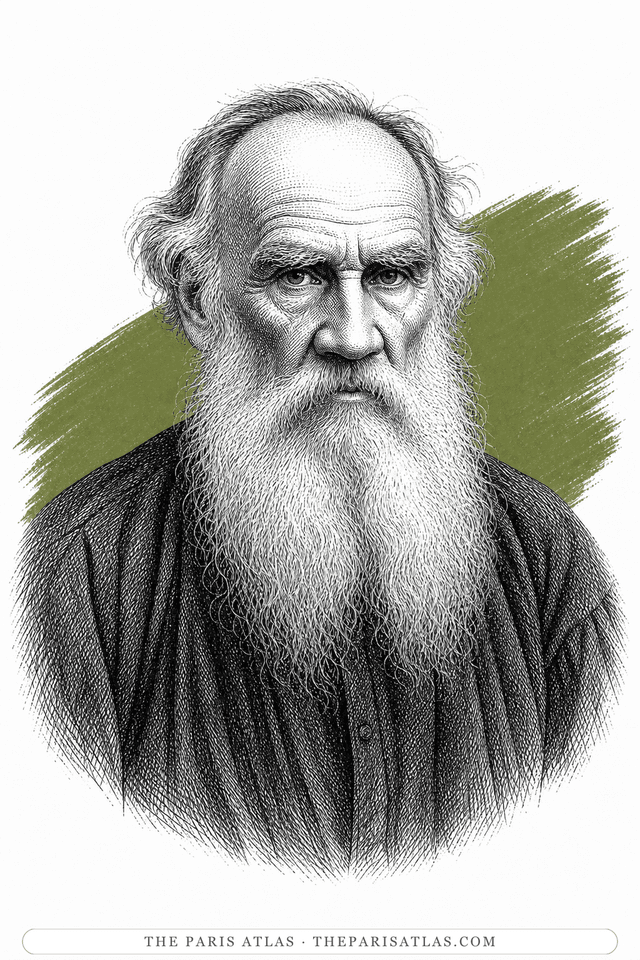
Leo Tolstoy
Russian novelist who wrote War and Peace and Anna Karenina, then renounced the life that produced them. He spent six weeks in Paris in 1857, and on one April morning went to watch a man beheaded in the street — an hour he said destroyed his belief in progress and in the state, and which he was still writing about twenty-two years later.
View author