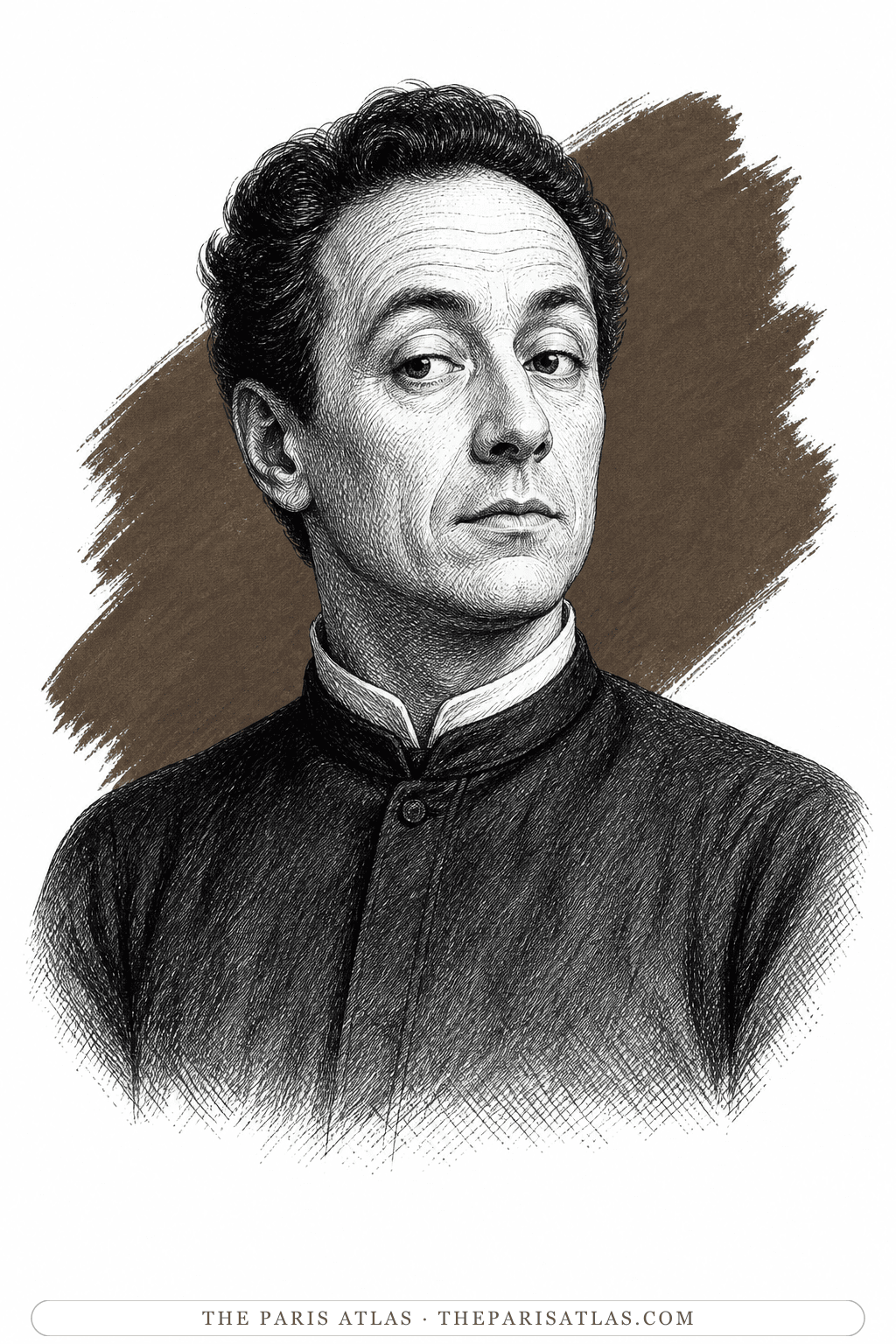
Brague
Renée's stage partner and mime teacher — a professional who treats the music hall as a trade and keeps her honest about the work.
To keep the engagements coming and keep love out of the work. He says plainly that love and the job do not go together, and he has never changed his mind about it.
The book

At a glance
- Renée's partner from the first page onward, in Paris and then on the road
- Mime. He teaches as well, and gives a dancing lesson at nine in the morning after working past midnight
- L'Emprise, a wordless play whose title means a hold over somebody. For the tour they add La Dryade, in which he is a faun and Renée a wood nymph
- Second class with the boy who plays the cave-dweller, while Renée travels first. He calls economising in every town simply what everybody does
- Ma vieille, la môme Renée, and, when she has offended him, a chilly chère amie
- That she lives alone because she chooses to, and that her way of living is not healthy
Who they are in the book
Spoiler-freeBrague is the stage partner of Renée Néré, the divorced performer who narrates this novel, and the man who taught her the job. He is a mime, which means an actor who tells a story in movement and without speaking, to music. He guided her first gestures on a stage three years before the book opens, and he still treats her as a pupil, an intelligent amateur who needs telling.
He is small, quick, clean-shaven and permanently wide awake, with a little bright black eye that misses nothing. Everything he does is deliberate. He checks the lighting and the set before a performance while Renée is still staring at the audience through the hole in the curtain, and he keeps his own recipes for stage make-up the way a cook keeps recipes.
What he supplies to the novel is a working man's view of a life that Renée keeps trying to weigh. He does not find the music hall degrading or romantic. It is a trade, it pays, the next engagement is the thing that matters, and love is a separate department that ruins the first one if you let the two mix.
How Brague Is Portrayed
- How he teaches herHe only really looks at Renée in rehearsal, and then it is to say: don't do that, it's ugly; don't open your mouth upwards, you look like a fish; don't blink, you look like a white rat; don't swing your backside when you walk, you look like a mare. She still takes it, and admits she trusts him like a pupil.
- His paintsHe has a particular blue for wrinkles, a particular orange-red for the inside of the lips, an ochre for the base, a syrupy carmine for blood that runs, and a white for a Pierrot mask whose recipe, he says, he would not give his own brother. He draws his eyebrows in dark violet on the grounds that it looks fiercer.
- How he handles the eighteen-year-oldThe boy hired to play the cave-dweller in their new piece is a starving lad of eighteen, one of Brague's pupils, and Brague shouts at him and abuses him until Renée says he will make him cry. Let him cry, Brague answers, tears are not work. He also advanced the boy his stage costume and takes five francs a day back out of the fifteen francs a day the tour pays him.
- In the agent's officeWhen the tour contract comes, Renée baulks at handing the agent Salomon six hundred francs of commission and Brague backs her flatly, tells the man seven and a half per cent for the two of them together and calls that generous, and asks for twenty-four hours to consult his family. Salomon calls them both pigs, wipes dry eyes and a wet forehead, and gives way.
- One trunk between themOn the last tour they paid up to eleven francs a day in excess baggage, so this time he plans it out: his trunk, stage costumes in the top tray, then the linen, her shirts and drawers and stockings packed in with his, then shoes and spare clothes at the bottom. It saves about five francs each a day. Max, listening, is appalled by the arrangement; Renée points out that it comes to two hundred francs.
- Love and the job do not mixHe has watched tours wrecked by couples: the quarrels, the kissing, the sulks, the reconciliations that stop people getting out of bed, soft legs on stage and black rings round the eyes. When Renée tells him she is not taking Max with her, he is openly delighted with her, and says forty days is not eternity.
- The game he plays on tramsHis favourite joke on tour is to pick out a timid young woman or a combative spinster on a tram, sit down opposite her and stare with a slowly building lecherous expression until she coughs, straightens her veil and gets off. He calls it an excellent exercise in facial control, and says that when they finally give him a mime class at the Conservatoire he will make all his pupils practise it. Renée laughs and it makes her flesh creep.
- What he does with a strange townHe takes possession of the provincial towns he already knows like a good-natured conqueror: out into the streets, round the shops, up the cathedrals, and straight to the little eating house on the quay where they do the sausage in white wine and where he is sure they remember him.
If you like The Vagabond


If you like Colette
Explore authors with a similar voice, perspective, and influence.

Henry Miller
The Brooklyn dropout who arrived in Paris broke at thirty-eight and wrote the exuberant, banned books that ended American censorship.
View author
Louis-Ferdinand Céline
The doctor of the Paris slums who wrote the century's blackest, funniest novel — and changed the sound of French prose.
View author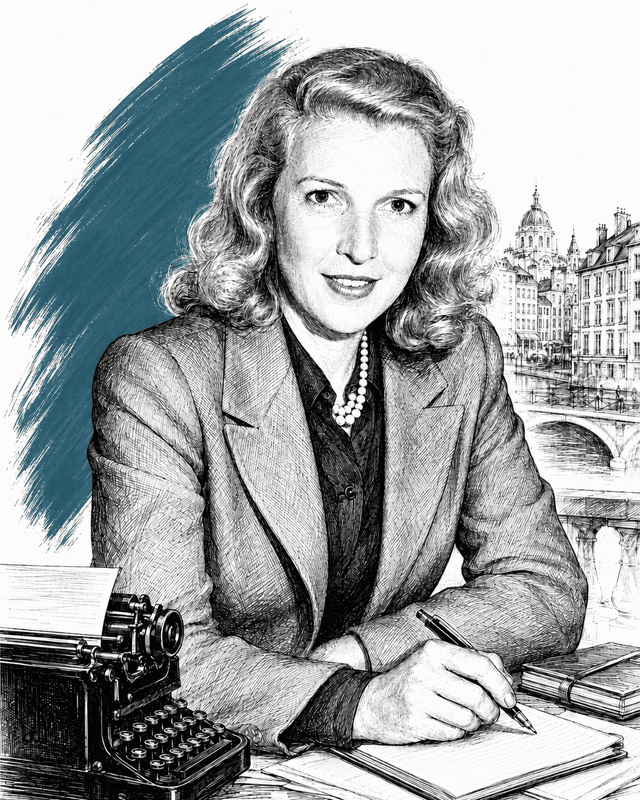
Martha Gellhorn
War correspondent who covered the Spanish Civil War, D-Day, and conflicts across five more decades; Hemingway's third wife, 1940–1945.
View author