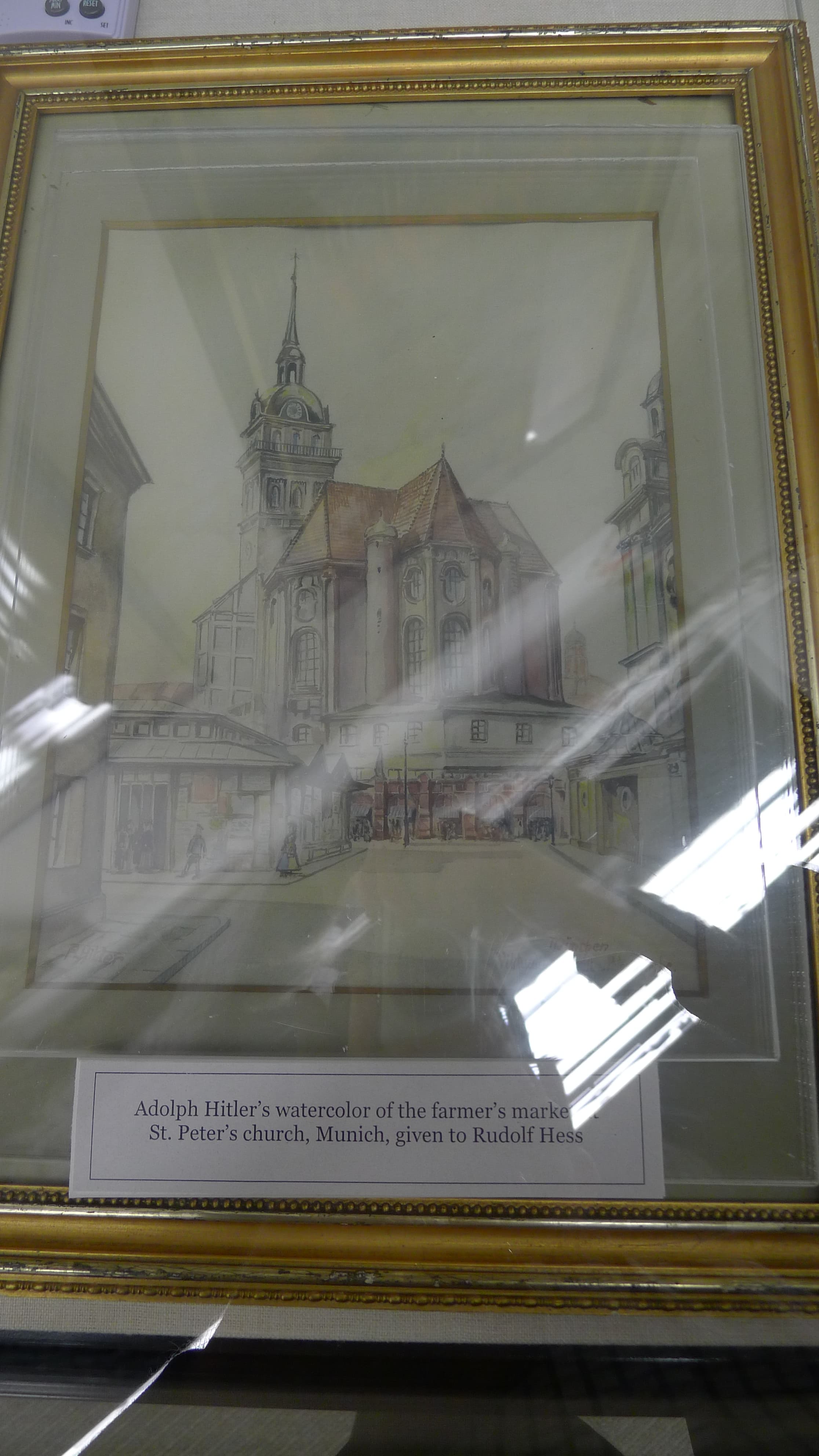
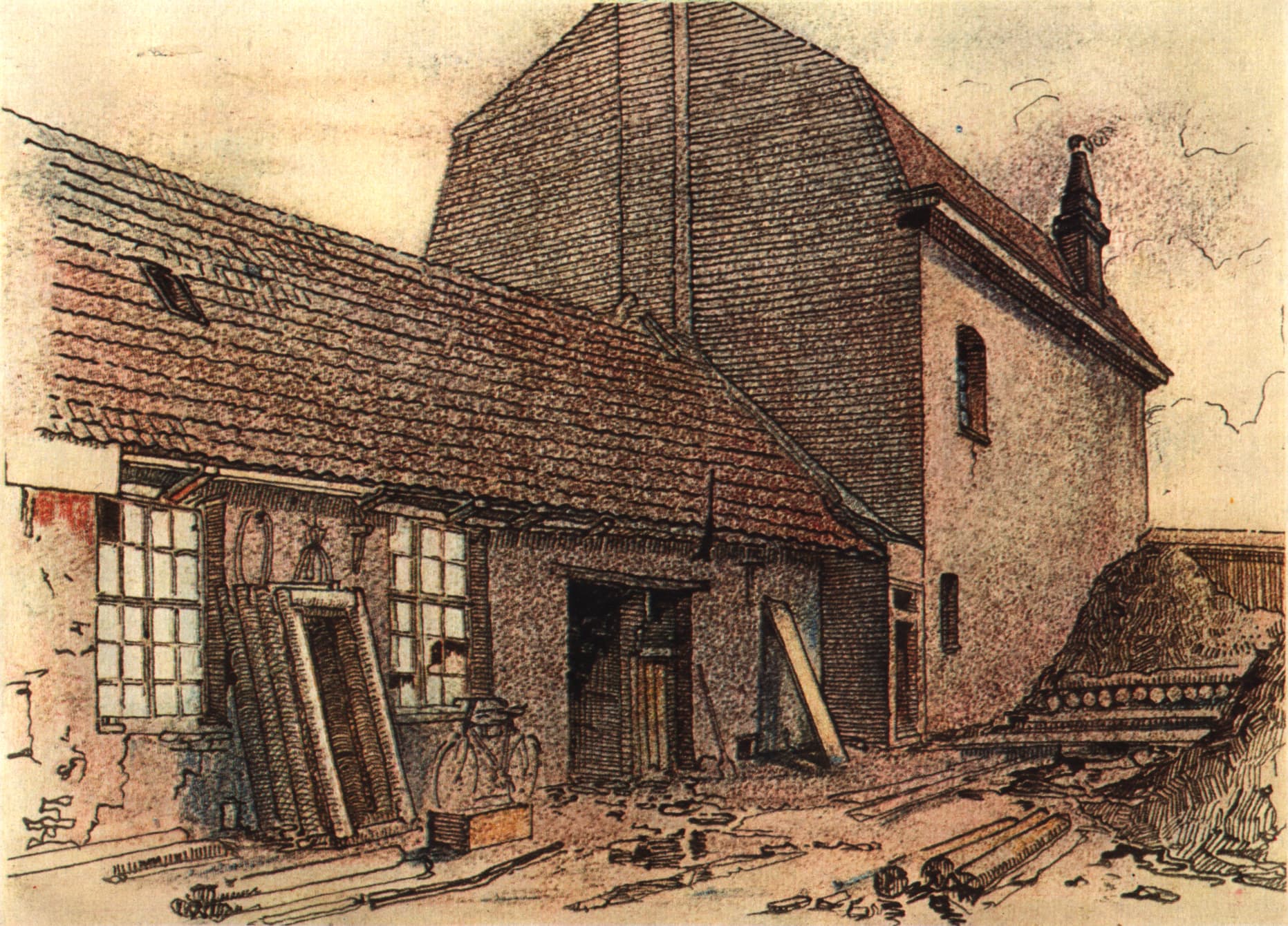
Viktualienmarkt with St Peter's Church, Munich
by Adolf Hitler
A watercolour of Munich's food market below the tower of St Peter's, attributed to Adolf Hitler. It hung in a private war museum in Massachusetts until the museum closed in 2019, and where it went is not on record.
- Undated
- Watercolour
About Adolf Hitler
The view
The Viktualienmarkt is Munich's open food market, a square of stalls just south-east of Marienplatz, and the tower behind it belongs to the church of St Peter, the oldest parish church in the city. The two make one of the standard Munich views, which is the sort of subject the picture's painter worked from.[1]
Nothing else about the object is documented. It carries no recorded date, no dimensions and no published inventory number.
The pictures were copies, and the copying was a trade
Adolf Hitler painted views he had in front of him on paper, not views he was standing in. He worked from postcards, prints and photographs, and the surviving sheets repeat the same landmarks because the postcards did.[2]
Selling them was a small commercial operation with a partner in it. Reinhold Hanisch handled the Vienna sales from about 1910, taking the watercolours round frame dealers and tourists for a cut, until the two men quarrelled over money. Hitler moved to Munich in 1913 and kept to the same routine, selling small sheets to dealers and visitors, without much success at it.
“He had no style of his own as a painter, but generally just copied.”
Nobody knows where it is
The watercolour was on display at the International Museum of World War II in Natick, Massachusetts, a private museum open by reservation from 1999 to 2019 that held more than seven thousand objects. It closed in 2019.[3]
Where the collection went has not been established, and no later owner, sale or loan of this picture is on record. That is the honest answer to the question of its whereabouts: unknown, as of August 2026.
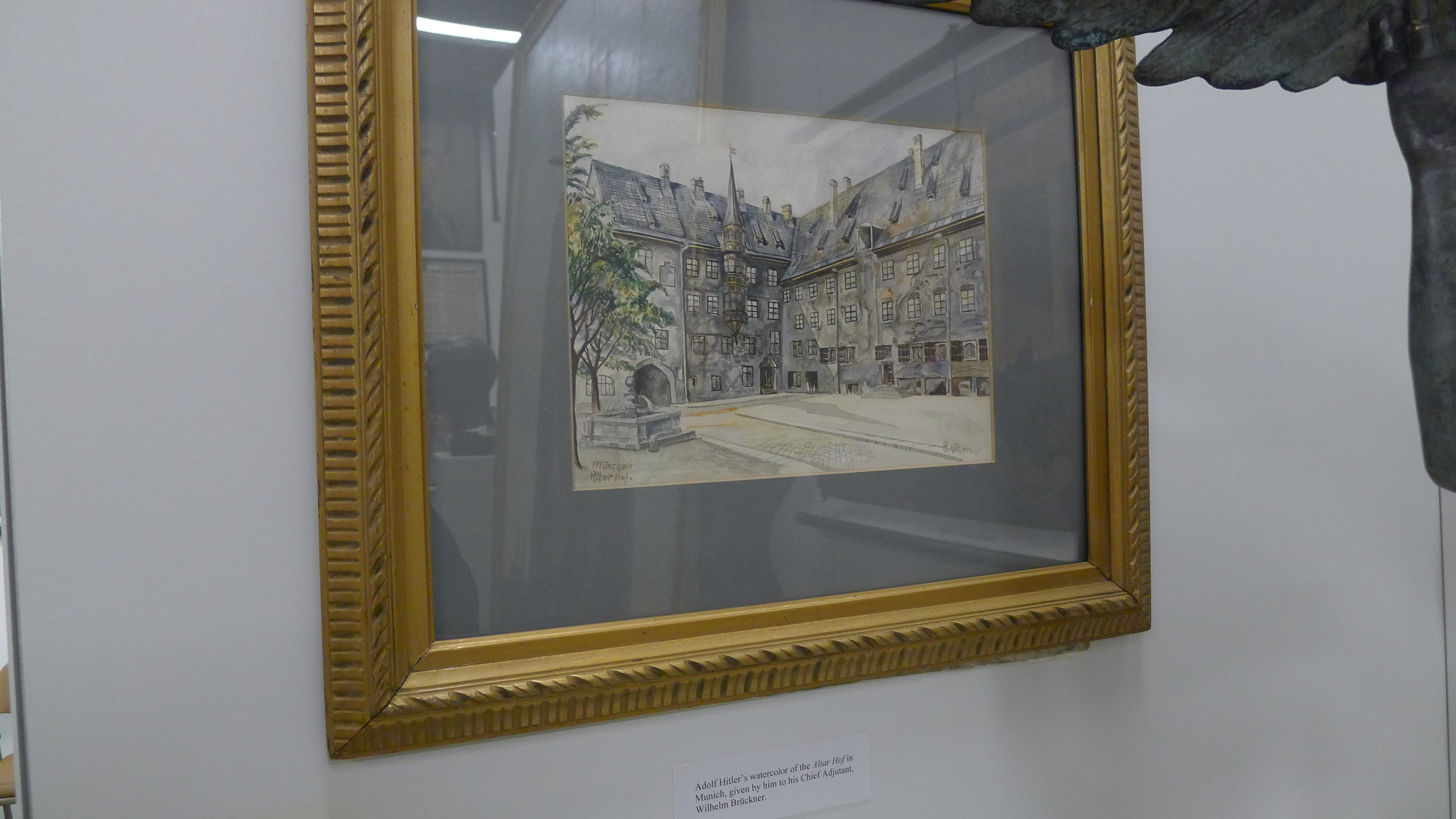
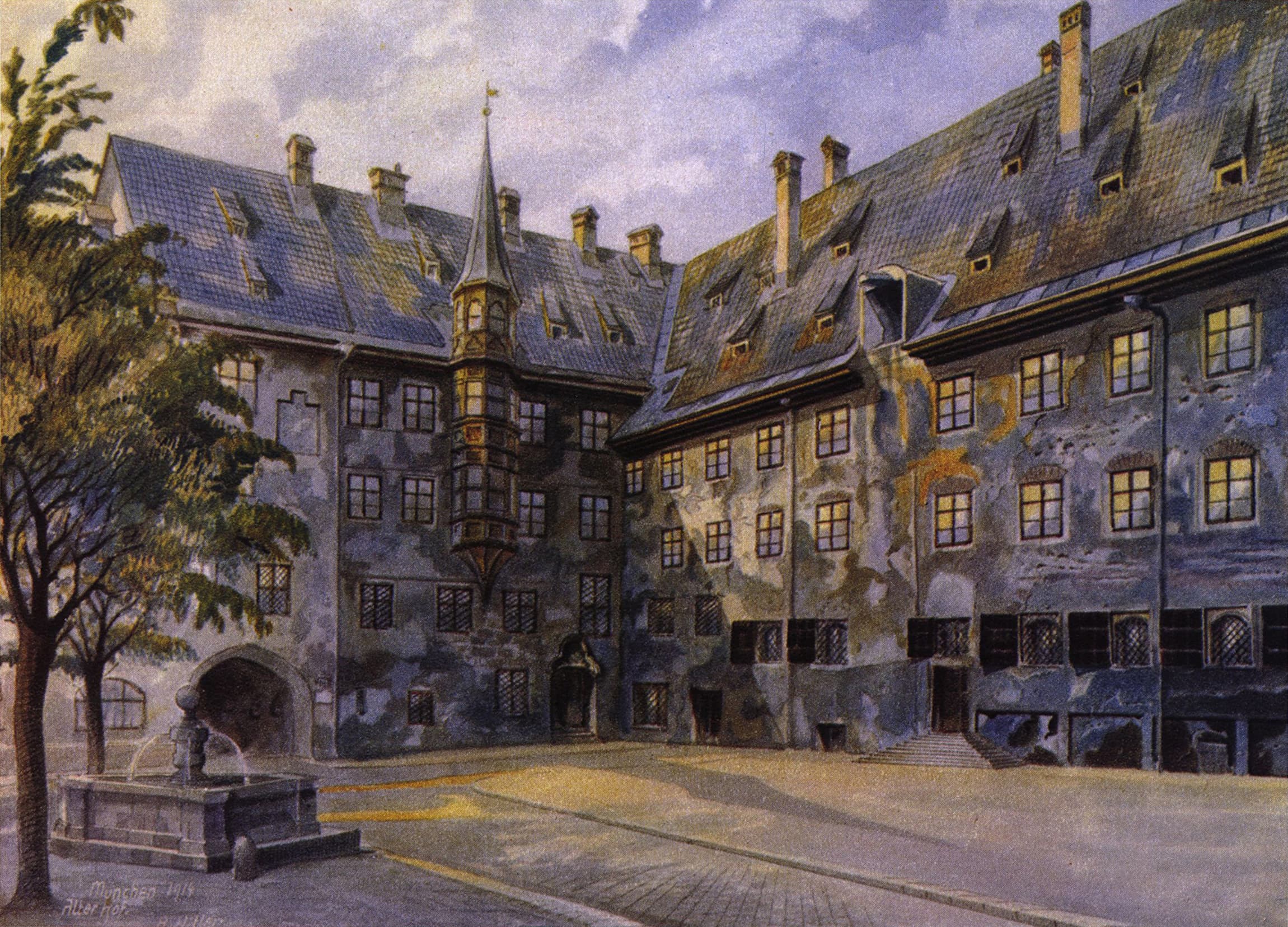
One provenance claim attaches to it. The description filed with the 2015 photograph says the watercolour was given by Hitler to Rudolf Hess. No museum label, catalogue or sale record supporting that has been found, so it stands as an assertion rather than a documented chain. The companion Alter Hof watercolour photographed at the same museum carries a similar claim, that it was a gift to his chief adjutant Wilhelm Brückner, and it is unverified on the same terms. Whether either is the same object as the Alter Hof sheet reproduced in 1936 and reported to be in United States Army custody is not established; they may be different pictures of the same courtyard.
Why the attribution needs saying carefully
Works signed with Hitler's name are forged in quantity, and have been for ninety years. Reinhold Hanisch, who had sold the real ones in Vienna, was producing fakes by 1933; he was arrested in 1936 and died in custody the year after. Two seizures in 2019 show the modern trade: three watercolours taken from a Berlin auction house in January, sixty-three from Auktionshaus Weidler in Nuremberg in February, on suspicion of document forgery and fraud.[4]
Checking a sheet against the literature does not help either. The catalogue the trade uses, Billy F. Price's Adolf Hitler: The Unknown Artist of 1984, was compiled by one of the material's largest private owners, includes works the historian Hermann Weiss identified as forgeries by Konrad Kujau, and is dedicated to August Priesack, who signed certificates of authenticity for paintings and vouched for the Hitler diaries.[5]
“No one has really conducted any serious comprehensive research into Hitler's art.”
That is why the provenance of this picture matters more than its brushwork. A painter who copied postcards left no personal handwriting for a connoisseur to recognise, so the usual test for a forgery has almost nothing to work with, and the questions that remain are documentary ones: who owned it, when, and what proves it.[6]
This page shows a photograph, not the painting
The image here is Lee Wright's photograph of the watercolour on display in Natick, taken on 5 December 2015 and released under a Creative Commons Attribution 2.0 licence. The credit is a condition of using it.[1]
The distinction is not a formality. A flat, faithful copy of a painting that is out of copyright creates no new rights, in German law and in American practice alike. A photograph of a framed object in a museum room is a photograph, made by someone who chose the angle and the light, and it belongs to the photographer.
The painting itself is out of copyright
Copyright in everything Adolf Hitler made expired on 1 January 2016, seventy years after the end of the year in which he died. Sheets like this one, sold as single originals and never published with the copyright owner's authority, came out of copyright in the United States on the same date.[7]
Before that the rights belonged to the Free State of Bavaria, which inherited the estate after a Munich court declared the will void and denazification proceedings in 1948 transferred the assets. Bavaria used the copyright to withhold permission rather than to earn from it, blocking German reprints of Mein Kampf for decades. The copyright never covered the objects, which had been in private hands since they were sold before the First World War.
Close reading
Reading the work, detail by detail
This is again a photograph of a displayed watercolour rather than a direct image of the sheet. The details show how a standard Munich landmark, market buildings, and an attribution label combine to make the pictured object legible—and why the photograph remains evidence as well as reproduction.
1.St Peter's tower makes the view identifiable
The church's vertical silhouette provides the landmark that organizes the lower market roofs. Like many commercial city views, the composition depends on recognition arriving quickly.
2.The market is reduced to orderly architecture
Rooflines and façades receive more attention than the people who would define an operating food market. The scene reads as a built landmark assembled from a model image rather than a crowded observation.
3.Frame and wall preserve the image's actual context
The visible frame and display setting remind us that this is Lee Wright's 2015 photograph of an object whose present location is unknown. Cropping cannot turn that limited record into a direct conservation image.
4.Overlapping roofs compress the market into layers
Small gables and roof planes overlap instead of opening into a broad square. The compact arrangement makes the foreground feel densely built even in the absence of a busy crowd.
5.The church clock gives the distant tower a civic function
The clock face is a small but legible point high above the market. It turns the church from a general skyline shape into a structure that organizes daily urban time.
6.The foreground is abbreviated rather than fully described
Quick lines and pale washes indicate nearby stalls and structures without resolving every object. The unfinished quality keeps the eye moving toward the identifiable tower.
Timeline
1913
Adolf Hitler moves from Vienna to Munich and goes on selling watercolour views through dealers and to visitors.
1999
The International Museum of World War II opens in Natick, Massachusetts, a private collection shown by reservation.
5 December 2015
Lee Wright photographs the watercolour on display at the museum. The photograph is the image on this page.
1 January 2016
Copyright in Hitler's work expires in Germany and Austria, and in the United States for works never published in his lifetime.
2019
The Natick museum closes. Where its collection went, and who holds this watercolour, has not been established.
2019
German police seize sixty-six suspected fake Hitler works from two auction houses in two months, on suspicion of document forgery and fraud.
Where to see it
Formerly the International Museum of World War II, Natick, Massachusetts
On display at the museum in 2015. The museum closed in 2019 and the present owner is unknown.
Frequently asked questions
Where is this Hitler watercolour now?
Nobody has said. It was on display at the International Museum of World War II in Natick, Massachusetts, until that museum closed in 2019, and no record of where the collection went has been found. The picture has not been reported at auction, in a museum or in a named private collection since.
Is the painting genuine?
It is attributed to Adolf Hitler and has not been authenticated. The subject and the technique fit the Munich watercolours he sold in 1913 and 1914, but no conservation report, exhibition catalogue or documented ownership chain has been published for it. Given how many forgeries are in circulation, an attribution of this kind should be read as a claim awaiting evidence.
Was it really a gift to Rudolf Hess?
That is what the description filed with the 2015 photograph says, and no supporting document has been found. There is no museum label, catalogue entry or sale record behind the claim in the public record, so it cannot be treated as established provenance.
Who took the photograph, and why is it credited?
Lee Wright, who photographed the watercolour on display in Natick on 5 December 2015 and released the picture under a Creative Commons Attribution 2.0 licence. That licence permits reuse on the single condition that the photographer is named. The painting is out of copyright; the photograph of it is not.
Did Hitler paint the Viktualienmarkt from life?
Almost certainly not, on the evidence of how he worked. He copied his views from postcards, prints and photographs rather than painting on the spot, which is why the same Munich and Vienna landmarks recur across the sheets attributed to him.
Can Hitler's paintings be bought and sold?
Yes. They are sold openly at auction in Germany and elsewhere, and the German law on Nazi symbols does not reach a market square or a church tower. The legal trouble the trade attracts is about forgery: the seizures at auction houses in Berlin and Nuremberg in 2019 were made on suspicion of document forgery and fraud.
Why does a watercolour of a market square matter?
Because it can be located in the record, which most works of its kind cannot. Photographs of this sheet on public display, with a stated licence and a named photographer, make it one of a small number of pictures attributed to Hitler whose recent history can be checked at all. What follows from that is a documented gap rather than a story: the museum closed, and the trail stops.
More by Adolf Hitler
If you like Adolf Hitler
Explore painters from the same movements and circles.
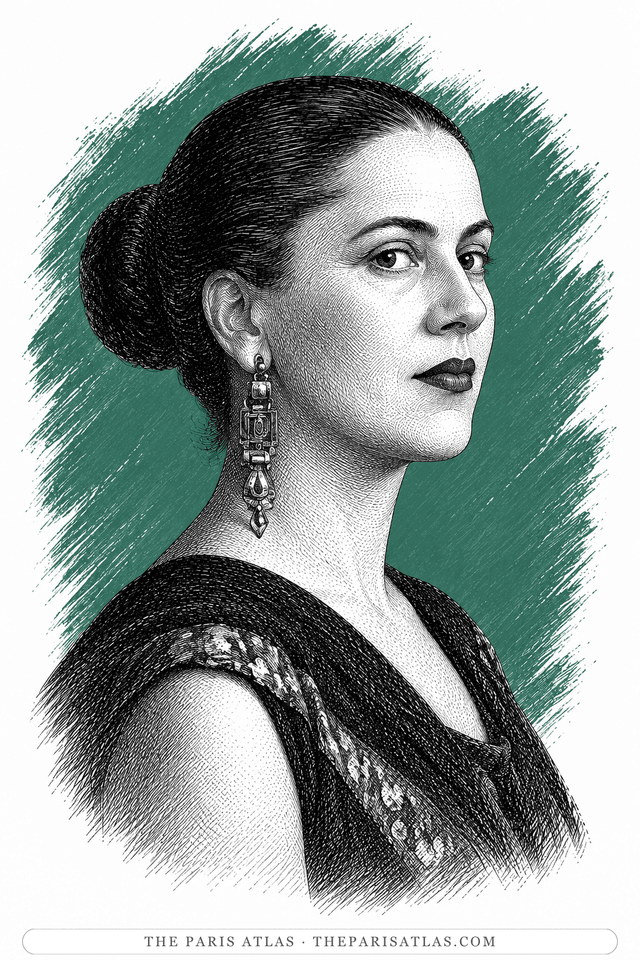
Tarsila do Amaral
Brazilian painter who spent the 1920s moving between São Paulo and Paris, studied Cubism under André Lhote, Albert Gleizes and Fernand Léger, and used what she learned to paint Brazilian towns, railways, plants and bodies. Her 1928 painting Abaporu prompted the manifesto that gave the Anthropophagic movement its name.
View artist
Arman
French-American artist, lifelong friend of Yves Klein, and a founder of New Realism.
View artist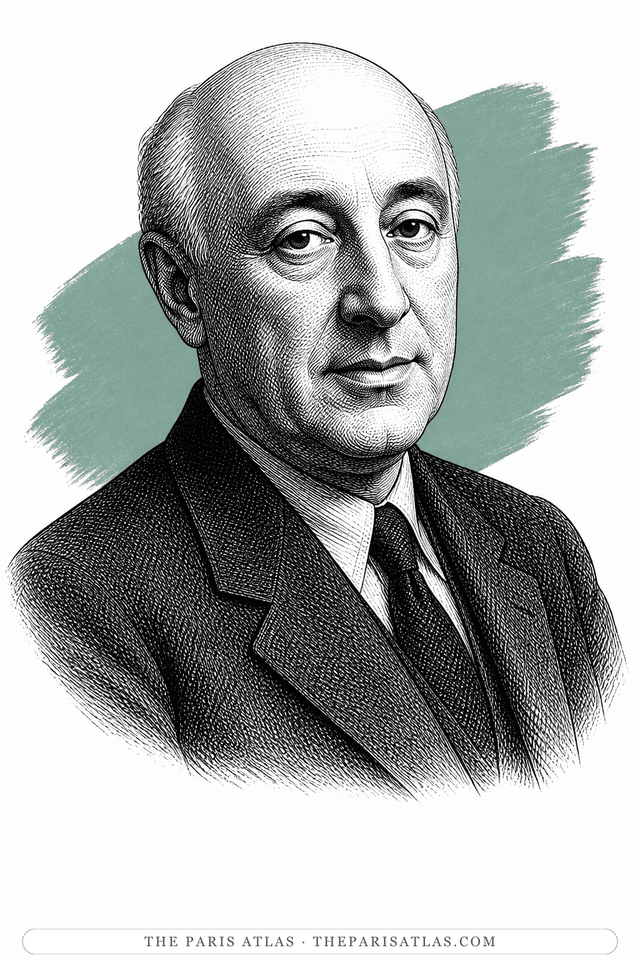
Jean Arp
Strasbourg-born sculptor and poet — Hans in German, Jean in French, both all his life — who co-founded Dada at the Cabaret Voltaire in 1916, composed collages by dropping torn paper 'according to the laws of chance', and settled at Meudon outside Paris in a house his wife Sophie Taeuber-Arp designed.
View artist
References
The sources below include collection records, catalogues, scholarly research, and primary materials that informed this page. They document Viktualienmarkt with St Peter's Church, Munich, its making, and its place in cultural history.


1abFile: Museum of World War II, Natick, Massachusetts, 2015 — Adolf Hitler watercolour of the Viktualienmarkt and St Peter's Church, Munich
WebsiteWikimedia Commons, 2015Used forWeb source consulted for documented facts and historical context presented on the Viktualienmarkt with St Peter's Church, Munich page.

2↑There Is a Market for Artworks by Hitler. Many of Them Are Fakes
PeriodicalSmithsonian Magazine, 2019Used forContemporary reporting or criticism used to document the historical reception and context of Viktualienmarkt with St Peter's Church, Munich.
3↑Hitler watercolours seized as suspected fakes
PeriodicalThe Art Newspaper, 2019Used forContemporary reporting or criticism used to document the historical reception and context of Viktualienmarkt with St Peter's Church, Munich.
4↑Faking Hitler: the story behind a sinister market
PeriodicalThe Art Newspaper, 2019Used forContemporary reporting or criticism used to document the historical reception and context of Viktualienmarkt with St Peter's Church, Munich.
_St_Peter%27s_Chuch_(Sankt_Peter)_Munich.jpg) View source
View source5↑Nuremberg prosecutor seizes 63 Hitler works from auction house on forgery suspicions
PeriodicalThe Art Newspaper, 2019Used forContemporary reporting or criticism used to document the historical reception and context of Viktualienmarkt with St Peter's Church, Munich.
6↑Forging the Führer: inside the sinister trend for fake Hitler paintings
PeriodicalProspectUsed forContemporary reporting or criticism used to document the historical reception and context of Viktualienmarkt with St Peter's Church, Munich.
7↑Copyright of Adolf Hitler's Mein Kampf expires
PeriodicalBBC News, 2016Used forContemporary reporting or criticism used to document the historical reception and context of Viktualienmarkt with St Peter's Church, Munich.
These references provide the documented foundation for this work's history and interpretation. Claim-level citations remain attached to the specific claims they support.
 Explore more resources