The Paris AtlasCharting the artists, works, and places worth returning to.

In their own words

Charles Dickens quotes

6 quotations, each verified against its source and credited to the work it comes from — the wording as Charles Dickens wrote or said it, not as the internet passes it around.

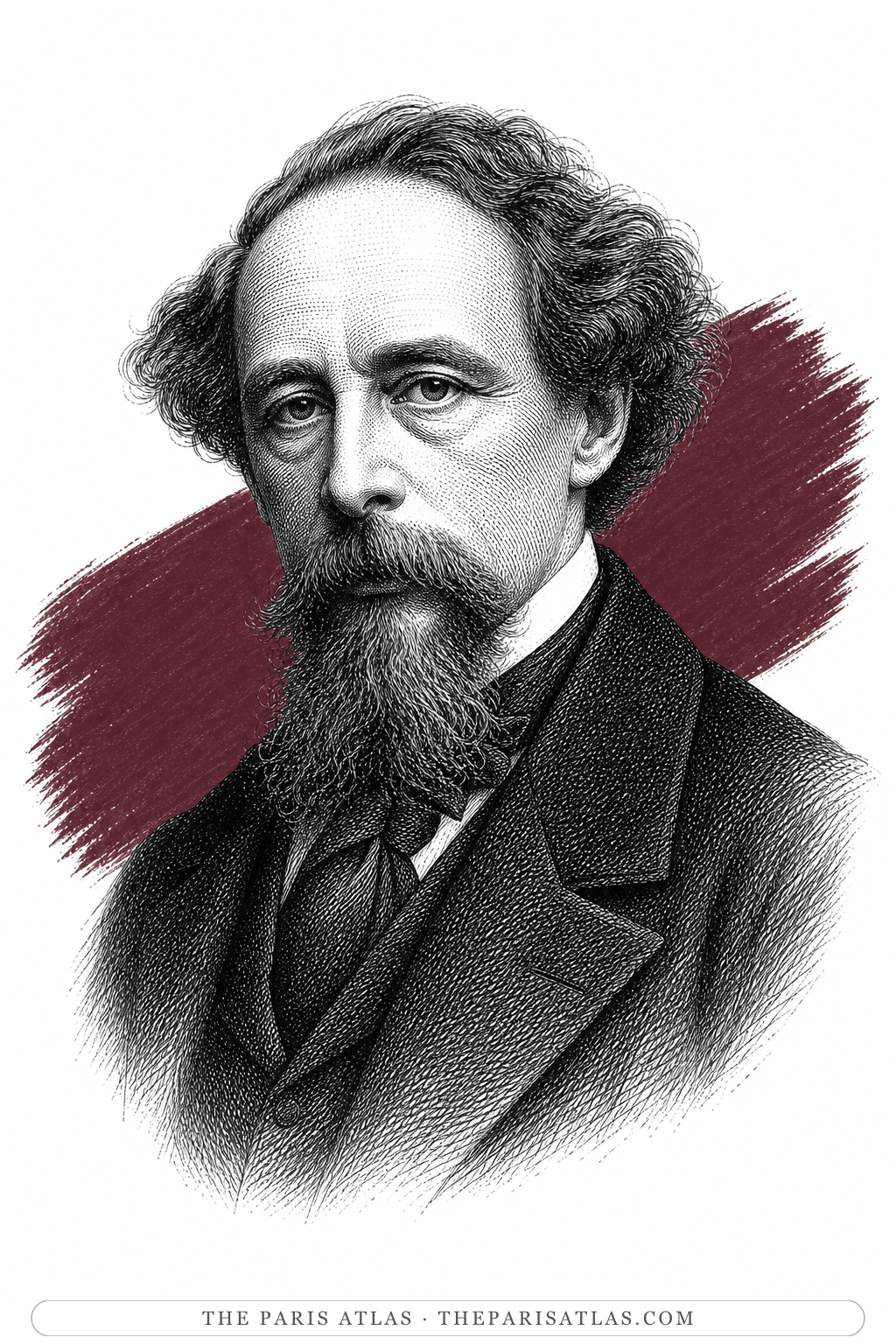
Illustrated portrait of Charles Dickens

How these quotes were checked

How we decide whether a quote is genuine

Everything Charles Dickens published is in the public domain, so his quotations can be checked against the books themselves rather than against each other. Every line here is verified verbatim against the complete texts.

What that checking mostly catches is not invention but erosion: the famous sentences are quoted shorter and smoother than Dickens wrote them. Two cases are documented below.

Four famous Hemingway quotes, fact-checked

A sentence linked to Hemingway may be exact, shortened, remembered by someone else, or unsupported. Each label below explains what the available evidence actually proves.

Common paraphrase

It was the best of times, it was the worst of times.

Accurate as far as it goes, and it stops after eleven words. Dickens's sentence keeps going through ten paired opposites — wisdom and foolishness, belief and incredulity, Light and Darkness, hope and despair — and the accumulation is the effect the short version removes.

  • Charles Dickens, Project Gutenberg texts of A Tale of Two Cities (#98), Oliver Twist (#730), A Christmas Carol (#46) and David Copperfield (#766)
Common paraphrase

Annual income twenty pounds, annual expenditure nineteen nineteen six, result happiness.

Micawber says “nineteen nineteen and six.” The circulating version drops the “and,” which turns a spoken sum into a written one and loses the rhythm of a man reciting his own ruin.

  • Charles Dickens, Project Gutenberg texts of A Tale of Two Cities (#98), Oliver Twist (#730), A Christmas Carol (#46) and David Copperfield (#766)
It was the best of times, it was the worst of times, it was the age of wisdom, it was the age of foolishness, it was the epoch of belief, it was the epoch of incredulity, it was the season of Light, it was the season of Darkness, it was the spring of hope, it was the winter of despair.
Charles Dickens, A Tale of Two Cities (1859), the opening sentence
It is a far, far better thing that I do, than I have ever done; it is a far, far better rest that I go to than I have ever known.
Sydney Carton · Charles Dickens, A Tale of Two Cities (1859), the closing lines
Please, sir, I want some more.
Oliver Twist · Charles Dickens, Oliver Twist (1838)
Annual income twenty pounds, annual expenditure nineteen nineteen and six, result happiness. Annual income twenty pounds, annual expenditure twenty pounds ought and six, result misery.
Wilkins Micawber · Charles Dickens, David Copperfield (1850)
Whether I shall turn out to be the hero of my own life, or whether that station will be held by anybody else, these pages must show.
Charles Dickens, David Copperfield (1850), the opening sentence
I will honour Christmas in my heart, and try to keep it all the year.
Ebenezer Scrooge · Charles Dickens, A Christmas Carol (1843)

Questions about Charles Dickens quotes

What is the full opening line of A Tale of Two Cities?

It runs far past the eleven words usually quoted: best of times and worst of times, age of wisdom and of foolishness, epoch of belief and of incredulity, season of Light and of Darkness, spring of hope and winter of despair — and then continues still further before the sentence ends.

What are the last words of A Tale of Two Cities?

“It is a far, far better thing that I do, than I have ever done; it is a far, far better rest that I go to than I have ever known.” They are Sydney Carton's, imagined as he goes to the guillotine in Charles Darnay's place.

Did Oliver Twist say “please sir, I want some more”?

Yes — in the workhouse, after the starving boys draw lots to decide who will ask. Dickens follows it with the master turning very pale.

What is the Micawber principle?

Mr Micawber's rule from David Copperfield: twenty pounds of income against nineteen nineteen and six of expenditure is happiness; against twenty pounds and sixpence it is misery. Sixpence is the entire difference, which is the joke and the tragedy, since Micawber never manages the happy side of it.

Are Dickens's famous lines usually quoted accurately?

Usually accurately but rarely completely. His most quoted sentences are long, and circulation shortens them — the Tale of Two Cities opening loses most of its clauses, and Micawber's arithmetic loses a word. The full versions are on this page.

References

References

The sources below are the editions, archives, and full-text searches used to verify the quotations on this page. Every line was checked against one or more of them before it appeared here.

  1. 1Project Gutenberg texts of A Tale of Two Cities (#98), Oliver Twist (#730), A Christmas Carol (#46) and David Copperfield (#766)


    Website
    Charles Dickens
    Used for

    Web source consulted for documented facts and historical context presented on the Charles Dickens page.

    View source
i
Why these sources are here

Verification is the point of this collection: a quotation is listed only when its wording has been checked against the sources above, and the attribution notes record what each check found about the famous lines that failed.

Explore more resources

The Friday Letter

One story from the atlas, every Friday.

No algorithms chasing attention. A work, a place, and the connection between them — with the history checked.

One email a week. No spam, no selling your address. Unsubscribe anytime.