The Paris AtlasCharting the artists, works, and places worth returning to.
  • Painter
  • Designer
  • Illustrator
· French · 1877–1953

Raoul Dufy

The French painter who turned Fauvist colour into a quick, bright shorthand for regattas, racecourses and seafronts, and applied it just as readily to dress fabric, ceramics and a mural the size of a wall of a building.

Details

Lived
1877–1953
Born
3 June 1877
Birthplace
Le Havre
Died
23 March 1953 · aged 75
Place of death
Forcalquier
Nationality
French
Profession
Painter, designer and illustrator
Major works
La Fée Electricité (1937), Regatta at Cowes (1934), Street Decked with Flags (1906), and the Bianchini-Férier textile designs
Roles
PainterDesignerIllustrator

About Raoul Dufy

French painter of regattas and seafronts who carried Fauvist colour into textiles, ceramics and public murals

Raoul Dufy was a French painter, born in Le Havre on 3 June 1877, known for bright, rapidly drawn scenes of outdoor social life: sailing regattas, racecourses, orchestras and the seafront at Nice. He worked in oil and watercolour, and also in fabric, ceramics, book illustration, tapestry and stage design.

The second of eleven children of a Le Havre accountant, he left school at fourteen to work for a coffee importer and studied art at night. A scholarship took him to Paris in 1900. Seeing Henri Matisse's Luxe, calme et volupté in 1905 turned him toward Fauvism and its strong, unmixed colour. By about 1920 he had settled into the manner he is known for: a fast skeleton of drawn lines with thin washes of colour laid across it, often deliberately out of register with the drawing.

From 1909 he also designed for the couturier Paul Poiret, and from 1912 produced textile patterns for the silk firm Bianchini-Férier. His largest work, La Fée Electricité, was painted for the 1937 Paris international exposition and covers about six hundred square metres. He won the grand prize for painting at the Venice Biennale in 1952 and died at Forcalquier on 23 March 1953.

Le Havre and the night class, 1877–1900

Raoul Dufy was born on 3 June 1877 in Le Havre, the Normandy port city, the second of eleven children. His father, Léon Marius Dufy, kept the books for a steel manufacturer and was a serious amateur musician, and music stayed with Dufy as a subject all his life. At fourteen he left school to work for a company that imported coffee through the port. In 1895, at eighteen, he began taking evening classes at Le Havre's municipal art school under Charles Lhuillier, who had trained with the portrait painter Jean-Auguste-Dominique Ingres.

Two fellow students in that class, Othon Friesz and Raimond Lecourt, became lifelong friends, and Dufy later shared a studio with Friesz in Montmartre. His work in these years was mostly Norman landscape in watercolour. After a year of military service he won a scholarship in 1900 to the École nationale supérieure des Beaux-Arts in Paris, where Friesz was also studying and where Georges Braque, another Le Havre painter, overlapped with them.

First exhibitions and the turn to Fauvism, 1901–1909

Dufy showed publicly for the first time in 1901 and exhibited at the Salon des Indépendants in 1903. The dealer Berthe Weill took his work into her gallery from 1902, and the painter Maurice Denis bought one of his canvases, an early sign that other artists were watching him. His painting at this point was in the line of Claude Monet and Camille Pissarro, and he worked the beaches near Le Havre, particularly at Sainte-Adresse, which Monet and Eugène Boudin had already made famous.

The decisive picture was somebody else's. At the 1905 Salon des Indépendants, Dufy saw Henri Matisse's Luxe, calme et volupté and turned toward the group the critics had just nicknamed the Fauves, the wild beasts, for their unmixed colour and hard outlines. He painted in that manner until about 1909, producing pictures such as Street Decked with Flags of 1906, a Bastille Day street in Le Havre reduced to blocks of flag colour. Contact with the work of Paul Cézanne then pulled him toward a more structured, subdued handling, and he painted alongside Braque at L'Estaque in 1908.

Poiret, Bianchini-Férier, and the fabric years, 1909–1930

In 1909 the couturier Paul Poiret commissioned Dufy to design the fashion house's printed stationery, and the two went on working together for years. Dufy set up a small woodblock printing operation with Poiret's backing, cutting his own blocks to print fabric directly. From 1912 he was under contract to Bianchini-Férier, the Lyon silk manufacturer, and for roughly the next twenty years his patterns were woven and printed into dress silks that Poiret and the shirtmaker Charvet made up into garments.

The commercial work was not a sideline he tolerated for the money. Dufy's drawing was already flat, graphic and decorative, and it suited cloth better than most easel painting does. He also cut woodblocks for books, most famously the illustrations for Guillaume Apollinaire's Le Bestiaire ou Cortège d'Orphée in 1911, and his plates later appeared in books by Stéphane Mallarmé and André Gide. Tapestry, ceramics and stage sets followed.

The stenographic style, 1920–1940

After a period working through Cubism, Dufy arrived around 1920 at the method that made his name. He drew a rapid, skeletal structure in line and used a steeply foreshortened perspective. Then he laid thin, fast washes of colour over the drawing without matching the two exactly, so that a blue might run past the edge of the boat it belongs to. Critics called it stenographic, after shorthand writing. It let him paint quickly and made the finished picture look like something caught in passing.

The subjects were the pleasures of the interwar rich, painted without complaint or comment: yacht races at Cowes and Deauville, horses at Epsom and Longchamp, orchestras, the harbour at Nice and the promenade along the French Riviera. Regatta at Cowes of 1934 is the type of the thing, a crowded sea of sails and flags in a handful of colours.

His largest commission came from the electricity utility for the 1937 Exposition Internationale in Paris. La Fée Electricité, the Electricity Fairy, is painted in oil on plywood panels and covers about six hundred square metres, which made it one of the largest paintings in the world at the time. It runs the history of electric power from the Greek philosophers to the modern power station, with more than a hundred figures of scientists and inventors along the way. It now hangs in the Musée d'Art Moderne de Paris.

Arthritis, Boston, and death, 1940–1953

Rheumatoid arthritis crippled Dufy's hands in the 1940s. By 1950 he could not hold a brush and had it strapped to his hand so that he could keep working. In April of that year he travelled to Boston for an experimental course of cortisone and corticotropin, drugs newly developed from the research of Philip S. Hench, and the treatment worked well enough that he dedicated several later paintings to the American doctors and researchers who gave it to him.

He exhibited at the Salon des Tuileries in Paris in the late 1940s and early 1950s, and in 1952 he won the grand prize for painting at the 26th Venice Biennale. Raoul Dufy died on 23 March 1953 at Forcalquier, in Provence, aged 75. The cause was intestinal bleeding, which is thought to have been a consequence of the long drug treatment that had given him back the use of his hands. He was buried in the monastery cemetery at Cimiez, above Nice, close to the grave of Matisse.

How Dufy worked

Dufy separated drawing from colour and refused to reconcile them. Most painters make the colour sit inside the drawn shape. He laid down a quick line drawing, then washed colour across it in broad areas that ignore the outlines, so the eye assembles the picture from two layers that do not quite agree. He had noticed that a child's eye registers a colour before it registers the object, and built the method on that.

He also worked in what he called tonal colour, keeping a single dominant hue across a canvas, most often the deep marine blue now sold under his name as Dufy blue. He painted fast and repeated his subjects often, sometimes making dozens of versions of the same regatta or orchestra. The habit is why his work is easy to recognise and, for some critics, easy to undervalue.

Reception and changing reputation

Dufy has always sold well and has often been ranked below the painters he came up with. The charge is that the work is decorative, repetitive and untroubled, made for a pleasant wall rather than an argument, and that the fabric and ceramic commissions confirm it. The defence is that he set out to do something specific with colour and light and did it consistently for thirty years, and that the cheerfulness is a choice rather than a limit.

His standing rose in the second half of his life. The Venice Biennale prize in 1952 came a year before his death, and major retrospectives followed at the Musée d'Art Moderne de Paris and, in 1983, at the Hayward Gallery in London. His paintings are held by the Metropolitan Museum of Art, the Museum of Modern Art, the Centre Pompidou, the Art Institute of Chicago and the National Gallery of Art in Washington. His textile designs are now collected as design history in their own right.

Life events

  1. 1877

    Born in Le Havre on 3 June, the second of eleven children of an accountant and amateur musician.

    Raoul Dufy

  2. 1895

    Begins evening classes at Le Havre's art school under Charles Lhuillier, meeting Othon Friesz.

    Raoul Dufy

  3. 1900

    Wins a scholarship to the École nationale supérieure des Beaux-Arts in Paris.

    Raoul Dufy

  4. 1905

    Sees Matisse's Luxe, calme et volupté at the Salon des Indépendants and turns to Fauvism.

    Raoul Dufy

  5. 1909

    Paul Poiret commissions him to design stationery for the fashion house.

    Raoul Dufy

  6. 1911

    Cuts the woodblock illustrations for Guillaume Apollinaire's Le Bestiaire ou Cortège d'Orphée.

    Raoul Dufy

  7. 1912

    Signs with the Lyon silk manufacturer Bianchini-Férier, beginning some twenty years of textile design.

    Raoul Dufy

  8. 1920

    Arrives at the rapid line-and-wash manner critics called stenographic.

    Raoul Dufy

  9. 1937

    Completes La Fée Electricité for the Paris Exposition Internationale, about six hundred square metres of oil on plywood.

    Raoul Dufy

  10. 1950

    Travels to Boston for experimental cortisone treatment after rheumatoid arthritis stops him holding a brush.

    Raoul Dufy

  11. 1952

    Wins the grand prize for painting at the 26th Venice Biennale.

    Raoul Dufy

  12. 1953

    Dies of intestinal bleeding at Forcalquier on 23 March, aged 75, and is buried at Cimiez near Matisse.

    Raoul Dufy

People they knew

Documented connections — every one carries its source.

Paul Poiret

  • Fashion designer

Collaborated with · 1909

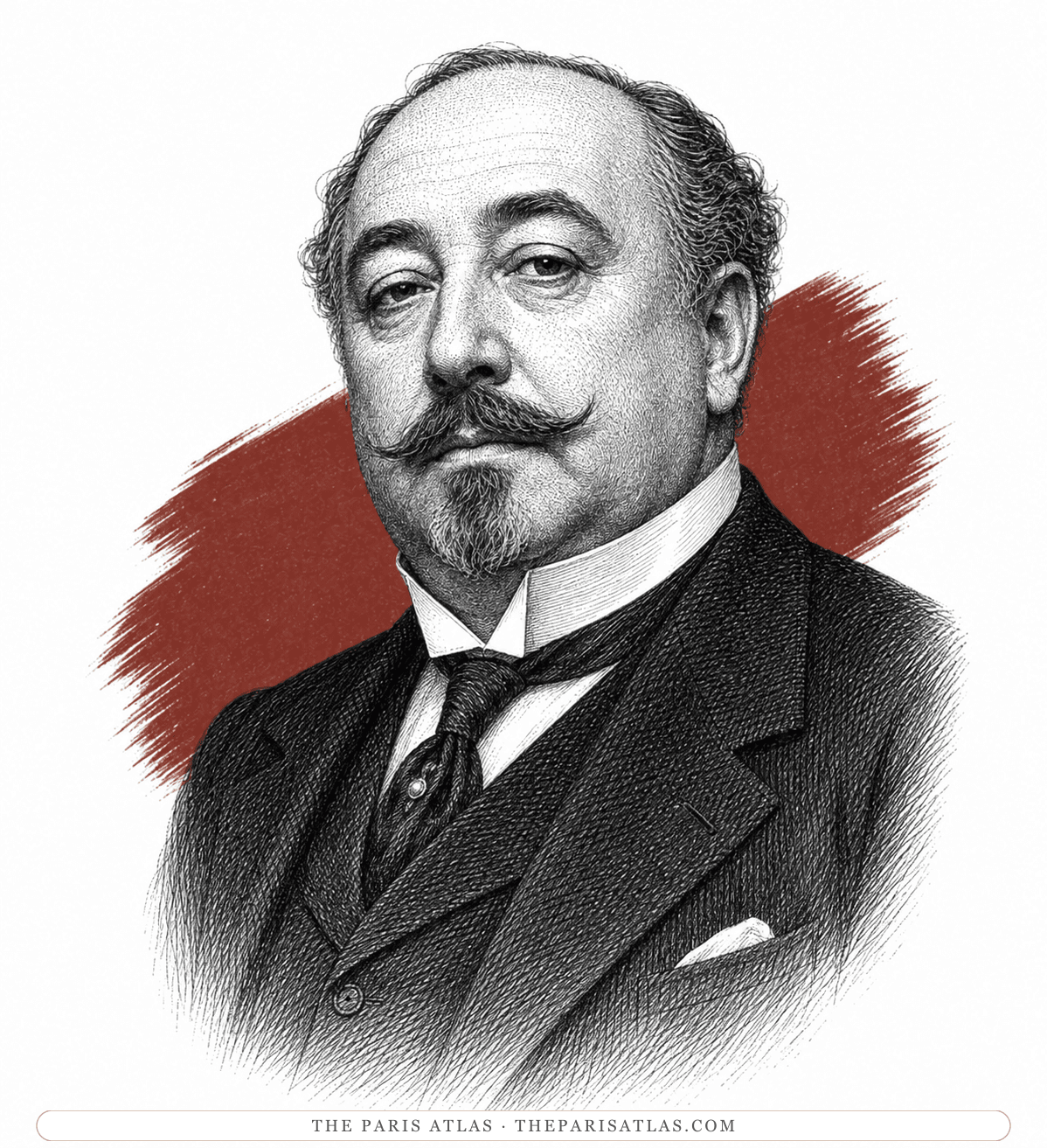
Paul Poiret commissioned Dufy to design the fashion house's stationery in 1909, and from 1912 Dufy's bold graphic textile patterns, woven by Bianchini-Férier, were made up into Poiret garments. The two returned to each other repeatedly, Dufy's flat, decorative line matching Poiret's taste.

Raoul Dufy

Who they drew from

Influence running inward — the writers and artists whose work fed theirs. Admiration is not acquaintance; these edges claim neither a meeting nor a friendship.

Illustrated portrait of Henri Matisse

Henri Matisse

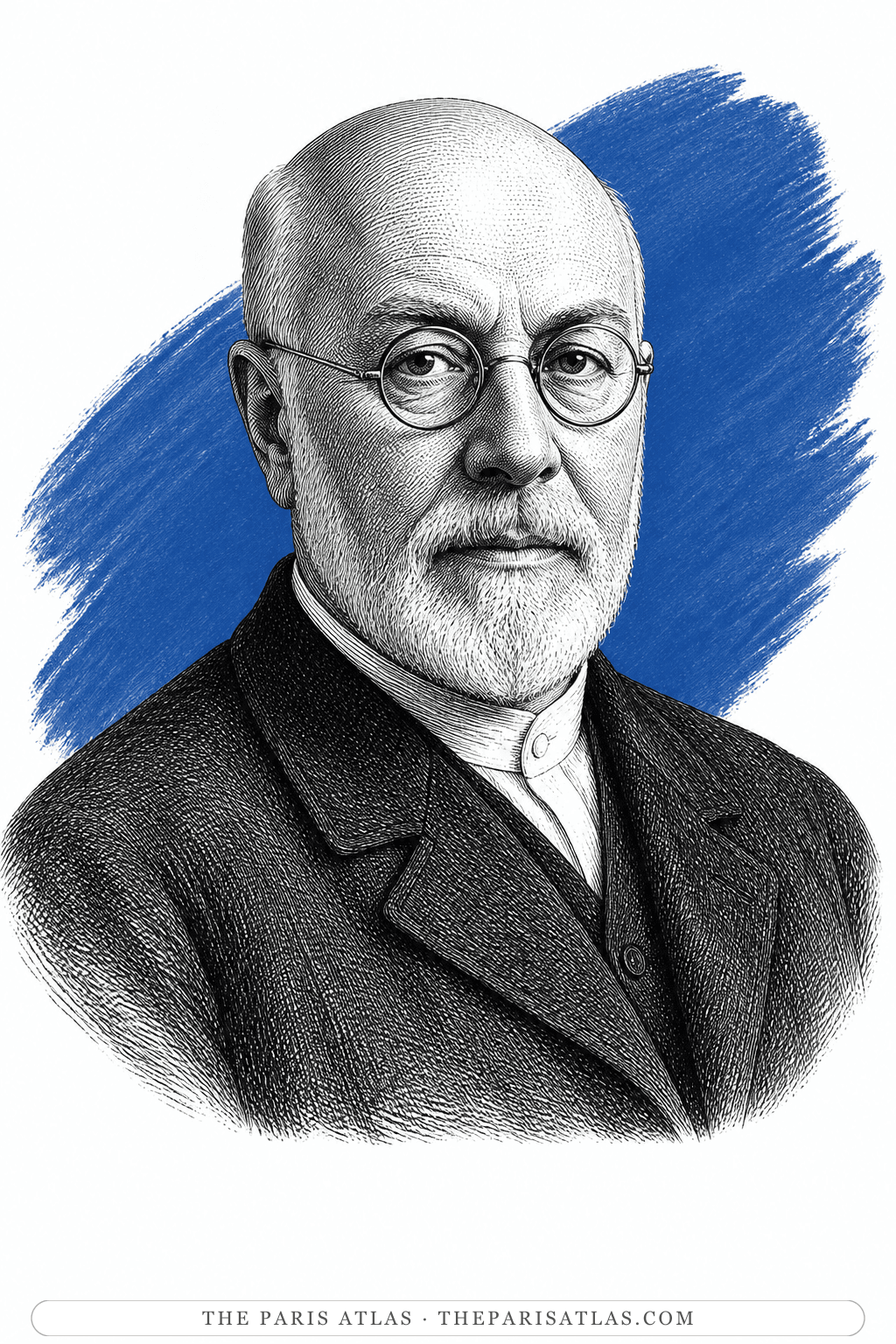
Seeing Henri Matisse's Luxe, calme et volupté at the 1905 Salon des Indépendants turned Dufy toward Fauvism, its bright colour and bold outline. He worked in the manner until about 1909, when Cézanne pulled him toward a subtler technique, but the high-keyed palette stayed the basis of the stenographic style he became known for.

Raoul Dufy

Questions about Raoul Dufy

Who was Raoul Dufy?

Raoul Dufy (1877–1953) was a French painter best known for bright, rapidly drawn scenes of outdoor social life: sailing regattas, horse races, orchestras and the seafront at Nice. He began as a Fauvist after seeing Henri Matisse's work in 1905, and by about 1920 had developed the quick line-and-wash style he is identified with. He also designed textiles, ceramics, tapestries and book illustrations.

What is Raoul Dufy's most famous painting?

La Fée Electricité, painted in 1937 for the Paris Exposition Internationale. It covers about six hundred square metres in oil on plywood panels, which made it one of the largest paintings in the world when it was made. It tells the story of electric power from Greek philosophy to the modern power station, across more than a hundred figures. It is now in the Musée d'Art Moderne de Paris. Among his easel paintings, Regatta at Cowes of 1934 is the best known.

What is Dufy blue?

It is the deep marine blue that dominates much of Dufy's work, particularly his sea and harbour scenes, and it is now sold as an artists' colour under his name. Dufy often kept one hue dominant across a whole canvas, a practice he called tonal colour, and blue was the one he returned to most.

Why did Raoul Dufy design fabric?

Because the work suited his drawing and because the couturier Paul Poiret asked him to. Poiret commissioned him to design the fashion house's stationery in 1909 and backed a small woodblock printing operation, and from 1912 Dufy was under contract to the Lyon silk firm Bianchini-Férier. For roughly twenty years his patterns were made up into dresses by Poiret and shirts by Charvet. His flat, graphic line worked better on cloth than most easel painting does.

How did Raoul Dufy die?

He died on 23 March 1953 at Forcalquier in Provence, aged 75, of intestinal bleeding. The bleeding is thought to have been a consequence of the long course of cortisone and corticotropin he had been taking since 1950 for rheumatoid arthritis. That treatment had restored enough movement in his hands for him to paint, after years of having a brush strapped to them. He was buried in the monastery cemetery at Cimiez above Nice, near the grave of Henri Matisse.

Was Raoul Dufy related to Jean Dufy?

Yes. Jean Dufy, born in 1888, was his younger brother and also a painter, working in a comparable bright, decorative manner on similar subjects. The two are frequently confused, and Jean's work is sometimes mistaken for his brother's on the market.

Sourced claims

Every connection the graph holds for Raoul, with the evidence behind it.

Collaborated with · 1909

Paul Poiret

Paul Poiret commissioned Dufy to design the fashion house's stationery in 1909, and from 1912 Dufy's bold graphic textile patterns, woven by Bianchini-Férier, were made up into Poiret garments. The two returned to each other repeatedly, Dufy's flat, decorative line matching Poiret's taste.

Raoul Dufy

Influenced by

Henri Matisse

Seeing Henri Matisse's Luxe, calme et volupté at the 1905 Salon des Indépendants turned Dufy toward Fauvism, its bright colour and bold outline. He worked in the manner until about 1909, when Cézanne pulled him toward a subtler technique, but the high-keyed palette stayed the basis of the stenographic style he became known for.

Raoul Dufy

References

References

The sources below include biographies, scholarly essays, interviews, and primary materials that informed this page. They reflect both the historical record and ongoing critical conversations about Raoul Dufy and their work.

  1. 1Raoul Dufy

    Website
    Wikipedia
    Used for

    Reference article cross-checked for the training in Le Havre, the Fauvist turn, the Poiret and Bianchini-Férier work, La Fée Electricité, the Boston treatment and the death.

    View source
  2. 2Raoul Dufy

    Website
    Encyclopaedia Britannica
    Used for

    Encyclopaedia Britannica's biography, used for dates, the illustration work and the outline of the career.

    View source
  1. 3Raoul Dufy

    Website
    The Museum of Modern Art
    Used for

    The Museum of Modern Art's artist record and holdings.

    View source
  2. 4Raoul Dufy: Paintings, Drawings, Illustrated Books, Mural Decorations, Aubusson Tapestries, Fabric Designs and Fabrics for Bianchini-Férier, Paul Poiret Dresses, Ceramics, Posters, Theatre Designs

    Exhibition catalogue
    Arts Council of Great Britain, 1983
    Used for

    The Arts Council of Great Britain's 1983 retrospective catalogue, which covers the fabric designs for Bianchini-Férier and the Poiret dresses alongside the paintings.

i
Why these sources are here

These references anchor the page in the documented record and in the scholarly conversations around Raoul Dufy. Every claim on this page traces back to one or more of the works listed here.

Explore more resources