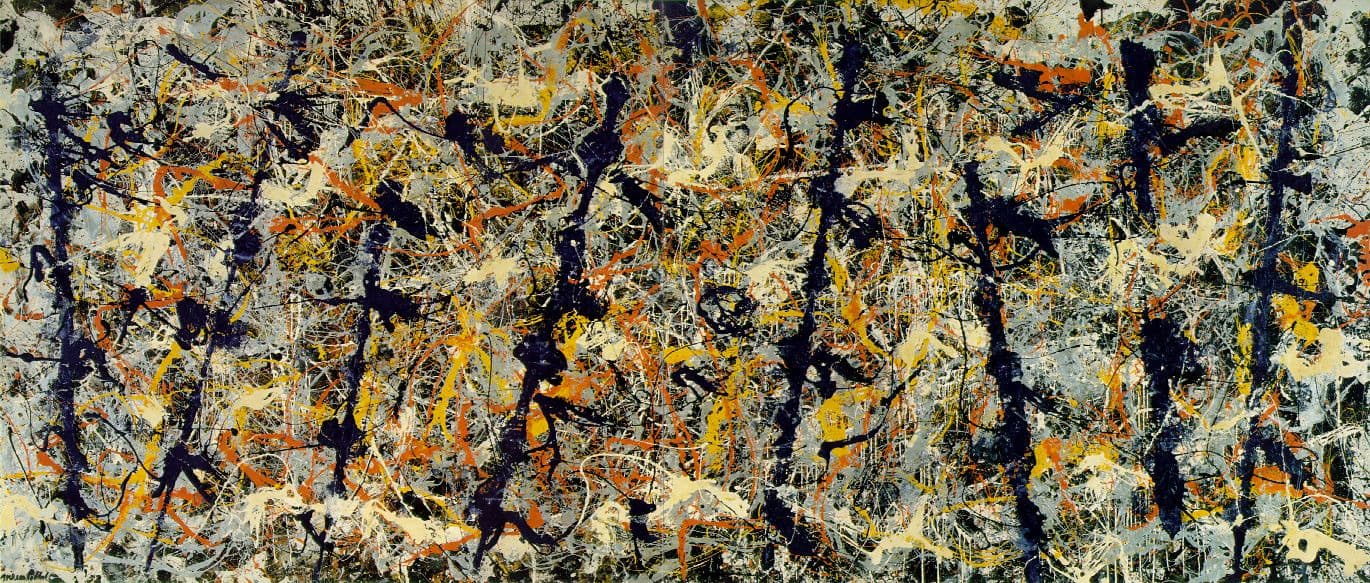
Blue poles [Number 11, 1952]
A canvas nearly five metres wide, made in 1952 and first shown as Number 11, 1952. Eight dark blue-black poles lean across a field of orange, cadmium yellow, cream, black and silver aluminium paint. The National Gallery of Australia records that the poles were made by pressing the wet edge of a painted length of wood onto the surface. It also records curved fragments of glass buried in the paint, and a signature whose date was originally a 3, painted over with a 2.
- 1952
- Oil, enamel, aluminium paint, glass on canvas
- National Gallery of AustraliaCanberra, Australia
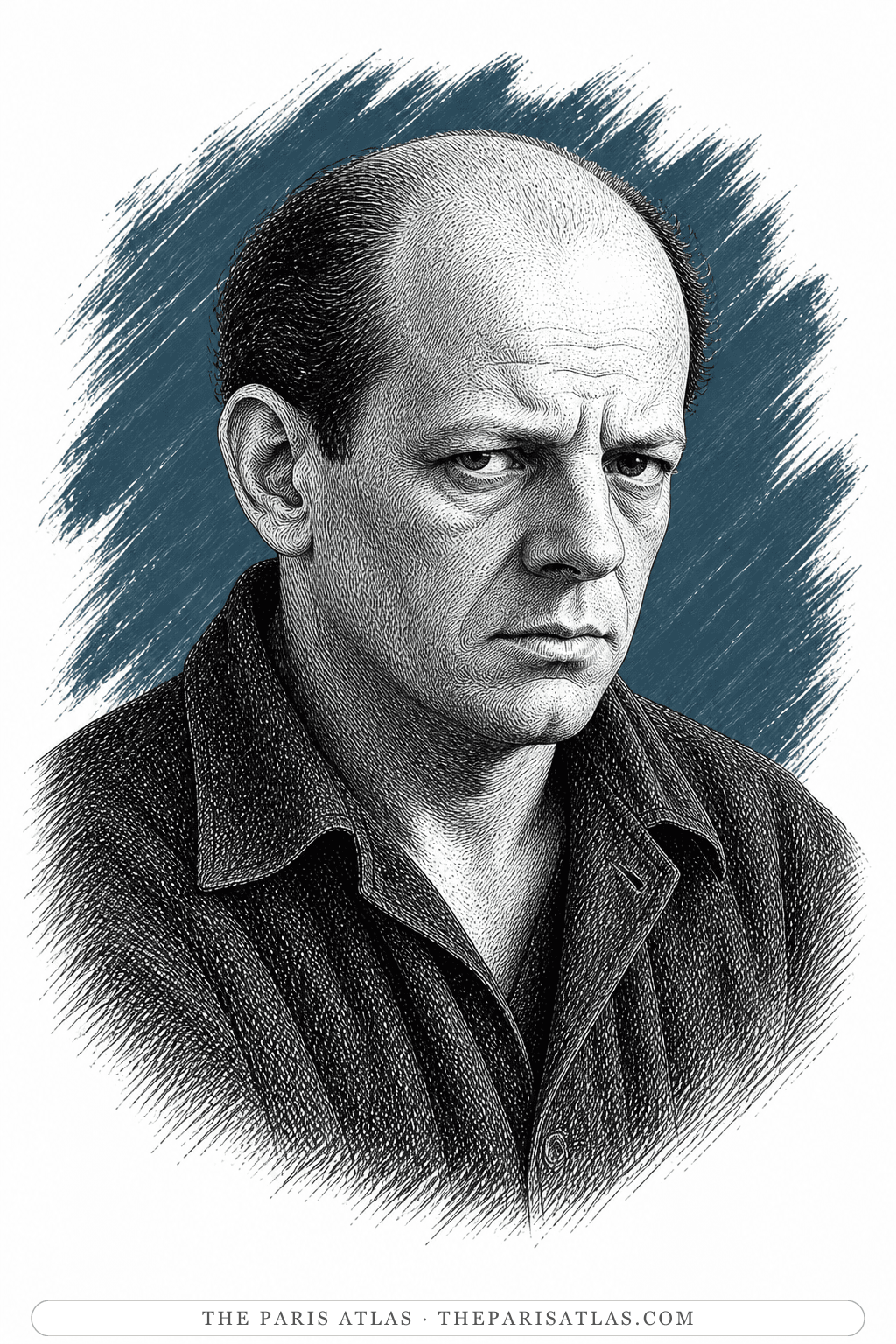
About Jackson Pollock
What the canvas shows
Eight dark vertical bars cross the canvas at intervals, reaching almost its full height. None is upright: each tilts a few degrees left or right, and each is crossed by three or four short horizontal lines. They are not black but a deep blue-black, closer to ultramarine mixed into black than to pure enamel black.
Behind them the surface is an even mesh with no resting point. The ground reads as a pale silver-grey, laid down in aluminium paint, and over it run orange lines close to tangerine, bright cadmium yellow, thick cream pools, thin white threads and a separate skein of pure black. The National Gallery of Australia names these colours and adds that they are standard hardware-store shades.
The painting is 212.1 centimetres high by 488.9 centimetres wide in the gallery's collection record, and weighs 99 kilograms with its frame. The gallery's own essay on the painting rounds the figures to 213 by 489.5 centimetres.
How the poles were made
The poles were not poured and not brushed. Sarina Noordhuis-Fairfax, the National Gallery's Curator of Australian Prints and Drawings, records that they were formed by pressing the wet edge of a painted length of wood onto the canvas surface. They went on towards the end of the painting process, and were then overlaid with further flung lines of cream, tangerine and black.
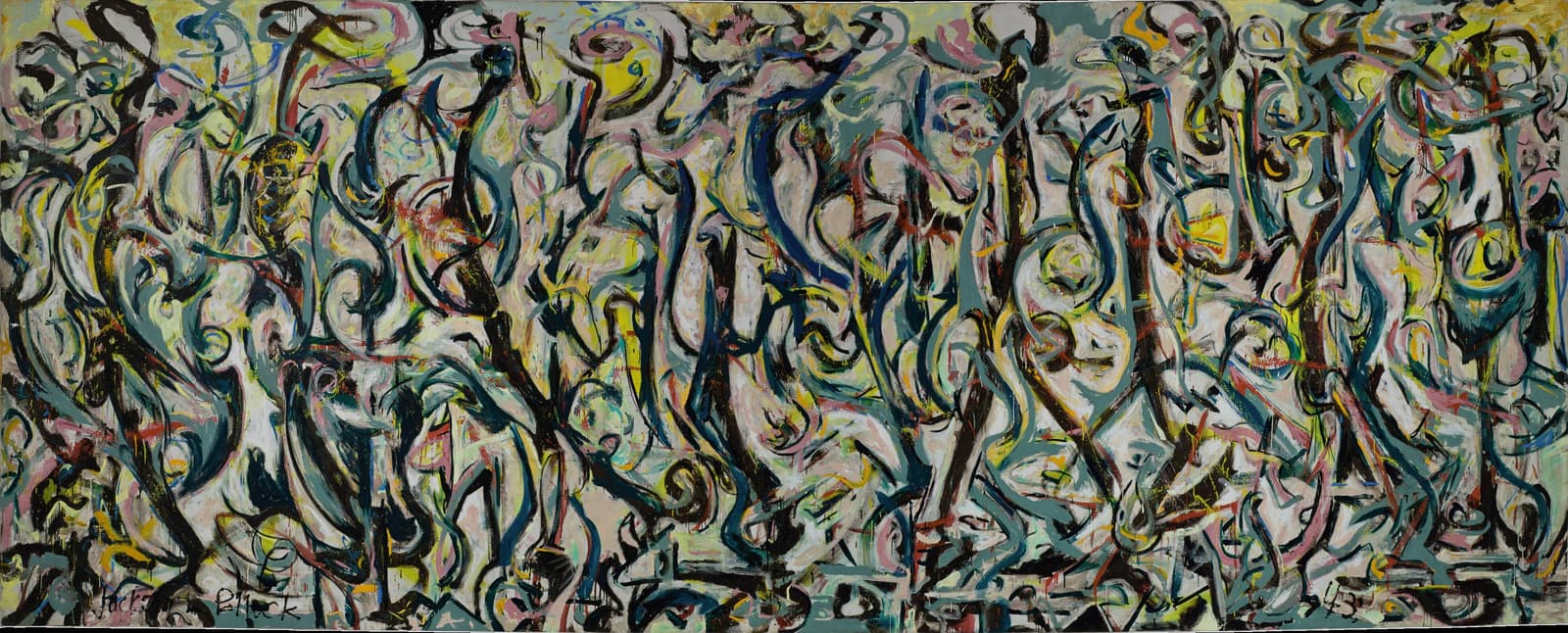
That order reverses the usual assumption. The eight verticals look like a structure the rest of the painting was built around, and they were in fact the last major move. The same reversal turned up in the Getty's study of Mural, where the dark verticals also proved to be late rather than first.
Jackson Pollock's earliest teacher, Thomas Hart Benton, had taught that a long horizontal composition needs vertical poles acting as a skeleton. The National Gallery of Australia connects the eight bars to that teaching directly.
Paint, glass and which way gravity pulled
Aluminium paint is the unusual material here. It is a shiny silver made from aluminium particles, and Jackson Pollock used it for the textural contrast it makes against ordinary oil paint. The National Gallery of Australia records that tiny ripples have formed in both the cadmium yellow and the aluminium paint as they dried, puckering the surface.
Curved fragments of glass are buried under the layers. Hans Namuth's documentary, filmed at Springs in 1950 and released in 1951, records Pollock listing sand, broken glass, pebbles, string, nails and other foreign matter among the things he liked to work into a surface.
Most of the painting was made with the canvas flat on the floor, so gravity did not pull the paint into runs. There is one exception: a single thin layer of white did drip, made while the canvas was temporarily tacked up on the studio wall. Those runs are the only place in the picture where down is a direction.
What he was holding
By 1952 Jackson Pollock rarely touched the canvas with anything. The National Gallery of Australia lists his tools as sticks, dried paintbrushes, trowels, turkey basters and syringes, used with twists of the right wrist to flick, squirt, pour and drizzle. The drawing, in the gallery's phrase, was done in the air above the canvas.
Line thickness records which tool and which movement. Runny low-viscosity paint holds together rather than breaking into droplets, so some lines landed as continuous gooey strands, while a faster throw produced a thin whipping line that tapers at its end.
The title, and the date that was changed
The painting was first exhibited as Number 11, 1952, in Jackson Pollock's solo show at the Sidney Janis Gallery in New York in November 1952. He gave it the descriptive title Blue poles two years later, referring to the eight dark vertical stripes. The National Gallery of Australia catalogues it as Blue poles [Number 11, 1952], with a lower-case p.
The signature is at the lower left and reads Jackson Pollock 52. The gallery's collection record notes that the last digit was originally inscribed as a 3 and subsequently painted over with a 2. The catalogue raisonné compiled by Francis V. O'Connor and Eugene Victor Thaw lists it as number 367.
Bought for Australia in 1973
The Acquisitions Committee of the Australian National Gallery bought the painting in August 1973 from the New York collector Ben Heller, through the Max Hutchinson Gallery in New York. Its accession number is NGA 74.264.
The purchase became a national argument about public money and modern art, and the painting has been an unusually public object in Australia ever since. The gallery now runs a dedicated archive and conservation project around it.
Close reading
Reading the work, detail by detail
Blue poles is nearly five metres wide and carries eight dark verticals that look like the structure everything else was built around. The National Gallery of Australia records that they went on near the end, pressed from the wet edge of a painted length of wood. Close view shows how differently each layer was delivered.
1.The leftmost pole, broadening at the foot
The first bar runs from top to bottom at the left and widens towards its foot. It is not black but a deep blue-black. Tangerine lines, cadmium yellow and cream pools pass behind it on a silver-grey ground.
2.The bars were pressed, not poured
The bar has hard straight sides and a blunt end, where every other mark near it is rounded. The National Gallery of Australia records that the poles were formed by pressing the wet edge of a painted length of wood onto the canvas. The difference in edge is visible.
3.Each pole is crossed by short horizontals
Short horizontal strokes cross the bar at intervals, in the same blue-black. The National Gallery of Australia counts three or four on each of the eight poles. They are what stops a pole reading as a single stripe.
4.None of the poles stands upright
The bar leans a few degrees off vertical, and its neighbours lean at other angles. Jackson Pollock's first teacher, Thomas Hart Benton, taught that a long horizontal composition needs vertical poles as a skeleton. These tilt enough to stop the picture squaring up.
5.The orange is close to tangerine
The orange runs in broad bands close to tangerine, laid over the silver ground and under the poles. The National Gallery of Australia names these as standard hardware-store colours rather than artists' pigments. They were bought in cans.
6.The silver ground is aluminium paint
The pale grey field behind everything is aluminium paint, a silver made from metal particles. Jackson Pollock used it for the contrast in texture against ordinary oil. The National Gallery of Australia records that it has dried with tiny ripples in its surface.
7.Cream paint sits in flat pools
Thick cream paint lies in broad flat pools rather than lines, spread wide where it landed. Low-viscosity paint holds together instead of breaking into droplets, so a heavy release settles rather than splashes. Tangerine and yellow lines cross the pools on top.
8.Thin white threads, and the one layer that ran
Thin white threads run down over the ground, much finer than anything else. The National Gallery of Australia records that most of the painting was made flat on the floor, so gravity produced no runs, except in one thin layer of white applied while the canvas was tacked to the studio wall.
9.Black is a separate, thinner system
The thin black lines are a separate system from the poles: pure black rather than blue-black, and a fraction of the width. They whip across the field in long curves, often ending in a taper. Two different blacks are doing two different jobs.
10.Cadmium yellow runs under the orange
Bright cadmium yellow runs beneath the orange in most places, so it was laid down earlier. The National Gallery of Australia records that the yellow has puckered into tiny ripples as it dried, as the aluminium paint has. Some layers were left to dry before the next went on.
11.The signature, and the altered date
Jackson Pollock signed at the lower left in dark blue-black, with the year beside the name. The National Gallery of Australia's collection record states that the final digit was originally inscribed as a 3 and subsequently painted over with a 2.
12.The right end is the most crowded
Two bars stand close together at the right end, with the largest cream pools and the broadest yellow patches of the picture between them. The activity is not evenly spread across the five metres. Density builds towards this end.
Timeline
1952
Painted at Springs, Long Island, and first exhibited as Number 11, 1952 at the Sidney Janis Gallery, New York, in November.
1954
Jackson Pollock gives it the descriptive title Blue poles.
1973
Bought in August from the New York collector Ben Heller, through the Max Hutchinson Gallery, by the Acquisitions Committee of the Australian National Gallery.
1974
Accessioned as NGA 74.264.
Where to see it
National Gallery of Australia
Canberra, Australia
A public viewing address has not yet been confirmed for this holding.
Purchased for the Australian national collection in 1973. Gallery displays change, so check the National Gallery of Australia's own record before making a special visit.
Frequently asked questions
How did Jackson Pollock make the poles in Blue poles?
By pressing the wet edge of a painted length of wood onto the canvas, according to the National Gallery of Australia. They were added towards the end of the process, not at the start, and were then crossed with further flung lines of cream, tangerine and black.
How many poles are there in Blue poles?
Eight. They are spaced fairly evenly across the canvas, reach almost its full height, and each tilts slightly left or right rather than standing upright. Each is crossed by three or four short horizontal lines.
What is Blue poles painted with?
Oil, enamel, aluminium paint and glass on canvas, in the National Gallery of Australia's words. The aluminium paint is a silver made from metal particles and gives the silvery ground. Curved fragments of glass are buried under the layers.
Why is the date on Blue poles painted over?
The National Gallery of Australia's collection record states that the signature at the lower left was originally inscribed with a 3 and that the digit was subsequently painted over with a 2. The work is catalogued as 1952.
What is the correct title of Blue poles?
The National Gallery of Australia catalogues it as Blue poles [Number 11, 1952], with a lower-case p. It was exhibited in November 1952 as Number 11, 1952, and Jackson Pollock added the descriptive title two years later.
How much did Australia pay for Blue poles?
The Acquisitions Committee of the Australian National Gallery bought it in August 1973 from the New York collector Ben Heller, through the Max Hutchinson Gallery. The purchase caused a public argument about spending on modern art that the painting has never entirely shaken off.
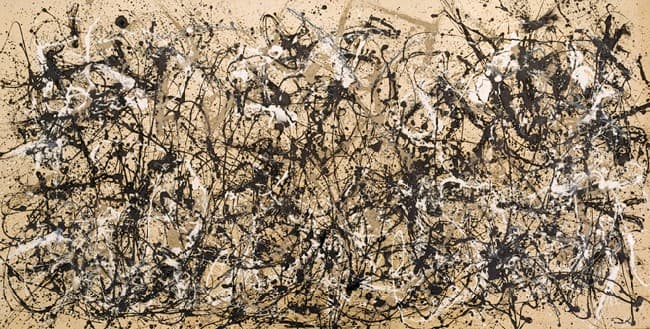
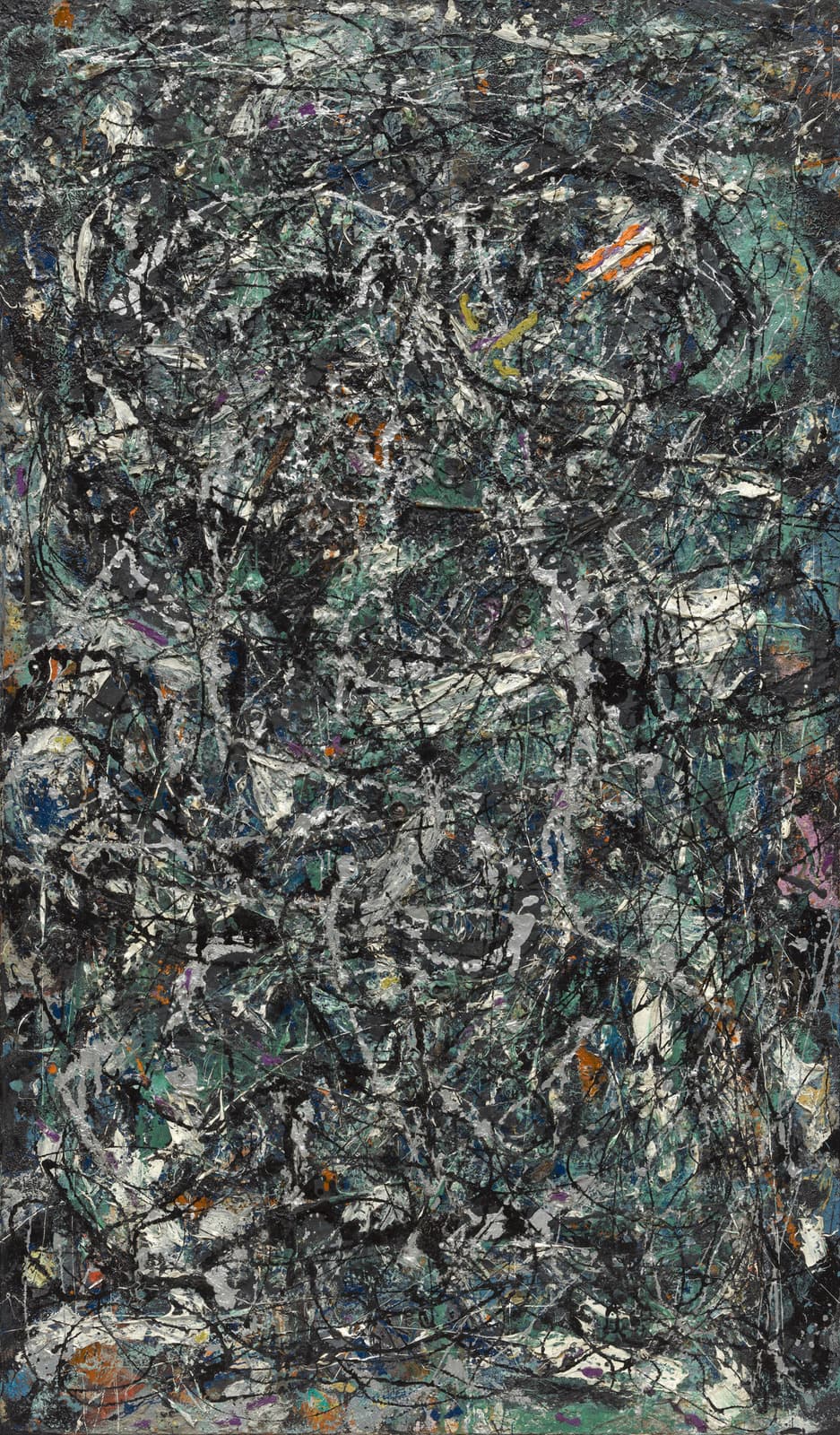
More by Jackson Pollock
If you like Jackson Pollock
Explore painters from the same movements and circles.
Tarsila do Amaral
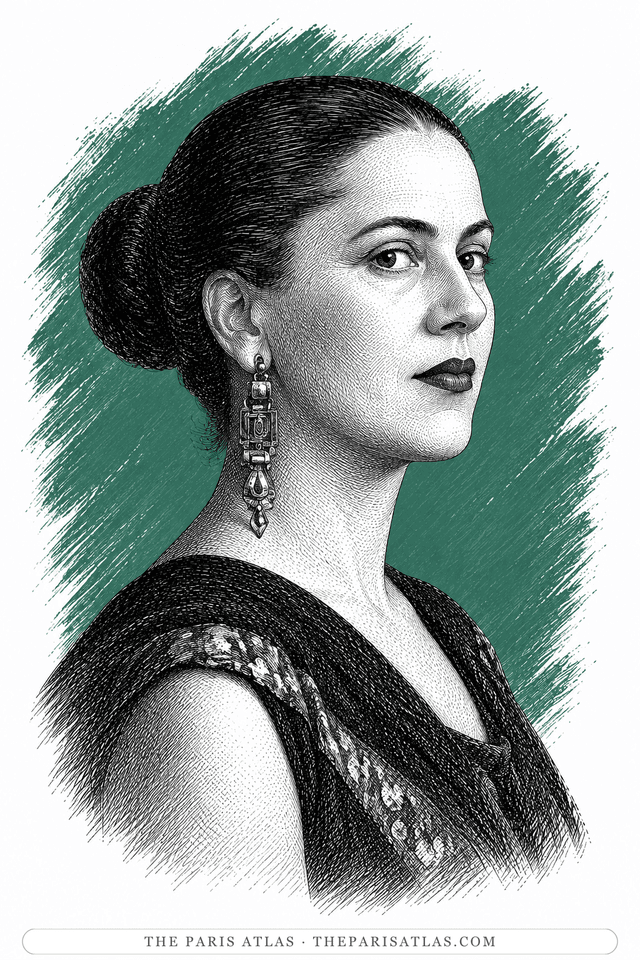
Brazilian painter who spent the 1920s moving between São Paulo and Paris, studied Cubism under André Lhote, Albert Gleizes and Fernand Léger, and used what she learned to paint Brazilian towns, railways, plants and bodies. Her 1928 painting Abaporu prompted the manifesto that gave the Anthropophagic movement its name.
View artist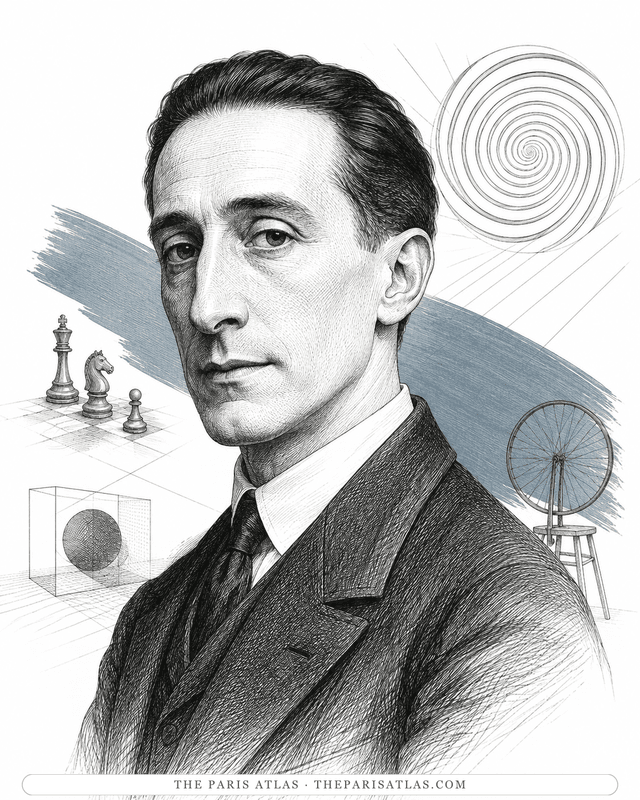
Marcel Duchamp
The century's quietest revolutionary — readymades, the abandonment of painting, chess on a Paris rooftop in Entr'acte, and one anemic film of spinning puns signed Rrose Sélavy.
View artist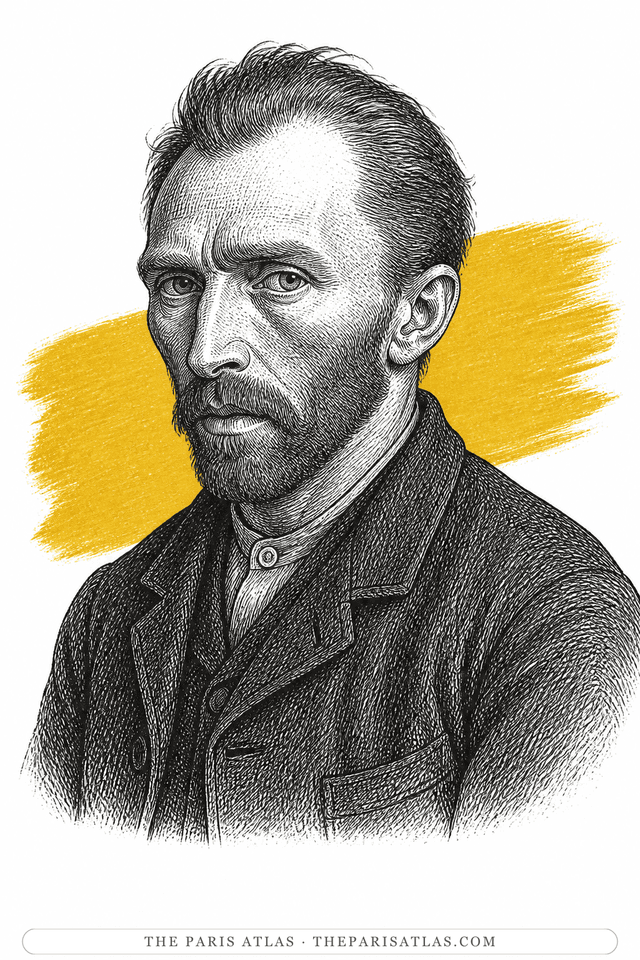
Vincent van Gogh
Dutch painter who lived in Montmartre with his brother Theo from March 1886 to February 1888 — the two years in which his dark Dutch palette turned into colour. He painted more than 200 pictures in Paris and died at Auvers-sur-Oise, north of the city, in 1890.
View artist
References
The sources below include collection records, catalogues, scholarly research, and primary materials that informed this page. They document Blue poles [Number 11, 1952], its making, and its place in cultural history.


1Blue Poles: The Work of Art
WebsiteNational Gallery of Australia, Action ReactionUsed forWeb source consulted for documented facts and historical context presented on the Blue poles [Number 11, 1952] page.

2Jackson Pollock, Blue poles [Number 11, 1952] — collection record, archived 24 March 2016
Official recordNational Gallery of Australia, via the Internet ArchiveUsed forOfficial record used to verify names, dates, institutional details, or other factual information on this page.
3Jackson Pollock Chronology: Life and Art
WebsiteNational Gallery of Australia, Action ReactionUsed forWeb source consulted for documented facts and historical context presented on the Blue poles [Number 11, 1952] page.
4Jackson Pollock: The Artist
WebsiteNational Gallery of Australia, Action ReactionUsed forWeb source consulted for documented facts and historical context presented on the Blue poles [Number 11, 1952] page.
5Art + Ideas: Jackson Pollock's Mural, Part Two
WebsiteGettyUsed forWeb source consulted for documented facts and historical context presented on the Blue poles [Number 11, 1952] page.
These references provide the documented foundation for this work's history and interpretation. Claim-level citations remain attached to the specific claims they support.
 Explore more resources