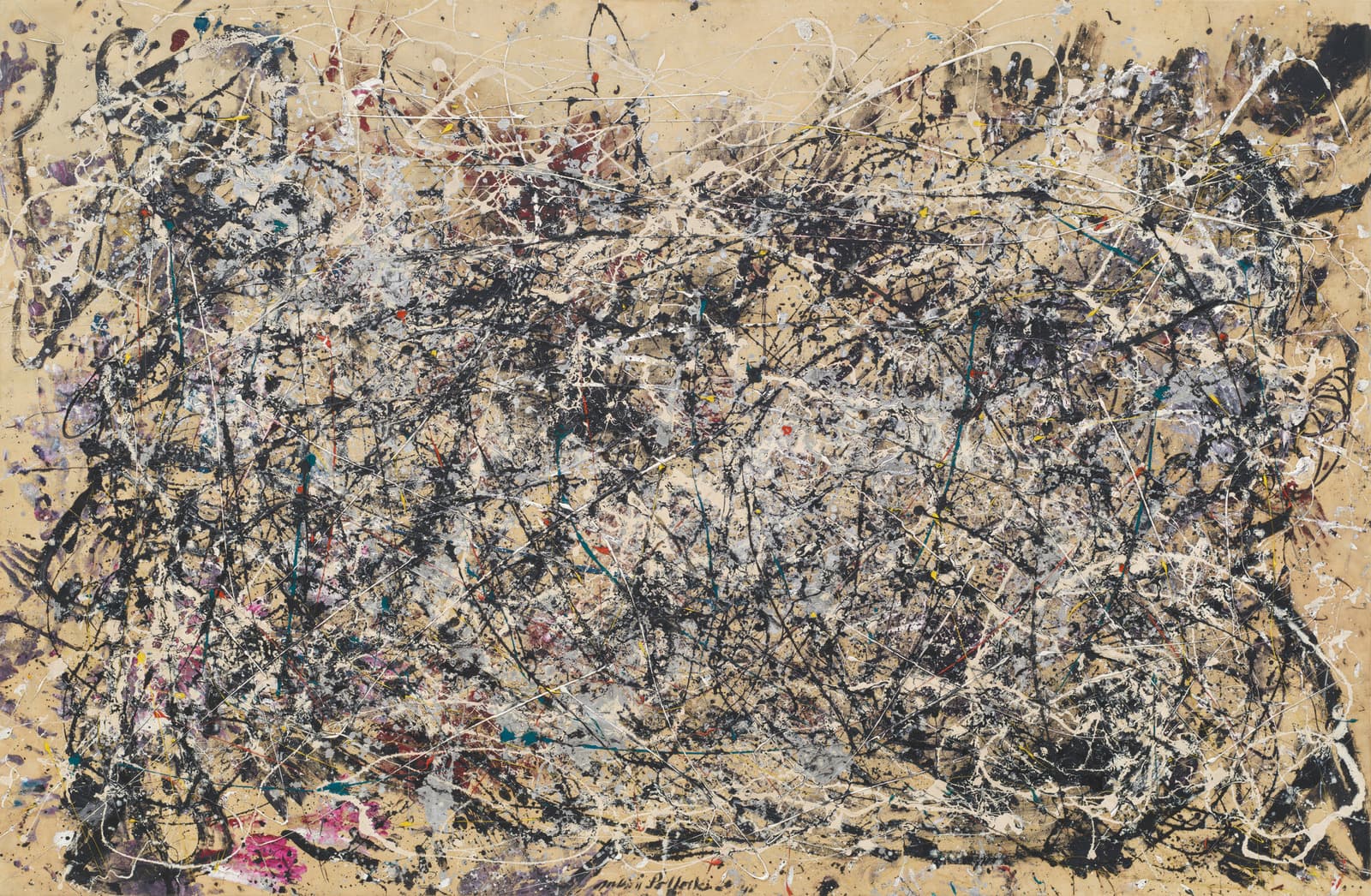
Number 1A, 1948
A canvas 172.7 by 264.2 centimetres, poured and flung in black, white, aluminium grey and bare canvas, with small hits of magenta, teal, orange and yellow. Along the top right edge Jackson Pollock pressed his own hands into the wet paint, leaving a row of prints in dark brown, near-black and oxblood. The Museum of Modern Art bought it on 27 January 1950, while he was alive, and it is the first work in the numbered series.
- 1948
- Oil and enamel paint on canvas
- The Museum of Modern ArtNew York, United States
About Jackson Pollock
What the canvas shows
The ground is unprimed canvas, a warm tan, and Jackson Pollock left a lot of it showing. The activity thins toward all four edges and toward the corners, so the painted field sits inside the rectangle rather than filling it. That margin is a decision, not an accident of reach.
Three materials do most of the work. Black enamel makes the long looping skeins; a cream-white, thicker and more ribbon-like, arcs over them; and aluminium paint falls as flat grey discs and droplets rather than as lines. Under and between them the tan canvas is dotted with fine black spatter.
The colour is sparing and placed low or to the sides. A patch of hot magenta sits near the bottom left, a horizontal teal line crosses it, and thin lines of orange-red and yellow run through the centre. A few small red and yellow blobs are pressed into the black.
The handprints along the top
Along the top right edge, between roughly three-fifths and the full width of the canvas, a row of handprints runs across the bare ground. Fingers are separately legible in several of them. They vary in colour: some are dark brown to near-black, one is an ochre-brown, and at least two are a dark oxblood red with a drip running down from the heel of the hand.
They were pressed onto canvas that was largely still open, because poured white lines cross over the top of them. That order matters. The hands went on before the last passes of white, so they are part of the making rather than a signature added at the end.
A handprint is the oldest mark in painting and the one least mediated by a tool. In a picture otherwise made entirely without touching the surface, the prints are the only place where the artist's body met the canvas directly.
Poured, flung and dripped are different marks
A poured line is laid down continuously, with the paint falling in an unbroken stream from a stick or a hardened brush held above the canvas. It has an even width and rounded ends, and it curves smoothly because the hand is moving steadily. The cream-white arcs in the upper half are poured.
A flung line is thrown. The paint leaves the tool as a mass and then stretches, so the line is thick where it landed first and tapers to a whip-end, often with a burst of small satellite droplets alongside. Several of the black marks in the centre are flung, and the droplets beside them are the evidence.
A drip is the smallest of the three: a single fall from a tool held still or nearly still, landing as a dot with a short tail. The fine black stippling over the tan ground is made of these. All three are visible in a single square foot of the surface, which is why the picture does not read as one uniform texture.
Why it is called Number 1A, 1948
From 1948 Jackson Pollock stopped giving his paintings names and began numbering them. The reason he gave was that titles suggested subjects, and people looked for the subject instead of the painting. Numbers were meant to be neutral.
The system was not tidy. He restarted the numbering each year, so there is a Number 1 in 1948, in 1949 and in 1950, and the 1950 one is generally called Lavender Mist. Some works acquired nicknames later, which is why several Pollocks now carry both a number and a name.
The Museum of Modern Art's full title is Number 1A, 1948, with the year inside the title. That is the museum's own form and the one to use.
Bought in January 1950
The Museum of Modern Art acquired the painting by purchase on 27 January 1950, object number 77.1950. Jackson Pollock was thirty-eight and had six years to live. The painting went on show at the museum in Recent Acquisitions from 28 March to 7 May 1950.
The acquisition came eight months after Life magazine's profile of 8 August 1949 asked whether he was the greatest living painter in the United States. It also came before Autumn Rhythm, One: Number 31, 1950 and Lavender Mist existed.
The phrase action painting, and who wrote it
The Museum of Modern Art credits the term to one person and one year. The art critic Harold Rosenberg coined action painting in 1952, for artists who painted with bold gestures engaging more of the body than easel painting does. The museum adds that the viewer can often see broad brushstrokes, drips and splashes left by the physical action.
The phrase came four years after this canvas was made, and it describes a claim about how a picture was produced rather than what the finished surface is doing. Clement Greenberg, who had advocated for Jackson Pollock since 1943, argued for something close to the opposite emphasis: what mattered was the flatness of the picture and the way activity ran evenly across it.
Close reading
Reading the work, detail by detail
Number 1A, 1948 is the painting with Jackson Pollock's handprints along the top right edge. The Museum of Modern Art bought it in January 1950, while he was alive. Close view separates the three kinds of mark the picture is made of — poured, flung and dripped — and finds where a hand went into the wet paint.
1.Handprints along the top right
Several handprints run across the bare canvas near the top right, fingers separately legible in three of them. Two are near-black, one is a dark oxblood with a short run below the heel. A cream poured line arcs across the top of them.
2.One print is ochre brown, not black
Further right a full palm reads in ochre brown with the fingers splayed, beside a darker maroon print. The prints are not one colour. Whatever was on the hand changed between one press and the next.
3.The white went on after the hands
A cream-white line crosses an unbroken path over the top of a handprint. The hand was pressed down before that pass of paint, not after it. The prints belong to the making of the picture rather than to its finishing.
4.Jackson Pollock 48, on bare canvas
The signature reads Jackson Pollock 48 in black script at the bottom centre, written straight onto unpainted canvas rather than over the paint. Short red-orange lines and a teal line run past it. 1948 was the first year he numbered his pictures instead of naming them.
5.A poured line keeps its width
A cream-white line loops across the bare ground at an even width with rounded ends. Paint fell from the tool in an unbroken stream while the hand moved steadily above the canvas. Nothing touched the surface to make it.
6.A flung line tapers and throws satellites
Here the black lands thick and thins to a whip end, with a spray of separate droplets alongside. That is a throw rather than a pour: the paint left the tool as a mass and stretched in the air. The satellites are the evidence.
7.The grey is aluminium, and it lands flat
Pale grey discs are scattered across the surface, flat-edged and slightly metallic. Aluminium paint fell in drops rather than running in lines here, so it reads as punctuation. It sits on top of the black in most places.
8.Hot magenta at the bottom left
A patch of hot magenta spreads over bare canvas near the bottom left, the strongest colour anywhere on the picture. A horizontal teal line runs across it. Colour in this painting is concentrated low and to the sides.
9.Violet splashes at the left edge
Pale violet and lilac splashes sit on bare canvas at the left edge, where the activity has thinned to almost nothing. Black lines run off the side without resolving. The worked field stops short of the stretcher on all four sides.
10.Teal and red run as single threads
A teal line runs vertically as a single thread, with an orange-red one beside it. Neither loops or doubles back. They were laid in one pass each, and they are the only places those two colours appear in this part of the canvas.
11.Fine stipple is the third kind of mark
A fine scatter of small black dots covers the bare ground, each with a short tail. These are single drips from a tool held nearly still, the smallest of the three marks in the picture. Poured, flung and dripped are all present within a single square foot.
12.One black mass sits almost solid
In the lower right the black has built up into a nearly solid mass rather than a net of lines. Cream lines loop over the top of it and bare canvas shows immediately around its edges. Density varies sharply across the picture.
Timeline
1948
Painted at Springs, Long Island, in the first year Jackson Pollock numbered rather than named his work.
1949
Life magazine's profile of 8 August asks whether he is the greatest living painter in the United States.
1950
Bought by the Museum of Modern Art on 27 January as object 77.1950, and shown in Recent Acquisitions from 28 March to 7 May.
1951
Included in Abstract Painting and Sculpture in America at the Museum of Modern Art, 23 January to 25 March.
1952
The critic Harold Rosenberg coins the term action painting, which attaches itself to Jackson Pollock permanently.
1956
Included in the museum's Jackson Pollock memorial exhibition, opening 19 December, four months after his death.
Where to see it
The Museum of Modern Art
11 West 53 Street, New York, NY 10019, United States
The Museum of Modern Art's record lists the painting on Floor 4, gallery 401. Gallery displays change, so check it before making a special visit.
Plan your visit on the museum’s official website (opens in a new tab)Frequently asked questions
Are there handprints in Number 1A, 1948?
Yes, along the top right edge, running from about three-fifths of the way across to the right corner. Several show separate fingers. They are dark brown, near-black and oxblood red, and poured white lines cross over the top of them, so the hands went on before the final passes of paint.
What is Number 1A, 1948 painted with?
Oil and enamel paint on canvas, in the Museum of Modern Art's words. The enamel is commercial house paint, which flows further and dries glossier than artists' oil. The aluminium paint that falls as flat grey droplets across the surface is a third material behaving differently again.
Why is it called Number 1A, 1948 rather than a name?
From 1948 Jackson Pollock numbered his paintings because titles made people look for subjects. He restarted the count each year, so there is also a Number 1 from 1949 and one from 1950, the last of which is usually called Lavender Mist. The museum's full form of the title includes the year.
How big is Number 1A, 1948?
172.7 by 264.2 centimetres, about five feet eight by eight feet eight. A wide band of unpainted canvas is left visible around the worked area, so the painted field sits inside the rectangle rather than running to the edges.
When did the Museum of Modern Art buy Number 1A, 1948?
On 27 January 1950, while Jackson Pollock was alive and thirty-eight years old. Its object number is 77.1950. It went on view that March, months before he painted Autumn Rhythm and One: Number 31, 1950.
Who invented the phrase action painting?
The art critic Harold Rosenberg, in 1952, according to the Museum of Modern Art's own glossary. He used it for artists whose gestures engaged more of the body than easel painting did, leaving visible brushstrokes, drips and splashes. It was coined four years after this canvas was made.
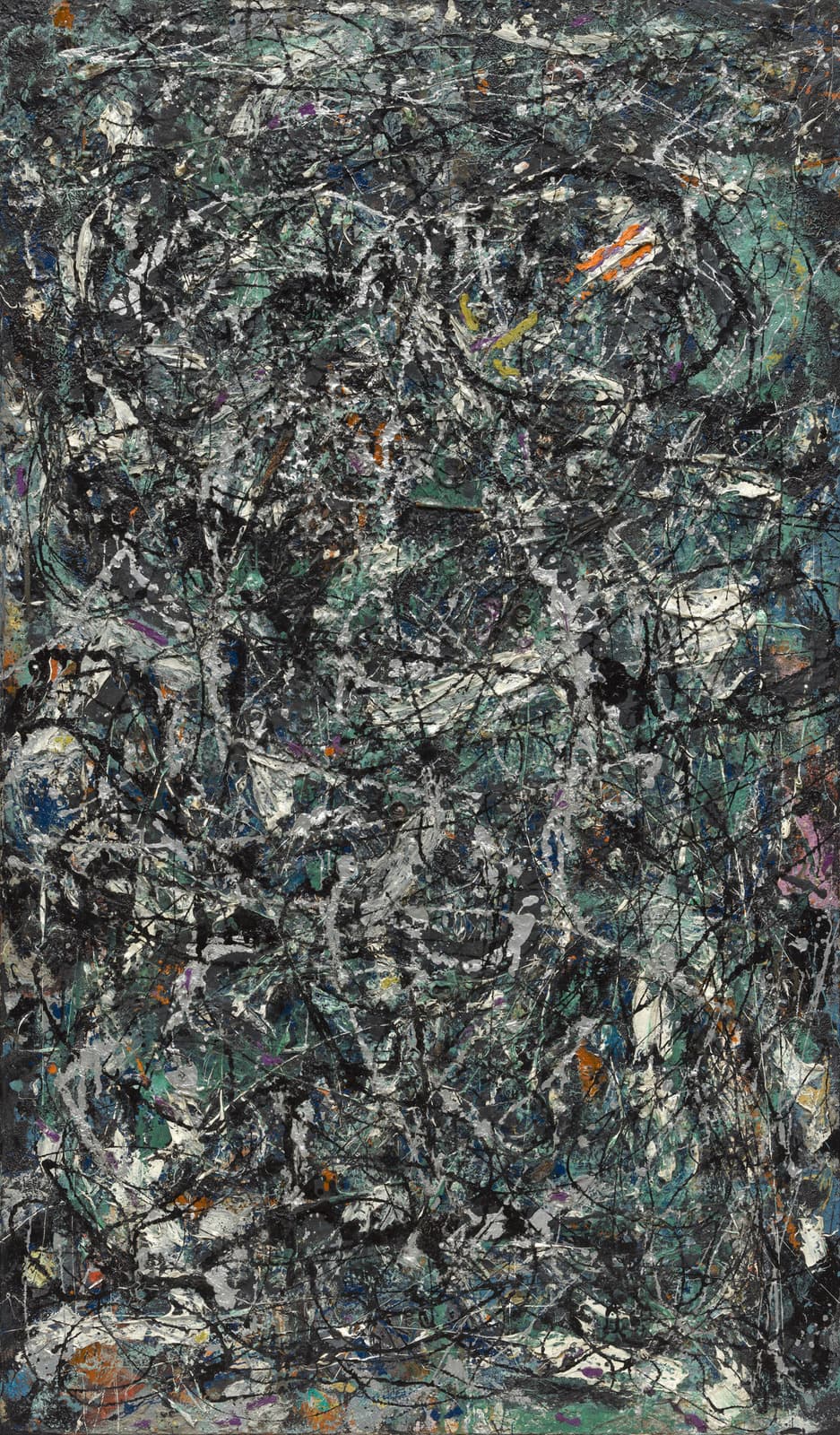
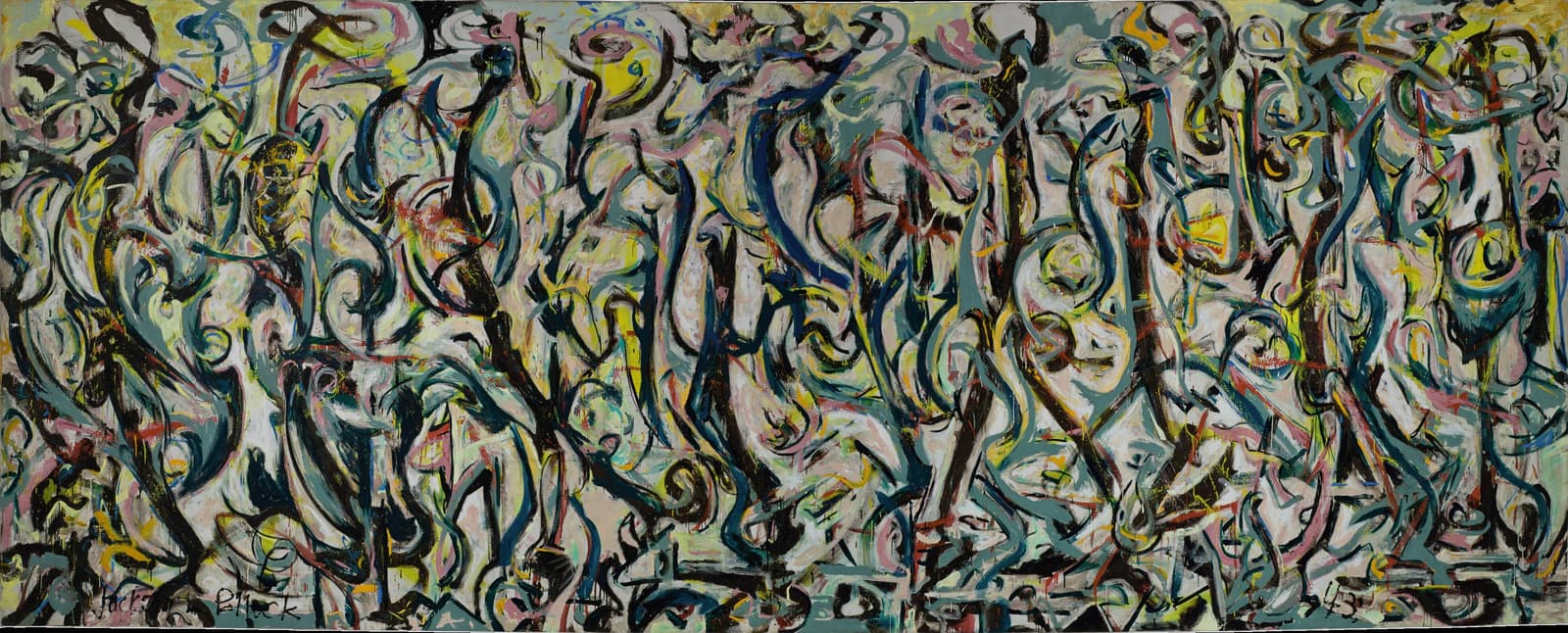
More by Jackson Pollock
If you like Jackson Pollock
Explore painters from the same movements and circles.
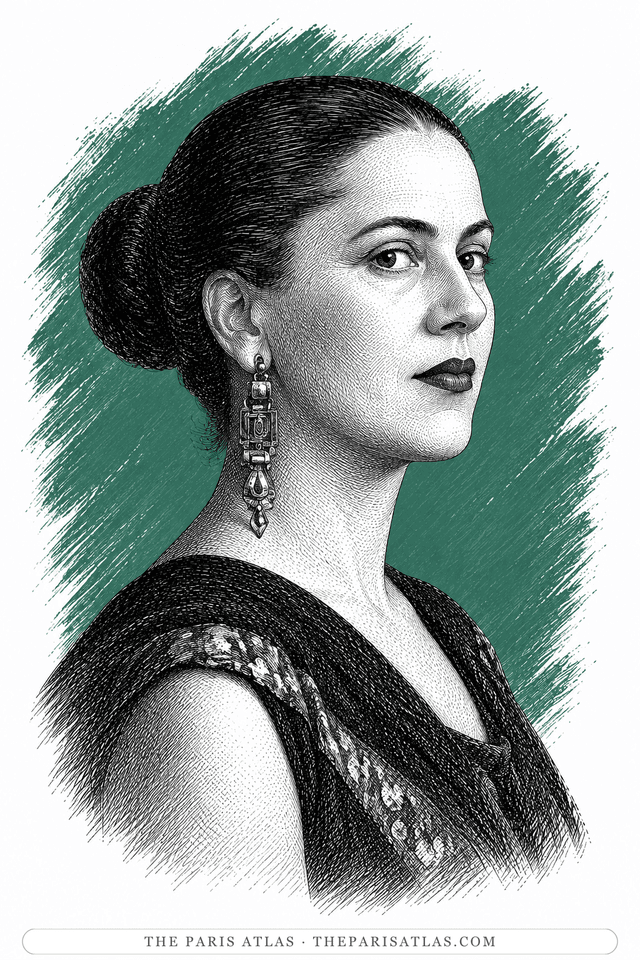
Tarsila do Amaral
Brazilian painter who spent the 1920s moving between São Paulo and Paris, studied Cubism under André Lhote, Albert Gleizes and Fernand Léger, and used what she learned to paint Brazilian towns, railways, plants and bodies. Her 1928 painting Abaporu prompted the manifesto that gave the Anthropophagic movement its name.
View artist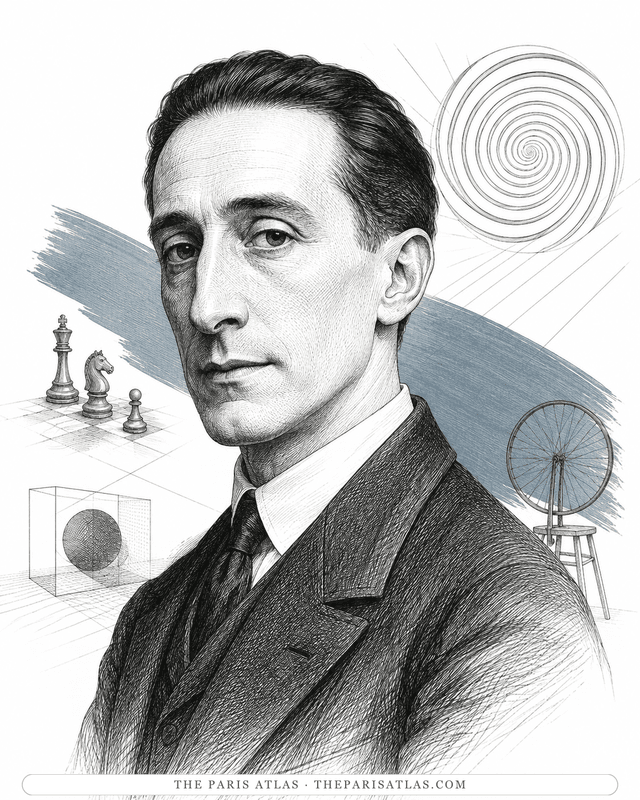
Marcel Duchamp
The century's quietest revolutionary — readymades, the abandonment of painting, chess on a Paris rooftop in Entr'acte, and one anemic film of spinning puns signed Rrose Sélavy.
View artist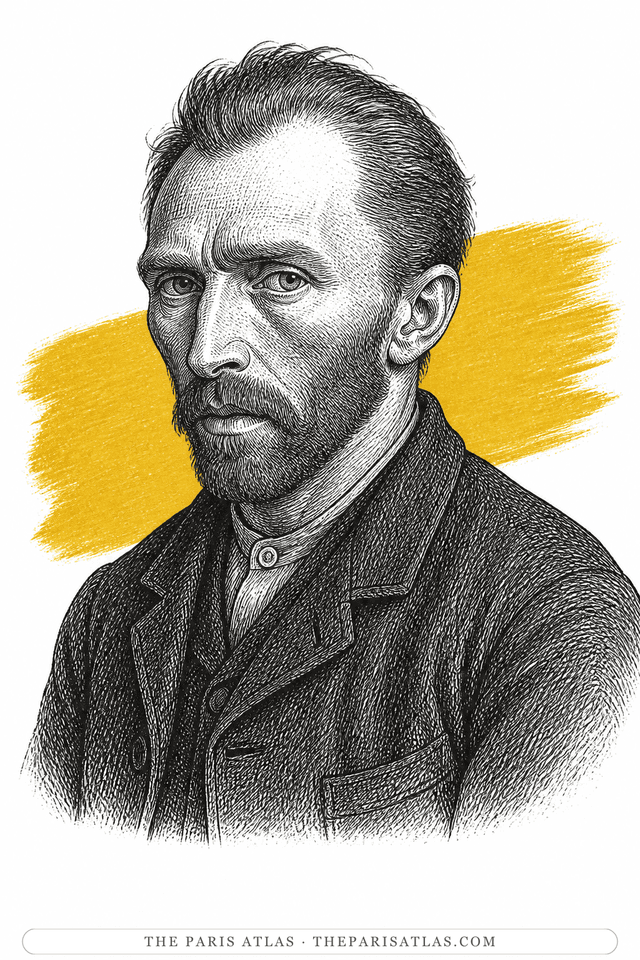
Vincent van Gogh
Dutch painter who lived in Montmartre with his brother Theo from March 1886 to February 1888 — the two years in which his dark Dutch palette turned into colour. He painted more than 200 pictures in Paris and died at Auvers-sur-Oise, north of the city, in 1890.
View artist
References
The sources below include collection records, catalogues, scholarly research, and primary materials that informed this page. They document Number 1A, 1948, its making, and its place in cultural history.


1Jackson Pollock, Number 1A, 1948
WebsiteThe Museum of Modern ArtUsed forWeb source consulted for documented facts and historical context presented on the Number 1A, 1948 page.
2MoMA's Jackson Pollock Conservation Project: Insight into the Artist's Process
WebsiteThe Museum of Modern ArtUsed forWeb source consulted for documented facts and historical context presented on the Number 1A, 1948 page.
3Blue Poles: The Work of Art
WebsiteNational Gallery of Australia, Action ReactionUsed forWeb source consulted for documented facts and historical context presented on the Number 1A, 1948 page.
4Jackson Pollock: Early Photos of the Action Painter at Work
WebsiteTIMEUsed forWeb source consulted for documented facts and historical context presented on the Number 1A, 1948 page.
5Action painting — art term
WebsiteThe Museum of Modern ArtUsed forWeb source consulted for documented facts and historical context presented on the Number 1A, 1948 page.
6Jackson Pollock
WebsitePollock-Krasner House and Study CenterUsed forWeb source consulted for documented facts and historical context presented on the Number 1A, 1948 page.
These references provide the documented foundation for this work's history and interpretation. Claim-level citations remain attached to the specific claims they support.
 Explore more resources