Full Fathom Five
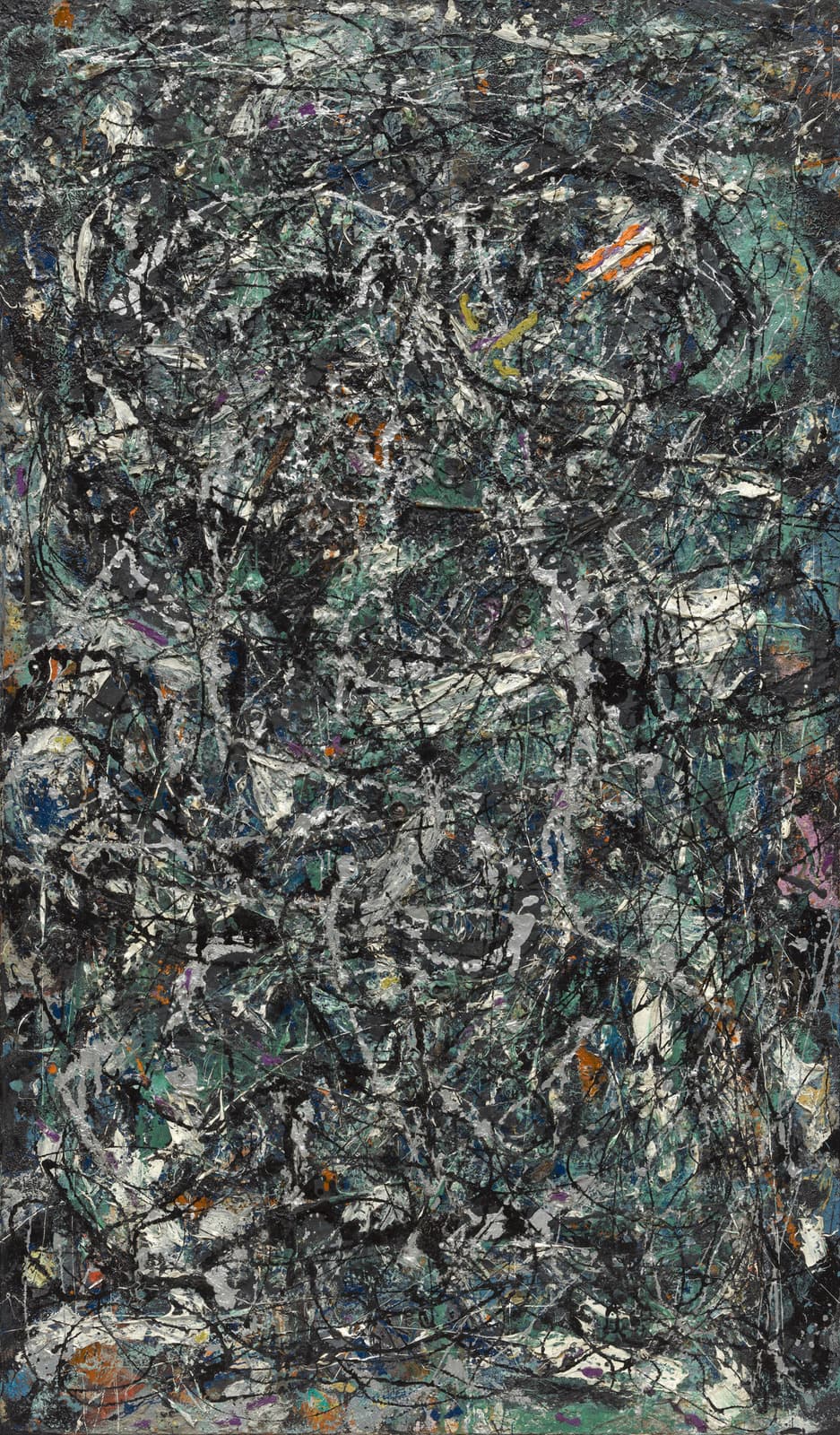
A small upright canvas, about 129 by 77 centimetres, made in 1947 as Jackson Pollock was working out the poured technique. Objects are embedded in the paint: the Museum of Modern Art's medium line names nails, tacks, buttons, a key, coins, cigarettes and matches. A cigarette lies near the middle of the picture, still cylindrical under its coat of paint. Peggy Guggenheim gave the painting to the museum in 1952.
- 1947
- Oil on canvas with nails, tacks, buttons, key, coins, cigarettes, matches, etc.
- The Museum of Modern ArtNew York, United States
About Jackson Pollock
What the canvas shows
The picture stands upright and is densely worked from edge to edge. Beneath everything is a sea-green ground, closer to viridian than to grass, which shows through in patches along the right side and near the top. Over it lie broad passages of aluminium grey and thick ridges of cream-white, then a network of thin black lines that reaches every corner.
The colour accents are small and scattered rather than massed. Bright orange appears as short dabs, and a cadmium yellow squiggle sits high and right of centre. Violet and ultramarine flecks are pushed into the darker areas. A single stretch of orange and purple runs along a wrinkled white ridge in the upper right quarter. Nothing is arranged toward a centre.
The Museum of Modern Art gives the size as 129.2 by 76.5 centimetres, roughly fifty-one by thirty inches. It is a small painting by the standards of the work that followed.
The things in the paint
The museum's medium line is unusually long: oil on canvas with nails, tacks, buttons, key, coins, cigarettes, matches, and more. Most of those objects are buried under later layers and read as lumps rather than as things. A few are still legible on the surface.
A cigarette lies diagonally just left of centre and a little below the halfway line, coated in paint but keeping its cylinder and its tapered end. A round disc with a raised rim sits above and right of it. A second circular object, dark, with a recessed middle, is caught in the paint further right and lower down.
Jackson Pollock did not treat these as collage elements to be seen. They are worked into the body of the picture and then covered, which makes them part of its physical thickness rather than part of its image.
The poured line arrives
1947 is the year the poured paintings begin, and the surface here shows the technique still being assembled. Thin black lines swing in long arcs that could only have been made in the air above the canvas, with the tool never touching it. Other passages are the opposite: cream paint laid on so heavily that it stands proud of the surface and has wrinkled as it dried.
Those wrinkles are worth looking for. A thick skin of paint dries at the surface before the body beneath it, and the skin puckers into ridges. They run in parallel lines across several of the white passages here, which records how much paint was on the canvas and how slowly it set.
Conservation at the Museum of Modern Art has found that Jackson Pollock used commercial enamels and metallic paints alongside artists' oils, and that brushed passages lie beneath poured layers in his work. The two kinds of paint behave differently: the artists' oil stays matte and stiff, the commercial enamel flows further, pools flatter and dries glossier.
Where the title comes from
The words open Ariel's song in the first act of William Shakespeare's The Tempest: full fathom five thy father lies. The song is about a body changed by the sea into coral and pearl. The painting does not illustrate it.
Jackson Pollock numbered his paintings from 1948 onward precisely to stop titles doing this kind of work. Full Fathom Five belongs to the year before that change, when his pictures still carried names.
Peggy Guggenheim gives it away
Peggy Guggenheim had commissioned Mural in 1943 and represented Jackson Pollock through the 1940s. She closed her New York gallery in 1947, the year the painting was made, and moved to Venice. The Museum of Modern Art records the painting as her gift, acquired on 21 October 1952.
Its object number is 186.1952. As of the museum's own record it is not currently on view.
Close reading
Reading the work, detail by detail
Full Fathom Five is the painting with hardware in it: the Museum of Modern Art's medium line runs to nails, tacks, buttons, a key, coins, cigarettes and matches. Most of that is buried. Close view finds the few objects still legible on the surface, and the wrinkled skins that record how much paint was sitting on top of them.
1.A cigarette, still a cigarette
A cigarette lies diagonally on a patch of sea-green paint, coated but still cylindrical, with one end visibly tapered. It is the most legible of the objects the Museum of Modern Art lists in the medium line. A dark circular disc sits above and left of it.
2.A dark ring with a hole in it
A small dark ring with a raised rim and a recessed middle sits embedded in the surface, below and right of centre. It reads as hardware rather than as paint. The museum's medium line names buttons, coins and a key among the things worked into the picture.
3.The thick paint dried into ridges
Cream-white paint stands proud of the surface and has puckered into parallel ridges. A thick layer skins over at the top while the body beneath is still soft, and the skin wrinkles. The ridges record how much paint was on the canvas and how slowly it set.
4.Orange and violet squeezed along one ridge
A long wrinkled cream ridge in the upper right carries bright orange down one side and violet down the other. Both colours sit on top of the ridge rather than in it, so they went on after it had set. A yellow-olive bar lies below and left.
5.The ground underneath is sea green
Where later layers thin out, a flat sea green shows through, closer to viridian than to grass. It runs behind the whole picture and is easiest to read down the right side and near the top. Everything else is stacked on it.
6.A metallic pour runs down the middle
A broad band of silver aluminium paint runs down the centre, catching light where the surrounding paint does not. Conservation at the Museum of Modern Art has found Jackson Pollock using commercial enamels and metallic paints alongside artists' oils. The three age at different rates.
7.Ultramarine pushed into the dark
Small flecks of ultramarine are pushed into the darkest passages, where they barely register from a distance. The colour in this picture is deployed in dabs rather than in runs. Nothing is massed.
8.One magenta streak on the left
A short magenta streak sits on the left side, brighter than anything near it and only a few centimetres long. An orange dab lies below it. These late touches were dropped onto a surface that was already nearly solid.
9.A crazed patch in the upper left
In the upper left the dark paint has dried into a fine crackled network, quite different from the smooth black lines beside it. Different paints on one canvas shrink at different rates as they age. The crazing marks where two of them meet.
10.A rust-orange pool near the bottom edge
A broad rust-orange pool spreads flat near the bottom left, wider than any other colour patch in the picture. Black lines cross it without disturbing it, so it had already dried. A violet dab sits to its right.
11.The black lines run off all four sides
Thin black lines run off every side without slowing or turning. They were made with the tool held above the canvas and never touching it, which is why they keep an even width and rounded ends. The picture is a cut from a continuous activity.
Timeline
1947
Painted at Springs, Long Island, in the first year of the poured technique. Peggy Guggenheim closes her New York gallery the same year.
1952
Given to the Museum of Modern Art by Peggy Guggenheim, acquired 21 October, object number 186.1952.
1953
Shown at the Museum of Modern Art in Summer Exhibition: New Acquisitions, 23 June to 4 October.
Where to see it
The Museum of Modern Art
11 West 53 Street, New York, NY 10019, United States
The Museum of Modern Art's own record lists the painting as not on view. Gallery displays change, so check it before making a special visit.
Plan your visit on the museum’s official website (opens in a new tab)Frequently asked questions
What objects are embedded in Full Fathom Five?
The Museum of Modern Art's medium line names nails, tacks, buttons, a key, coins, cigarettes and matches, and ends with an etcetera. Most are buried and read only as lumps. A paint-covered cigarette is still clearly a cigarette just left of centre, and two disc-shaped objects sit nearby.
How big is Full Fathom Five?
129.2 by 76.5 centimetres, roughly fifty-one by thirty inches, and upright. It is small compared with the paintings Jackson Pollock made two and three years later, which run to five metres wide.
Where does the title Full Fathom Five come from?
From Ariel's song in the first act of William Shakespeare's The Tempest, which begins full fathom five thy father lies. The painting does not illustrate the song. From 1948 Jackson Pollock numbered his pictures instead of naming them, to stop titles suggesting subjects.
Is Full Fathom Five a drip painting?
It is one of the first. Painted in 1947, it combines long poured arcs made with the tool held above the canvas with heavily loaded passages that stand proud of the surface and wrinkled as they dried. The method is visibly still being worked out.
Who gave Full Fathom Five to the Museum of Modern Art?
Peggy Guggenheim, who had commissioned Mural from Jackson Pollock in 1943 and shown him at her New York gallery through the 1940s. The museum acquired it on 21 October 1952 as her gift, object number 186.1952.
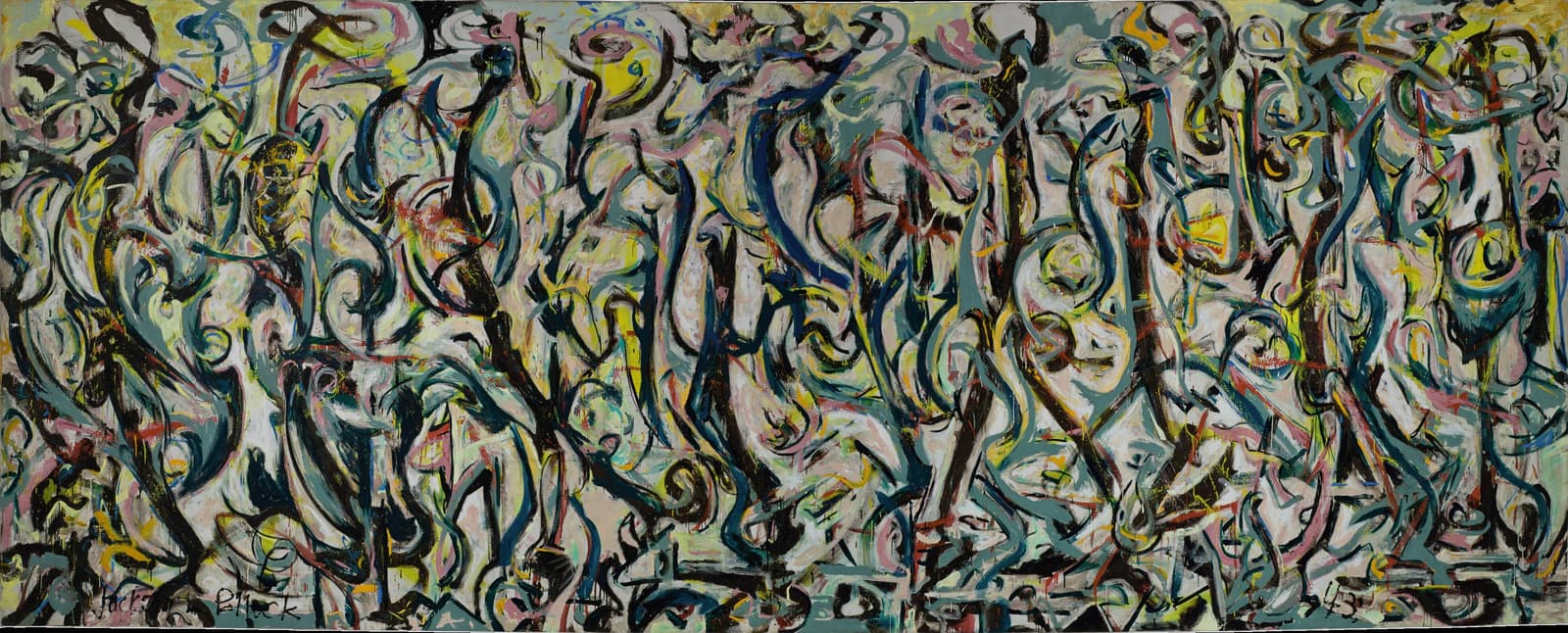
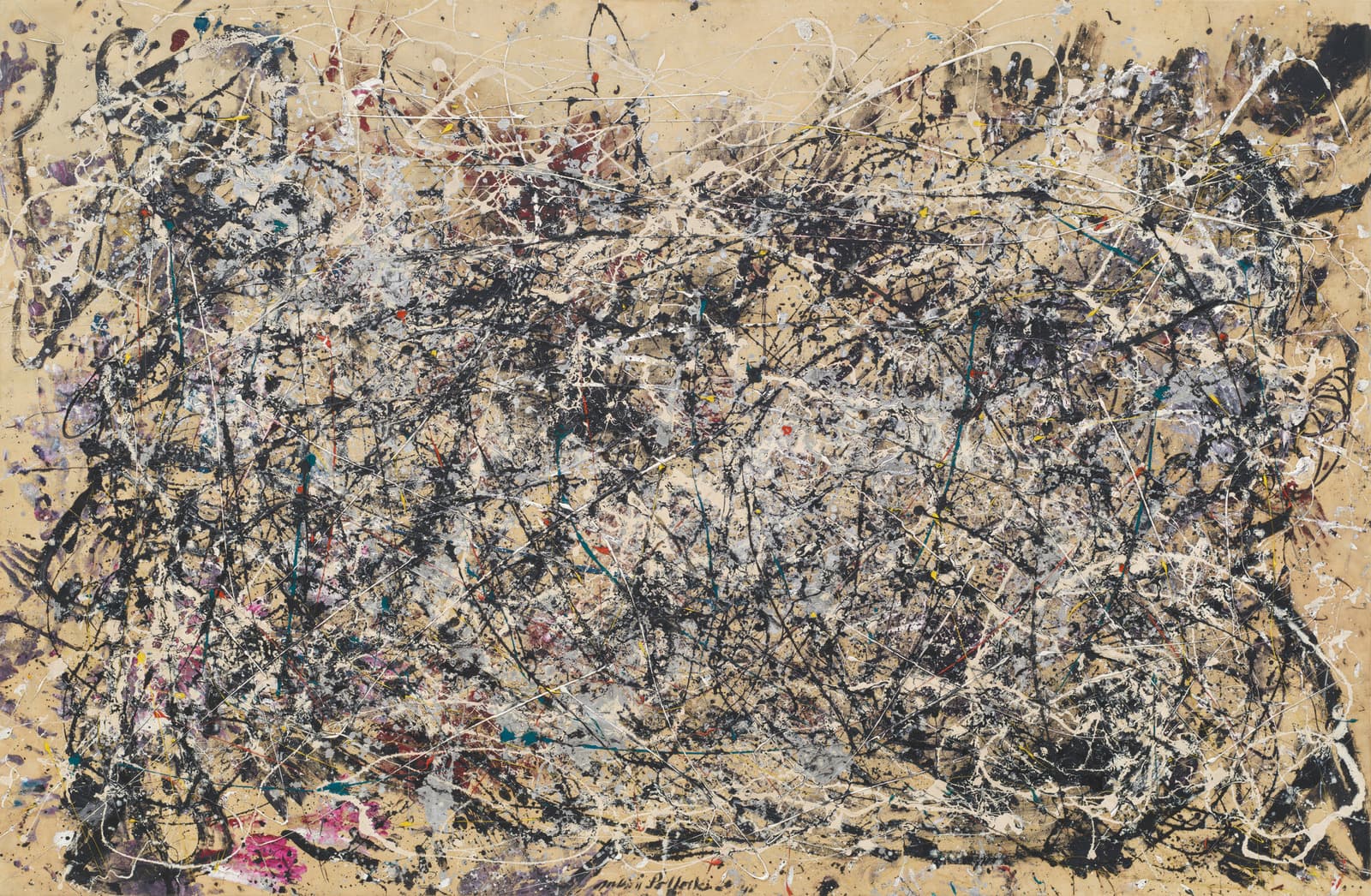
More by Jackson Pollock
If you like Jackson Pollock
Explore painters from the same movements and circles.
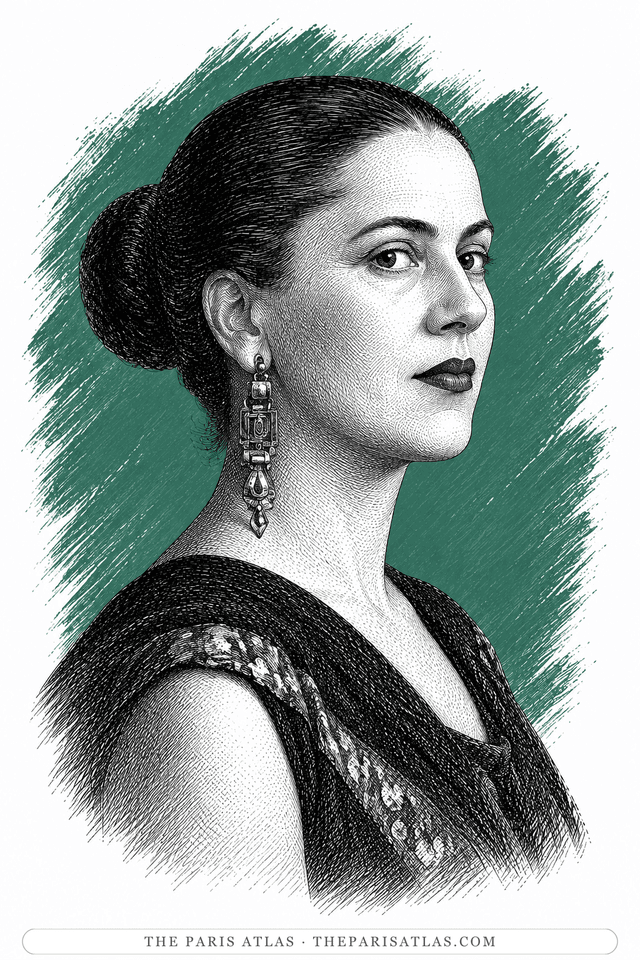
Tarsila do Amaral
Brazilian painter who spent the 1920s moving between São Paulo and Paris, studied Cubism under André Lhote, Albert Gleizes and Fernand Léger, and used what she learned to paint Brazilian towns, railways, plants and bodies. Her 1928 painting Abaporu prompted the manifesto that gave the Anthropophagic movement its name.
View artist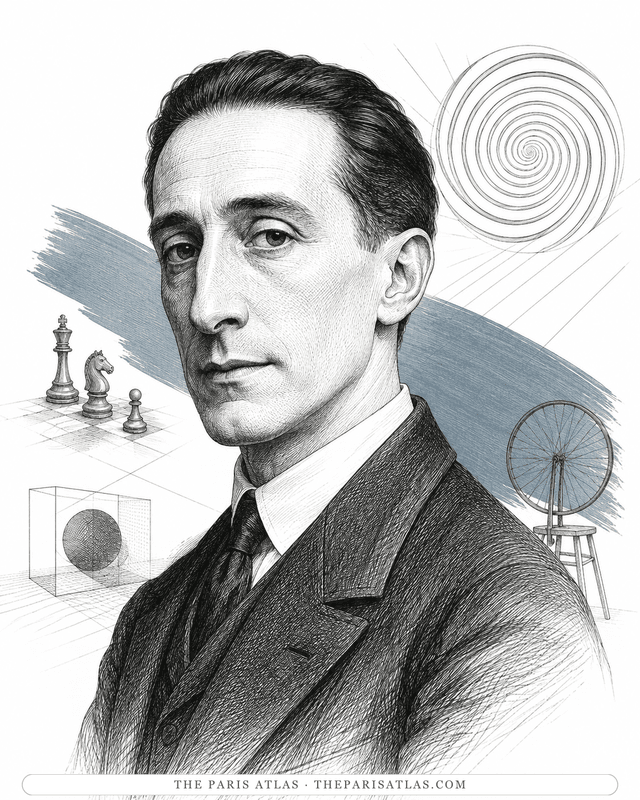
Marcel Duchamp
The century's quietest revolutionary — readymades, the abandonment of painting, chess on a Paris rooftop in Entr'acte, and one anemic film of spinning puns signed Rrose Sélavy.
View artist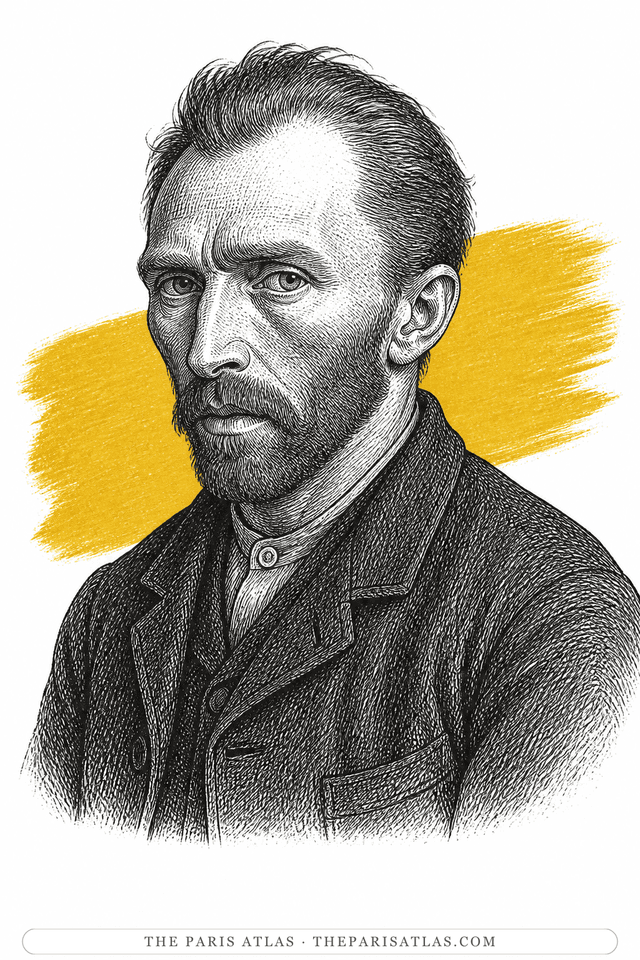
Vincent van Gogh
Dutch painter who lived in Montmartre with his brother Theo from March 1886 to February 1888 — the two years in which his dark Dutch palette turned into colour. He painted more than 200 pictures in Paris and died at Auvers-sur-Oise, north of the city, in 1890.
View artist
References
The sources below include collection records, catalogues, scholarly research, and primary materials that informed this page. They document Full Fathom Five, its making, and its place in cultural history.


1Jackson Pollock, Full Fathom Five, 1947
WebsiteThe Museum of Modern ArtUsed forWeb source consulted for documented facts and historical context presented on the Full Fathom Five page.
2MoMA's Jackson Pollock Conservation Project: Insight into the Artist's Process
WebsiteThe Museum of Modern ArtUsed forWeb source consulted for documented facts and historical context presented on the Full Fathom Five page.
3Jackson Pollock
WebsitePollock-Krasner House and Study CenterUsed forWeb source consulted for documented facts and historical context presented on the Full Fathom Five page.
4Foundation Overview
WebsitePollock-Krasner FoundationUsed forWeb source consulted for documented facts and historical context presented on the Full Fathom Five page.
These references provide the documented foundation for this work's history and interpretation. Claim-level citations remain attached to the specific claims they support.
 Explore more resources