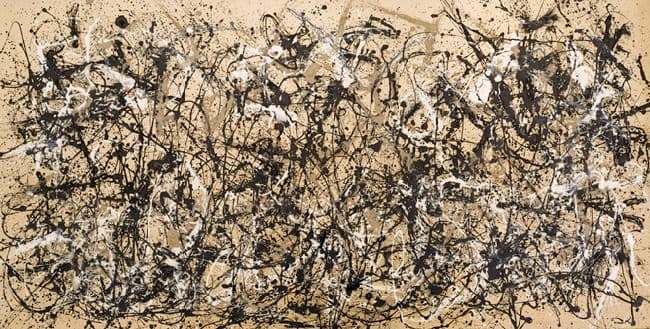
Jackson Pollock made Autumn Rhythm: Number 30, 1950 by pouring paint onto canvas laid on the floor of his Long Island studio. It is more than five metres wide, worked in a narrow range of colours, with large areas of bare canvas left open between the black lines. The Metropolitan Museum of Art bought it in 1957, the year after Pollock's death.
Autumn Rhythm: Number 30, 1950 is a monumental abstract painting by Jackson Pollock, now in the Metropolitan Museum of Art in New York. More than five metres wide, it creates an expansive field of interwoven marks rather than a conventional scene organized around recognizable figures. The museum identifies its medium as oil-modified alkyd resin on canvas.
Painting Beyond the Easel
During the late 1940s, Pollock developed his poured and dripped paintings by working over canvas placed on the ground. This changed the relationship between the artist's body and the picture. Instead of directing every mark through a brush pressed against an upright surface, he could allow liquid paint to travel, fall, and accumulate across a horizontal support.
In this approach, a line could record an action without outlining a recognizable object. The painting's subject was no longer located only in what its marks represented; the marks also preserved evidence of how the work had been made. This emphasis on process helped make Pollock central to the gestural side of Abstract Expressionism.
Scale, Rhythm, and the Viewer
The size of Autumn Rhythm matters to its effect. It is difficult to take in every relationship at once, and the viewer's attention moves between the whole field and particular passages. Rather than providing one obvious center, its distributed activity encourages a sustained encounter with density, openness, overlap, and movement.
The title offers a connection with natural change, but the painting does not illustrate an autumn landscape. Its relationship with nature is better understood through flux and rhythm than through a search for hidden trees or recognizable leaves. The Metropolitan Museum places this association alongside Pollock's ambition to make large pictures operating between easel painting and the mural.
The Mural Tradition Behind the Innovation
Pollock's technique can seem so radical that it obscures his earlier formation. The museum emphasizes his connections with Thomas Hart Benton and David Alfaro Siqueiros, both of whom he had worked alongside. Their mural-related ambitions helped establish precedents for painting conceived at a scale larger than the intimate easel picture.
Abstract Expressionism also developed through encounters with European modernism and Surrealist ideas about improvisation and the unconscious. Pollock's work was therefore innovative without being disconnected from earlier art. Its achievement lay in transforming those resources into a distinctively forceful method and viewing experience.
Reception and Legacy
The Met acquired Autumn Rhythm in 1957, the year after Pollock's death. Its entrance into the collection demonstrates how rapidly an approach that had disturbed conventional expectations could become central to the museum history of modern art.
Close reading
Reading the work, detail by detail
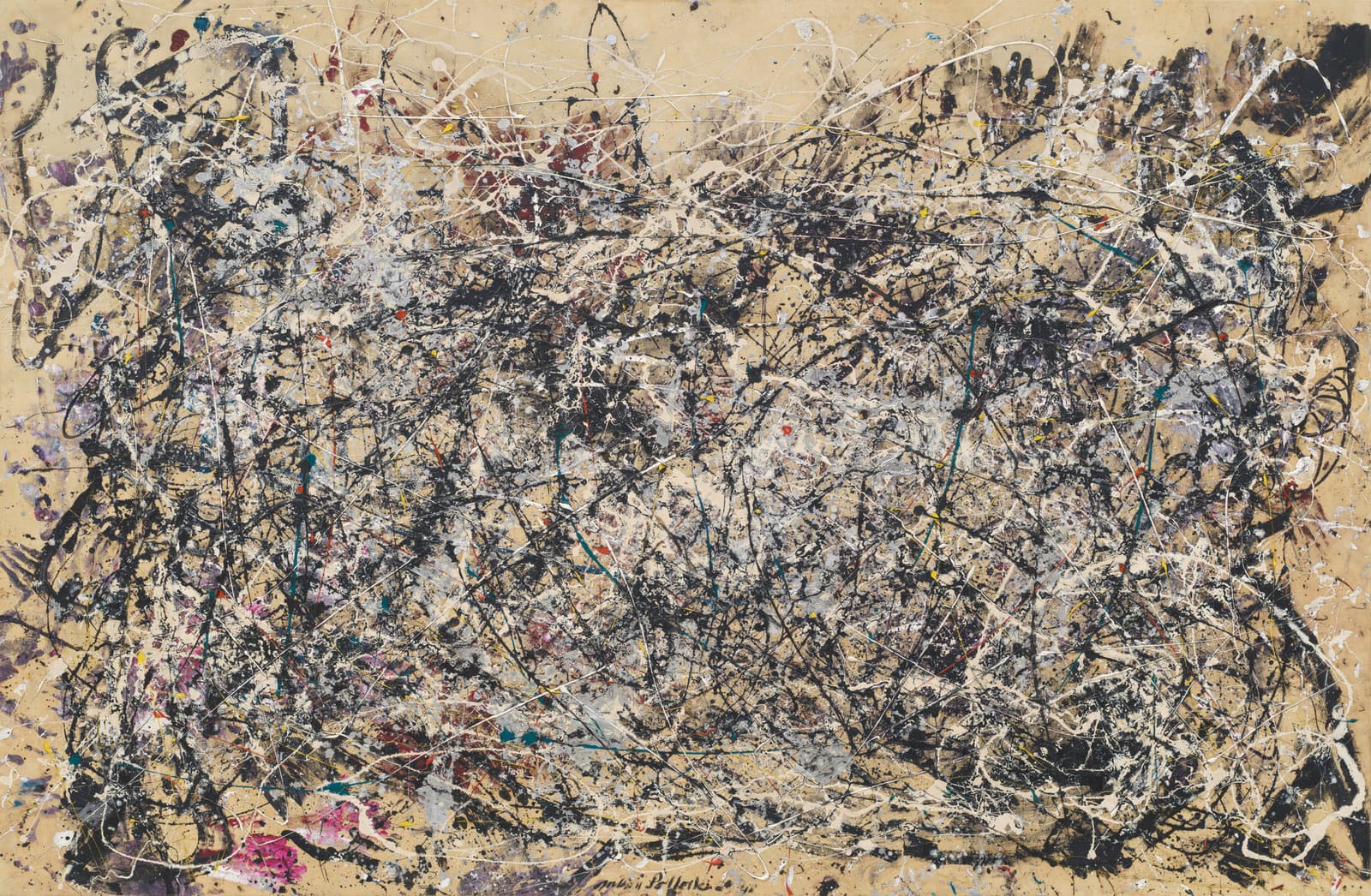
The reproduction shows a field of poured marks over tan canvas. These details compare broad trails, narrow loops, pale crossings, dense knots, and open areas without treating the marks as a hidden picture of a recognizable scene.
1.A long loop keeps an open center
A long narrow curve encloses a patch of tan canvas near the upper left. Smaller marks collect around it without filling the opening. The contrast between the continuous loop and scattered spots makes two different scales of movement visible in the same small area.
2.A pale trail passes through dark lines
The pale trail is wider than many of the black lines around it. At visible crossings, light and dark marks remain distinct enough for the eye to follow separate paths. This is one reason the surface reads as layered: neighboring lines occupy the same area without merging into a single even tone.
3.A dense knot interrupts the open ground
Near the center, several dark trails gather into a compact accumulation. The surrounding tan openings make its density noticeable. The knot does not become a conventional central subject because similarly dark passages recur elsewhere, but it supplies a temporary point of concentration within the larger field.
4.Small spots differ from drawn-out trails
Small spots occupy the gaps between longer trails near the upper edge. Their separate rounded shapes differ from marks that continue across the surface. This variation lets the viewer distinguish paint that has gathered in a place from paint stretched into a line, without needing to reconstruct every movement that produced it.
5.A pale line bends through a crowded area
A pale line bends through the crowded right-hand passage and stays visible against darker marks. Its curve gives the eye a route through the density. Nearby lines turn in other directions, so following one path does not resolve the whole area into a single pattern.
6.Curves run along the lower edge
Several long arcs run close to the lower edge before turning back into the field. Their proximity to the boundary makes the width of the canvas more apparent. Open tan areas remain between the curves, allowing the viewer to distinguish their paths even where neighboring marks overlap.
On the floor. He laid the canvas flat in his converted-barn studio at Springs, Long Island, walked around it, and directed liquid paint across it with sticks and hardened brushes. A line in the finished picture records a movement made above the surface rather than a brush dragged along it.
How big is Autumn Rhythm?
269.9 by 528.3 centimetres, so roughly 2.7 metres high and 5.3 metres wide. The scale matters to the effect: you cannot take in every relationship at once, and your attention keeps moving between the whole field and particular passages.
Does Autumn Rhythm depict autumn?
No. There are no trees or leaves to find. The title suggests natural change and rhythm rather than a landscape, and the Metropolitan Museum sets it alongside Pollock's ambition to make paintings operating between the easel picture and the mural.
What is Autumn Rhythm painted with?
The Metropolitan Museum gives the medium as oil-modified alkyd resin on canvas. Pollock's materials were more varied than the phrase house paint suggests: he used commercial enamels and metallic paints alongside traditional artists' oils, and conservation has found brushed passages beneath poured layers in his work.
Where is Autumn Rhythm now?
At the Metropolitan Museum of Art in New York, which acquired it in 1957, the year after Pollock's death. Gallery displays change, so check the museum's own object record before making a special visit.
In the atlas
What the graph records about this work — every claim carries its citation.
Jackson Pollock made Autumn Rhythm in 1950 by pouring paint onto canvas laid on the floor of his Long Island studio. At more than five metres wide it distributes activity across the whole surface instead of arranging a subject against a background, and a line records a movement rather than an outline.
Explore painters from the same movements and circles.
Tarsila do Amaral
Brazilian painter who spent the 1920s moving between São Paulo and Paris, studied Cubism under André Lhote, Albert Gleizes and Fernand Léger, and used what she learned to paint Brazilian towns, railways, plants and bodies. Her 1928 painting Abaporu prompted the manifesto that gave the Anthropophagic movement its name.
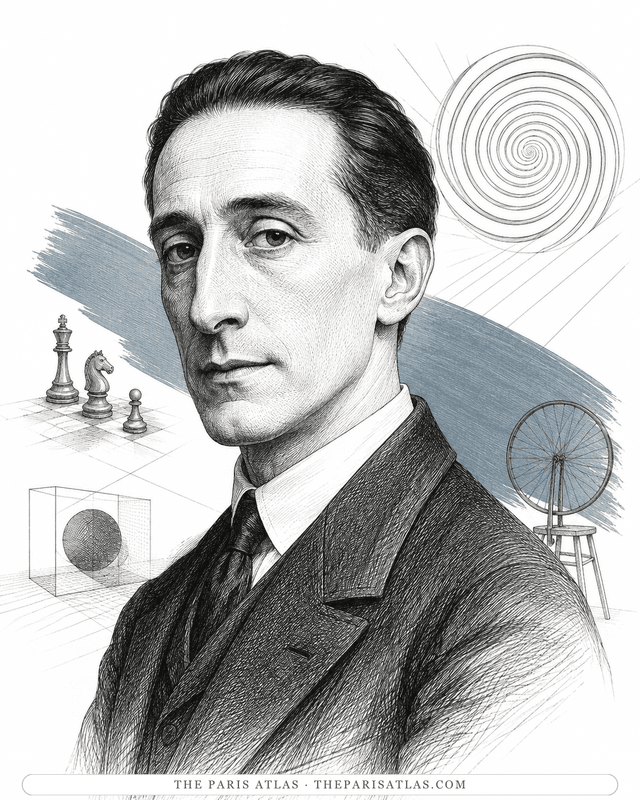
The century's quietest revolutionary — readymades, the abandonment of painting, chess on a Paris rooftop in Entr'acte, and one anemic film of spinning puns signed Rrose Sélavy.
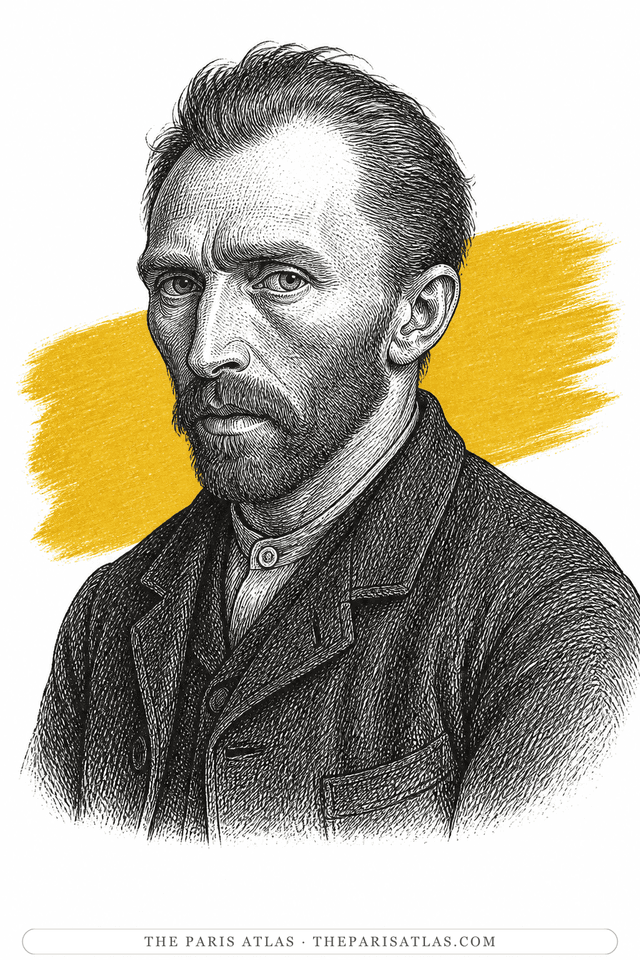
Dutch painter who lived in Montmartre with his brother Theo from March 1886 to February 1888 — the two years in which his dark Dutch palette turned into colour. He painted more than 200 pictures in Paris and died at Auvers-sur-Oise, north of the city, in 1890.
The sources below include collection records, catalogues, scholarly research, and primary materials that informed this page. They document Autumn Rhythm: Number 30, 1950, its making, and its place in cultural history.
1Jackson Pollock, Autumn Rhythm (Number 30) — collection record
Website
The Metropolitan Museum of Art
Used for
The holding museum's record: the 1950 date, the 269.9 by 528.3 cm dimensions, the oil-modified alkyd resin medium, the 1957 acquisition, and the Benton and Siqueiros precedents for its scale.
These references provide the documented foundation for this work's history and interpretation. Claim-level citations remain attached to the specific claims they support.


 View source