Michel
The husband, who discovers his wife's old, brief affair and cannot reduce it to its true small size — jealousy hollowing him out over a few days.
For the affair to turn into something small enough to live beside. He keeps starting the same sentence — if only it had been something other than what it was — and Alice, listening to him circle back to it, privately names it the si-encore theme, the if-only theme.
The book

At a glance
- One of the two people it is about; the whole novel takes place at his country house, over the first days of the Easter holiday
- Forty-three. Alice is thirty-seven, and he studies his face in the mirror wondering how, with only six years between them, she still looks like a young woman
- Theatre and music-hall management — a casino season at Saint-Raphaël, winter revues on tour in the provinces, a summer directing at the Étoile theatre in Paris, and the hall at the Petit-Casino, which is what the household lives on
- Cransac, the house he was born to: two squat tile-roofed towers, twelve hectares of overgrown park, a river below it, and a village at the bottom of the hill that watches everything
- Alice, his wife of ten years; Maria, the caretaker, who came to the house the same year Alice did; Chevestre, the farm manager he is afraid of; and Ambrogio, his business partner in Paris and the man Alice slept with
Who they are in the book
Spoiler-freeMichel is the husband in Duo, a novel the French writer Colette published in 1934. He and his wife Alice are two of only a handful of people in the book, and they spend it at Cransac, the country house he grew up in and still owns, on the Easter holiday he takes there every year. On the first morning he comes back from walking the land with his farm manager, sees a purple reflection thrown onto Alice's cheek by a leather blotter on her desk, and says how good the color looks on her. When he goes to pick the blotter up it is gone. Alice tells him there is no purple blotter. He opens the desk drawer, finds it, and finds inside it a letter from a man called Ambrogio thanking her for a night they spent together.
Everything the novel does after that is Michel failing to put the letter down. The affair lasted under a month, happened in November 1932 while he was away running a casino season on the coast, and was finished long before he learned of it. Alice tells him so on the first afternoon. He agrees with her that it was nothing, and then asks about it again, and again, for the rest of the book.
He is forty-three, six years older than his wife, and he works in show business: casino seasons, provincial tours, a music-hall room in Paris, a summer's directing at a theatre called the Étoile. It is a trade that runs on charm and on being liked, and he carries the habits of it into the house. He performs for the servant. He tells the same jokes twice. He compares the weather to the weather in Nice. Alice, who has been married to him for ten years, tells him to his face that she does not like it when he is subtle, because he is only subtle when he is unhappy.
How Michel Is Portrayed
- The morning he sees the purple reflectionHe notices that something on his wife's desk is throwing a violet light onto her cheek and says it is worth painting. She tells him the object does not exist. He opens the drawer, holds the blotter up to the sun, and is briefly delighted to have been right, before he opens it and a sheet of thin foreign writing paper slides out onto the floor.
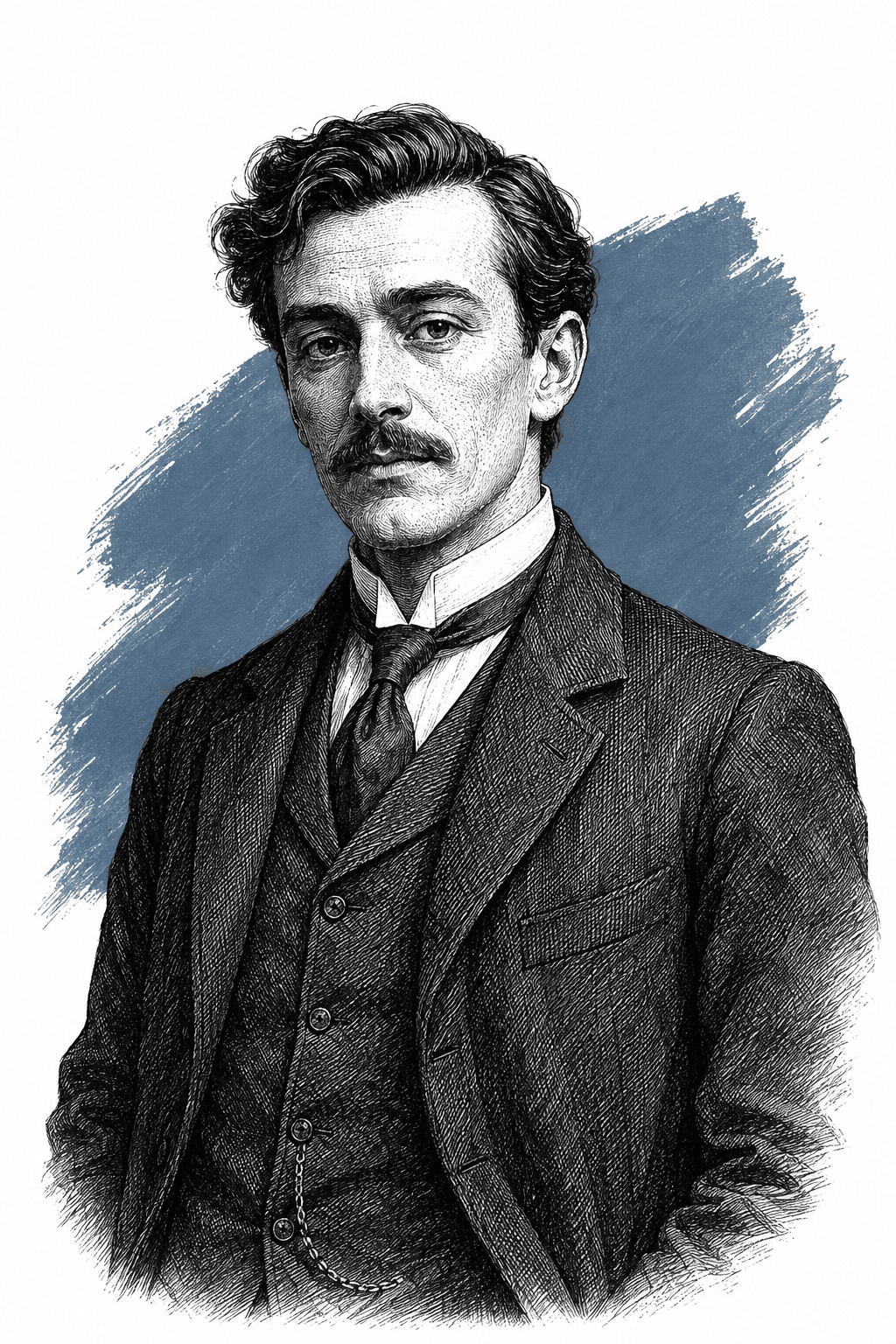
- The beard he had just grownHe and Alice are the same height, though she looks tall and he looks short. He has tobacco-colored eyes, small well-kept teeth, curly hair going white, and a new thin strip of beard along the jaw, trimmed close and running up to the ear, which he grew to cover the loosening skin under his chin. He needs round glasses to read, and has to hunt for them when the letter is in his hand.
- The lunch he plays for the servantAn hour after the discovery they sit down to eat, and Michel spends the meal charming Maria, the caretaker who has kept the house for ten years — asking after the vegetable garden, marvelling at the radishes, sighing over a sheepdog that died. Alice watches, appalled, and works out what he is frightened of: not the affair, but Maria finding out about it.
- The sentence he cannot finishWhat he says he could have forgiven is the sex. What he cannot get past is that Alice talked to the man first, liked him, called it friendship and used the word trust. He returns to it in the same broken form every time — if only it had been a passing thing, a hot evening, an accident of the body — and never gets to the end of the thought.
- The jug against the wallLate one evening he picks up the empty jug that held their mulled wine and throws it at the wall. Then he bends down, collects the largest piece, and stands there turning it over, struck that the handle had once been glued back on and has survived the smash intact. Alice, who has been waiting for him to do something violent, is relieved.
- He wrecks the deal by telephoneA Paris syndicate wants to revive an operetta, Daffodyl, in his hall, with Alice designing the costumes and Ambrogio as the senior partner. Michel calls Paris back and kills it. He then asks his wife whether more than one woman would not be proud of a husband who put jealousy ahead of money.
- He takes the letters out of her handThere are three letters, and Alice has been carrying them folded in her pocket for days. When she finally waves them at him he catches her wrist and opens her fingers one at a time. He reads them at the desk with his glasses on. When her finger comes down on a coarse word while she is explaining the dates, he grabs the hand and twists it hard enough to leave it numb.
- The house he cannot pay forCransac is failing quietly around him. The roof sheds tiles, the stables are stuffed with straw instead of repaired, the willow crop has gone wrong, and he is privately certain that the mortgage on the place is funded by his own farm manager through a man acting as a front. He has not told Alice, and he expects that she will find out on the day he has to sell.
After he has read the three letters and burned them, he sends Alice to bed and stays up alone in the library. He walks the room for hours, wants to smash the lamp, cries, works out that if he had spent another half hour with his farm manager that first morning he would have missed the reflection and none of it would have happened, and finds that the sentences from the letters come back to him word for word whenever he stops talking to himself.
He opens the drawer that holds the money but not the one that holds his revolver, on the grounds that he will not do that in his own house, where Alice and Maria would find him. He checks that he has his handkerchief and his diary. Then he climbs over the balcony rather than risk the hinges waking anyone, walks down through the wood in the dark, and reaches the swollen river at the broken fence of the park. That is the last line of the book.
Le Toutounier, published five years later, picks Alice up in Paris after his death.
If you like Duo


If you like Colette
Explore authors with a similar voice, perspective, and influence.

Henry Miller
The Brooklyn dropout who arrived in Paris broke at thirty-eight and wrote the exuberant, banned books that ended American censorship.
View author
Louis-Ferdinand Céline
The doctor of the Paris slums who wrote the century's blackest, funniest novel — and changed the sound of French prose.
View author
Martha Gellhorn
War correspondent who covered the Spanish Civil War, D-Day, and conflicts across five more decades; Hemingway's third wife, 1940–1945.
View author