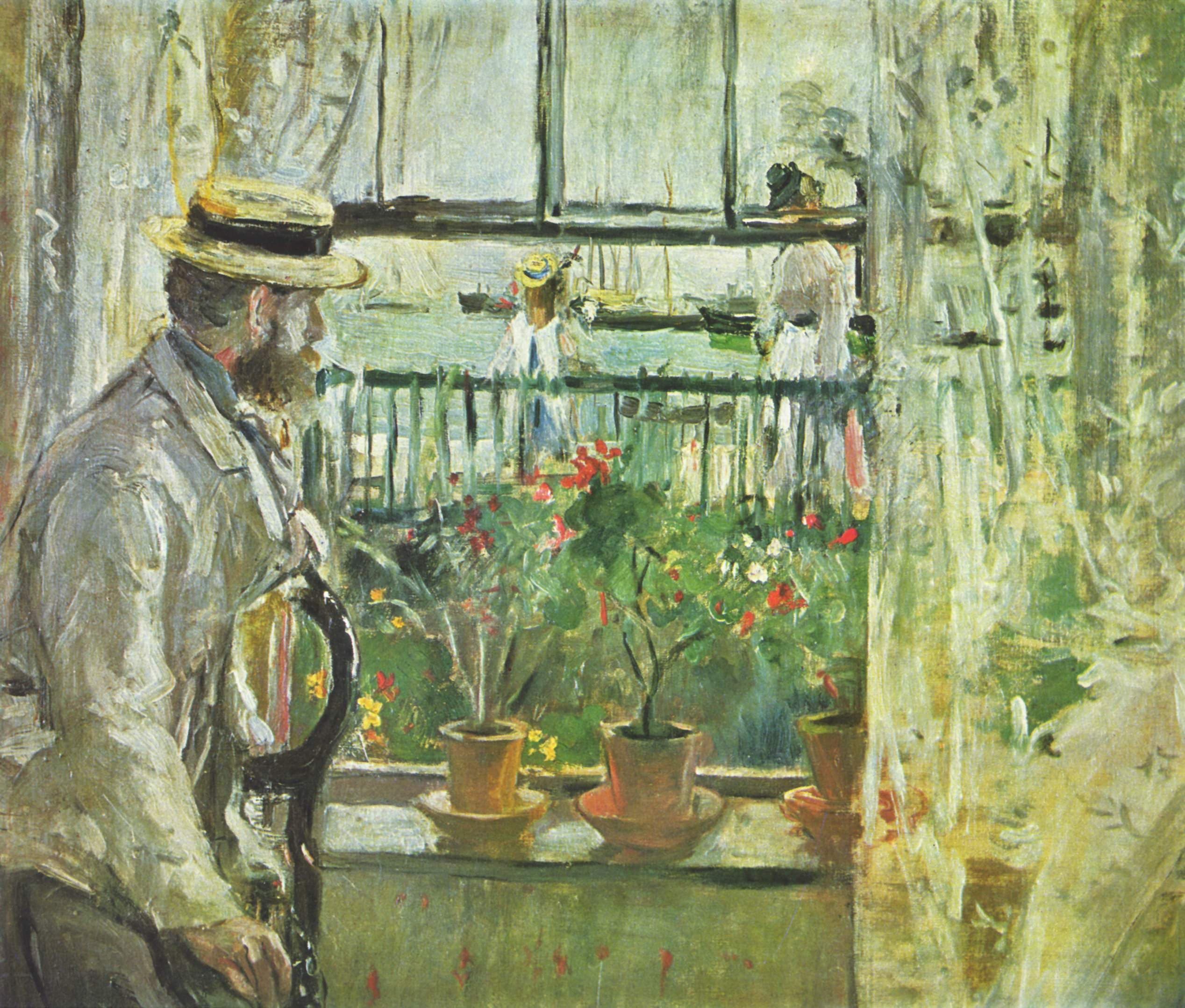
Eugène Manet on the Isle of Wight
A bearded man in a straw hat sits at the left of a window and looks out through it. Berthe Morisot painted her husband Eugène Manet in the sitting room of the Globe Cottage Hotel at Cowes on the Isle of Wight in 1875, during their honeymoon, and it is the first picture she made of him. The Musée Marmottan Monet has held it since 1993.
- 1875
- Oil on canvas
- Musée Marmottan Monet, ParisParis, France
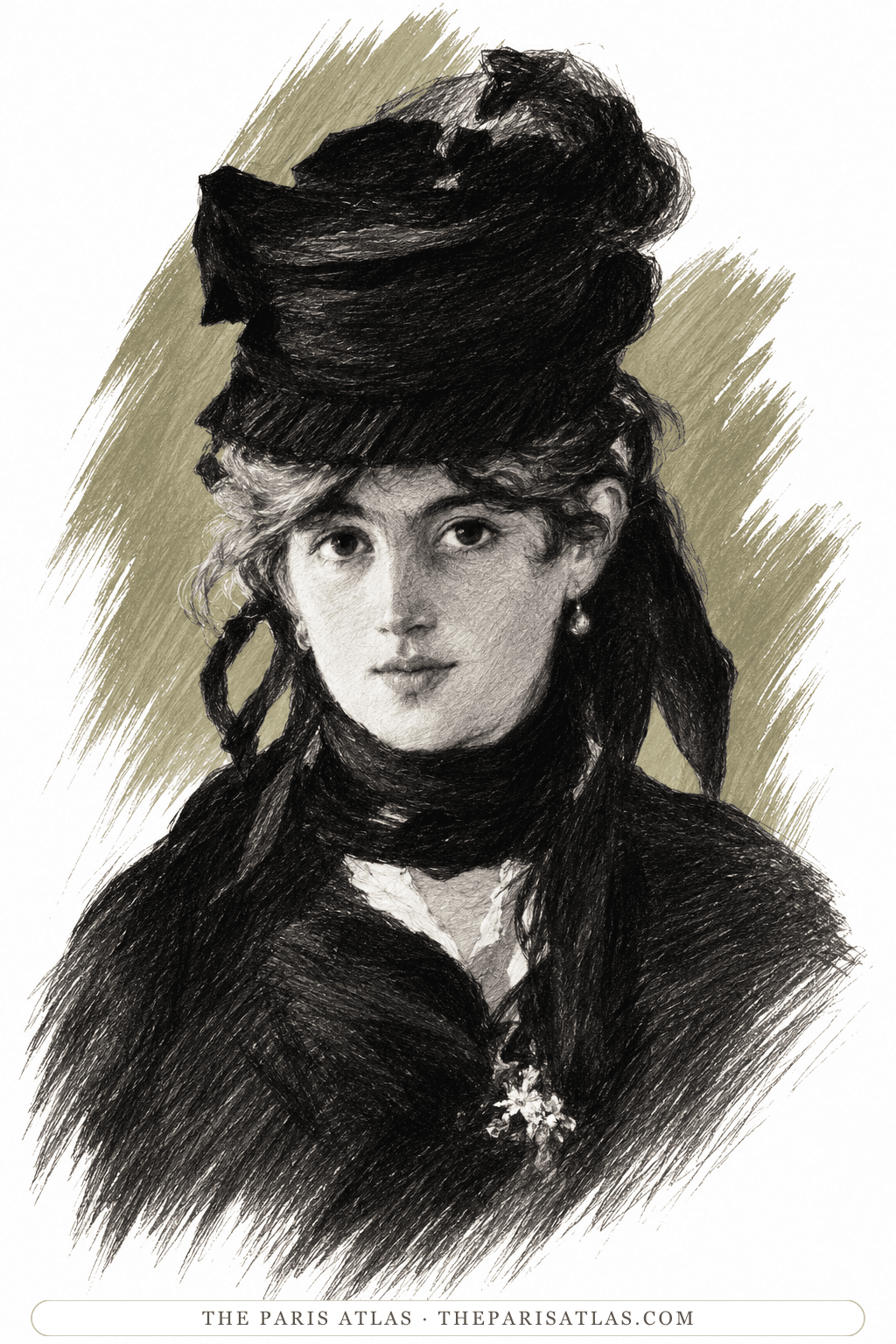
About Berthe Morisot
What the painting shows
Eugène Manet sits at the far left in profile, in a pale jacket and a pale yellow straw boater with a black band, with a full beard. He is inside, close to the glass, with the curved back of a dark bentwood chair beside him. He is looking out.
The window fills the rest of the canvas. Terracotta pots in matching saucers stand on the sill, holding red, white, yellow and orange flowers over dark green leaves, and beyond them a green railing crosses the picture. Past the railing two figures of about the same height stand at the water, one in a yellow straw hat with long brown hair over a white bodice and a blue skirt, the other in white. Masts and hulls lie along the shore in thin gray-blue strokes.
A pale curtain, patterned and almost transparent, hangs down the right-hand edge. The Musée Marmottan Monet records the canvas as oil on canvas, 38 by 46 centimeters, inventory number 6029.[1]
The honeymoon at Cowes
Berthe Morisot and Eugène Manet married on 22 December 1874 in the church of Notre-Dame-de-Grâce de Passy in Paris.[1] They had become engaged that summer, while she was on vacation in Normandy with Edma Pontillon and her family.[2]
Eugène Manet was the younger brother of the painter Édouard Manet. The Musée Marmottan Monet describes his life as quiet and leisured, and the Women in World History entry records that, like his brothers, he had no need to work and was not driven to it.[1][2]
The couple spent their wedding trip in England and stayed at the Globe Cottage Hotel in Cowes, on the Isle of Wight. The room in the painting is its sitting room. Morisot kept working, kept exhibiting under her own name, and Eugène Manet encouraged her to do both.[1]
A husband who rarely sat
Eugène Manet agreed to pose for his wife only on a few occasions. This small canvas is the first she painted of him.[1]
He is also pushed to the edge of the canvas. The Marmottan's own reading is that the painter's interest lies less in the figure than in the flowering garden and the quayside beyond the glass, and in the transparency and the light she gets out of the window itself.[1]
She painted him again in 1881, in the garden at Bougival with their daughter Julie, who was born on 14 November 1878.[3][2] Eugène Manet died on 13 April 1892, three years before Morisot herself.[2]
How it reached the Marmottan
The painting came to the Musée Marmottan Monet in 1993 as part of the Annie Rouart bequest.[1] By the will of the artist's descendants, the museum holds what it calls the world's leading collection of her work: 25 oil paintings, 75 watercolors, and a quantity of pastels and drawings.[3]
The museum also explains why its holding is unusual. Morisot sold comparatively few pictures in her lifetime, so her work is thinly represented in museums generally.[3]
The canvas travels under two names. The 2018 touring exhibition Berthe Morisot: Woman Impressionist showed it as In England, with the older title in brackets.[4]
Close reading
Reading the work, detail by detail
The sitter is pushed to the left edge and the window takes the rest. These seven views follow Eugène Manet, the flowers on the sill, and what Berthe Morisot put on the other side of the glass.
1.Eugène Manet in profile
Eugène Manet sits at the far left in a straw boater with a wide black band, in profile, looking out. The face is built from a few strokes and is less finished than the flowers on the sill. The Musée Marmottan Monet records the canvas as the first painting his wife made of him.
2.The bentwood chair
A dark bentwood chair stands between him and the window. Its black curve is the firmest drawn line anywhere in the canvas, and it is the one piece of furniture that keeps the picture a room rather than a view.
3.Flowers on the sill
Three potted plants stand in their saucers on the sill, painted with more care than the sitter. The red flowers are the brightest color in the picture, with smaller yellow and orange ones among the leaves. They sit exactly on the line between the room and the outside.
4.The railing
A railing crosses the whole window at about the middle of the canvas. It separates the pots on the sill from the water and the moored boats beyond. Its horizontal run repeats the dark bars of the window frame above it.
5.The figures beyond the railing
Two figures stand on the far side of the railing. One wears a yellow straw hat with a red flash at the brim over long brown hair, a white bodice and a blue skirt; the other is painted almost entirely in white. Both rise the same distance above the rail, so neither reads as a child beside an adult.
6.The lace curtain
A patterned curtain falls down the right-hand edge, thin enough that the greenery outside shows through it. The Musée Marmottan Monet describes the transparency effects as the painter's real subject here, and this is where they are most exposed.
7.The boats on the water
Past the railing the water is laid in as flat pale bands. A long dark hull lies across it, a boat at the right shows a bright green strip along its side, and the masts are single thin strokes. The Musée Marmottan Monet reads the quayside beyond the glass as the painter's real interest here.
Timeline
1874
Berthe Morisot and Eugène Manet become engaged in Normandy in the summer and marry on 22 December at Notre-Dame-de-Grâce de Passy, Paris.
1875
The couple honeymoon in England and stay at the Globe Cottage Hotel, Cowes, Isle of Wight. Morisot paints her husband at the sitting-room window.
1878
Their daughter Julie Manet is born on 14 November.
1892
Eugène Manet dies on 13 April.
1993
The painting enters the Musée Marmottan Monet with the Annie Rouart bequest, inventory 6029.
2018
Included in the touring exhibition Berthe Morisot: Woman Impressionist, shown under the title In England.
Where to see it
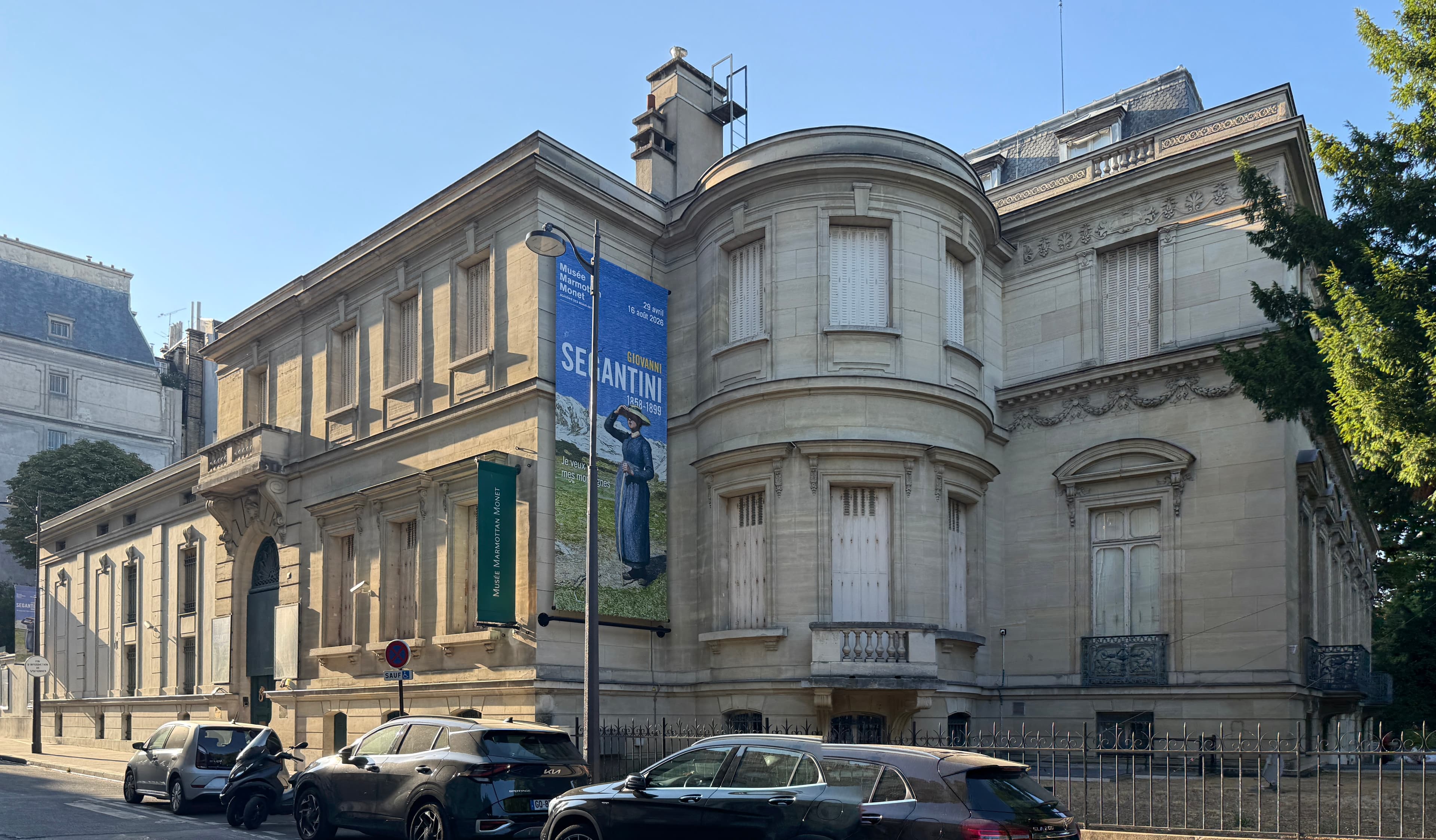
Musée Marmottan Monet, Paris
2 rue Louis-Boilly, 75016 Paris, France
Collection locations and gallery displays can change. Check the official collection notice before making a special visit.
Plan your visitFrequently asked questions
Who is Eugène Manet?
Berthe Morisot's husband, and the younger brother of the painter Édouard Manet. They married on 22 December 1874 and had one daughter, Julie Manet, born in 1878. He died on 13 April 1892.
Where is Eugène Manet on the Isle of Wight?
The Musée Marmottan Monet in Paris, inventory number 6029. It arrived in 1993 with the Annie Rouart bequest. Gallery displays change, so check the museum's own record before a special visit.
Where was it painted?
In the sitting room of the Globe Cottage Hotel at Cowes, on the Isle of Wight, where Berthe Morisot and Eugène Manet stayed during their honeymoon in England in 1875.
How big is Eugène Manet on the Isle of Wight?
38 by 46 centimeters, about 15 by 18 inches. It is a small canvas, and the sitter takes up only its left-hand edge.
Did Eugène Manet often pose for Berthe Morisot?
No. The Musée Marmottan Monet records that he agreed to sit for his wife only on rare occasions, and that this is the first painting she made of him.
What can be seen through the window?
Flowers in terracotta pots on the sill, a green railing, and two figures standing beyond it. One wears a yellow straw hat and a blue skirt, the other white. Past them are the masts and hulls of boats along the Cowes waterfront.
Is the painting also called In England?
Yes. The 2018 touring exhibition Berthe Morisot: Woman Impressionist showed it as In England, with Eugène Manet on the Isle of Wight given as the alternative title.
More by Berthe Morisot
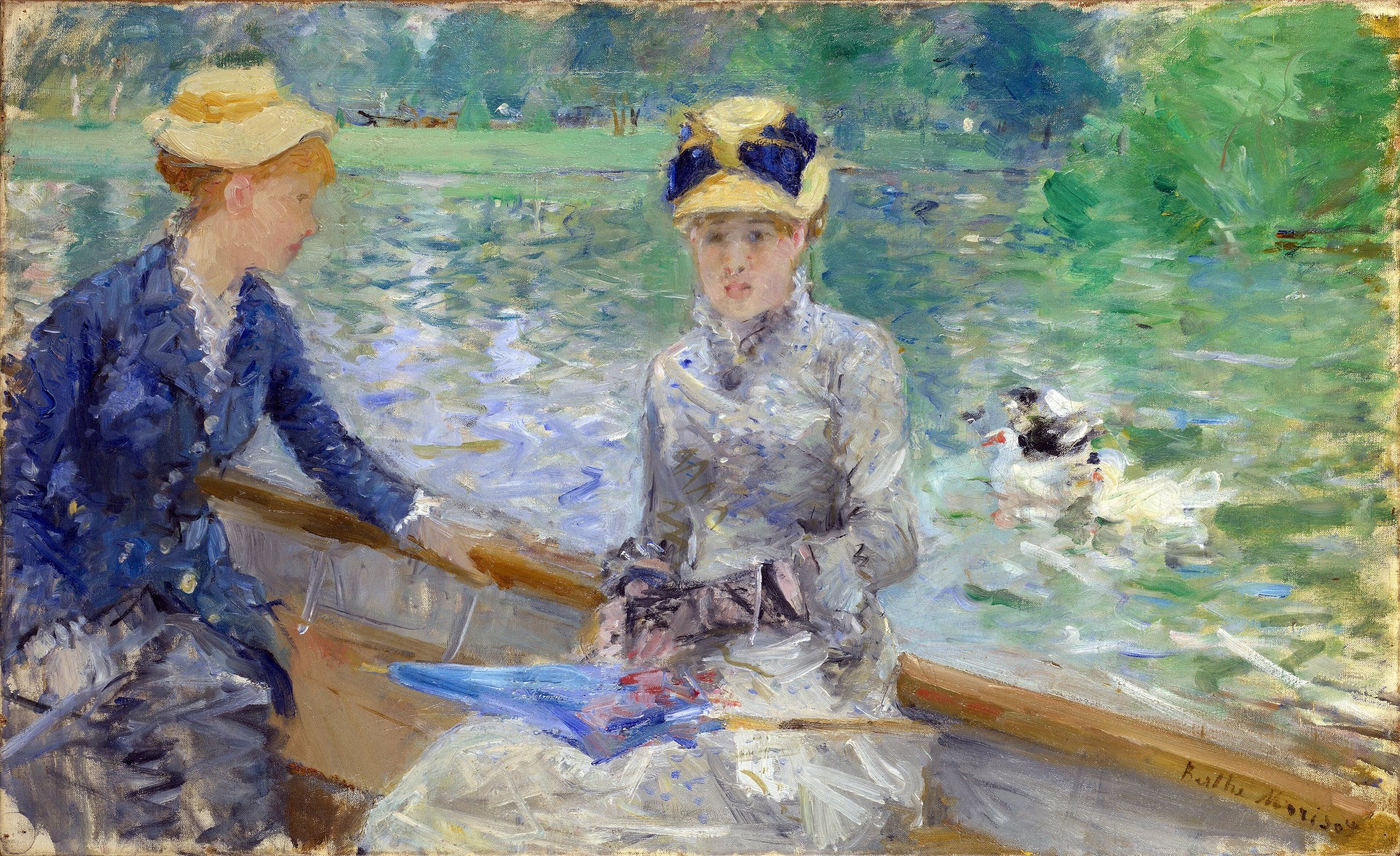
If you like Berthe Morisot
Explore painters from the same movements and circles.
Gustave Caillebotte
Painter of Haussmann's geometry and the group's organizer-financier; his bequest of Impressionist paintings forced the French state to take the movement in.
View artist
Mary Cassatt
Mary Cassatt was an American painter and printmaker known for her depictions of women and children. Based in France for the last fifty-two years of her life, she was the only American to exhibit with the original French Impressionist group, participating in four of its eight exhibitions. Edgar Degas invited her to exhibit with the group in 1877 after the Salon jury rejected her submissions.
View artist
Paul Cézanne
Painter between Impressionism and everything after — shown in the independents' exhibitions, emulated by the Cubists, and present at the Orangerie through 15 works in the Walter-Guillaume collection.
View artist
References
The sources below include collection records, catalogues, scholarly research, and primary materials that informed this page. They document Eugène Manet on the Isle of Wight, its making, and its place in cultural history.



4↑Berthe Morisot comes into her own
PeriodicalApollo, 2018Used forContemporary reporting or criticism used to document the historical reception and context of Eugène Manet on the Isle of Wight.
These references provide the documented foundation for this work's history and interpretation. Claim-level citations remain attached to the specific claims they support.
 Explore more resources