Summer's Day
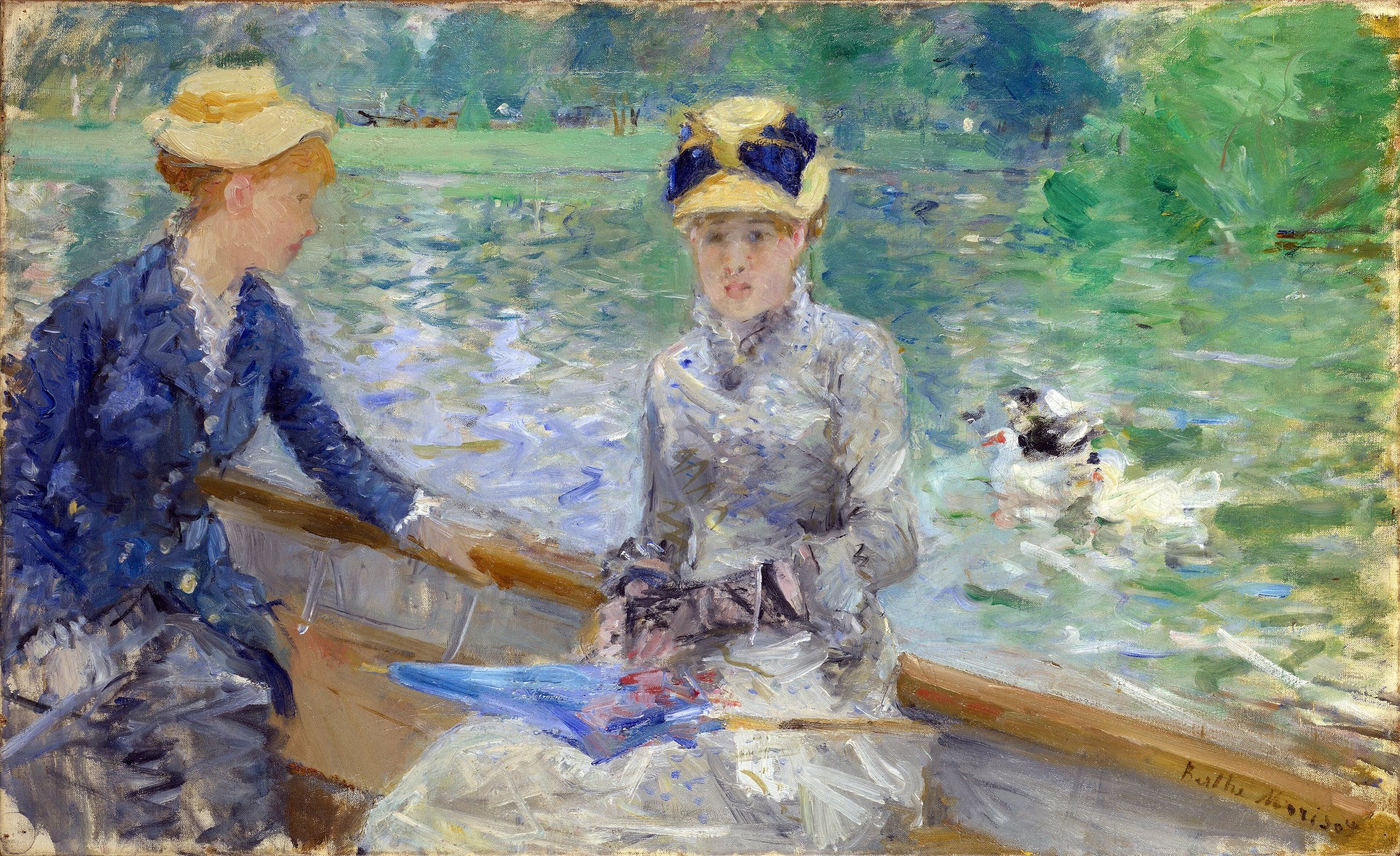
Two women sit in a rowing boat on the lake in the Bois de Boulogne, one in blue, one in gray and white, with three ducks on the water behind them. Berthe Morisot painted it around 1879 and almost certainly showed it at the fifth Impressionist exhibition in April 1880 under a different title, The Lake in the Bois de Boulogne. It belongs to the National Gallery in London as part of the Hugh Lane Bequest, and has spent long periods on loan in Dublin.
- about 1879
- Oil on canvas (unlined)
- The National Gallery, LondonLondon, United Kingdom
About Berthe Morisot
What the painting shows
Two women share the stern of a small boat, seen close up and from inside it. The woman on the left has red hair under a plain pale straw hat, wears a dark blue jacket, and looks down and to the right. The woman on the right faces the viewer in a gray-white dress and a straw hat trimmed with dark blue, her gloved hands in her lap and a blue parasol folded across her skirt.
The lower edge of the canvas cuts the boat off. A pale wooden oar runs across the picture below them. To the right, three ducks sit on the water. The far bank is a band of green foliage squeezed against the top edge, with a hint of a carriage and figures on the shore.
The National Gallery gives the canvas as 45.7 by 75.2 centimeters, oil on unlined canvas, signed, inventory number NG3264.[1] The water takes up more of the surface than the figures do.
Zig-zag strokes
The National Gallery singles out the handling: short zig-zag strokes running across the whole surface, clearest in the blue dress in the lower left corner, which break the lake into shifting facets of light.[1] The same stroke describes the women, the water and the leaves, so the figures never separate cleanly from what is behind them.
Morisot was attacked for it. The word critics used for her work was vaporeuse, misty or steamy, and Edgar Degas used it too. One reviewer at the 1880 exhibition asked why, with her talent, she did not take the trouble to finish. Another called her pictures promises of paintings that would never be done.[1] That show was the fifth of the independent exhibitions the group held after breaking with the Salon in 1874.[2] Morisot appeared in seven of the eight.[3]
The National Gallery notes that praise could be as narrow as the attacks: writers who admired the delicacy and the subtle tones of her two 1880 pictures were often describing them as feminine work. It names her brother-in-law Édouard Manet, who himself often rejected traditional ideas of finish, among those who recognized how distinctive her handling was.[1]
The lake in the Bois de Boulogne
Morisot lived in Passy, on the western edge of Paris and next to the Bois de Boulogne, and painted there often.[1]
The park was not natural. In the 1850s Napoleon III and the landscape architect Adolphe Alphand rebuilt the old royal forest into winding paths, glades, ponds, lakes and islands. The National Gallery quotes a commentator of the day: "everything is artificial … all that is missing is a mechanical duck."[1]
Parisians went there to run, cycle, skate, watch horse racing and row. Morisot leaves the crowds out and keeps two figures, a boat, and a summary background of water and foliage.[1]
The National Gallery says the two women, possibly professional models, appear in identical clothes in a second Morisot canvas, In the Bois de Boulogne, which hung beside this one in 1880. A watercolor study for the picture was very likely made at the lake; its location is unknown.[1]
London, Dublin, and a shared bequest
The painting was with the dealers Bernheim-Jeune in Paris, then Durand-Ruel in 1910. Hugh Lane bought it in 1912 and it came to the nation with the Lane Bequest in 1917. It was transferred from the Tate Gallery to the National Gallery in 1951.[1]
The acquisition credit names two institutions: the Sir Hugh Lane Bequest, 1917, the National Gallery, London, in partnership with the Hugh Lane Gallery, Dublin. The painting has gone to Dublin City Gallery The Hugh Lane on two long loans, the first from 2012 to 2019 and the second recorded as running from 2026 to 2031.[1]
It travels a great deal besides. Since 2012 it has been lent to the Musée Marmottan Monet, Ordrupgaard, the Dallas Museum of Art and the Musée d'Orsay. It has also been to the Dulwich Picture Gallery, the Museo Nacional Thyssen-Bornemisza, the National Gallery of Ireland and the Legion of Honor in San Francisco.[1] The Marmottan, which holds the largest collection of Morisot's work anywhere, opened that run with a retrospective in 2012.[4]
Close reading
Reading the work, detail by detail
Two women, a boat, and a lake made almost entirely of short zig-zag strokes. These seven views take the sitters, their hands, the ducks, the far bank, and the corner where the brushwork is easiest to see.
1.The woman facing us
The right-hand figure faces the viewer directly from close range, as though from the opposite seat in the same boat. Dark blue bows are tied around the crown of her straw hat, picking up the blue of her companion's jacket.
2.The woman in blue
The left-hand figure is in profile with her head tilted down, looking past her companion toward the water rather than at the far bank. A white ruffled jabot runs down the front of the jacket. The National Gallery says the two wear identical clothes in a second Berthe Morisot canvas, In the Bois de Boulogne, which hung beside this one in 1880.
3.The gloved hands
The hands are the only place the picture slows down into a small dark shape. They sit just below the center of the canvas, and everything around them is pale, so they anchor the figure to the boat.
4.The folded parasol
A closed parasol lies across her lap on the diagonal, built from blue and violet strokes rather than one flat color. Red touches cluster at the end nearest her hands. It carries the strongest blue in the lower half of the painting, where the skirt and the boat are handled in broken strokes.
5.Ducks on the water
Three birds sit on the lake behind the boat. The nearest is white with an orange bill, a second shows a black head and back, and a third at the right is cream-white with an orange bill and a dark crown. They are the only incident on the water between the boat and the far bank.
6.Zig-zag strokes in the corner
The National Gallery points to the dress in the lower left corner as the clearest place to see Berthe Morisot's zig-zag stroke. Here the strokes are gray-blue and navy, laid on thinly enough that the canvas weave shows between them. The same mark describes the cloth, the water and the leaves.
7.The carriage on the far bank
A strip of green bank runs along the top of the canvas below the trees. A dark horizontal shape with tan forms in front of it reads as a carriage and horses, and a few marks beside it read as figures. The National Gallery records that Parisians came to the Bois de Boulogne to run, cycle, skate, watch horse racing and row.
Timeline
1879
Painted, most likely partly in the studio after a watercolor study made at the lake.
1880
Almost certainly shown at the fifth Impressionist exhibition in April, as The Lake in the Bois de Boulogne, beside a second canvas of the same two women.
1910
With Durand-Ruel, Paris, after the private collection of Bernheim-Jeune.
1912
Bought by Hugh Lane.
1917
Enters the national collection through the Lane Bequest.
1951
Transferred from the Tate Gallery to the National Gallery, London, as NG3264.
2023
Shown in Berthe Morisot: Shaping Impressionism at the Dulwich Picture Gallery, and in Women Masters at the Museo Nacional Thyssen-Bornemisza, Madrid.
2026
Begins a long loan to Dublin City Gallery The Hugh Lane, scheduled to run to 2031.
Where to see it
The National Gallery, London
Trafalgar Square, London WC2N 5DN, United Kingdom
Recorded on long loan to Dublin City Gallery The Hugh Lane from 2026 to 2031. Check the official object record before making a special visit.
Plan your visit on the museum’s official website (opens in a new tab)Frequently asked questions
Where is Summer's Day?
It belongs to the National Gallery in London, inventory number NG3264, and is shared with the Hugh Lane Gallery in Dublin. The National Gallery records it on long loan to Dublin City Gallery The Hugh Lane from 2026 to 2031, so check both museums before traveling to see it.
Where is the scene in Summer's Day?
The lake in the Bois de Boulogne, on the western edge of Paris. Berthe Morisot lived nearby in Passy and painted in the park often. Napoleon III and the landscape architect Adolphe Alphand had remade it in the 1850s with lakes, islands and winding paths.
Who are the two women in Summer's Day?
They are not identified. The National Gallery says they were possibly professional models, and that the same two women in the same clothes appear in a second Morisot painting, In the Bois de Boulogne, shown alongside this one in 1880.
What was Summer's Day called originally?
The National Gallery says it was almost certainly exhibited as The Lake in the Bois de Boulogne at the fifth Impressionist exhibition in April 1880. The present title came later.
How big is Summer's Day?
45.7 by 75.2 centimeters, about 18 by 30 inches. It is oil on unlined canvas and it is signed. The current frame is a twentieth-century replica.
Why does the paint look unfinished?
Morisot worked in short zig-zag strokes that cover the whole surface, including the women, the water and the leaves. Critics of the time called the effect vaporeuse, misty, and several complained that she had not finished. The National Gallery treats the handling as the point of the picture rather than a fault.
How did a French painting reach Dublin?
Through Hugh Lane, who bought it in 1912 and left it in his 1917 bequest. The bequest is administered jointly, so the painting moves between the National Gallery in London and the Hugh Lane Gallery in Dublin on long loans.
More by Berthe Morisot
If you like Berthe Morisot
Explore painters from the same movements and circles.
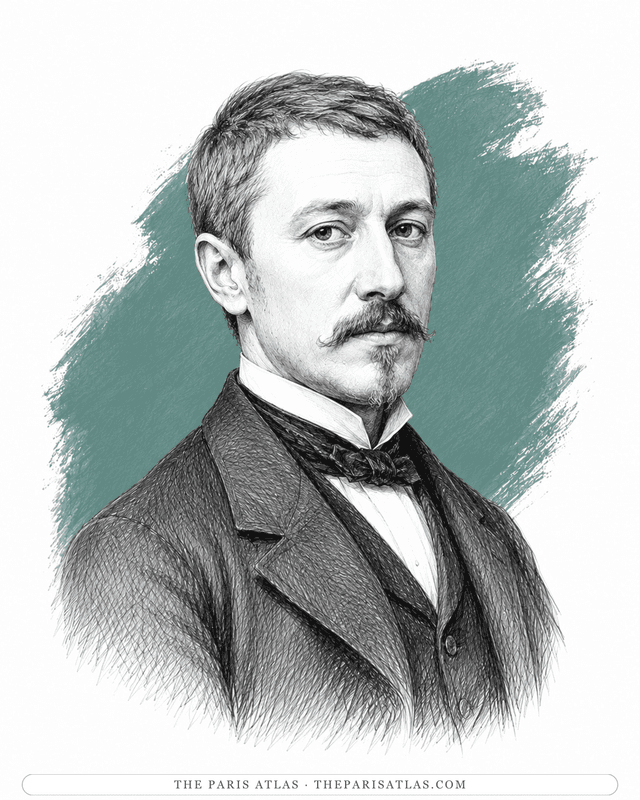
Gustave Caillebotte
Painter of Haussmann's geometry and the group's organizer-financier; his bequest of Impressionist paintings forced the French state to take the movement in.
View artist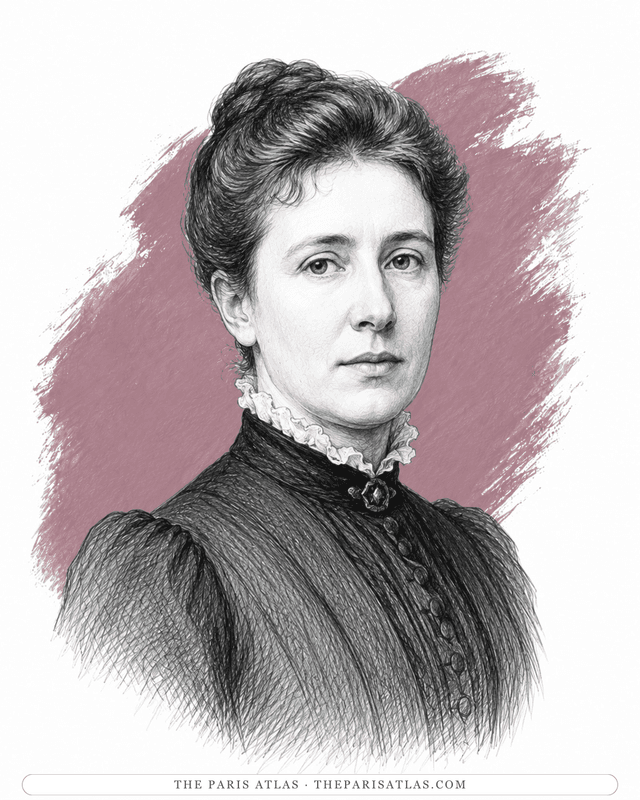
Mary Cassatt
Mary Cassatt was an American painter and printmaker known for her depictions of women and children. Based in France for the last fifty-two years of her life, she was the only American to exhibit with the original French Impressionist group, participating in four of its eight exhibitions. Edgar Degas invited her to exhibit with the group in 1877 after the Salon jury rejected her submissions.
View artist
Paul Cézanne
Painter between Impressionism and everything after — shown in the independents' exhibitions, emulated by the Cubists, and present at the Orangerie through 15 works in the Walter-Guillaume collection.
View artist
References
The sources below include collection records, catalogues, scholarly research, and primary materials that informed this page. They document Summer's Day, its making, and its place in cultural history.


2↑1874: The Birth of Impressionism
WebsiteNational Gallery of Art, WashingtonUsed forWeb source consulted for documented facts and historical context presented on the Summer's Day page.
3↑Morisot, Berthe (1841–1895)
BiographyWomen in World History: A Biographical Encyclopedia (via Encyclopedia.com)Used forBiographical evidence used to verify chronology, relationships, and historical context connected to Summer's Day.
4↑Berthe Morisot — Musée Marmottan Monet
WebsiteMusée Marmottan MonetUsed forWeb source consulted for documented facts and historical context presented on the Summer's Day page.
These references provide the documented foundation for this work's history and interpretation. Claim-level citations remain attached to the specific claims they support.
 Explore more resources