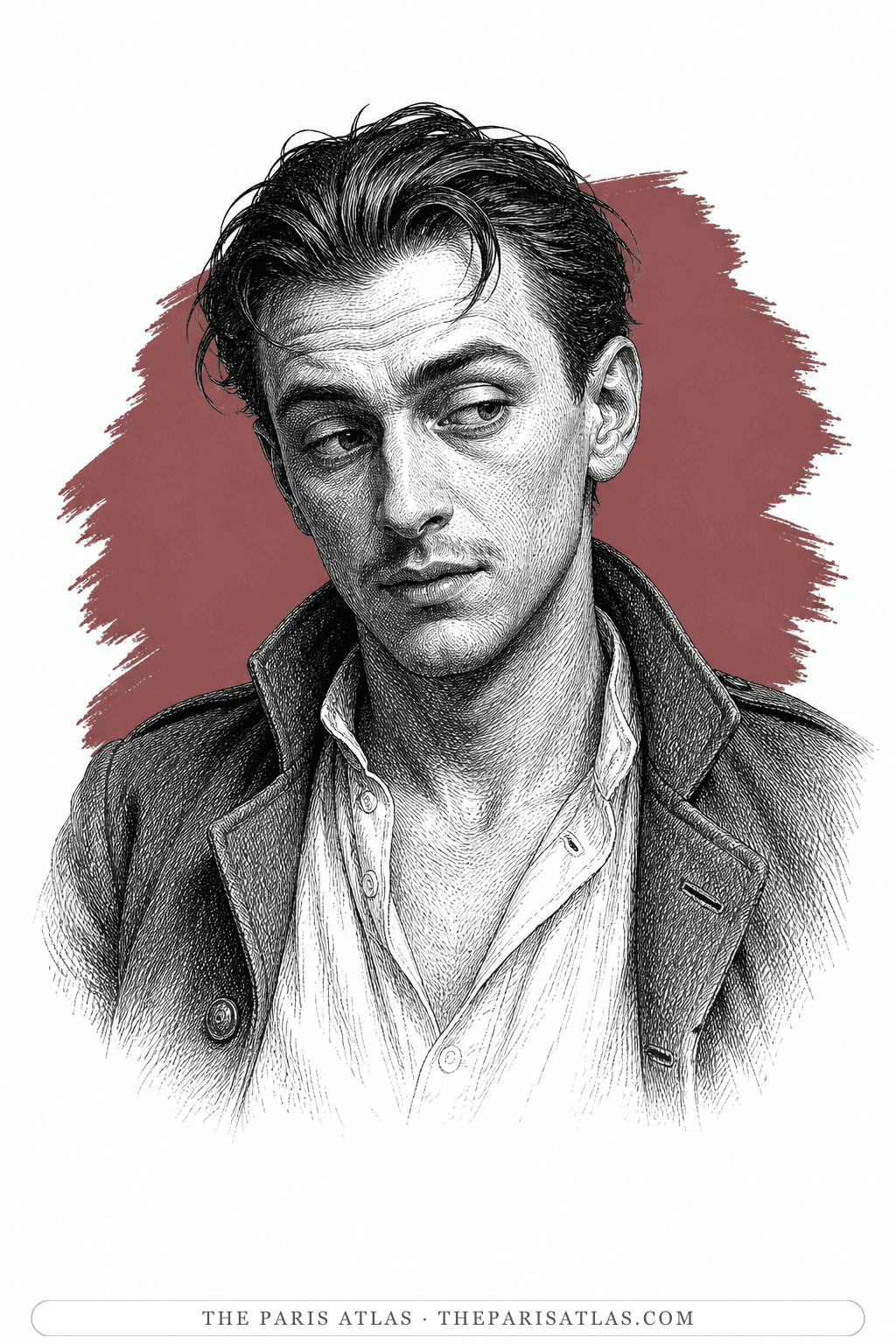
Cascade
A fellow wounded soldier Ferdinand befriends in the hospital ward — a Parisian low-life who schemes, with a wife, Angèle, whose money keeps him afloat.
To keep his foot rotting long enough that the army forgets about him, and to run Angèle in town for two months on the side. He says it out loud: "If my foot keeps suppurating two or three months more, Angèle will make you laugh Ferdinand."
The book

At a glance
- Cascade (also Gontran, actually Julien Boisson) — private in the 70th, from the Porte Brancion, Paris
- In the bed on Ferdinand's right at the Salle Saint-Gonzef, wounded in the left toe
- Self-inflicted, kept festering; Dr. Méconille refuses to amputate late in the book for reasons no one explains
- Angèle — mahogany-red hair, from Paris, twenty years old
- A pimp; also — Angèle reveals — a bigamist, with a first wife who works for him in Toulon under his real name
Who they are in the book
Spoiler-freeCascade is the patient in the bed on Ferdinand's right at the Virginal Secours — a Parisian pimp with a bullet wound in his left foot that keeps festering just enough to keep him off the front. He is nineteen and a half, married, from the Porte Brancion end of Paris, and he knows how the hospital works from the first day. He is the one who takes Ferdinand out into the town of Peurdu-sur-la-Lys, teaches him to drink at the Hyperbole café, and eventually summons his wife Angèle to Peurdu on the theory that she can make them both a fortune off the English garrison.
The theory backfires immediately. Angèle arrives, refuses to be managed, and starts working the officers directly. Cascade spends the middle of the book losing his authority over her in slow motion, and the ward around him watches it happen.
How Cascade Is Portrayed
- The self-inflicted footThe wound is his — deliberately put there to escape service. The rot earns him special catheterization privileges from Mlle L'Espinasse and a room-service manner around the ward.
- Real name Julien Boisson"My name is not Cascade, or Gontran, my name is Julien Boisson," he tells Ferdinand on the towpath one afternoon. He says it as a gift, without warning, halfway through a walk in the fields.
- The Hyperbole regularHe and Ferdinand hide behind the half-curtain of the Hyperbole café every afternoon under the medical fiction that they are going to electrotherapy. Amandine Destinée, the barmaid, is in love with him. He treats her badly and she loves him harder.
- The song he keeps singing"I know … tralala tralala … that you are pretty … That your big eyes full of sweetness, ness, ness / Have captured my heart!" He sings it at the Harnache lunch, and he keeps singing it while Angèle exposes him in front of everyone.
- The premonition at the execution wallFerdinand slips off one morning to look through the keyhole of the courtyard behind the seminary where the army shoots deserters. He finds Cascade waiting for him on the way back, already knowing. They say nothing.
- The card streakLate in the book Cascade suddenly starts winning every card game he sits down to — four rounds of piquet, then a whole afternoon of manille, then a poker session with the sergeants next door. He stops playing pale. "It's not good," he says. Ferdinand disagrees.
At the Harnache lunch Angèle exposes Cascade in front of everyone — the bigamy, and then the fact that the foot wound is self-inflicted — and tells the room she sent the letter he wrote her admitting it to his colonel. Cascade keeps singing his song through the whole thing. That evening the little male nurse from the Midi warns Ferdinand that the army cops came by at two that afternoon asking after Cascade.
Cascade goes to the canal the next afternoon and tries to drown himself in three feet of water — Ferdinand pulls him out and calls him an idiot. That night he refuses to sleep and reads Les Belles Images in the toilet by candlelight until the gendarmes arrive at dawn to arrest him. Four days later he is executed by firing squad at the billet where his regiment, the 418th, is on two weeks' leave near Péronne. His name in the record is Julien Boisson.
If you like War


If you like Louis-Ferdinand Céline
Explore authors with a similar voice, perspective, and influence.
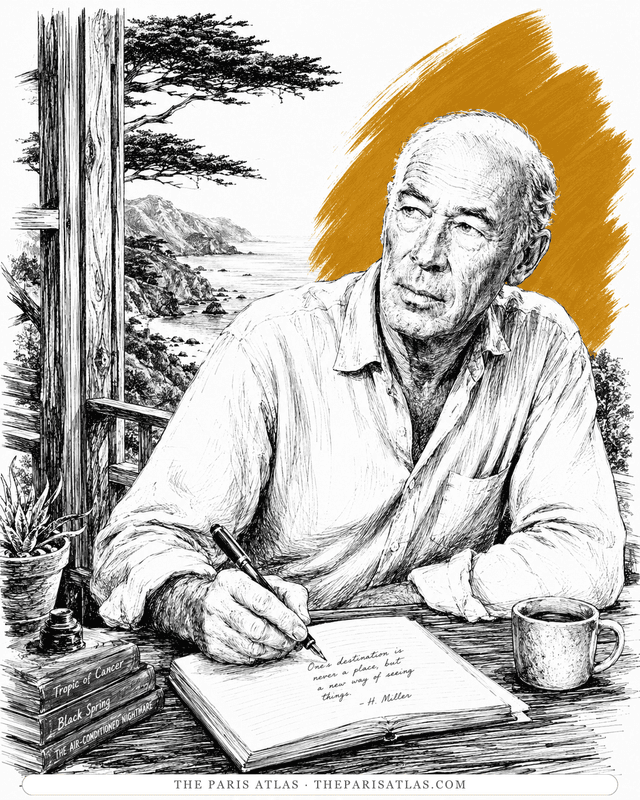
Henry Miller
Miller read Journey in manuscript while writing Tropic of Cancer and never recovered — the two books are the era's twin gutter-testaments.
View author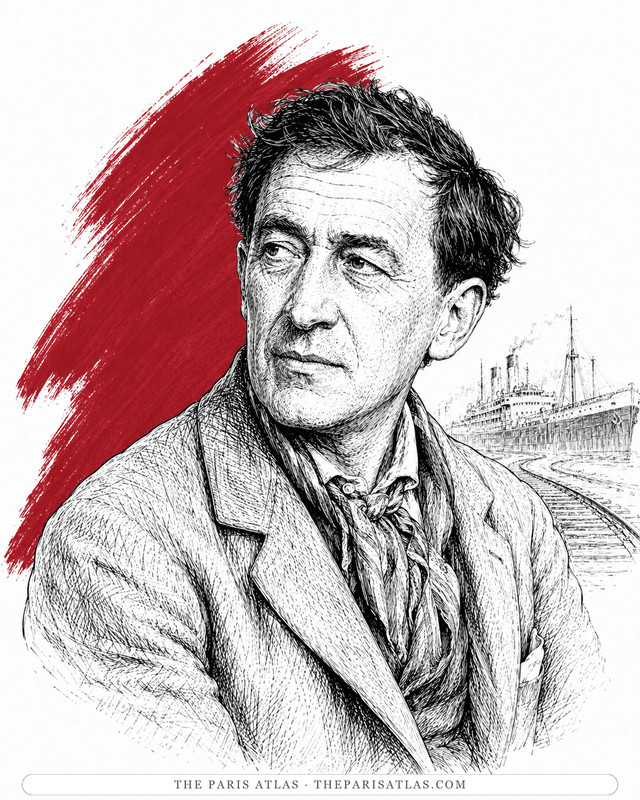
Blaise Cendrars
The other French modernist Céline could not look away from: a war-wounded amputee whose spoken prose ran ahead of grammar and whose Moravagine anticipates Bardamu's tour of the century's slaughterhouses.
View author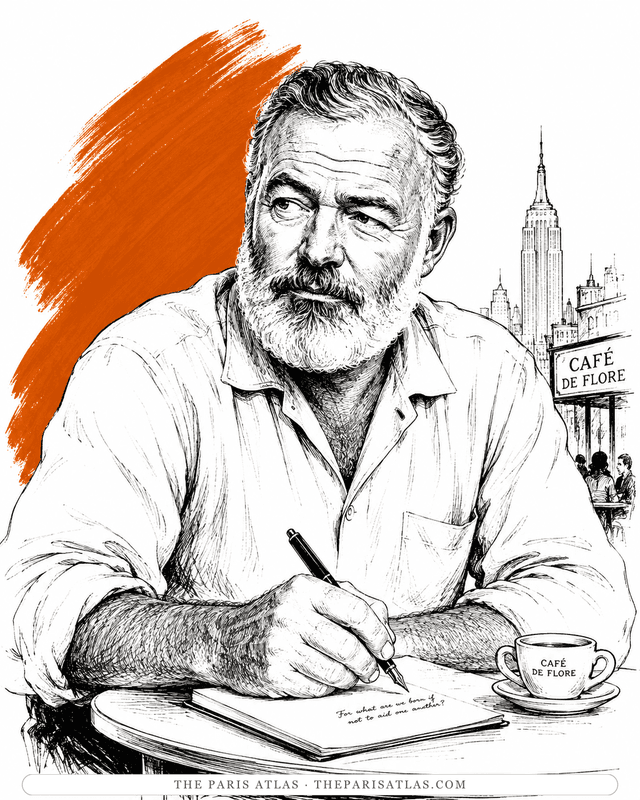
Ernest Hemingway
The same war, the same refusal of the big words — delivered in whispers where Céline delivers it in screams. Both writers died in the same week of July 1961.
View author