The Soldier
The guard who holds the condemned man's chain. He understands no French and does what the officer tells him.
He wants an easy day, and later, it seems, to leave the island with the traveler.
The book
In the Penal Colony
Franz Kafka
Who they are in the book
Spoiler-freeHe is a common soldier doing work that, the officer complains, used to be the officer's own honor (page 37). He dozes, eats and plays, and in the end he is the one who shows the traveler the old commandant's grave.
How The Soldier Is Portrayed
- Dozing on his rifleOn page 10 he has wound the prisoner's chain around both wrists, leans on his rifle and lets his head hang. Kafka writes that he cares about nothing.
- Cleaning up and eatingOn page 34 he cleans the machine with the prisoner's own shirt. On page 38 he pours rice porridge into the bowl, then eats some of it himself with his dirty hands in front of the hungry prisoner.
- Making a friendOn page 51 he and the condemned man seem to have become friends. On page 58 he snatches back the ladies' handkerchiefs the officer has thrown to the prisoner, and the two men squabble half in fun.
- Showing the traveler the graveOn pages 65 and 66 he points out the teahouse. He tells the traveler that the priest refused the old commandant a place in the cemetery, and that the officer tried at night to dig him up.
If you like In the Penal Colony


If you like Franz Kafka
Explore authors with a similar voice, perspective, and influence.
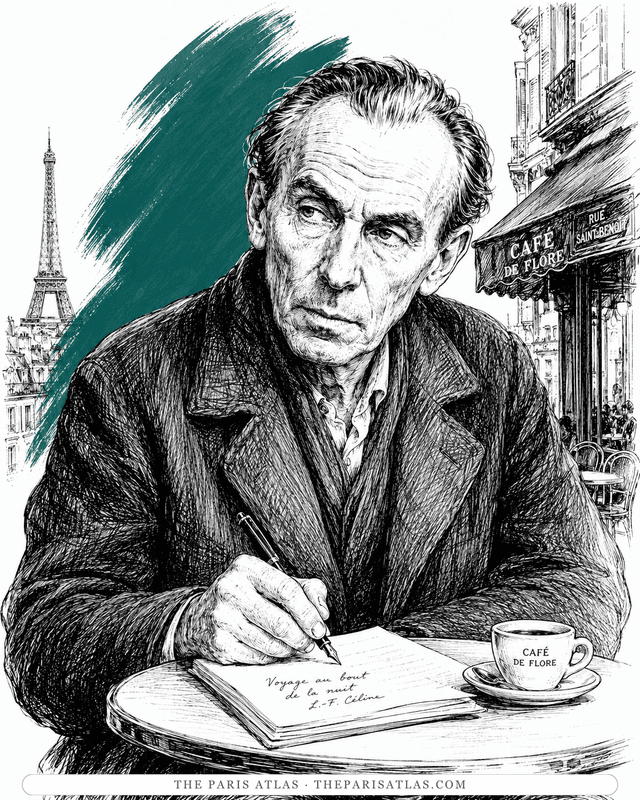
Louis-Ferdinand Céline
The doctor of the Paris slums who wrote the century's blackest, funniest novel — and changed the sound of French prose.
View author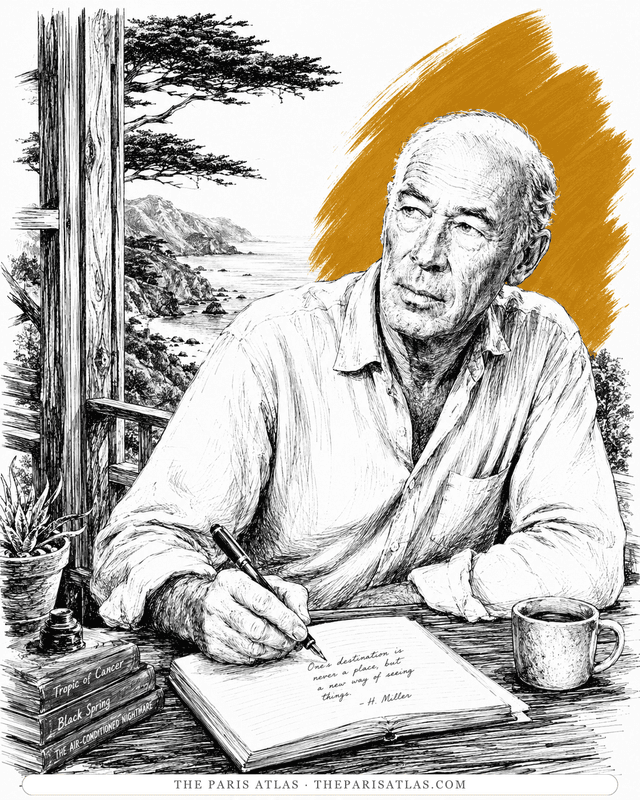
Henry Miller
The Brooklyn dropout who arrived in Paris broke at thirty-eight and wrote the exuberant, banned books that ended American censorship.
View author
Paul Bowles
American novelist and composer whose expatriate fiction explores dislocation, unstable intimacy, fatalism, and North Africa.
View author