Painting 1946
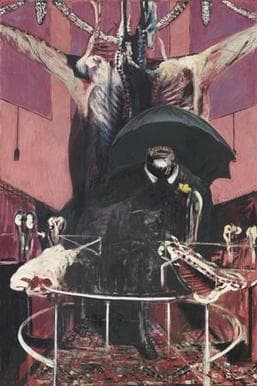
A man in a black coat sits under a black umbrella with his mouth open, a flayed carcass spread above him like a pair of wings and a white rail curving around him. Francis Bacon painted it in 1946. The Museum of Modern Art in New York bought it two years later and holds it as 229.1948.
- 1946
- Oil and pastel on linen
- The Museum of Modern ArtNew York, United States
About Francis Bacon
What the painting shows
The upper half of the canvas is a pink-mauve wall broken into vertical bands of deeper purple, like a room panelled or blinded. Hanging across the very top are pale garlands with dark objects strung along them. Down the left edge a dark cord with a toggle at its end hangs against the pink.
Below that hangs a carcass, split down the spine and opened out. Its two halves reach sideways and upward, bone-white and streaked with pink, the ribs legible on both sides and a dark column of vertebrae running down the middle. The shape it makes is the shape of outstretched arms.
Under the carcass is a black umbrella, open, its dome filling the centre of the canvas. The umbrella cuts the head off at the level of the nose. What is left visible is a mouth, open, with the upper teeth bared and a dark shadow above them.
The body below is a black mass with a white collar and a yellow flower at the lapel. In front of it a white tubular rail curves round on thin posts, enclosing the figure. Two more pieces of meat lie on that rail, a pale cream joint at the left and a long ribbed flank at the right, both streaked with red.
The floor is a patterned carpet in red and black. At the far left and far right of the middle distance, small pale forms on stalks stand against maroon, marked with dark dots.
The title does not say what the picture is
Francis Bacon called it Painting. The Museum of Modern Art catalogues it exactly that way — title Painting, date 1946 — and joins the two with a full stop when it prints them together. The Estate of Francis Bacon's catalogue raisonné runs them into one title, Painting 1946, and numbers the work 46-03.
The form used here is the Estate's, because Painting on its own does not identify anything: Francis Bacon used the word as a title repeatedly, and the Estate's catalogue records another Painting from 1980. The museum's own shorter form is recorded above, in the collection details.
The Estate explains its titling policy in the catalogue raisonné. Titles assigned by Ronald Alley in the 1964 catalogue are kept for the earlier years, and for 1963 to 1991 the titles established by Francis Bacon with Marlborough Fine Art are used. Alley numbered this painting 19.
Chance, and what the studio showed
Francis Bacon talked often about accident. In the interviews he gave David Sylvester between 1962 and 1974, first published as a book in 1975 and expanded in 1980 and 1987, he put heavy public emphasis on the part chance played in his pictures.
The Estate of Francis Bacon sets that against the evidence of the studio, and says plainly that it suggests a more deliberate artist than he cared to admit. He wrote notes towards paintings, outlined compositions in biro, paint and felt-tip, and traced and overpainted photographs to work out a motif. Annotated typescripts found after his death show he had a hand in editing the interviews themselves.
The Estate makes a related point about his titles. Calling so many pictures Study for something was, it argues, neither whimsical nor accidental: he was being open-ended rather than tentative.
What can be checked here is the repetition. The umbrella, the split carcass, the curved rail and the buttonhole flower recur across his work for decades.
Meat, and an umbrella
The split carcass is a motif Francis Bacon returned to for the rest of his life. He was direct about where it came from: butchers' shops, and the paintings of Rembrandt van Rijn and Chaim Soutine that had got there first. Hung as it is here, arms out and head down, it takes the position of a crucifixion without being one.
The umbrella belongs to a different world — city, weather, business, the clothes of a public man. Setting it under the carcass puts a tailored figure inside a slaughterhouse and leaves the two in the same room without explaining the relation.
Nothing in the canvas identifies the man. The pinstripe, the buttonhole flower and the umbrella supply a class and a period rather than a person.
New York bought it in 1948
The Museum of Modern Art acquired the painting in 1948, two years after it was made, and records the acquisition simply as Purchase. Its object number is 229.1948 and it belongs to the Department of Painting and Sculpture.
Francis Bacon was thirty-eight and had been exhibiting seriously for four years. The purchase put his work into a major American collection well before the British retrospectives of 1962 and 1985.
The museum notes on its own record that the entry is a work in progress. As of September 2026 the painting is not on view.
Paris, 1971
The painting travelled to Paris for the retrospective at the Galeries nationales du Grand Palais, which ran from 26 October 1971 to 10 January 1972 and then moved to the Kunsthalle in Düsseldorf. The catalogue counted 108 works and was published by the Centre national d'art contemporain.
Two days before the Paris opening, George Dyer — the painter's lover — was found dead of an overdose of drink and drugs. He was in the bathroom of their room at the Hôtel des Saints-Pères, at 65 rue des Saints-Pères in the 6th arrondissement. Francis Bacon attended the opening, and was photographed there with Jacques Duhamel, the French culture minister, on 29 October 1971.
Close reading
Reading the work, detail by detail
The picture stacks three things on one vertical axis: a split carcass at the top, an open black umbrella below it, and a seated black-coated body below that, with a white rail curving round in front. The close views take that stack from the top down, then work outward to the rail and the room.
1.The carcass is split and opened out
A carcass hangs from the top of the canvas, split down the spine and opened out so that both halves reach sideways and up. The meat is painted bone-white streaked with pink, and the ribs are drawn as parallel curves on each side. A dark column runs down the centre where the spine was cut.
2.The umbrella cuts the head off at the nose
The black umbrella is the largest single area of flat dark in the picture, and its edge falls exactly across the face. Everything above the nose is hidden. The dome is painted with a soft grey sheen along its upper curve and is otherwise unbroken black.
3.What is left of the face is a mouth
Below the umbrella's edge the paint gives an open mouth with the upper teeth bared and a dark shadow over the upper lip. A white collar shows at the throat. The face is built from a few strokes and stops where the umbrella begins, so the figure has no eyes to read.
4.A yellow flower at the lapel
A small bright yellow flower sits at the lapel, the only warm high note in the lower half of the canvas. It is painted in two or three loaded strokes. A pale streak runs down below it against the black.
5.A white rail curves round the figure
A white tubular rail curves round in front of the figure on thin vertical posts, drawn as an ellipse in perspective. It is painted with a highlight along its upper edge, so it reads as a pipe rather than a line. It encloses the figure without touching it.
6.Two more cuts of meat lie on the rail
Two further pieces of meat rest on the rail, a pale cream joint at the left and a long ribbed flank at the right. The right-hand one is opened out with its ribs showing and a red streak through the middle. Both are painted more thickly than anything around them.
7.A cord and toggle hang at the left edge
A thin dark cord hangs down the left edge against the pink, with a small dark toggle at its end. It is the kind of detail that fixes the setting as an interior — a blind pull, or a light switch — and it is painted as a single unbroken line.
8.The floor is a patterned carpet
The floor is worked as a dense red and black pattern with pale flecks, painted in small broken strokes. It is the busiest surface in the picture and sits directly beneath the flattest, the black coat. The two meet without any shadow between them.
9.The wall is banded pink and purple
The wall behind is pink-mauve, broken into vertical bands of deeper purple that run the height of the upper canvas. Pale garlands are strung across the very top with dark objects hanging from them. The bands give the room a shallow, screened feel with no visible depth.
Timeline
1946
Painted in London, in oil and pastel on linen.
1948
Bought by the Museum of Modern Art, New York, and accessioned as 229.1948. The museum records the acquisition simply as Purchase.
1963–64
Shown in the Solomon R. Guggenheim Museum retrospective, 18 October 1963 to 12 January 1964.
1971
Francis Bacon repaints the subject, larger and on canvas, as Second Version of 'Painting' 1946, Museum of Modern Art, New York. It belongs to the Museum Ludwig in Cologne.
1971–72
Shown at the Galeries nationales du Grand Palais in Paris, 26 October 1971 to 10 January 1972, then at the Kunsthalle in Düsseldorf.
1990
Shown in the retrospective at the Museum of Modern Art, 24 May to 28 August.
2009
Shown at the Metropolitan Museum of Art, 18 May to 16 August, in the Francis Bacon centenary retrospective.
Where to see it
The Museum of Modern Art
11 West 53 Street, New York, NY 10019, United States
The Museum of Modern Art catalogues the work as Painting, 1946, and marks it not on view as of September 2026. The museum also notes that its own record is a work in progress.
Plan your visit on the museum’s official website (opens in a new tab)Frequently asked questions
Where is Francis Bacon's Painting 1946?
The Museum of Modern Art in New York, object number 229.1948, in the Department of Painting and Sculpture. The museum bought it in 1948. As of September 2026 it is not on view, so check the museum's record before travelling.
Is the title Painting or Painting 1946?
Both forms are in use by the two authorities. The Museum of Modern Art catalogues the title as Painting with 1946 as a separate date field. The Estate of Francis Bacon's catalogue raisonné gives the title as Painting 1946 and numbers the work 46-03, which is the form used here because Painting alone does not identify it.
What is the meat in Painting 1946?
A carcass split down the spine and opened out, hanging behind and above the seated man, with two further cuts laid on the white rail in front of him. Francis Bacon painted butchered meat throughout his career and named butchers' shops, Rembrandt van Rijn and Chaim Soutine as his sources.
Who is the man under the umbrella?
Nobody identified. The painting gives him a black coat, a white collar, a yellow flower in the buttonhole and an open black umbrella, and shows only his mouth and teeth below the umbrella's edge. The clothes indicate a type rather than a person.
How big is Painting 1946?
197.8 by 132.1 centimetres, which the Museum of Modern Art also gives as 6 feet 5 7/8 inches by 52 inches. The support is linen, and the medium is oil and pastel.
Is there a second version of Painting 1946?
Yes. In 1971 Francis Bacon repainted the subject as Second Version of 'Painting' 1946, Museum of Modern Art, New York — oil on canvas, 198 by 147.5 centimetres, now in the Museum Ludwig in Cologne. It is a separate painting, numbered 71-01 in the Estate of Francis Bacon's catalogue raisonné, and the 1946 date inside its title refers to the earlier work.
Has Painting 1946 been shown in Paris?
Yes. It was in the Francis Bacon retrospective at the Galeries nationales du Grand Palais from 26 October 1971 to 10 January 1972, an exhibition of 108 works that then travelled to the Kunsthalle in Düsseldorf.
More by Francis Bacon
If you like Francis Bacon
Explore painters from the same movements and circles.
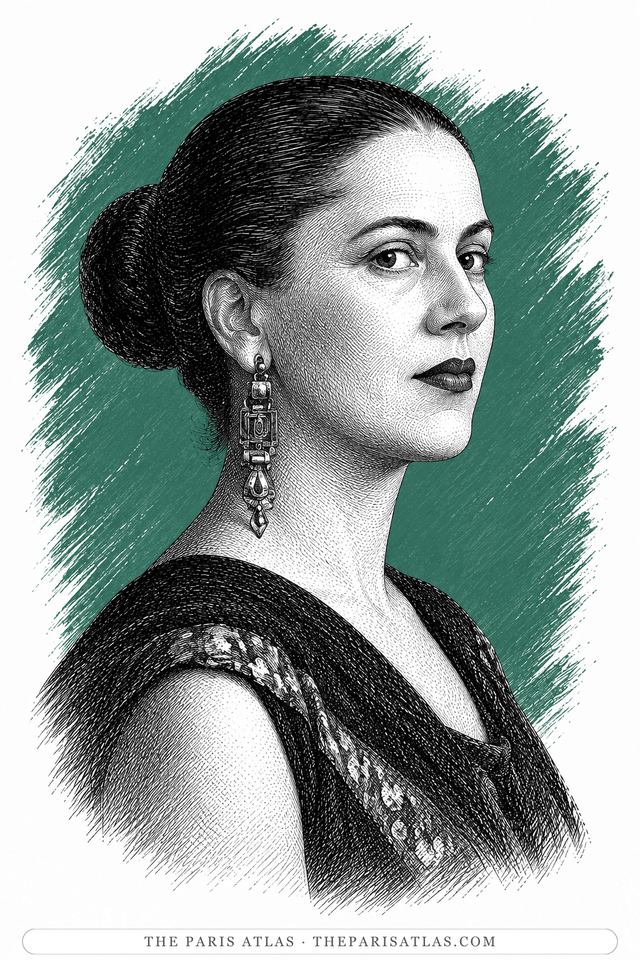
Tarsila do Amaral
Brazilian painter who spent the 1920s moving between São Paulo and Paris, studied Cubism under André Lhote, Albert Gleizes and Fernand Léger, and used what she learned to paint Brazilian towns, railways, plants and bodies. Her 1928 painting Abaporu prompted the manifesto that gave the Anthropophagic movement its name.
View artist
Arman
French-American artist, lifelong friend of Yves Klein, and a founder of New Realism.
View artist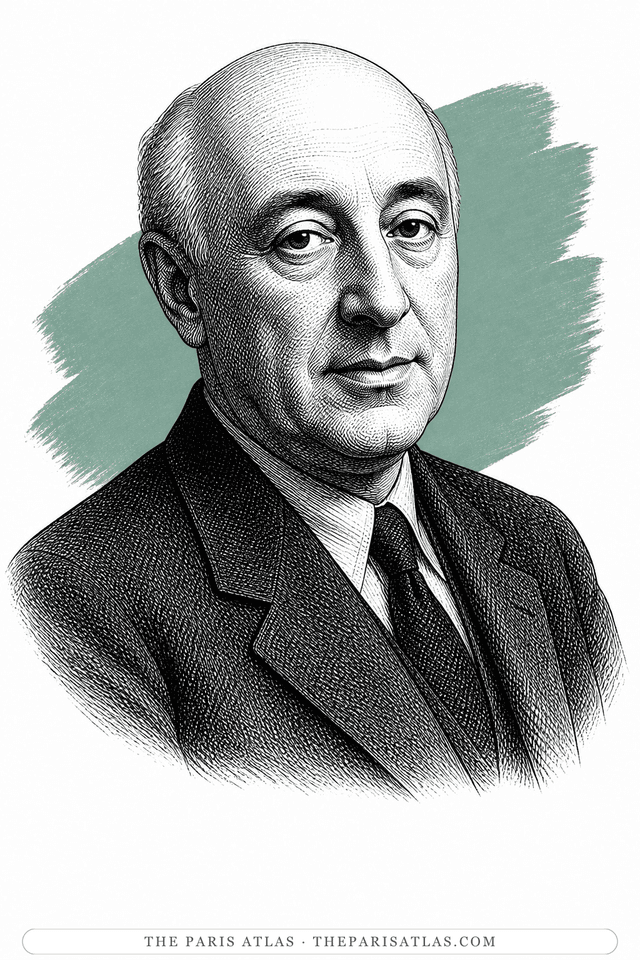
Jean Arp
Strasbourg-born sculptor and poet — Hans in German, Jean in French, both all his life — who co-founded Dada at the Cabaret Voltaire in 1916, composed collages by dropping torn paper 'according to the laws of chance', and settled at Meudon outside Paris in a house his wife Sophie Taeuber-Arp designed.
View artist
References
The sources below include collection records, catalogues, scholarly research, and primary materials that informed this page. They document Painting 1946, its making, and its place in cultural history.


1Francis Bacon, Painting, 1946 — collection record 229.1948
WebsiteThe Museum of Modern Art, New YorkUsed forThe Museum of Modern Art's collection record — title, date, medium, dimensions, credit line and copyright notice.
2Francis Bacon, Painting 1946, 1946 — catalogue raisonné 46-03
WebsiteThe Estate of Francis BaconUsed forThe Estate of Francis Bacon's catalogue raisonné entry, with the Alley number and the exhibition history.
3Francis Bacon, Second Version of 'Painting' 1946, Museum of Modern Art, New York, 1971 — catalogue raisonné 71-01
WebsiteThe Estate of Francis BaconUsed forThe 1971 repainting of the same subject, kept distinct from the 1946 canvas.

4Francis Bacon — Galeries nationales du Grand Palais, Paris, 26 October 1971 to 10 January 1972 (108 works)
Exhibition catalogueCentre national d'art contemporain, Paris, 1971Used forThe catalogue of the 1971–72 Paris retrospective, 108 works, published by the Centre national d'art contemporain.
5Francis Bacon biography: the 1970s
WebsiteThe Estate of Francis BaconUsed forThe Estate's account of the Sylvester interviews and of Francis Bacon's working method.
6George Dyer — family, friends and sitters
WebsiteThe Estate of Francis BaconUsed forThe Estate's page on George Dyer, for the death two days before the Grand Palais opening.
7Francis Bacon biography: the 1940s
WebsiteThe Estate of Francis BaconUsed forThe Estate's account of the 1940s.
These references provide the documented foundation for this work's history and interpretation. Claim-level citations remain attached to the specific claims they support.
 Explore more resources