What to Read This Summer
Summer reading is a matching problem, not a ranking problem. Our seasonal guide pairs the moderns to the July you're actually having.

by Ezra Pound
The 'poem including history' — fifty years, 116 cantos, and modernism's most magnificent ruin.
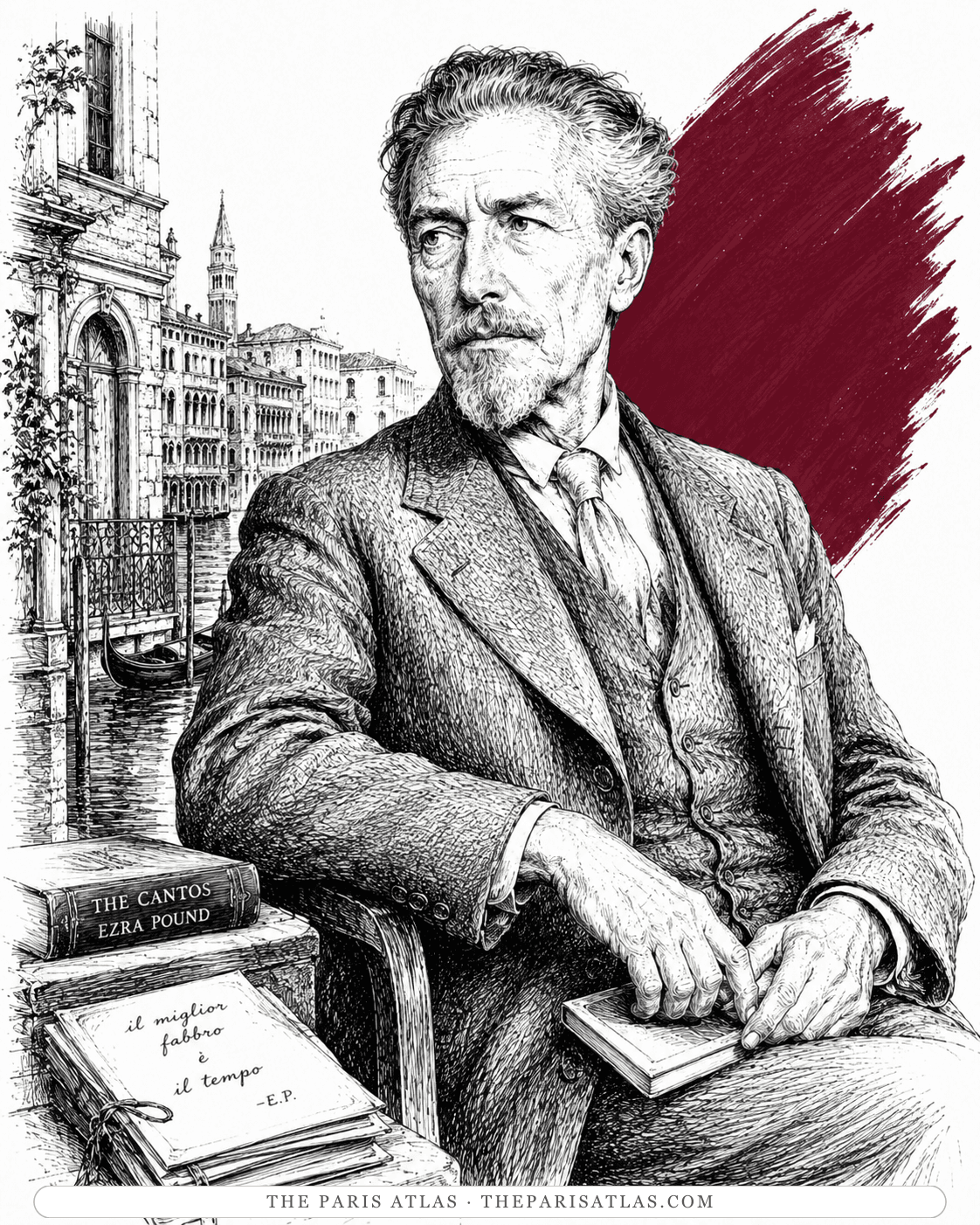
Begun in London, launched from Paris — A Draft of XVI Cantos was hand-printed there in 1925 — and continued for half a century, The Cantos is Pound's attempt to write an epic containing everything: Odysseus and Confucius, Renaissance bankers and American presidents, economics, paradise, and eventually his own catastrophe, drafted in a Pisan detention cage. No one calls it a success; no one serious calls it skippable. It is the most ambitious poem in English of its century, wreckage included.
Pound called it the 'poem including history,' and he meant all of it: Homer's Odysseus next to Renaissance condottieri, Chinese emperors, American presidents, and the contents of his own mail. He had been drafting and discarding openings since 1915; the project found its footing in Paris, where William Bird's Three Mountains Press published A Draft of XVI. Cantos in 1925 — a folio printed in an edition of about ninety copies, with grand initial letters by the painter Henry Strater, the most beautiful object the movement ever made.
The poem then simply kept going — through Rapallo, through his obsession with credit and usury, through the section everyone quotes (the usura canto) and the sections nobody finishes — for more than a hundred cantos across half a century, growing a masterpiece and a case file at once. His wartime broadcasts for Mussolini's Italy ended in a treason indictment, a cage at Pisa, and twelve years in a Washington asylum; the Pisan Cantos, written in the cage, won the first Bollingen Prize in 1949 and ignited a controversy about art and its maker that has never really gone out.
He worked at it nearly to his death in Venice in 1972, and the late fragments concede what readers had long suspected — that it would not, could not cohere. It didn't need to. The Cantos stand as modernism's Everest: unclimbable whole, endlessly climbed in parts, and the wreckage and grandeur of the century are both in it.
The poem begins in the underworld: Canto I is Odysseus sailing to consult the dead, translated from a Renaissance Latin translation of Homer — which is the method in miniature, history speaking through layered voices. From there it opens outward with no plot and no perimeter: the condottiere Sigismondo Malatesta building his temple amid wars and treacheries; Confucian China administered dynasty by dynasty; John Adams and Jefferson corresponding; Venice and Provence; the money system anatomized in the famous canto against usura, the force the poem blames for corrupting art, marriage, and bread alike.
The war years break the poem and remake it: the Pisan Cantos, written while Pound was held in an American military cage at Pisa, drop the pedagogy for memory and grief — the dead friends of the Paris and London years, the ant on the tent wall, the fragments of a life audited by disaster. The late sections thin toward silence, and the final fragments concede that the great design would not cohere. It is the century's most ambitious poem and its most instructive ruin: nobody reads all of it, everybody should read some of it, and the parts repay the visit.
Canto I makes the search for knowledge depend on obligations to other people. Odysseus travels to consult Tiresias, but the unburied Elpenor reaches him first, asking for a grave and the oar that marked his place among the crew. The epic's opening therefore pauses for someone without a heroic reputation. Memory requires a material act, not merely an impressive story. When the voice later names Andreas Divus and his edition, the poem exposes another dependence: its access to antiquity passes through a translator and a particular printed book.
In Canto XLV, the repeated accusation against usura moves from stonework and painting to bread, weaving and marriage. Rusting tools and the separation of workers from their materials make an abstract economic grievance physically imaginable. Repetition gives the argument force, but does not prove its claim that one cause explains so many forms of damage. Pound's September 1938 letter to Laurence Binyon explicitly connects this canto to antisemitic scapegoating about war and finance. That context complicates the appeal of its craftsmanship: admiration for skilled work cannot make the poem's wider politics harmless.
Odysseus sailing to the dead, rendered through Anglo-Saxon verse rhythms — the most thrilling opening page in modern poetry, and free of everything that later poisons the poem.
Written in an American military cage in 1945, with the empire of his delusions in ashes — 'Pull down thy vanity' is the sound of modernism judging itself.
Genius and moral ruin in one binding: few books pose the reader's hardest question — what do we do with the art of the indefensible? — more directly.
Summer reading is a matching problem, not a ranking problem. Our seasonal guide pairs the moderns to the July you're actually having.
1915
Pound begins drafting and discarding openings for a 'poem including history.'
1925
William Bird's Three Mountains Press hand-prints A Draft of XVI. Cantos in Paris — a folio of about ninety copies, with grand initial letters by the painter Henry Strater.
1945
Held in an American military detention cage near Pisa, Pound drafts the Pisan Cantos, widely judged the poem's greatest section.
1949
The Pisan Cantos win the first Bollingen Prize, igniting a controversy over art and its maker that has never fully gone out.
1972
Pound works at the poem nearly to his death in Venice; the late fragments concede the great design would not cohere.


The other modernist landmark whose author was prosecuted after the war — Pound indicted for treason, Céline convicted in absentia in France.
Read our take

Ezra Pound. He worked on the poem for roughly half a century; the first installment, A Draft of XVI Cantos, was hand-printed in Paris in 1925.
Pound's attempt to write a modern epic "including history" — Odysseus and Confucius, Renaissance bankers and American presidents, economics and paradise — and, eventually, his own catastrophe.
No. It remained an unfinished epic drafted across decades, and is generally read as a magnificent ruin rather than a completed whole.
The section Pound drafted while held in a United States Army detention camp near Pisa in 1945 — among the most admired parts of the poem, and later the cause of a national controversy when it won the Bollingen Prize.
Notoriously so — dense with allusion and many languages. No one calls it a straightforward success, but no serious reader calls it skippable; it is the most ambitious poem in English of its century.
Explore authors with a similar voice, perspective, and influence.
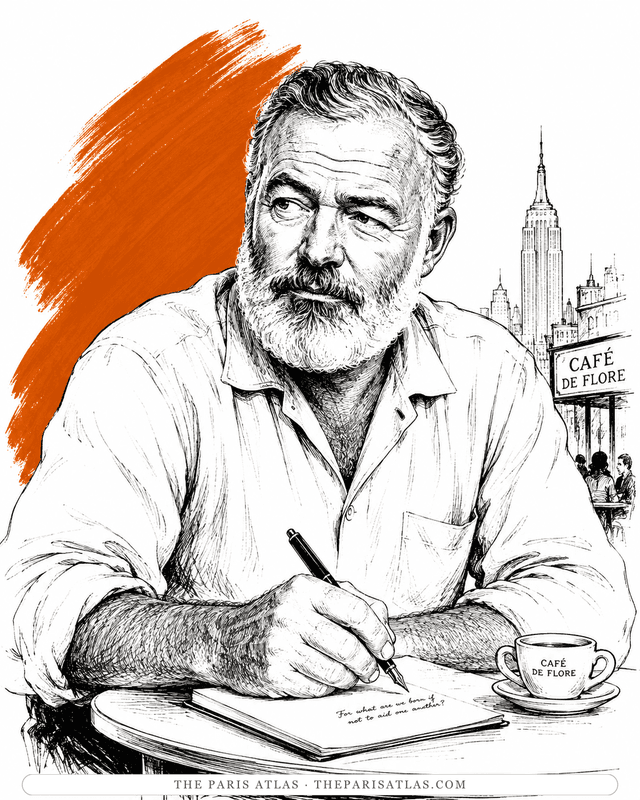
His most famous pupil. Hemingway repaid the editing lessons by teaching Pound to box, and swore he'd learned more about writing from Pound than from anyone alive.
View author
The era's other genius-with-an-asterisk — both demand the same difficult reading: full admiration, eyes open.
View author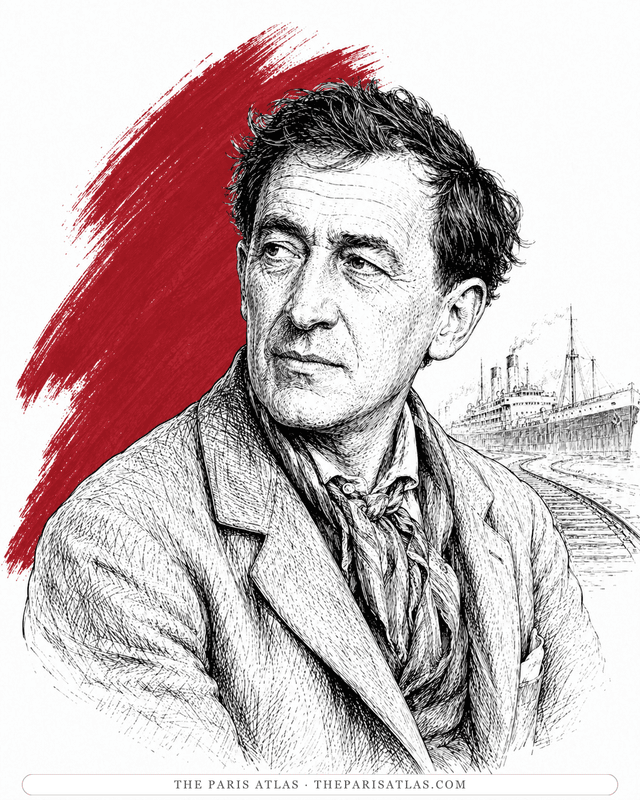
The one-armed adventurer-poet of the Paris avant-garde — La Prose du Transsibérien, Moravagine, the memoir tetralogy — and the living writer Henry Miller ranked above all others.
View authorThe sources below include the primary text, editions, scholarship, archival materials, and other records that informed this page. They document The Cantos, its publication, and its place in literary history.


Used to place The Cantos within Ezra Pound's published work and verify its bibliographic context.

Used for independent biographical, archival, or historical context surrounding Ezra Pound's career and the period in which The Cantos appeared.
Used to cross-check authorship, chronology, and the work's place in Ezra Pound's wider catalogue.
Used to verify Ezra Pound's bibliography and place The Cantos within the broader chronology of Ezra Pound's career.

The new reading uses the presented poem, cross-checked against The Cantos Project's annotations on Elpenor and Divus. This public transcription is not an independently collated critical edition.
The new reading uses the presented poem only, not the site's AI analysis. Craft images were cross-checked against The Cantos Project's companion; transcription errors and edition pagination are not relied upon.
The 29 September 1938 Binyon letter supplies direct evidence of Pound connecting Canto XLV to antisemitic scapegoating. Its accusations are analyzed critically, not repeated as historical or economic fact.
The primary text is the baseline reference for every book page. Additional references document publication history, interpretation, and historical context where that evidence is available.
 Explore more resources