
The Real Paris Behind A Moveable Feast
The Lost Generation's Paris wasn't a mood — it was a specific set of rooms within walking distance of each other, and an exchange rate. Here is the real map under the memoir.

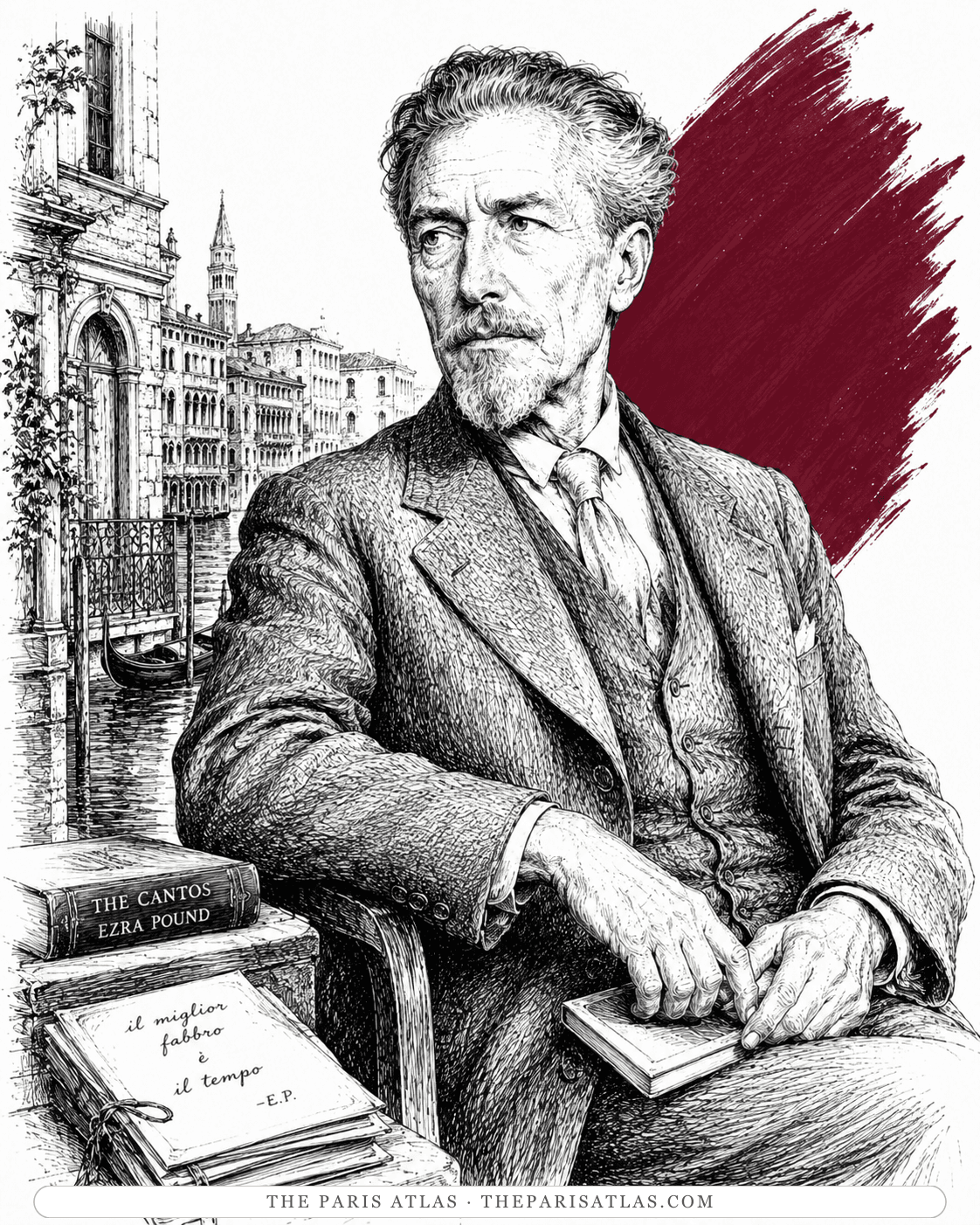
by Ezra Pound
Pound's farewell to London and elegy for the war dead — eighteen pages that indict an entire civilization.
Part self-portrait, part exit interview with English literary culture, Mauberley follows a minor poet 'out of key with his time' through a society that rewards the fake and buries the real. At its center stand the war sections — 'There died a myriad / And of the best, among them' — four of the most quoted stanzas of the century, written for friends who did not come back. Pound left for Paris the year it appeared.
By 1919 Pound had spent a decade making London modern — discovering, editing, and bullying the new poetry into existence — and had concluded that London deserved none of it. His farewell was an eighteen-page poem in rhymed quatrains, modeled with Eliot on Gautier's chiseled stanzas: a mock-elegy for 'E.P.' and a portrait of Mauberley, a minor aesthete polishing medallions while the age demanded — and rewarded — something cheaper.
John Rodker's Ovid Press printed it in 1920 in an edition of about two hundred copies, a deluxe object containing the era's angriest accounting. The war stanzas are its permanent center: the young men who walked eyes-deep in hell for a civilization the poem prices at two gross of broken statues and a few thousand battered books. No document of the generation's fury is more compressed.
Pound left England for Paris within the year, and the poem now reads as the hinge of his career — the last perfect small machine before The Cantos' impossible engine, and his goodbye to being merely brilliant. Eliot judged it a great poem and a document of an epoch; readers intimidated by Pound should start here, where the fury still fits in a pocket.
A poem in two sequences, eighteen pages, and the compressed autopsy of a literary civilization. Part one buries 'E.P.' — Pound's own initials on the tombstone — and surveys the London that defeated him: an age that demands plaster images and a prose cinema, editors and patrons sketched in acid miniature (Mr. Nixon, advising young writers to butter reviewers), and, at the center, the great war stanzas — the young men who marched away, what they believed, what they found, and the inventory of what their deaths purchased.
Part two hands the poem to Mauberley himself, the fastidious minor aesthete Pound might have become had he stayed: a maker of exquisite small medallions, drifting out of engagement, out of ambition, and finally out of the world altogether. The sequence closes with the lyric the aesthete leaves behind. Read it as Pound's farewell to England, his self-trial, and the era's angriest ledger — all in a form so tight it can be memorized in an afternoon.
The sequence's two poet portraits are connected without being interchangeable. E.P.'s devotion to Flaubert returns in the opening of the Mauberley section, making artistic discrimination a shared commitment rather than a simple dividing line between success and failure. Yet Mauberley's exactness becomes a means of withdrawal: selecting beautiful impressions shields him from disturbance while weakening his capacity to answer the world. The final Medallion turns a woman's eyes into gemstones. Its precision leaves an uncomfortable question: has the poem preserved living beauty, or perfected the distancing habit it has been examining?
The war passages resist a single heroic explanation of why men fought. Repeated references to different motives move between adventure, fear, belief and imagined violence; the accumulation makes official patriotic language inadequate to the experience it claims to honor. Section V then sets the remembered animation of faces against damaged cultural possessions. Books and statues matter throughout the sequence, but here they cannot balance the lives lost in their civilization's defense. The bitter inventory challenges any account that treats inherited culture as sufficient compensation for human destruction.
'Died some, pro patria, non “dulce” non “et decor”…' — the Great War's bitterest epitaph, and the hinge on which poetry in English turned modern.
The Cantos demands months; Mauberley demands an evening and gives you the whole Poundian toolkit — the compression, the masks, the rage at bad art.
What Pound demanded here — no ornament, no lies, make it new — is precisely what he then drilled into Hemingway across a Paris café table. Read the poem, then reread the prose it produced.
The Lost Generation's Paris wasn't a mood — it was a specific set of rooms within walking distance of each other, and an exchange rate. Here is the real map under the memoir.
Summer reading is a matching problem, not a ranking problem. Our seasonal guide pairs the moderns to the July you're actually having.
1919
After a decade making London modern, Pound concludes the city deserved none of it and writes his eighteen-page farewell in rhymed quatrains — a mock-elegy for 'E.P.' with the Great War stanzas at its center.
1920
John Rodker's Ovid Press prints it in an edition of about two hundred copies; Pound leaves England for Paris the same year.
1926
Pound includes the sequence in Personae, his collected shorter poems.


Contains the era's warmest portrait of Pound — read them as call and answer.
Read our take
Ezra Pound. The poem was published in 1920, the year he left London for Paris.
Part self-portrait, part farewell to English literary culture, it follows a minor poet "out of key with his time" through a society that rewards the fake and buries the real.
For its war stanzas — "There died a myriad, / And of the best, among them" — among the most quoted lines of the century, written for the friends who did not come back from the First World War.
It is a short sequence — about eighteen pages — written in tight rhymed quatrains.
It was his farewell to London, where he had spent a decade making poetry modern before concluding the city deserved none of it. He left for Paris the year it appeared.
Explore authors with a similar voice, perspective, and influence.
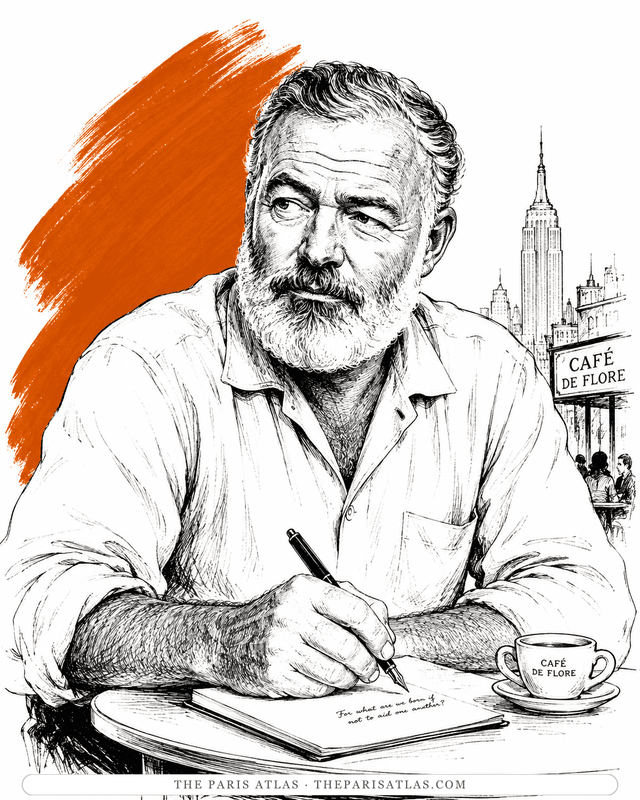
His most famous pupil. Hemingway repaid the editing lessons by teaching Pound to box, and swore he'd learned more about writing from Pound than from anyone alive.
View author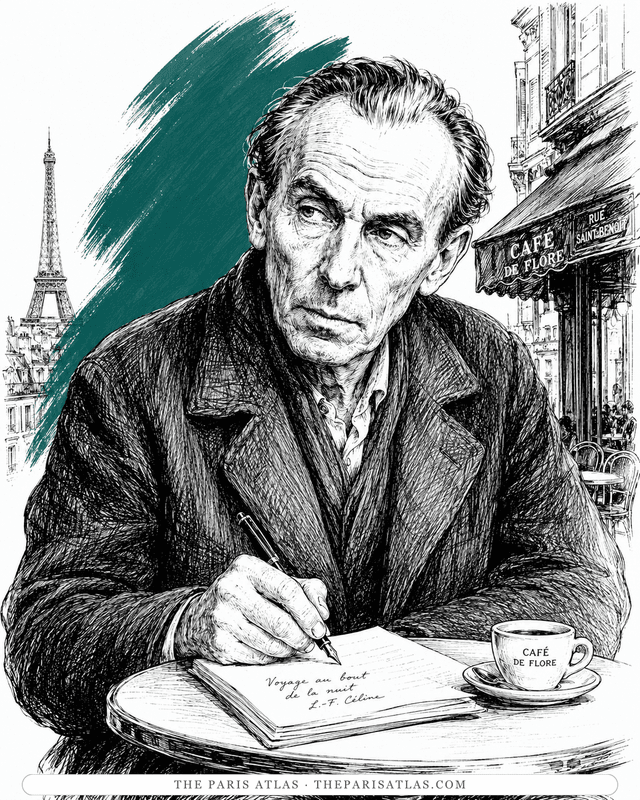
The era's other genius-with-an-asterisk — both demand the same difficult reading: full admiration, eyes open.
View author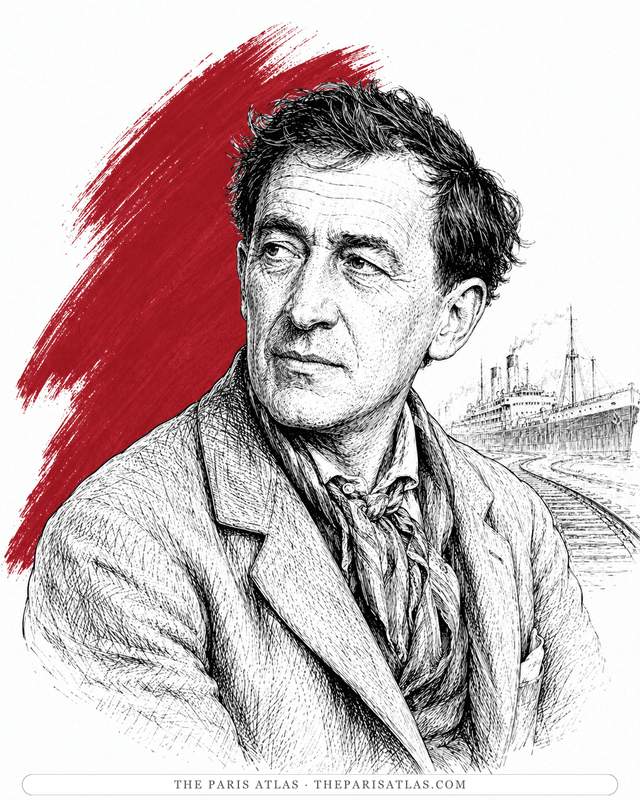
The one-armed adventurer-poet of the Paris avant-garde — La Prose du Transsibérien, Moravagine, the memoir tetralogy — and the living writer Henry Miller ranked above all others.
View authorThe sources below include the primary text, editions, scholarship, archival materials, and other records that informed this page. They document Hugh Selwyn Mauberley, its publication, and its place in literary history.


Used to place Hugh Selwyn Mauberley within Ezra Pound's published work and verify its bibliographic context.

Used for independent biographical, archival, or historical context surrounding Ezra Pound's career and the period in which Hugh Selwyn Mauberley appeared.
Used to cross-check authorship, chronology, and the work's place in Ezra Pound's wider catalogue.
Used to verify Ezra Pound's bibliography and place Hugh Selwyn Mauberley within the broader chronology of Ezra Pound's career.
Web source consulted for documented facts and historical context presented on the Hugh Selwyn Mauberley page.

The new readings use the public transcription of the 1920 sequence, with section locators rather than unverified edition pagination. E.P. and Mauberley remain related but distinct poetic figures; the interpretation of the final Medallion is presented as a question.
The primary text is the baseline reference for every book page. Additional references document publication history, interpretation, and historical context where that evidence is available.
 Explore more resources