
The Wrong Side and the Right Side
The first book sketches the mother, grandmother and poor Algiers home that The First Man reconstructs in depth.
Read our take
by Albert Camus
The unfinished novel recovered after Camus’s death returns to his father, his mother and a poor childhood in Algiers.
Camus’s unfinished autobiographical novel, published in 1994 from the manuscript found after his 1960 death. Jacques Cormery searches for his father’s grave and returns in memory to a poor childhood in colonial Algeria. The draft is open and sometimes rough, but its family detail and social world make it the essential final book.
Jacques Cormery visits the grave of the father he never knew and realizes that his father died younger than Jacques is now. That discovery sends him back through family stories and his own memories of a poor childhood in Belcourt, a working-class district of Algiers.[1]
The novel reconstructs a home ruled by poverty, silence and Jacques's strict grandmother. His mother is partly deaf and speaks little; his father died in the First World War. School offers Jacques a path beyond the neighborhood when his teacher Louis Germain recognizes his ability and helps him compete for a scholarship.[1]
Because the manuscript was unfinished, the narrative does not resolve every line. Notes, repetitions and alternative possibilities remain visible. The draft also enters the difficult history of French settlement in Algeria without completing the larger reckoning Camus appears to have planned.[1]
In 1913, Henri Cormery and his pregnant wife Lucie arrive at an Algerian farm where Henri will work. Their son Jacques is born that night. A year later Henri is wounded at the Battle of the Marne and dies in France.[1]
As an adult, Jacques visits Henri's grave at Saint-Brieuc and begins investigating a father who left almost no personal record. The search opens into memories of Belcourt: the cramped apartment shared with his mother, brother, grandmother and uncle; games in the street and sea; punishment at home; hunger; and the embarrassment of having no money.[1]
At school, Monsieur Bernard—modeled on Camus's teacher Louis Germain—persuades Jacques's family to let him pursue a scholarship. Education separates Jacques from the illiterate mother he loves even as it gives him the future that made the book possible.[1]
The dates change the encounter before Jacques learns anything more about his father’s character. Discovering that the dead man was younger than he is now unsettles the expected relation between parent and child: authority gives way to vulnerability, and filial duty becomes pity for a life cut short. The orderly rows of graves cannot contain that disruption. As Jacques notices other young fathers among the dead, a private calculation opens onto a larger loss, while also exposing how little the surviving son knows about his own beginnings.
Monsieur Bernard’s encouragement includes understanding why the family might refuse it. Before visiting Jacques’s home, he explains that years of further schooling would postpone wages the household needs; he does not treat the grandmother’s hesitation as simple hostility to learning. His offer of unpaid extra lessons makes support practical, but cannot remove every cost of the opportunity. When the grandmother finally squeezes Jacques’s hand, permission carries both affection and fear of separation. The scene makes education a shared sacrifice as well as an individual escape from poverty.
The novel makes Camus's poverty, family silence, schooling and colonial Algerian childhood concrete without reducing them to a short biography.
Notes and unresolved passages show Camus attempting a larger family and colonial history that he did not live to complete.
Jacques Cormery’s search for his father connects family memory with the limits of what a child can learn about the past.
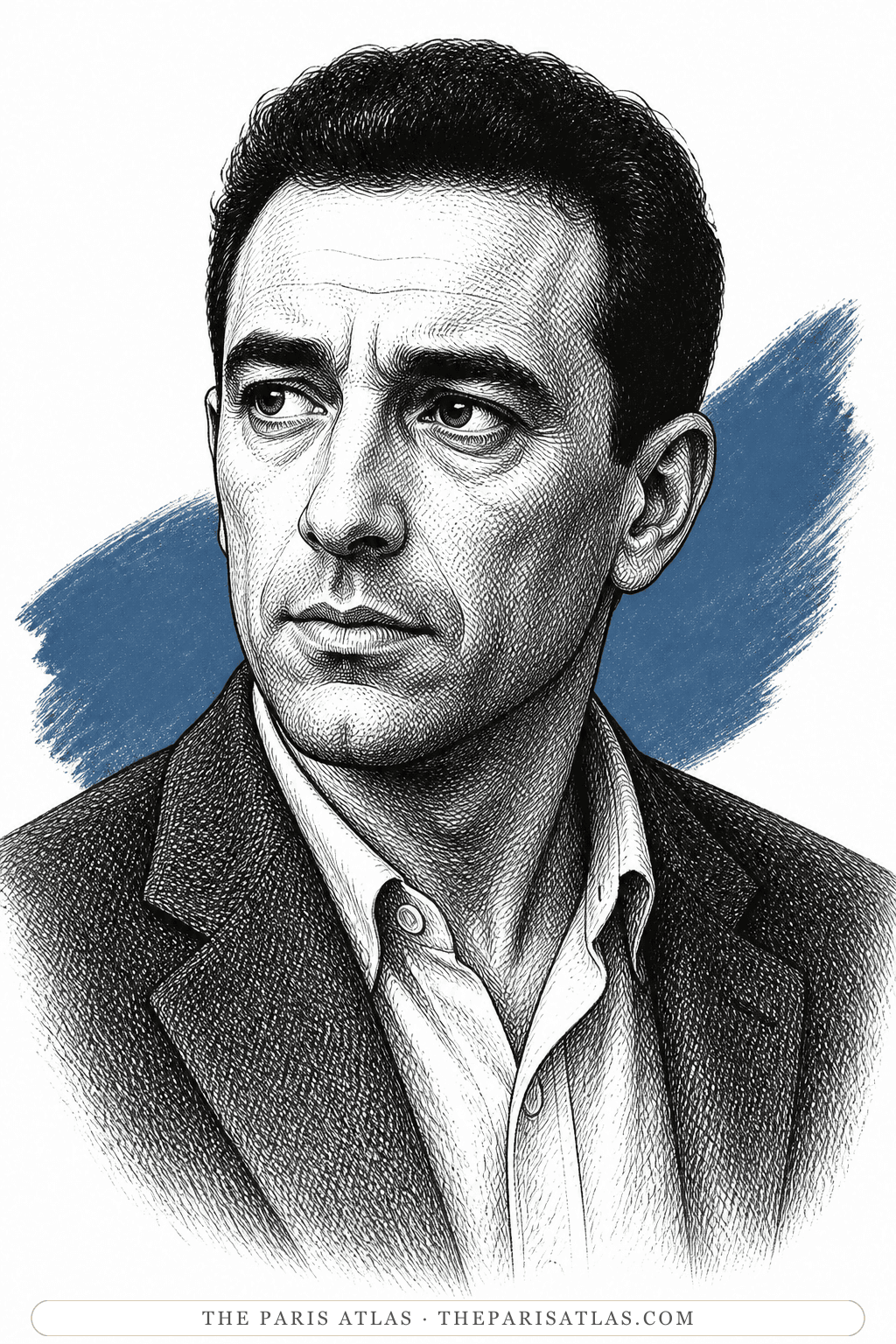
The autobiographical protagonist, seen as an adult searching for his father and as a boy growing up in Belcourt.
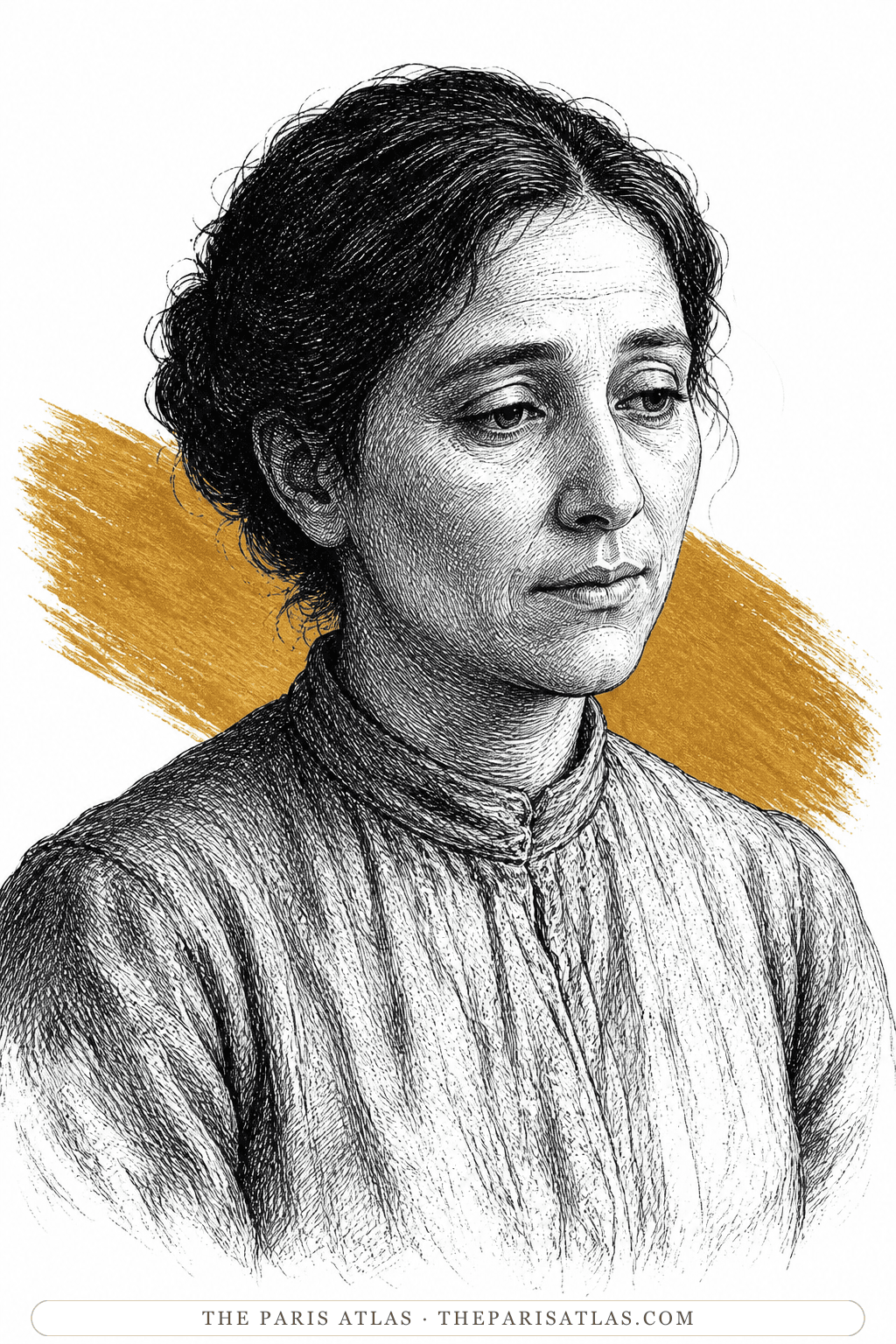
Jacques's partly deaf, nearly silent mother, whom he loves across the distance created by education and language.
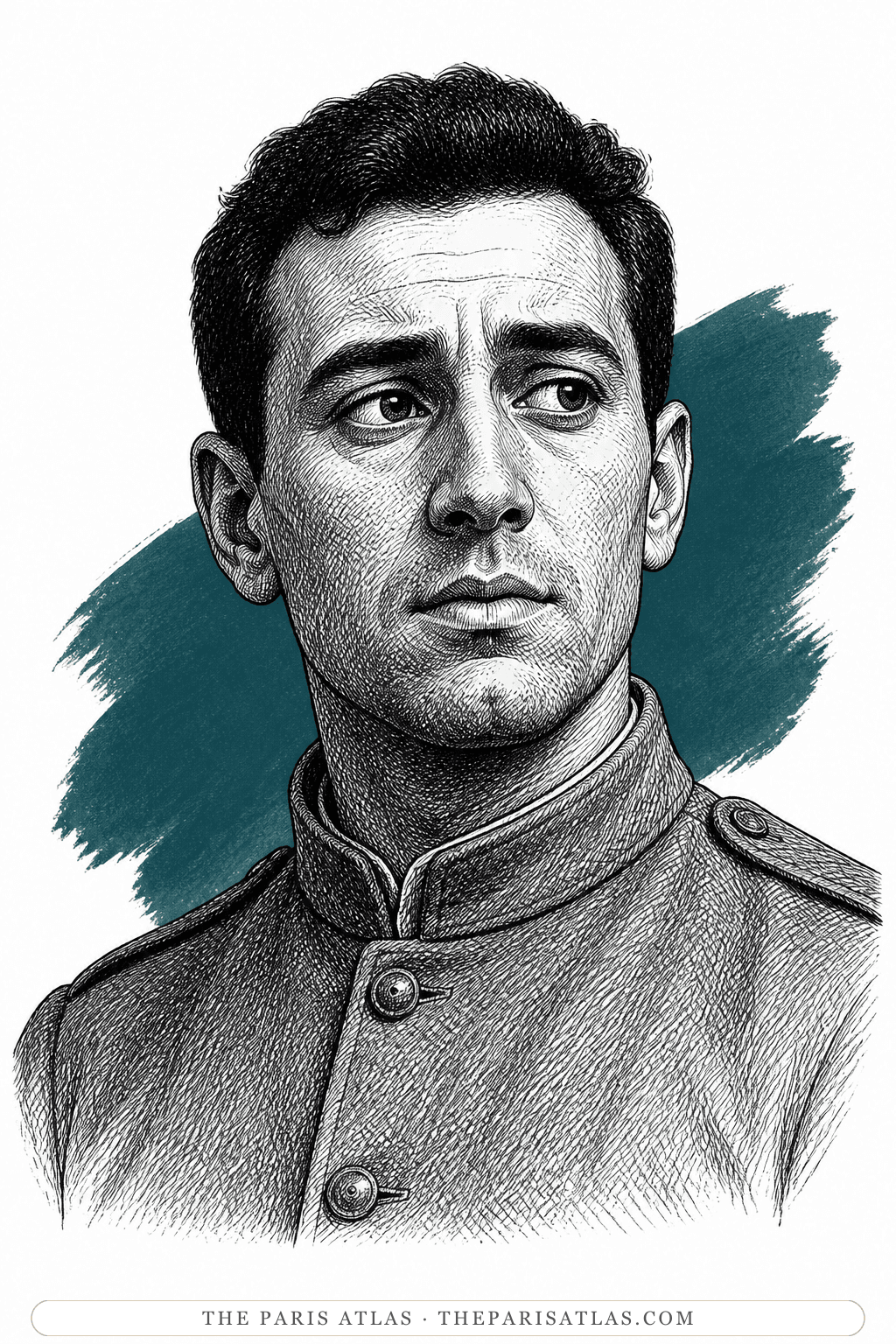
Jacques's father, killed in the First World War before his son could remember him.
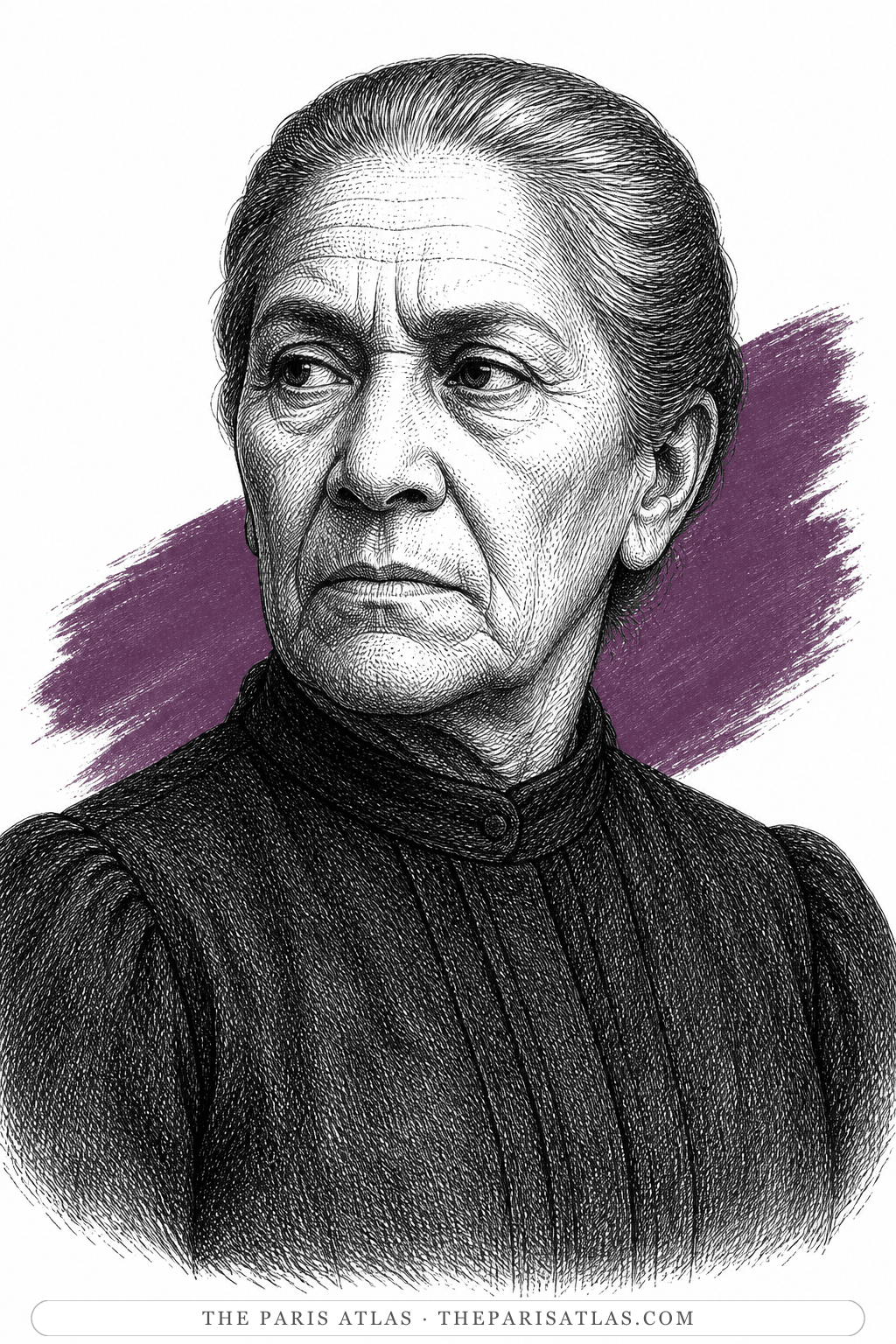
The strict head of the poor household, responsible for money, discipline and the family's daily survival.
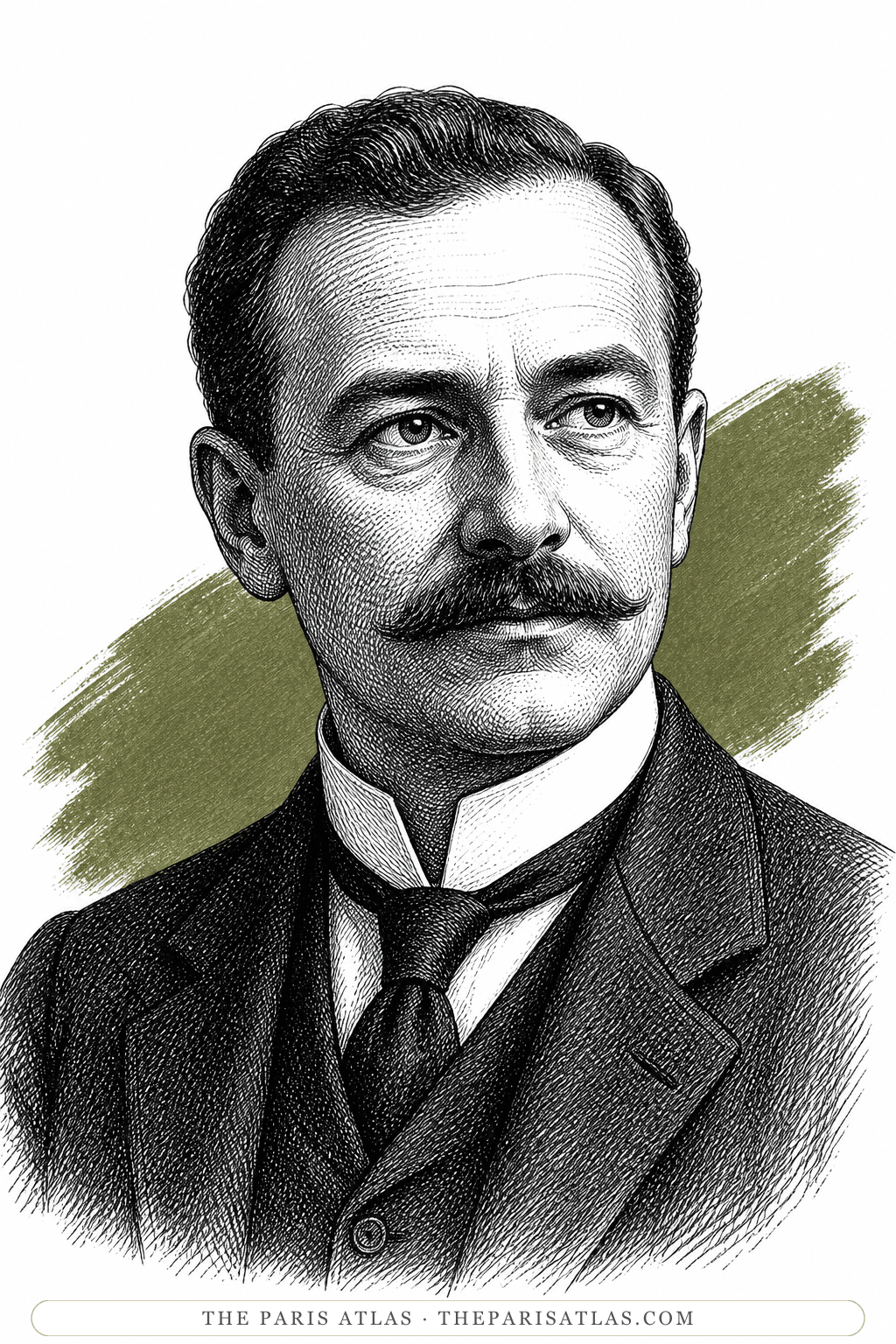
The teacher who recognizes Jacques's ability and helps him compete for a scholarship.
1913
The novel opens with the birth of Jacques Cormery in colonial Algeria.
1914
Jacques's father dies after being wounded at the Battle of the Marne.
1950s
Albert Camus develops the autobiographical novel and returns to memories of his Algerian childhood.
4 January 1960
Camus dies in a car crash; the unfinished manuscript is found in his briefcase.
1994
Catherine Camus prepares the manuscript and Gallimard publishes Le Premier Homme.
1995
David Hapgood's English translation appears as The First Man.

The first book sketches the mother, grandmother and poor Algiers home that The First Man reconstructs in depth.
Read our take
The abandoned first novel and unfinished last novel frame Camus's career and show two very different uses of autobiographical material.
Read our take
The late stories share the novel's concern with Algeria, exile and the difficulty of belonging across political divisions.
Read our takeThe First Man follows Jacques Cormery as he searches for information about his dead father and remembers a poor childhood in French colonial Algeria.
Gallimard published Le Premier Homme in 1994 from Albert Camus's unfinished manuscript, thirty-four years after his death.
Usually not. Start with The Stranger, then read The First Man when you want this part of Camus’s work.
Yes, strongly. Jacques Cormery's family, neighborhood, poverty and education closely follow Camus's life, though the book uses fictional names and novelistic scenes.
No. Camus was still working on it when he died in 1960. The published text preserves an incomplete draft and editorial notes.
The handwritten manuscript was recovered from the car in which Camus died. His daughter Catherine Camus later prepared it for publication.
Explore authors with a similar voice, perspective, and influence.
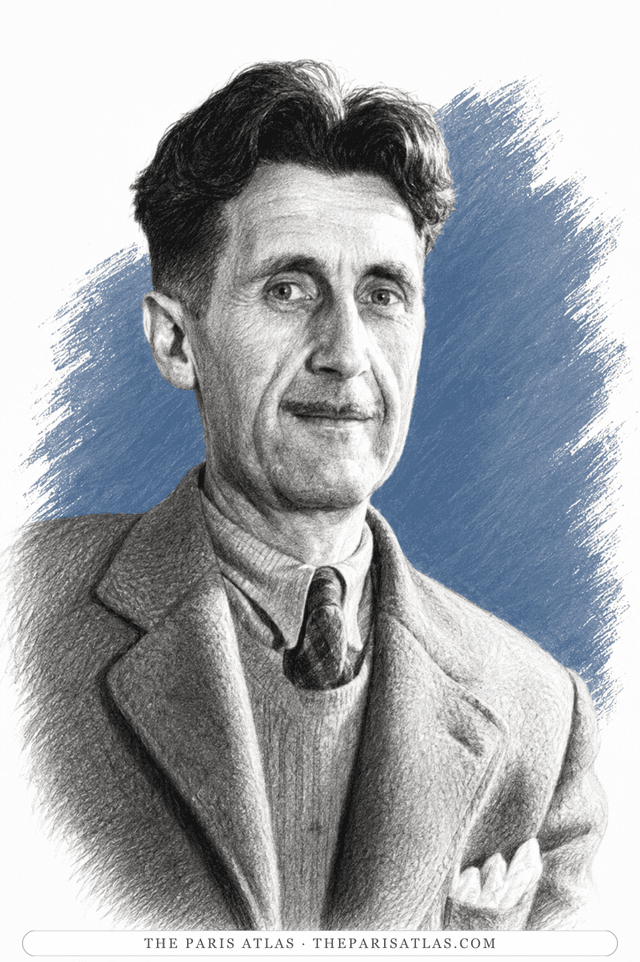
Both joined literary clarity to moral and political argument, and both distrusted systems that excuse present violence with a promised future.
View author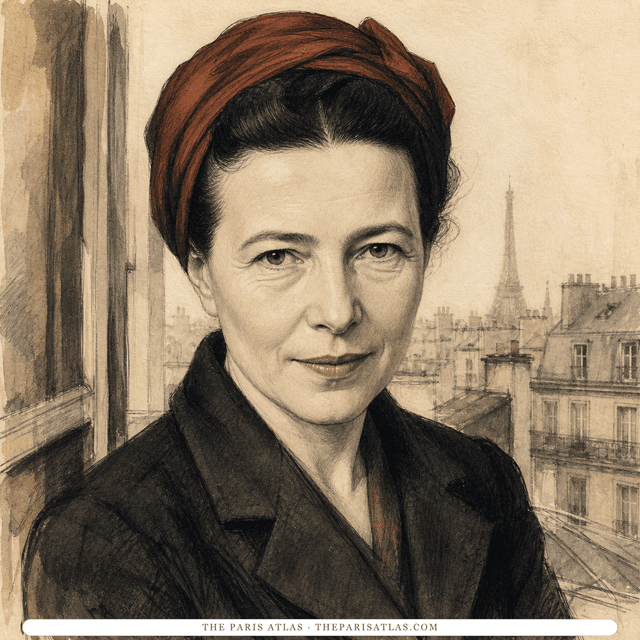
The third figure in the postwar Sartre-Beauvoir circle Camus argued with through the 1940s. Her later memoir Force of Circumstance gives one of the closest first-person accounts of Camus's Paris years and the 1952 break over The Rebel.
View author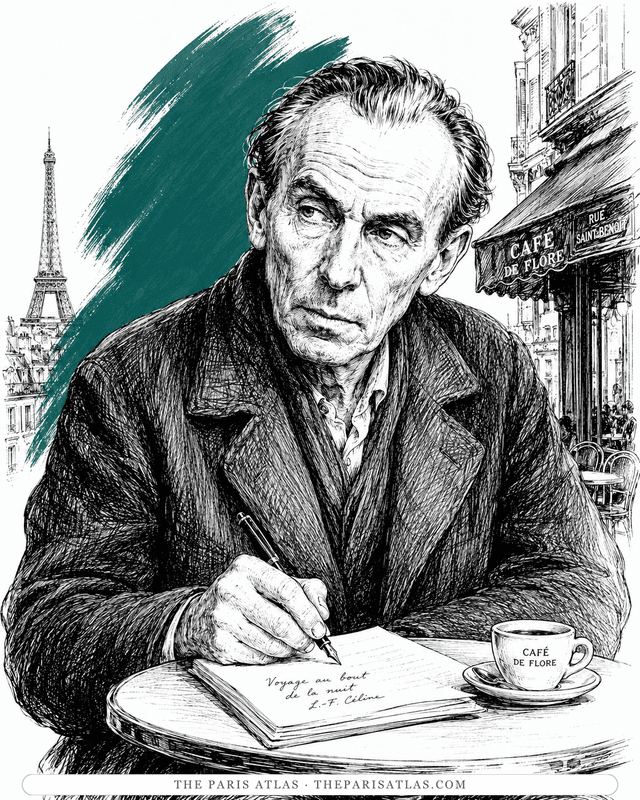
The doctor of the Paris slums who wrote the century's blackest, funniest novel — and changed the sound of French prose.
View authorThe sources below include the primary text, editions, scholarship, archival materials, and other records that informed this page. They document The First Man, its publication, and its place in literary history.

Primary transcription for the Saint-Brieuc cemetery visit and the scholarship offer and home visit in 6A: School. Its closing translator note identifies David Hapgood; no particular print edition or manuscript collation is claimed.
Used to place The First Man within Albert Camus's published work and verify its bibliographic context.

Used for independent biographical, archival, or historical context surrounding Albert Camus's career and the period in which The First Man appeared.
Used to cross-check authorship, chronology, and the work's place in Albert Camus's wider catalogue.
Used to verify Albert Camus's bibliography and place The First Man within the broader chronology of Albert Camus's career.
The primary text is the baseline reference for every book page. Additional references document publication history, interpretation, and historical context where that evidence is available.
 Explore more resources