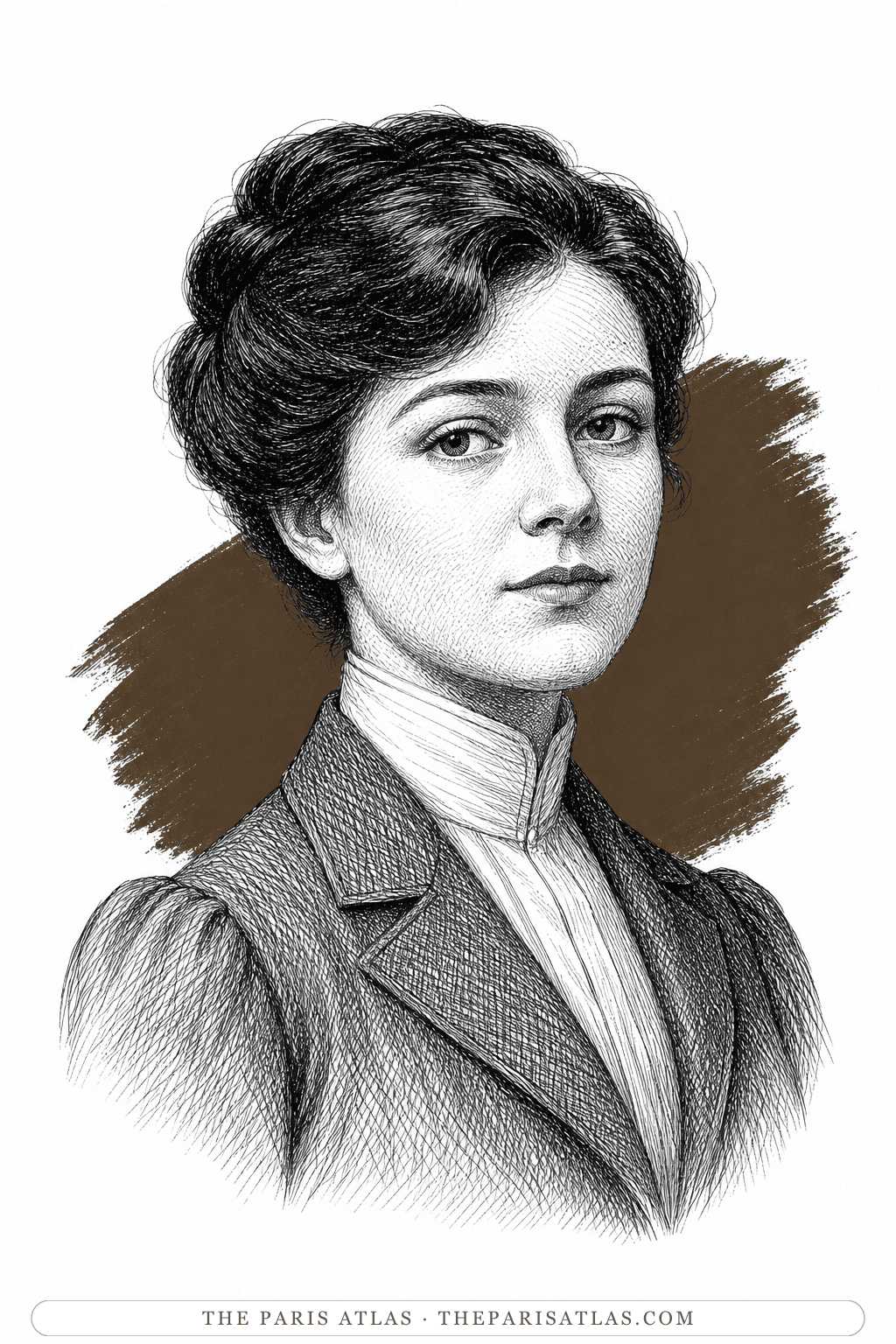
Edmée
Chéri's wife, who has grown into competence and purpose running a hospital — thriving in the peace that unmoors him.
To be somebody in the new postwar world, at work she is good at, and to be left to get on with it undisturbed.
The book

At a glance
- To Fred Peloux since 1913. She calls him Fred; nobody else in the house does
- Runs a military hospital in Paris, at her desk by nine every morning
- Marie-Laure, a red-haired beauty who used her looks as a trap throughout her career
- Manages her husband's whole fortune under a written power of attorney: the right to sell, buy and sign leases in his name
- The Peloux house on avenue Henri-Martin, where her boudoir has been renamed the study
- Charlotte Peloux, her mother-in-law and business partner, and the baroness Camille de La Berche, who tells the wounded men filthy stories and is adored for it
- Doctor Arnaud, the hospital's chief physician, in front of whom she plays the obedient girl
Who they are in the book
Spoiler-freeEdmée is the wife of Fred Peloux, the rich and beautiful young man the book calls Chéri. They married in 1913, when she was very young, and she was chosen partly for her manners: her mother, Marie-Laure, was a red-haired, white-skinned beauty who used her looks as a trap all through her career, and Edmée came out of that world determined to be respectable.
The war made her. She runs a military hospital in Paris, she is at her desk by nine every morning, and she is good at it. She works ministries on the telephone, gets import licences out of officials, sells her husband's shares on tips from her mother-in-law, and entertains American generals to lunch so that they will say abroad that her hospital stands comparison with anything at home. Colette describes her as a woman who intends to get on and who has so far known nothing but success.
The marriage is a quiet, courteous failure. They have separate concerns, then separate beds. She has attached herself to Doctor Arnaud, the hospital's chief physician, a red-gold-haired man who sings in the garden after lunch, and Chéri watches this happen without doing anything about it. She does not complain, does not ask her husband for anything, and wakes up smiling.
She is not the villain of the book and Colette does not treat her as one. She is simply the person in the house who turned out to be suited to the world that came after 1918, standing next to the person who did not.
How Edmée Is Portrayed
- Nine o'clock comes firstShe has to be at the hospital at nine and everything gives way to it. She goes to bed at two and gets up at eight, and on the morning an American general is due to tour the wards she asks for the Rolls, because it will look better for bringing him back to lunch. A reporter from the paper Excelsior is coming to photograph the place.
- She sells his shares without askingChéri wonders aloud whether he ought to sell some holdings and mentions putting a word in with his broker. She laughs like a schoolgirl and tells him the lot went the previous afternoon on a tip from his mother, in the middle of a short flurry on the exchange, for a profit of two hundred and sixteen thousand francs. He asks where he comes into all this. She says his power of attorney is still working perfectly: the right to sell, buy and sign leases in his name.
- The telephoneShe and her mother-in-law run their business by telephone across her boudoir, which she has renamed the study since the war. In the first chapter she is trying to extract an import licence from a man at the Ministry of Commerce for three shiploads of hides sitting in the port of Valparaiso, and being teased about how charming he is to her.
- The afternoon at the mirrorChéri comes home unexpectedly and finds her in their bedroom, powdering her face and putting her hair straight in front of a long glass, flushed from the heat and the meal, with a look of disorder and triumph. From the garden below, Doctor Arnaud's voice comes up singing. She turns round without a sound and waits for her husband to speak first. He puts a finger to his lips, points at the stairs, and neither of them mentions it again.
- What she takes from himHe calls her hospital her nine o'clock dancing class and her wounded men her pay parade. She twists a rose to pieces, calls him a savage and an abominable creature with tears in her eyes, and three minutes later is asking whether he wants lemon in his iced water and telling him the swimming pool has been mended.
- When he asks about a childHe asks her, mildly, what she would say if they had one. It comes out almost as a cry of fear: she clutches a scrap of linen to her chest and reaches blindly for a kimono. Then she says it plainly, and the frankness seems to hurt her as much as him. A child that looked like him would be him twice over in one woman's life, and no. He offers her his revolver as a joke. She says he should never laugh.
- She defends him at the dinner tableHe loses his temper at dinner and starts on his mother, who is delighted to fight and begins hinting that she could say a few things if she chose. Edmée cuts across both of them and tells her to leave him alone. Afterwards Chéri works out what he has just watched: she defended him without love, the way she defends the garden from the blackbirds, her sugar from pilfering nurses and her wine from the servants.
- How she behaves when he collapsesWhen he faints she is on the floor beside him almost as fast as he fell, without crying out, holding his head up with one hand and an open bottle of salts under his nose, fanning him with a newspaper, saying the small necessary things. Then the hospital rings. She looks him over once, assesses how far he has recovered, and tells them twenty-five minutes.
- She lies easilyAt dinner she is asked what she has been arranging and says it concerns a pension for a soldier who lost his right arm. Chéri knows she is lying, knows that his mother and the baroness at the same table know it, and says nothing. He has decided she has a guilty back: from the front she is a perfectly correct young lady, but her back tells him a great deal.
- Her motherMarie-Laure is mentioned rather than seen. Chéri thinks Edmée is beginning to look like her, then decides the resemblance comes down to one thing only, which is nerve. Something in his wife shocks the servants and shocks him, and it is not anything she does; it is that they can sense something in her lower than themselves.
By the last chapter she has had sheets put on the divan in her study, on the grounds that she is sleeping badly, and Chéri has noticed her flinch when he comes into a room. He works out that she thinks he is going mad, is briefly delighted by it, and then realises the disadvantage: a woman will stay and fight to win back a man she thinks is wicked, but she will only be frightened of one she thinks is mad.
Their last conversation is small and horrible. He lies to her about going to the barber, and lies so easily that his mouth goes childish and she looks at him with something like approval and tells him he looks well this morning. As she leaves he asks whether she is taking the seven-thirty. It is the train time the old woman with the photographs mentioned to him the day before and it means nothing to Edmée, who stares at him, taken aback, and goes out so fast that he is still laughing when the front door closes.
She is not there when he dies, in a rented room she has never heard of, and the novel ends before anyone tells her.
If you like The Last of Chéri


If you like Colette
Explore authors with a similar voice, perspective, and influence.

Henry Miller
The Brooklyn dropout who arrived in Paris broke at thirty-eight and wrote the exuberant, banned books that ended American censorship.
View author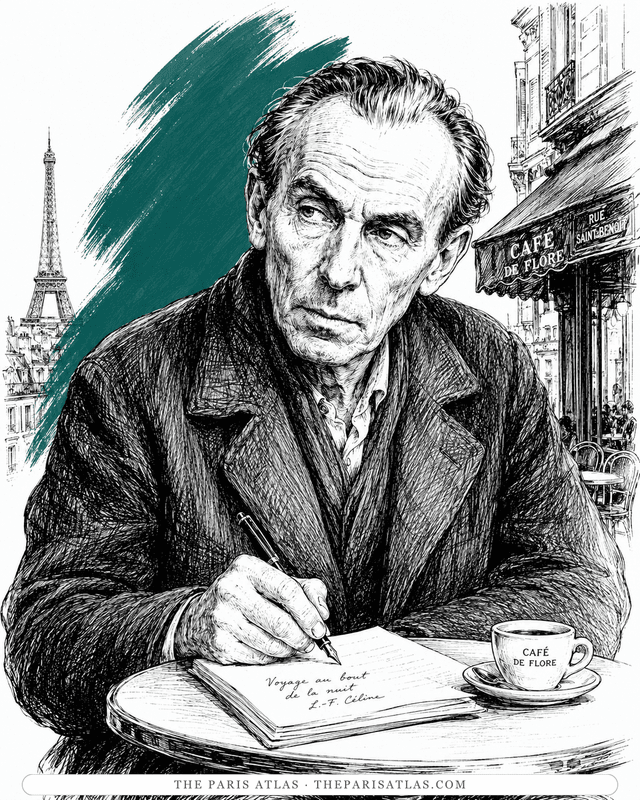
Louis-Ferdinand Céline
The doctor of the Paris slums who wrote the century's blackest, funniest novel — and changed the sound of French prose.
View author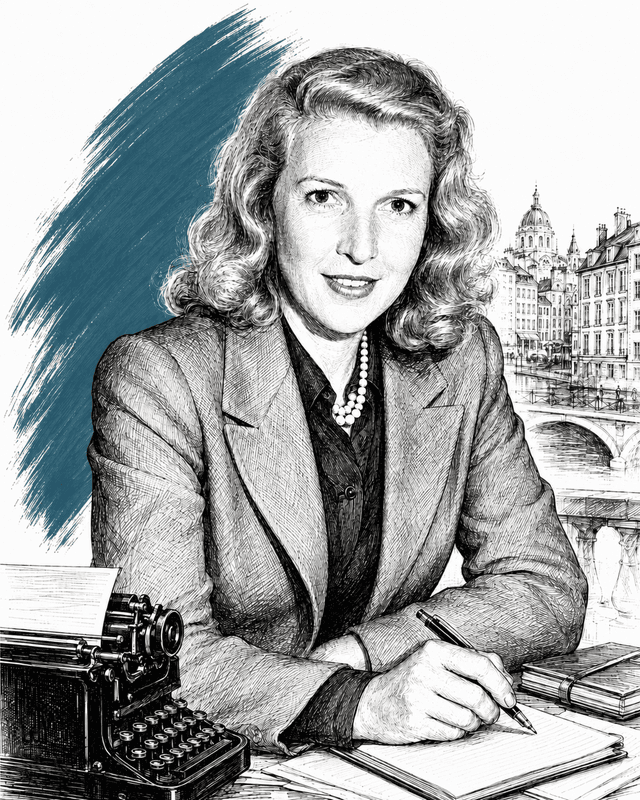
Martha Gellhorn
War correspondent who covered the Spanish Civil War, D-Day, and conflicts across five more decades; Hemingway's third wife, 1940–1945.
View author