
Murder on the Orient Express
Agatha Christie
Murder on the Orient Express
Christie's other solution that everybody knows; the two books are the ones named together as her boldest.
Read our takeThe Murder of Roger Ackroyd
Agatha Christie
A village doctor tells the story of his neighbour's murder, and tells it honestly. That is the trick.
Roger Ackroyd is the richest man in the village of King's Abbot. A widow he meant to marry has just died of an overdose, and on the evening her letter arrives explaining why, Ackroyd is found stabbed in his study with the letter gone. The story is told by Dr James Sheppard, the local doctor, who dined with him that night. Hercule Poirot, retired to the house next door to grow vegetable marrows, takes the case. Agatha Christie published the book in 1926, and its solution is the most argued-over in detective fiction.
The idea came to Agatha Christie from two directions. Her brother-in-law James Watts suggested a story in which the criminal was the Dr Watson figure, the person telling the tale. Then, in March 1924, Lord Louis Mountbatten wrote to her out of the blue with the same suggestion and some notes. She wrote in her autobiography that she thought it a remarkably original idea and worked out her own way of doing it.[1][2]
The novel ran first as a newspaper serial, in fifty-four parts in the London Evening News from July to September 1925, under the title Who Killed Ackroyd? William Collins published it in June 1926, the first Christie the firm issued, and Dodd, Mead followed in New York on 19 June. Collins remained her publisher for the rest of her life, and its successor HarperCollins publishes her still. The dedication is to Punkie, the family name for her elder sister Madge.[3][4]
The book made her famous and made some readers angry. Critics said the solution broke the rules of fair play. Dorothy L. Sayers answered that it is the reader's job to suspect everybody. In 2013 the Crime Writers' Association voted it the best crime novel ever written. It has been in the public domain in the United States since 2022 and can be read free at Project Gutenberg.[2][5]
Christie also said the doctor's sister Caroline was the beginning of Jane Marple. She wanted a sharp-tongued spinster who knew everything and heard everything, a complete detective service in the home. When the book was adapted for the stage as Alibi in 1928, Caroline was cut and replaced with a pretty young girl, and Christie never forgave the change.[2]
Dr James Sheppard lives in King's Abbot with his sister Caroline, who knows everything that happens in the village before it happens. Mrs Ferrars, a rich widow whose husband died a year before, has been found dead of an overdose of veronal. Caroline says it was suicide and says she poisoned her husband. Sheppard says nothing. He is a careful man.
Roger Ackroyd, the widower at Fernly Park, had meant to marry Mrs Ferrars. He asks Sheppard to dinner and tells him, alone in the study after the meal, that she had confessed to him. She had poisoned Ashley Ferrars, and afterwards somebody had blackmailed her for it. She had killed herself rather than go on paying. A letter from her arrives by the evening post, naming the blackmailer. Ackroyd wants to read it alone. Sheppard leaves at ten minutes to nine and, at the gate, meets a stranger asking the way to Fernly.
At a quarter past ten the telephone rings at the Sheppards' house. The caller says he is Parker, the butler, and that Ackroyd has been murdered. Sheppard drives back. Parker denies making any call. The study door is locked. Inside, Ackroyd sits in his chair with a Tunisian dagger from his own collection in his neck, and the letter is gone. The window is open, and outside are prints from a pair of shoes belonging to his stepson Ralph Paton.
Ralph has vanished. His fiancée Flora, Ackroyd's niece, goes next door to a retired foreigner who has taken the house called The Larches, and asks him to clear Ralph's name. He is Hercule Poirot, and he agrees on one condition: he will go on to the end, whatever the end is.
Everyone in the house had a reason. Flora and her mother were kept short of money. Geoffrey Raymond, the secretary, and Major Blunt, the big-game hunter, both owed money. Parker had once blackmailed a former employer. The parlourmaid Ursula Bourne had quarrelled with Ackroyd that afternoon and been dismissed. The housekeeper Miss Russell had asked Sheppard odd questions about drugs. Raymond and Blunt both heard Ackroyd's voice through the study door at half past nine, refusing a demand for money.
Poirot works with Sheppard as his Watson, and Sheppard writes it all down. A wedding ring is found in the goldfish pond. The stranger at the gate turns out to be Miss Russell's illegitimate son. Ursula Bourne proves to be Ralph's secret wife. Flora admits she never said goodnight to her uncle at a quarter to ten; she was taking forty pounds from his bedroom. Poirot notices that a chair had been pulled out from the wall in the study and pushed back. He asks how a man could have been heard talking at half past nine when the doctor says he left him alive at ten to nine, and what was in a small package the doctor carried that night.
Poirot calls the household together for what he calls a little reunion. He announces that Ralph Paton will walk in, and Ralph does. He tells them that he knows the murderer and that the murderer knows he knows, and that he will go to the police in the morning unless he is spared the trouble.
The murderer is Dr Sheppard, the man telling the story. He had blackmailed Mrs Ferrars, and her letter to Ackroyd named him. In the study he had stabbed Ackroyd at ten minutes to nine, before he left, and set a dictaphone Ackroyd had bought on trial to play Ackroyd's voice at half past nine. The telephone call came from a patient, a ship's steward sailing from Liverpool, whom Sheppard had asked to ring him at that hour. The call let him be the first back in the study, where he removed the dictaphone and pushed back the chair he had used to hide it. He had hidden Ralph Paton in a nursing home in Cranchester to keep suspicion on him.
Poirot has told Sheppard all this in private and given him the night. Sheppard finishes his manuscript, which he had begun as an account of Poirot's one failure, and takes veronal, as Mrs Ferrars did. His last wish is that Poirot had never come to King's Abbot to grow vegetable marrows.
Everything turns on two sentences in Chapter 4, and the reader is given them plainly. The letter had been brought in at twenty minutes to nine. It was just on ten minutes to nine when I left him, the letter still unread. Between those two times the doctor says nothing about what he did. He does not lie. He leaves a gap, and the reader fills it with the assumption that a doctor at his friend's side did nothing at all.
Agatha Christie's method here is not the false statement but the true one that leaves something out. In Chapter 5 Sheppard writes that he did what little had to be done, and the reader takes it as a doctor's decency toward a body. In the last chapter he quotes his own sentences back and shows what they meant. The book is fair because every word was accurate, and every word was chosen by the murderer.
Sheppard describes himself on the first page as a man who does not gossip, set against a sister who does. The contrast is a joke about Caroline and a warning about him. He records what other people say in full and what he thinks in short, dry asides. Christie makes the reader like him for his restraint, and the restraint is what lets him keep secrets.
The narration is also a document inside the story. Sheppard is writing an account of the case as it goes along, and Poirot reads the early chapters and praises their modesty. That scene, in Chapter 23, is the book's boldest move. The detective is holding the confession in his hands and remarking on how little the author says about himself. The reader has been reading the same pages and has drawn the same wrong conclusion.
Caroline Sheppard never leaves the house and knows everything. Her information comes from the milkman, the fishmonger and a network of maids, and it is almost always right. She knows Mrs Ferrars poisoned her husband before Poirot arrives. She knows Ralph Paton is in the village when the police think he is in Liverpool. Christie said Caroline was the seed of Jane Marple, the old lady who solves crimes by knowing what people are like.
Caroline is also the reader's one honest guide to her brother. Her remarks about his weakness of character, made as jokes, are the only criticisms of the narrator anyone makes. Poirot, who is fond of her, uses her exactly as he uses village gossip everywhere: as evidence about people. The book's last page has Sheppard hoping she will believe the story he intends to leave for her.
The complaint, made from the first reviews, was that a reader cannot suspect the person telling the story. The answer, given by Dorothy L. Sayers and by most readers since, is that the reader can and should. Christie plants the clues a rulebook would demand: the pushed-back chair, the missing dictaphone, the phone call that no one at Fernly made, the goldfish pond, and Sheppard's small, unexplained package. Poirot lists them all at the reunion before he names anyone.
The book has been adapted often, and the problem for every adaptation is the same: on stage or screen the narrator cannot be the narrator. Michael Morton's play Alibi, which opened at the Prince of Wales Theatre in London in May 1928 with Charles Laughton as the first Poirot anyone had seen, ran for more than 250 performances. A film of the play in 1931 was the first sound film of a Christie story. Orson Welles played both Sheppard and Poirot on American radio in November 1939, and David Suchet played Poirot in the ITV version broadcast in January 2000.
The truth, however ugly in itself, is always curious and beautiful to the seeker after it.
The letter had been brought in at twenty minutes to nine. It was just on ten minutes to nine when I left him, the letter still unread.
Every novel since in which the person telling the story turns out to be the killer is answering this one. Reading it is reading the original.
The chair, the dictaphone, the telephone call and the ten-minute gap are all on the page. Poirot lists them before he names anyone, and a second reading shows the whole thing in plain sight.
The sister who never leaves the house and knows everything is the best character in the book and the beginning of Jane Marple. Christie said so herself.
The village doctor who tells the story, dined with Ackroyd on the night he died, and writes it all down for Poirot.
The retired Belgian detective next door, mistaken by Caroline for a hairdresser, who has been trying to grow vegetable marrows and hates it.
The doctor's sister, who never leaves the house and knows everything that happens in King's Abbot before it happens.
The squire of Fernly Park, a self-made man who meant to marry the widow next door and learns on the last night of his life why she is dead.
Ackroyd's stepson, handsome, in debt and missing from the night of the murder, with his shoes' prints under the study window.
Ackroyd's niece, engaged to Ralph, who asks Poirot to take the case and has a small theft of her own to hide.
The parlourmaid dismissed on the afternoon of the murder, with a wedding ring in the goldfish pond and a reason for silence.
The rich widow found dead of an overdose before the story opens, whose letter sets everything moving.
The butler at Fernly, who listens at doors and once blackmailed an employer, and who did not make the telephone call.
The Cranchester policeman who is confident from the start, and who has Ralph Paton's footprints to prove it.
1924
Lord Louis Mountbatten writes to Christie in March suggesting a story told by its murderer; her brother-in-law James Watts had proposed the same idea.
1925
The London Evening News serialises the novel in fifty-four parts, from 16 July to 16 September, as Who Killed Ackroyd?
1926
William Collins publishes the book in London in June, the first Christie it issued; Dodd, Mead publishes it in New York on 19 June.
1928
Michael Morton's stage version Alibi opens at the Prince of Wales Theatre in London on 15 May, with Charles Laughton as Poirot.
1931
The film Alibi, the first sound film of a Christie story, is released with Austin Trevor as Poirot.
1939
Orson Welles adapts the novel for the Campbell Playhouse on American radio and plays both Sheppard and Poirot.
2000
ITV broadcasts the David Suchet adaptation on 2 January.
2013
The Crime Writers' Association votes it the best crime novel ever written.
2022
The novel enters the public domain in the United States and is published free by Project Gutenberg.


Murder on the Orient Express
Agatha Christie
Christie's other solution that everybody knows; the two books are the ones named together as her boldest.
Read our takeAnd Then There Were None
Agatha Christie
The other book that plays with the reader's trust in the voice on the page.
Read our takeThe Mysterious Affair at Styles
Agatha Christie
Poirot's first case, told by Arthur Hastings, the honest Watson this book replaces.
Read our takeDeath on the Nile
Agatha Christie
The late-thirties Poirot at his most assured, for readers who want the detective at full stretch.
Read our takeBecause of its solution, which broke what readers in 1926 took to be a rule of the genre and has been argued about ever since. In 2013 the Crime Writers' Association voted it the best crime novel ever written. The plot section below tells the ending; nothing above it does.
Dr James Sheppard, the doctor of King's Abbot, who lives with his sister Caroline and becomes Poirot's assistant. Arthur Hastings, Poirot's usual narrator, is in Argentina and does not appear.
From her brother-in-law James Watts, who suggested a story in which the Watson figure is the criminal, and from Lord Louis Mountbatten, who wrote to her in March 1924 with the same idea. She said in her autobiography that she thought it remarkably original and worked out her own version.
Christie said Caroline was where Jane Marple began: a sharp-tongued spinster who knows everything and hears everything, the complete detective service in the home. Miss Marple herself first appeared in print the following year.
In the United States, yes. The novel entered the American public domain in 2022 and is on Project Gutenberg as ebook #69087. In the United Kingdom and Europe it remains in copyright until seventy years after Christie's death in 1976.
The stage version Alibi, with Charles Laughton as Poirot, opened in London in May 1928 and ran for more than 250 performances. A film of the play in 1931 was the first sound film of any Christie. Orson Welles played both Sheppard and Poirot on American radio in 1939, and David Suchet's television version was broadcast in January 2000. Every adaptation has to solve the same problem: on screen the narrator cannot narrate.
Explore authors with a similar voice, perspective, and influence.
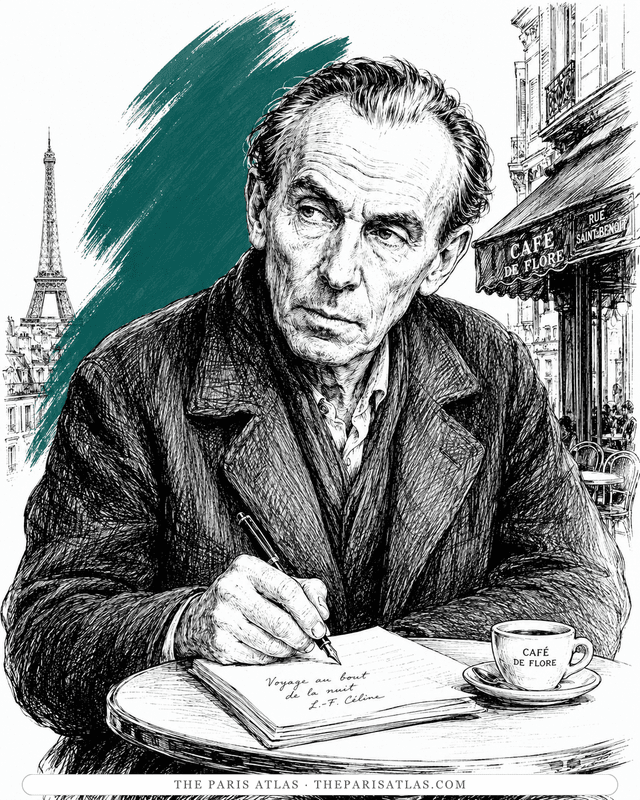
The doctor of the Paris slums who wrote the century's blackest, funniest novel — and changed the sound of French prose.
View author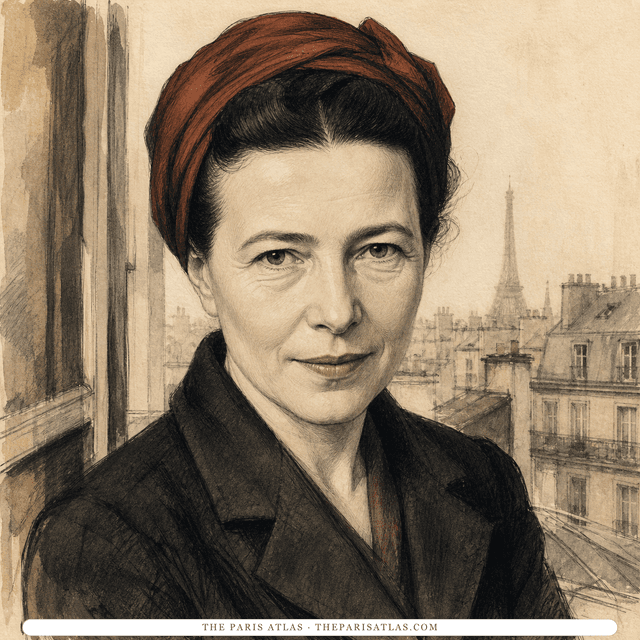
French writer and philosopher whose novels, memoirs, and social analysis examined freedom, gender, responsibility, aging, and the material conditions that shape a life.
View author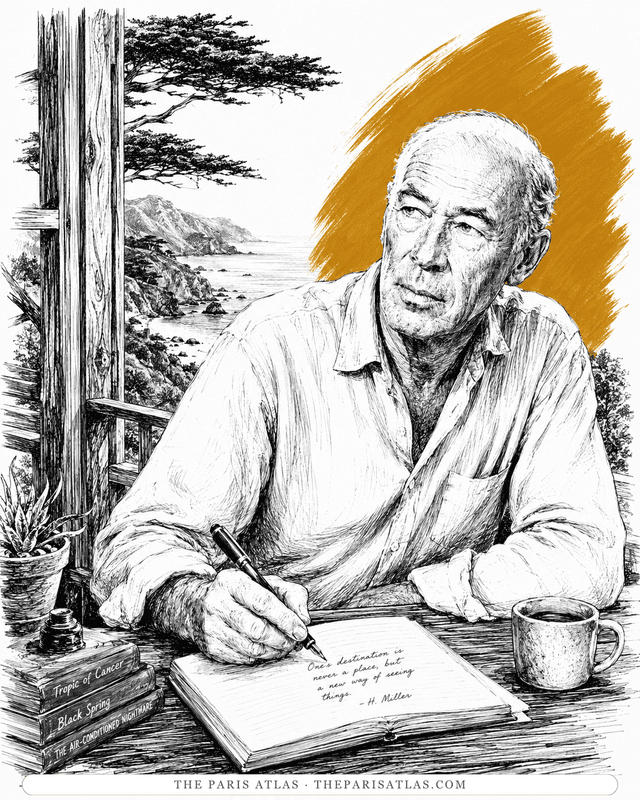
The Brooklyn dropout who arrived in Paris broke at thirty-eight and wrote the exuberant, banned books that ended American censorship.
View authorThe sources below include the primary text, editions, scholarship, archival materials, and other records that informed this page. They document The Murder of Roger Ackroyd, its publication, and its place in literary history.

A first-edition guide, the source for the Collins and Dodd, Mead dates, the serial dates and the 2013 vote.
The estate's own page for the novel: the 1925 serial, the dedication, and the adaptations.
The complete text, used for the plot, the chapter locators and both quotations.
The estate on Charles Laughton in Alibi and Austin Trevor in the 1931 film.
HarperCollins UK's product page, the source for the current paperback, hardback and ebook ISBNs.
Open Library edition records, used to check the William Morrow and HarperCollins ISBNs.
The primary text is the baseline reference for every book page. Additional references document publication history, interpretation, and historical context where that evidence is available.
 Explore more resources