
Murder on the Orient Express
Agatha Christie
Murder on the Orient Express
The other book in which everyone is cut off and everyone is suspect — with a detective on hand this time.
Read our takeAnd Then There Were None
Agatha Christie
Ten strangers on an island off Devon, a nursery rhyme on the wall, and no detective coming to save anyone.
Ten people who have never met are invited to a house on Soldier Island, a rock off the coast of Devon, by a host called U. N. Owen whom none of them has seen. After dinner a gramophone record accuses each of them of a death the law could not punish. That night the first of them dies. The boat does not come back. There is no detective, no policeman on the way, and nobody else on the island. Agatha Christie published it in 1939 and called it the hardest book she ever wrote. It is the best-selling crime novel there is.
Agatha Christie wrote in her autobiography that she took the book on because it was so difficult that the idea fascinated her. Ten people had to die without the story becoming ridiculous or the murderer becoming obvious. She said she was pleased with what she made of it, and that nobody but she knew how hard it had been.[1]
Her notebooks show the planning. She first considered at least twelve guests rather than ten. The crimes on the gramophone record went through several versions: in one draft Vera Claythorne had driven a lover to suicide, Emily Brent had poisoned a servant, and the general had sent thirty men needlessly to their deaths.[2]
The title has its own history, and it belongs in any honest account of the book. The Collins Crime Club published the novel in London on 6 November 1939 under a title taken from a Victorian minstrel song, one that used a racial slur. Dodd, Mead would not print that title in the United States and published the book in January 1940 as And Then There Were None, the last line of the rhyme. American paperbacks from 1964 used a third title, Ten Little Indians. British editions kept the original until 1985. The French edition was retitled only in 2020, at the request of Christie's great-grandson James Prichard, who runs her estate.[3][4]
Current editions call the island Soldier Island and the rhyme Ten Little Soldier Boys. The estate's own page for the book uses those names, and so do the notes below.[5]
Eight guests travel to Devon on the same August day, each with a different reason. Vera Claythorne has been hired as a secretary. Philip Lombard has been paid a hundred guineas to be useful. Emily Brent has a letter from an old acquaintance. Justice Wargrave, a retired judge, has an invitation from a friend. Dr Armstrong has been asked to attend a nervous wife. General Macarthur expects old comrades. Anthony Marston expects a party. William Blore, a former policeman, is there under a false name to watch the others. At the house a married couple, Thomas and Ethel Rogers, have been engaged by post as butler and cook. The host is absent.
In every bedroom hangs a framed copy of a nursery rhyme, Ten Little Soldier Boys, in which the boys die one by one until there are none. On the dining table stand ten china figures of soldiers. After dinner a voice from a gramophone record names each guest and each servant, and charges each with a death. A drunken operation. A child allowed to drown. A servant girl dismissed and driven to suicide. Twenty-one African tribesmen abandoned, an employer left to die, a man sent to the gallows.
Anthony Marston laughs it off, drinks, and chokes to death on cyanide. In the morning Ethel Rogers does not wake. The boat that should bring supplies does not come, and the guests find that no one on the island is who they were told. There is no Mr Owen. One by one the china soldiers disappear from the table.
General Macarthur is found on the shore, struck on the back of the head. A search of the island finds nobody but themselves. Rogers is killed with an axe while chopping firewood. Emily Brent dies at the breakfast table from an injection, a bee crawling on the window. The survivors search each other's rooms, lock away the doctor's drugs and Lombard's revolver, and find the revolver gone.
Justice Wargrave is found in the drawing room in a scarlet curtain and a grey wool wig, shot through the forehead. Dr Armstrong pronounces him dead. That night Armstrong vanishes from the house. In the morning Blore, Lombard and Vera are three, and they no longer trust one another enough to be indoors. Blore goes back for food and is crushed by a marble clock shaped like a bear, dropped from a window above. On the beach Vera and Lombard find Armstrong's drowned body in the rocks.
Vera takes the revolver from Lombard's pocket and shoots him on the beach. She walks back to the house alone, believing herself safe, and finds in her room a noose hanging from a hook and a chair set beneath it. Half in a dream of the boy she let drown, she puts her head through it and kicks the chair away. Ten china soldiers are gone.
In the epilogue two Scotland Yard men go over the evidence and cannot make it work: somebody moved the chair Vera kicked away, and somebody put Wargrave's body back on his bed. The answer arrives in a bottle picked up by a fishing trawler. Justice Wargrave, dying of an illness and possessed since childhood by a wish to kill, chose ten people the law could not reach. He faked his own death with Dr Armstrong's help, on the pretext of trapping the murderer, then pushed Armstrong off the cliff. After Vera hanged herself he replaced the chair and lay down on his bed. He shot himself through the head with the revolver tied to the door handle by elastic, so that it would fall away from his hand. The body would then match the wound the others had already seen.
The gramophone record in Chapter 3 is the book's opening move, and it does two jobs at once. It tells the reader that each guest has killed someone, so the question of guilt is settled before the first death. It also gives the reader ten short stories to hold in mind. Vera Claythorne and the boy Cyril. Emily Brent and the maid Beatrice Taylor. Dr Armstrong and the woman who died on his table. Every later chapter returns to one of them.
Agatha Christie's usual books ask who did it. Here she asks something harder: which of ten guilty people is also the one doing this. The record removes sympathy as a guide, because there is no innocent bystander to trust. The reader has to work from behaviour instead, and the book gives every character a private paragraph of thought in which they can lie to themselves but not to us.
Every death matches a line of Ten Little Soldier Boys, and the guests know it. One choked, one overslept, one was struck, one chopped, one stung. The reader is invited to check each death against the verse, which keeps attention on the how. Meanwhile the who is being arranged in plain sight. The killer must be alive after the ninth death, so the reader crosses off each victim as they fall. That is the trap, and Christie springs it in Chapter 13 by killing the one person the reader should have been watching.
The scarlet curtain and the grey wig on the judge's body are the clue that turns. Dressed as a judge in chancery, Wargrave is found shot, and a doctor confirms it. The reader has no reason to doubt a doctor. The book has already shown that the doctor is a weak man who once operated drunk, and a weak man can be talked into a plan. Nothing is hidden. The confession at the end explains only what a careful reader could have assembled.
Hercule Poirot is not on the island, and neither is anyone like him. The guests do the detecting themselves, badly, because each is also a suspect. Blore was a policeman and reasons like one. Wargrave was a judge and chairs the discussions. Lombard has a revolver and a soldier's instincts. Their conferences in the drawing room are the book's version of the interview chapters in a Poirot novel, and they get everything wrong because the one chairing them is lying.
The last three chapters narrow the point of view to Vera Claythorne, and the writing changes. Sentences shorten. Her memory of the boy drowning, kept out of reach for most of the book, comes in fragments. When she finds the noose, the narration is inside her head and half asleep. Christie wrote most of her books from a distance; this ending is the closest she came to writing fear from inside it.
The novel ends twice. The epilogue at Scotland Yard proves that the evidence cannot be explained by any of the ten, since the last two deaths needed a living hand. Then a trawler finds a bottle, and the judge's confession explains the mechanism in his own dry voice. The confession is the only place the book gives the killer's reasons: a lifelong wish to kill, held in check by an equally strong sense of justice, until a fatal diagnosis freed him to do both at once.
When Christie adapted the book for the stage in 1943 she gave it a different ending, in which Vera and Lombard prove innocent, survive and fall in love. She said later that the original ending would have been too bleak for London audiences in the middle of the war. René Clair's 1945 film and most screen versions after it used the play's ending. The BBC's three-part serial in 2015, written by Sarah Phelps, was the first screen adaptation to keep the novel's.
Oh, yes. I've no doubt in my own mind that we have been invited here by a madman — probably a dangerous homicidal lunatic.
We're not going to leave the island… None of us will ever leave… It's the end, you see — the end of everything…
Over a hundred million copies, and in 2015 a vote across a hundred countries named it the world's favourite Christie. It earned both by being the tightest thing she wrote.
Ten people had to die without the story turning ridiculous or the murderer showing, and Christie said only she knew how hard that was. The planning shows on every page.
The stage and screen versions softened it until 2015. The novel's own ending, the noose and the bottle, is the reason it lasts.
The retired judge who takes the chair at every conference on the island, charged by the record with sending an innocent man to the gallows.
The games mistress hired as a secretary, who was cleared at an inquest once and has never stopped hearing the sea.
The soldier of fortune with a revolver in his luggage and twenty-one dead men behind him, paid a hundred guineas to come.
The Harley Street specialist with the nervous hands, who once operated drunk and has been sober and successful ever since.
The former police inspector travelling as a South African called Davis, whose cover lasts one dinner.
The righteous elderly spinster who knits through the accusations, and who once turned a pregnant maid out of her house.
The old soldier who expected to meet comrades, and who stops wanting to leave the island before anyone else does.
The rich young man with the fast car who ran down two children and lost his licence for a year.
The butler engaged by post, who keeps serving dinner after the guests have started dying.
The cook, white-faced from the first evening, who faints when the record names her.
1939
The Collins Crime Club publishes the novel in London on 6 November under its original title.
1940
Dodd, Mead publishes it in New York in January as And Then There Were None.
1943
Christie's own stage version, with a changed ending in which two guests survive, opens in London and plays at the St James's Theatre.
1945
René Clair's film uses the play's ending.
1949
The BBC broadcasts a television version, the first Christie novel adapted for television.
1964
Pocket Books issues the American paperback as Ten Little Indians.
1985
British editions adopt the title And Then There Were None.
2015
The BBC's three-part serial by Sarah Phelps keeps the novel's ending; a global vote names the book the world's favourite Christie.
2020
The French edition is retitled at the request of Christie's great-grandson James Prichard.


Murder on the Orient Express
Agatha Christie
The other book in which everyone is cut off and everyone is suspect — with a detective on hand this time.
Read our takeThe Murder of Roger Ackroyd
Agatha Christie
Christie's other great trick with the reader's trust, thirteen years earlier.
Read our takeDeath on the Nile
Agatha Christie
Written two years before, with the same cast of the guilty and the same closed circle, on a boat instead of an island.
Read our takeThe Mysterious Affair at Styles
Agatha Christie
Where it started: the first Christie, nineteen years earlier, with Poirot and a country house.
Read our takeThe 1939 British edition took its title from a Victorian minstrel song that used a racial slur. The American publisher Dodd, Mead refused it and issued the book in January 1940 as And Then There Were None, the last line of the rhyme. American paperbacks from 1964 used Ten Little Indians. British editions kept the original title until 1985, and the French edition was changed only in 2020.
No. There is no detective at all. The ten guests investigate one another, and the police arrive only in the epilogue, after everything is over.
Off the coast of Devon, reached by boat from a village called Sticklehaven. The island is invented. Older American editions called it Indian Island.
The host who invited everyone and never appears. Wargrave points out at the first conference that the name reads as unknown. The plot section, with the ending told, says who wrote the letters.
No. When Christie adapted it for the stage in 1943 she let two of the guests survive and fall in love, because the wartime audience needed something less bleak. Most films followed the play. The BBC's 2015 serial was the first screen version to keep the novel's ending.
The estate puts it at more than a hundred million, which makes it the best-selling crime novel ever written. In 2015 readers in more than a hundred countries voted it the world's favourite Christie.
Explore authors with a similar voice, perspective, and influence.
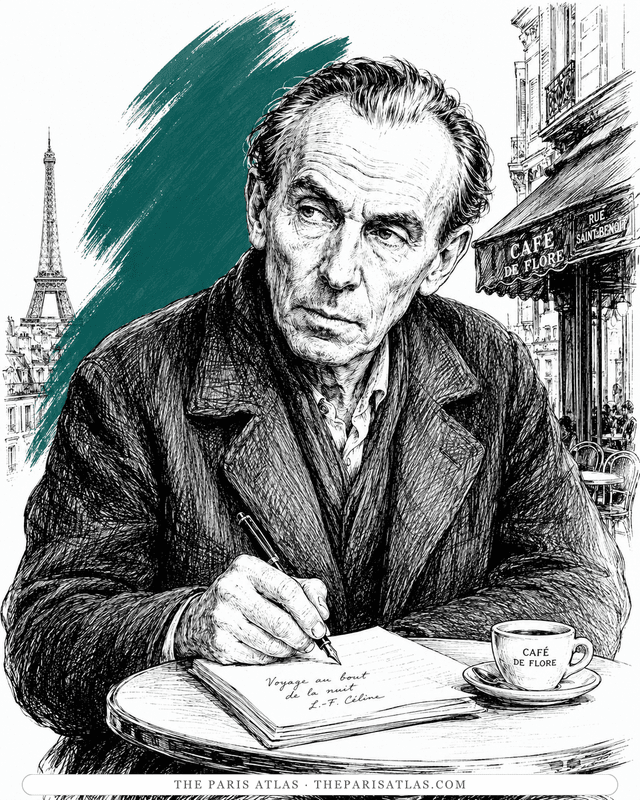
The doctor of the Paris slums who wrote the century's blackest, funniest novel — and changed the sound of French prose.
View author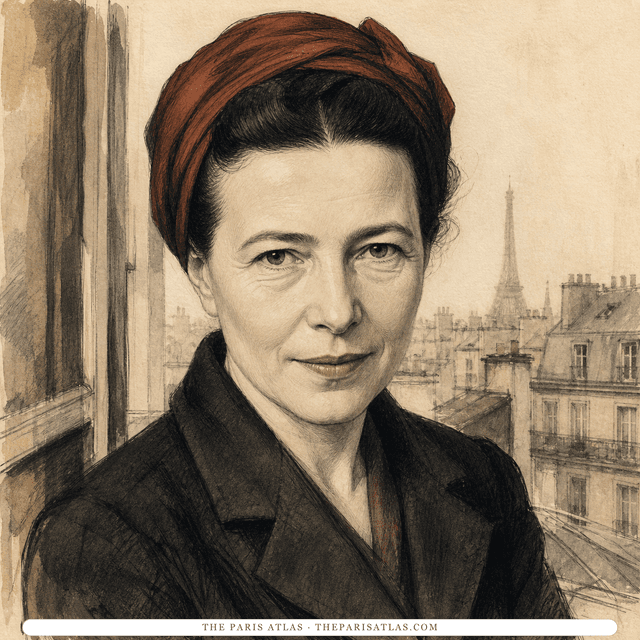
French writer and philosopher whose novels, memoirs, and social analysis examined freedom, gender, responsibility, aging, and the material conditions that shape a life.
View author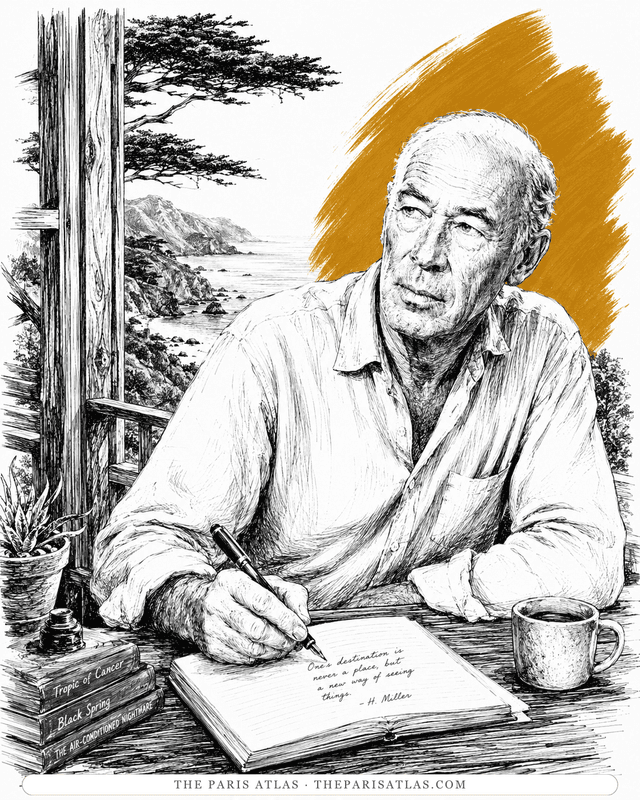
The Brooklyn dropout who arrived in Paris broke at thirty-eight and wrote the exuberant, banned books that ended American censorship.
View authorThe sources below include the primary text, editions, scholarship, archival materials, and other records that informed this page. They document And Then There Were None, its publication, and its place in literary history.


Christie's own account of why she wrote the book and how hard it was.
The estate on the notebooks, the twelve-guest draft, the earlier versions of the crimes, and the changed stage ending.
A first-edition guide, the source for the 1939 and 1940 publication dates and the title history to 1985.

The 2020 retitling of the French edition, with James Prichard's statement.
The estate's own page for the novel: the island's name, sales, the 2015 vote and the list of adaptations.
The estate's quotations page, the check for the two lines quoted above.
HarperCollins UK's product page, the source for the current hardback and ebook ISBNs.
Open Library edition records, used to check the William Morrow and HarperCollins ISBNs.
The primary text represented by this page, used for descriptions of the work’s contents and for any quoted passages shown here.
The primary text is the baseline reference for every book page. Additional references document publication history, interpretation, and historical context where that evidence is available.
 Explore more resources