Justice Lawrence Wargrave
The retired judge who takes the chair at every conference on the island, charged by the record with sending an innocent man to the gallows.
To preside — over the search, over the arguments, and over the ending.
The book
And Then There Were None
Agatha Christie
At a glance
- Retired judge, the eldest of the ten
- The death of Edward Seton, hanged on his sentence
- Chapters 1 to 13, and the manuscript at the end
Who they are in the book
Spoiler-freeWargrave is the oldest guest and the one the others defer to. He was a High Court judge, known in his day as a hanging judge, and he brings the habits of the bench to the island. He chairs the discussions, calls for evidence, and lays out the position after each death with the calm of a man summing up.
The record charges him with the death of Edward Seton, a man he sentenced to hang. He answers that Seton was guilty. What he wants, on the surface, is to find Mr Owen. He is the most rational person in the house, and the book lets the reader lean on that.
How Justice Lawrence Wargrave Is Portrayed
- The faceWrinkled, reptilian, with a tortoise's slow blink; Vera thinks he looks like a very old tortoise on the train.
- The chairHe takes charge after the record and never gives it up; every plan on the island goes through him.
- The summing upAfter each death he states the position in the language of a court, and the others find it steadying.
- The Seton caseHe sentenced a man the public thought innocent, and says flatly that the man was guilty.
- The judgmentHe is the first to say aloud that the killer is one of them, and he says it in Chapter 3.
- The costumeFound in the drawing room in a scarlet curtain and a grey wool wig, dressed as a judge in chancery.
Justice Lawrence Wargrave quotes
Oh, yes. I've no doubt in my own mind that we have been invited here by a madman — probably a dangerous homicidal lunatic.
Wargrave is U. N. Owen. Dying of an illness, and admitting to a lifelong wish to kill held in check only by a wish for justice, he chose ten people the law could not touch. He faked his death with Dr Armstrong's help, killed Armstrong, engineered the last deaths, and shot himself last so the body would match the wound already seen. His confession in a bottle is the book's final chapter.
If you like And Then There Were None


If you like Agatha Christie
Explore authors with a similar voice, perspective, and influence.
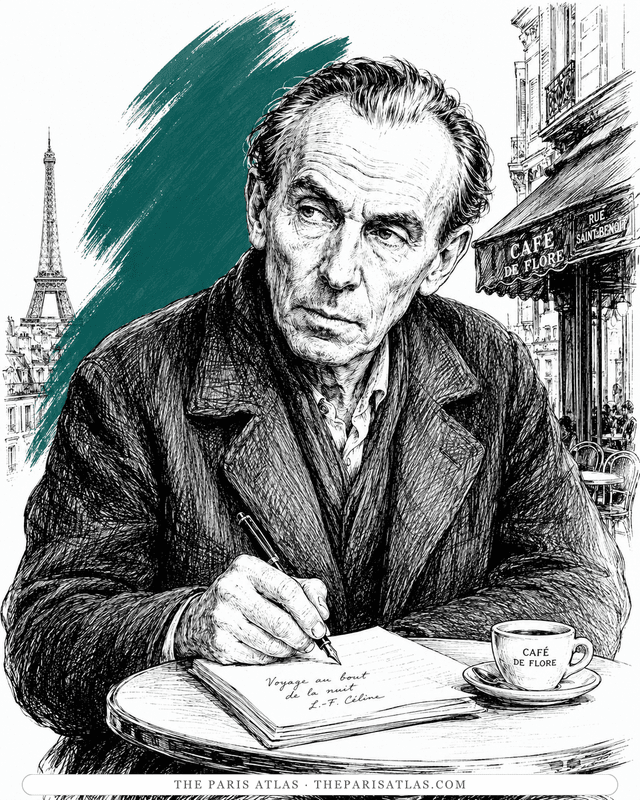
Louis-Ferdinand Céline
The doctor of the Paris slums who wrote the century's blackest, funniest novel — and changed the sound of French prose.
View author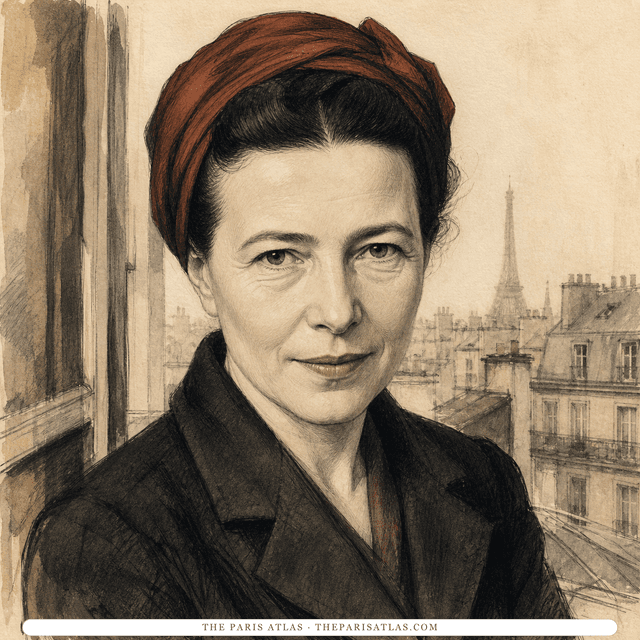
Simone de Beauvoir
French writer and philosopher whose novels, memoirs, and social analysis examined freedom, gender, responsibility, aging, and the material conditions that shape a life.
View author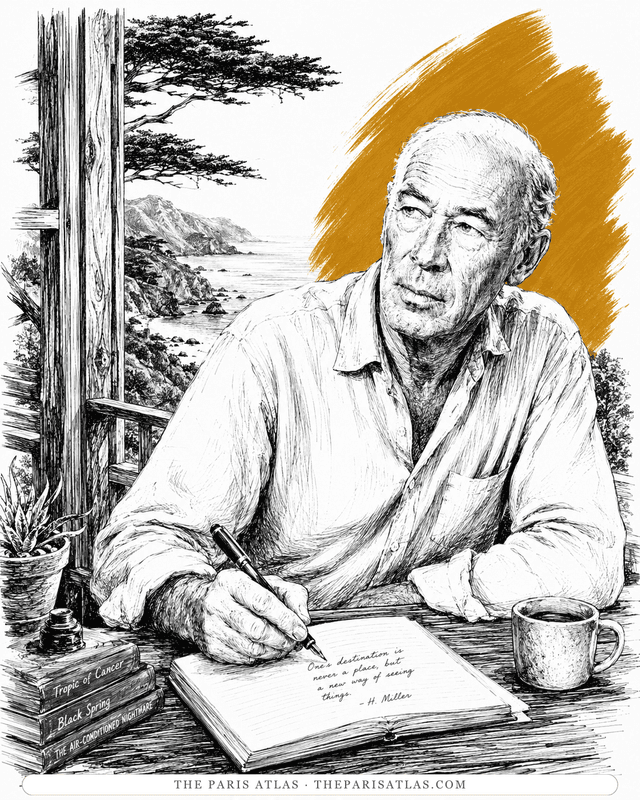
Henry Miller
The Brooklyn dropout who arrived in Paris broke at thirty-eight and wrote the exuberant, banned books that ended American censorship.
View author