
The Murder of Roger Ackroyd
Agatha Christie
The Murder of Roger Ackroyd
Six years later, the book that made her famous, and the other Christie in the American public domain.
Read our takeThe Mysterious Affair at Styles
Agatha Christie
Agatha Christie's first novel, written on a bet in a wartime dispensary, and the first appearance of Hercule Poirot.
Arthur Hastings, invalided home from the Western Front in the middle of the First World War, is invited to Styles Court in Essex by his old friend John Cavendish. The house belongs to John's stepmother, Emily Inglethorp, a rich old woman who has just married a man twenty years younger, and everyone in it hates him. One night she dies of strychnine behind a locked door. Hastings knows a Belgian refugee living in the village, a retired police officer called Hercule Poirot. Agatha Christie wrote the book in 1916 and it was published in 1920. It is the one Christie that is free to read in the United States.
Agatha Christie wrote the book on a bet. Her elder sister Madge said she could not write a good detective story, and Christie, working through the First World War in the dispensary of a Torquay hospital, took the bet and chose poison because poison was what she knew. For a detective she took the Belgian refugees who had settled in the town after the German invasion, and made hers a retired officer of the Brussels police. She wrote in her autobiography that she remembered the colony of Belgians in the parish of Tor and asked herself why her detective should not be one of them.[1][2]
Six publishers turned it down. John Lane of The Bodley Head accepted it in 1919, four years after she finished it, on a contract she later called exploitative, and asked her to move the final explanation out of a courtroom and into the house. The Times printed it first, as an eighteen-part serial in its Weekly Edition from February to June 1920. John Lane published it in New York in October 1920 and The Bodley Head in London on 21 January 1921.[3]
The chemistry was checked by professionals. The Pharmaceutical Journal, the trade paper of British chemists, reviewed the novel and approved its poisoning, which the estate records as an unusual honour for a work of fiction. When Christie and her first husband Archibald Christie bought a house, they named it Styles.[2]
The book was among the first ten Penguins, number six in the sixpenny paperbacks launched on 30 July 1935. Because it was published in 1920 it entered the public domain in the United States long ago, and Project Gutenberg carries the full text as ebook number 863. In the United Kingdom and Europe it remains in copyright until seventy years after Christie's death in 1976.[3][4]
Arthur Hastings, on sick leave from the Front, goes to stay at Styles Court, the Essex house of his friend John Cavendish. The house belongs to John's stepmother Emily Inglethorp, seventy, rich and generous with conditions, who has lately married Alfred Inglethorp, a bearded man twenty years younger whom the household calls a fortune hunter. Also in the house are John's wife Mary, his younger brother Lawrence, and Mrs Inglethorp's ward Cynthia Murdoch, who works in a hospital dispensary. Her companion Evelyn Howard quarrels with her over Alfred and leaves, warning Hastings to watch him.
In the village Hastings meets an old acquaintance, Hercule Poirot, a famous Belgian detective now living as a refugee in a house Mrs Inglethorp has provided. On the evening of 17 July Mrs Inglethorp is heard quarrelling with someone in her room, makes a new will, and drinks her coffee. In the small hours the house is woken by her cries. Her door is bolted on the inside. When the men break it down she dies in convulsions. Dr Bauerstein, a London specialist staying nearby, says strychnine.
Poirot examines the room. He finds a coffee cup ground into the carpet, candle grease on the floor, and a fragment of green cloth caught on the bolt of the door to Cynthia's room. In the grate are the burned remains of a will. The despatch case where Mrs Inglethorp kept her papers has been forced. A chemist's register in the town shows that Alfred Inglethorp bought strychnine on the Monday, signing his name. Alfred refuses to say where he was that afternoon.
At the inquest the case against Alfred looks complete, and Poirot, to Hastings's fury, works to prevent his arrest. Suspicion moves through the house. John and Lawrence inherit. Mary Cavendish was in the passage that night and will not say why. Lawrence was seen with a coffee cup. Cynthia handles poisons at work, and a box of her bromide powders has been emptied. Dr Bauerstein is arrested, but for spying.
John Cavendish is charged with the murder and tried at the Old Bailey. The defence shows that the quarrel overheard in Mrs Inglethorp's room was with John, about money and Mrs Raikes, a farmer's wife. Poirot, who had promised to find the last link, finds it. He gathers the household in the drawing room.
Alfred Inglethorp and Evelyn Howard did it together. They are cousins and lovers, and the quarrel over him was staged. The strychnine at the chemist's was bought by Evelyn wearing Alfred's clothes and beard, so that the purchase would point at him. He wanted to be arrested: once acquitted, which he would have been, he could never be tried again. Poirot kept him out of the dock. The strychnine that killed Mrs Inglethorp was in her own tonic, where a bromide powder had made it settle to the bottom of the bottle, so that the last dose was fatal. The murder was meant for the Monday; she forgot her medicine and died on the Tuesday.
Mrs Inglethorp had found a letter from Alfred to Evelyn and hidden it. Alfred forced the despatch case to find it and, hearing someone coming, tore it into strips and thrust it among the spills in the vase on the mantelpiece. Poirot finds it there. Mary Cavendish was in the passage because she had been trying to read the same letter; Lawrence's coffee cup and Cynthia's bromide were innocent. In the library afterwards Poirot tells Hastings that he let John be tried because a man in the dock wins back his wife.
Agatha Christie's first murder is a piece of pharmacy, and she was a qualified dispenser when she wrote it. Mrs Inglethorp takes a tonic that contains a small, safe dose of strychnine. A bromide powder added to the bottle makes the strychnine fall out of solution and collect at the bottom, and a careful person who never shakes the bottle will serve the whole poison in the last dose. Poirot reads the mechanism aloud in Chapter 13 from a dispensing manual, and the reader has been shown the empty bromide box in Chapter 4.
The design has a consequence the murderer did not plan. The last dose was meant for the Monday, when the bell wire had been cut and Cynthia was away, and Mrs Inglethorp would have died alone. She forgot her medicine, lunched out on the Tuesday, and took the dose a day late. Poirot's whole case turns on that delay, because a murder timed for one night was investigated as a murder on another.
The oddest thing Poirot does in the book is to protect the man everyone hates. Alfred Inglethorp has the motive, the poison in his name at the chemist's, and no alibi he will give. Hastings cannot understand why Poirot keeps him out of the dock. The answer, given in Chapter 13, is the rule that a man acquitted of a murder cannot be tried for it again. Alfred bought his conviction so that it would fail.
The chemist's register is the clue that turns. Alfred signed for strychnine on a Monday afternoon when he was somewhere he refuses to name. Poirot asks in Chapter 7 what kind of murderer buys poison under his own name, and answers that only a man who wants to be suspected does. Evelyn Howard, tall and deep-voiced, wearing Alfred's clothes and beard, signed the book. Christie shows the beard, the clothes and the voice long before she shows the trick.
Arthur Hastings tells the story, and he tells it as a man who believes he would make a good detective. He suspects Alfred, then Bauerstein, then Lawrence; he falls a little in love with Mary Cavendish and a little with Cynthia; and he is offended when Poirot will not explain. Christie uses his confidence to hide her clues. Everything Poirot needs is in Hastings's own report, and Hastings reports it without seeing it.
Poirot is drawn to match him. In Chapter 10 he taps his forehead and speaks of his little grey cells, the phrase's first appearance in print. He straightens the ornaments on the mantelpiece when he is agitated, and the reader learns in the last chapter that the habit found the hidden letter. The small, vain, tidy foreigner and the loyal, slow Englishman are set up here in the shape they kept for more than fifty years.
Christie's manuscript ended in a courtroom. John Lane, her first publisher, asked her to bring the explanation home. The printed book ends with Poirot gathering the household in the drawing room in Chapter 12 and finishing the story for Hastings in the library in Chapter 13. The scene of the detective collecting the suspects in one room and explaining the crime became the genre's most imitated ending, and it began as an editor's note.
The revised ending also changed what the book is about. In the courtroom version the law would have judged Alfred Inglethorp. In the drawing room Poirot judges him, and the household is the jury. Christie kept that shape for Poirot's whole career, and the two later books on these shelves in which he hands down his own verdict, Murder on the Orient Express and Death on the Nile, are the descendants of this scene. David Suchet's television version of Styles, broadcast on ITV in September 1990 for Christie's centenary, ends the same way.
This affair must all be unravelled from within. These little grey cells. It is ‘up to them’ — as you say over here.
The Belgian refugee, the moustache, the tidied mantelpiece and the little grey cells are all here, fully formed, in the first book Christie ever had published.
Christie was a qualified dispenser and the mechanism, a bromide that makes strychnine settle to the last dose, was approved by the Pharmaceutical Journal. It is the most exact murder she wrote.
Public domain in the United States and on Project Gutenberg, it is the one Christie a reader can check against the text without buying it.
The famous Belgian detective, now a refugee living in the village on Mrs Inglethorp's charity, in his first case.
The wounded officer who tells the story, fancies himself a detective, and falls for two women in one house.
The rich, generous, managing old woman who owns Styles and has just married a man half her age.
The bearded younger husband everyone suspects, who bought strychnine in his own name and will not say where he was that afternoon.
Mrs Inglethorp's blunt, deep-voiced companion, who quarrels over Alfred, leaves the house, and warns Hastings to watch him.
Hastings's friend, the elder stepson, kept short of money by his stepmother and tried at the Old Bailey for her murder.
John's wife, beautiful and unhappy, who was in the passage on the night of the murder and will not say why.
The younger stepson, a failed doctor and would-be poet, seen with a coffee cup he should not have had.
Mrs Inglethorp's ward, who works in a hospital dispensary and knows exactly how much strychnine will kill.
The London toxicologist convalescing in the village, who walks with Mary Cavendish and is arrested for something else.
1916
Christie writes the novel on a bet with her sister Madge, while working as a dispenser in a Torquay hospital, and invents Poirot as a Belgian refugee.
1919
John Lane of The Bodley Head accepts it, the seventh publisher to see it, and asks for the ending to be moved out of a courtroom.
1920
The Times Weekly Edition serialises it in eighteen parts from 27 February to 25 June; John Lane publishes the book in New York in October.
1921
The Bodley Head publishes the first British edition on 21 January.
1935
Penguin Books issues it as number six of its first ten sixpenny paperbacks on 30 July.
1990
ITV broadcasts the David Suchet adaptation on 16 September, for the centenary of Christie's birth.
2005
BBC Radio 4 serialises it with John Moffatt as Poirot.


The Murder of Roger Ackroyd
Agatha Christie
Six years later, the book that made her famous, and the other Christie in the American public domain.
Read our takeMurder on the Orient Express
Agatha Christie
Poirot fourteen years on, judging a crime from the same drawing-room chair this book invented.
Read our takeDeath on the Nile
Agatha Christie
The mature Poirot, with the method of the fact that will not fit used at full stretch.
Read our takeAnd Then There Were None
Agatha Christie
The book Christie called her hardest, nineteen years after her first.
Read our takeYes. She wrote it in 1916 on a bet with her sister Madge, while working in a hospital dispensary in Torquay, and John Lane published it in New York in October 1920 and in London in January 1921. It introduces Hercule Poirot and Arthur Hastings.
Because Belgian refugees from the German invasion of 1914 were living in Torquay when Christie was looking for a detective. She wrote in her autobiography that she remembered the colony of Belgians in the parish of Tor and made her detective a retired Belgian police officer. He is not French, and the book corrects anyone who says he is.
In the United States, yes. It was published in 1920 and is in the American public domain; Project Gutenberg carries the full text as ebook number 863. In the United Kingdom and Europe it is in copyright until seventy years after Christie's death in 1976. The Murder of Roger Ackroyd, from 1926, is her only other novel in the American public domain.
With strychnine, and the plot section explains exactly how, with the ending told. Christie was a qualified dispenser, and the Pharmaceutical Journal reviewed the book and approved the chemistry.
Yes. Christie's manuscript ended in a courtroom. John Lane asked her to bring the explanation back to the house, and the book now ends with Poirot gathering everyone in the drawing room. That scene became the standard ending of detective fiction.
ITV broadcast a feature-length version on 16 September 1990, for the centenary of Christie's birth, with David Suchet as Poirot and Hugh Fraser as Hastings. BBC Radio 4 serialised it in 2005 with John Moffatt as Poirot.
Explore authors with a similar voice, perspective, and influence.
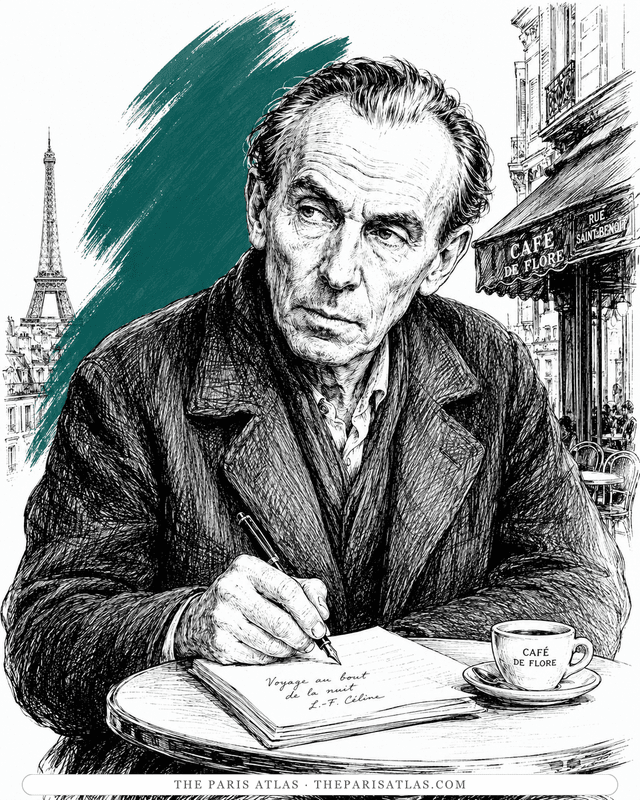
The doctor of the Paris slums who wrote the century's blackest, funniest novel — and changed the sound of French prose.
View author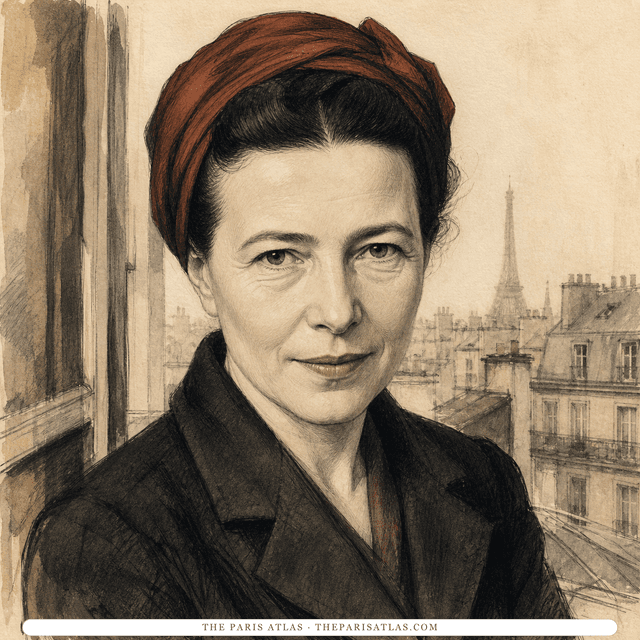
French writer and philosopher whose novels, memoirs, and social analysis examined freedom, gender, responsibility, aging, and the material conditions that shape a life.
View author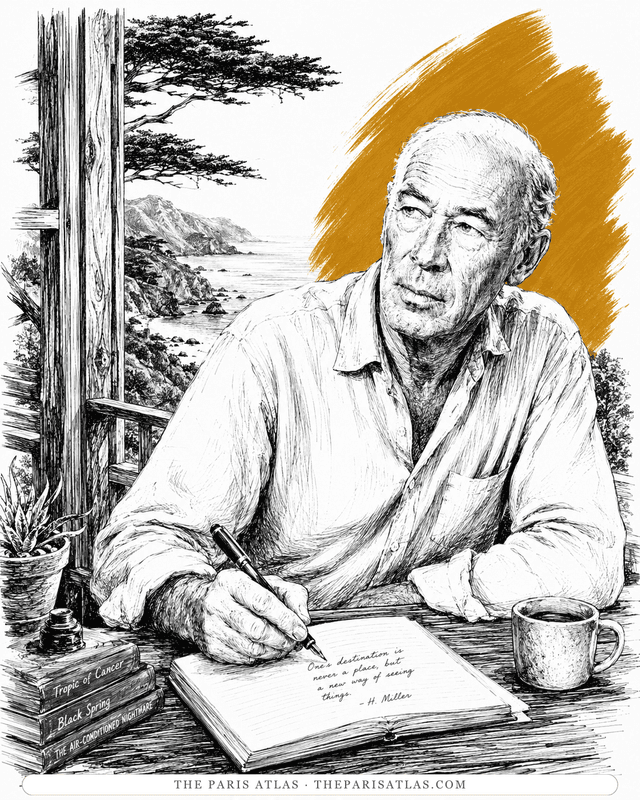
The Brooklyn dropout who arrived in Paris broke at thirty-eight and wrote the exuberant, banned books that ended American censorship.
View authorThe sources below include the primary text, editions, scholarship, archival materials, and other records that informed this page. They document The Mysterious Affair at Styles, its publication, and its place in literary history.

Christie's own account of choosing a Belgian detective.
The complete text, used for the plot, the chapter locators and the quotation.
The estate's life of Christie, for John Lane's acceptance and the changed ending.
HarperCollins UK's product page, the source for the current paperback and hardback ISBNs.
Open Library edition records, used to check the HarperCollins ISBNs.
The primary text is the baseline reference for every book page. Additional references document publication history, interpretation, and historical context where that evidence is available.
 Explore more resources