Annie
Returning from the previous novel — her freer approach to desire the counterpoint to Claudine's consuming attachment.
To leave again. She tells Claudine that the wish to go is not even an idea and barely a mental thing at all — it is more like a cyst she carries about, ripening quietly, getting heavier every day while she eats and sleeps and embroiders.
The book

At a glance
- Claudine's only close friend, and the owner of the house where nearly all of the novel is set
- Casamène, inherited from a grandfather; the boundary wall is down, the sundial is two hours out, and the hundred-year-old firs are being strangled by ivy
- Divorced from Alain Samzun, whom she left on finding him unfaithful; she kept neither vanity nor rancour from it
- Marthe Payet, her former sister-in-law, who called her husband a pretentious idiot at their reconciliation and borrowed money the same week
- Embroiders, and says nothing unless she is asked twice
Who they are in the book
Spoiler-freeAnnie is Claudine's only real friend, and she owns the house the novel takes place in. Casamène came down to her from a grandfather who laid out a maze in the garden, and she lives there most of the year, alone. She is divorced. She left her husband, Alain Samzun, after finding out he was unfaithful, and did it without a scene, the way a dog gets out of its collar by scraping its ears a little.
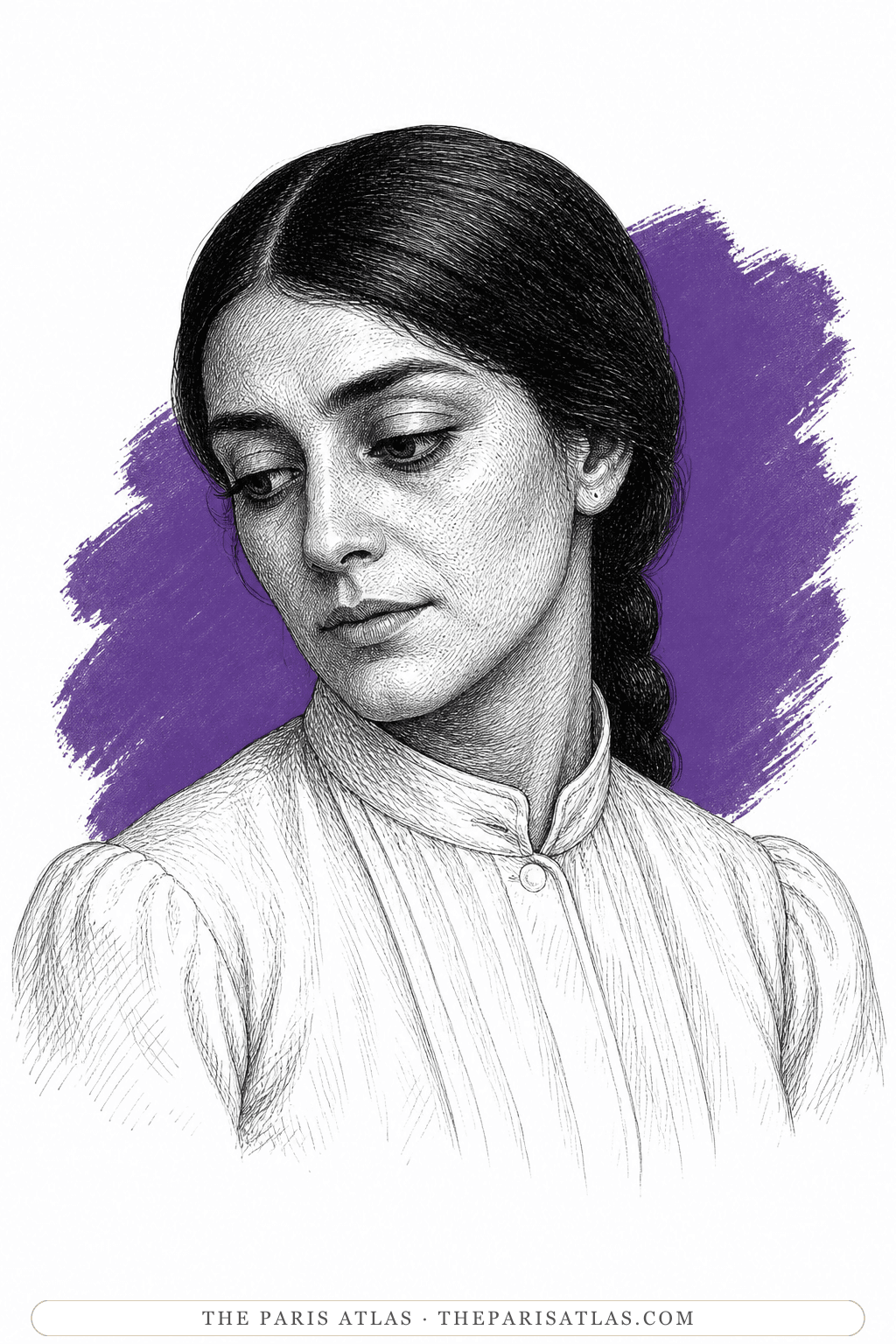
To look at, she is the picture of a modest, downtrodden woman. Her hair is absolutely black, without a hint of red or blue in it, worn flat and parted at the side, with a heavy plaited tail down her back. Her skin is brown, her eyes are blue and slightly mournful, and she has very long lashes she drops whenever she has said something she considers improper. She embroiders all evening on a frame like a tambourine, sitting half on a caned chair with the air of a poor relation, and lets Claudine give every order in her own house.
That is not who she turns out to be. Over one winter she tells Claudine, in instalments, what she did with the three years after her divorce, which was to travel around Europe sleeping with a long series of men whose names she has mostly not kept. She is not confessing and not boasting. She reports it the way other people describe their first ball gown, and she is upset only when she thinks Claudine has stopped taking her seriously.
The two women are set against each other all the way through. Claudine has one love and cannot imagine another; Annie has appetite and no love at all, and believes that everybody is allotted a very small share of happiness, Claudine included.
How Annie Is Portrayed
- Black hair and a poor relation's chairClaudine says Annie's hair invites no comparison at all: not swallow-blue, not the shine of coal, simply black. It is worn as a smooth cap with a heavy stallion's tail at the back. She embroiders by the window, silent and useless, seated half on a hard chair, and when she is embarrassed her blue eyes darken slightly, which is how she blushes.
- She gives her house awayTold that Claudine loves Casamène, Annie says calmly that it is hers, that she means it, and that she will hand it over when she next leaves. What she wants is the illusion that nothing there belongs to her, so that she could stand up and walk out leaving only an unfinished piece of embroidery behind.
- The night at BadenHer first confession is about a hotel at Baden, where a man she had never spoken to walked into her room one evening. She let him do everything and did not know his name; she barely looked at him, and closed her eyes to feel more. In the morning she was too ashamed to ring for her chocolate, then went down to the desk to ask who he was. He was called Martin. The next night she packed and took a train to Nuremberg, frightened of becoming his daily property.
- The men she counts offAfter Martin there is a hotel page at Carlsbad, a blond Viennese boy of the best-servant type. There is a chauffeur called Anthelme, sacked for putting his employers in a ditch, whom she kept for a fortnight at a rented villa at Agay and who once handed her back a gold coin another woman had paid him, for the common fund. There is Rusinol, a tenor, who took about a quarter of an hour and then sat down at the piano in his underwear to run scales up to his high C and check that the sex had not damaged it.
- Twenty-one nights on a stageShe once went on the stage, for one run. An actor she was keeping got her to replace an English girl who had bolted from a pantomime at the Pâturins theatre, and she played the little slave who gathers roses, in a red wig, twenty-one times. The Faun who carried her off at the end was played by a woman, Willette Collie, whose stage kiss caused a scandal and who once tickled Annie under the arm in the middle of it until she cried out and nearly stopped the show.
- Her explanation of herselfShe rejects the whole vocabulary Claudine uses. In her own words, «Moi, c’est mon corps qui pense. Il est plus intelligent que mon cerveau.», which means that with her it is the body that does the thinking, and that it is more intelligent than her brain. She also argues that the woman who falls fastest is the shyest and most silent one, who never flirts and has no idea anything could happen, and that women like her were simply never issued any weapons.
- The night with MarcelWhen Claudine engineers a night between Annie and Renaud's son, Annie goes to it happy: he looked so pretty in blue. It goes wrong at once, and she closes her eyes and caresses him to try to keep him. What she cannot forgive is his politeness afterwards. He called her madame and apologised as though he had trodden on her foot, and she tells Claudine she would rather have been insulted.
- The morning afterShe comes downstairs anyway, saying she is hungry and bored on her own. Claudine, guilty and unkind, suggests the gardener's son. Annie goes red in slow waves, admits she had already thought of that, and says that on reflection a cure of foreign air would be more suitable.
Annie does leave, as she said she would, and hands Casamène to Claudine on the way out.
She reappears in the last chapters, roughly two years later, arriving at Montigny in a red and yellow motor car she has paid half of and does not control, in a party organised by Marthe Payet. She has taken up her old place in Marthe's shadow, answering timidly, running her errands. Claudine points out that she is back on a lead, and Annie smiles and says leads break.
She is frightened of Claudine's widowhood: frightened of the room Renaud died in, offended that Claudine can be sunburnt and well and calm, and half convinced by the end of the visit that there must be a young gardener somewhere in the story. Her goodbye is the last thing anyone says to Claudine in the book. She asks Claudine to take her in and pity her, the way she pities animals, if she ever falls at her door like a dead bird.
If you like The Sentimental Retreat


If you like Colette
Explore authors with a similar voice, perspective, and influence.

Henry Miller
The Brooklyn dropout who arrived in Paris broke at thirty-eight and wrote the exuberant, banned books that ended American censorship.
View author
Louis-Ferdinand Céline
The doctor of the Paris slums who wrote the century's blackest, funniest novel — and changed the sound of French prose.
View author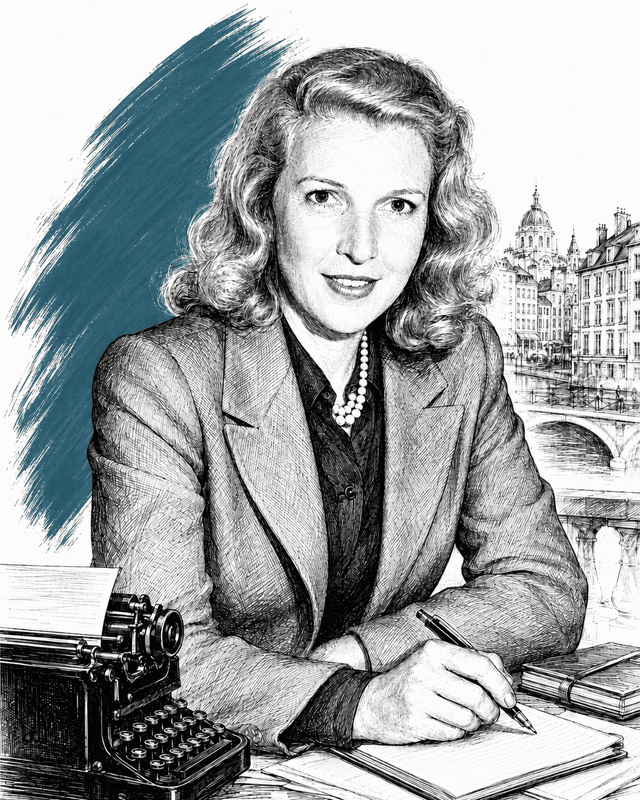
Martha Gellhorn
War correspondent who covered the Spanish Civil War, D-Day, and conflicts across five more decades; Hemingway's third wife, 1940–1945.
View author