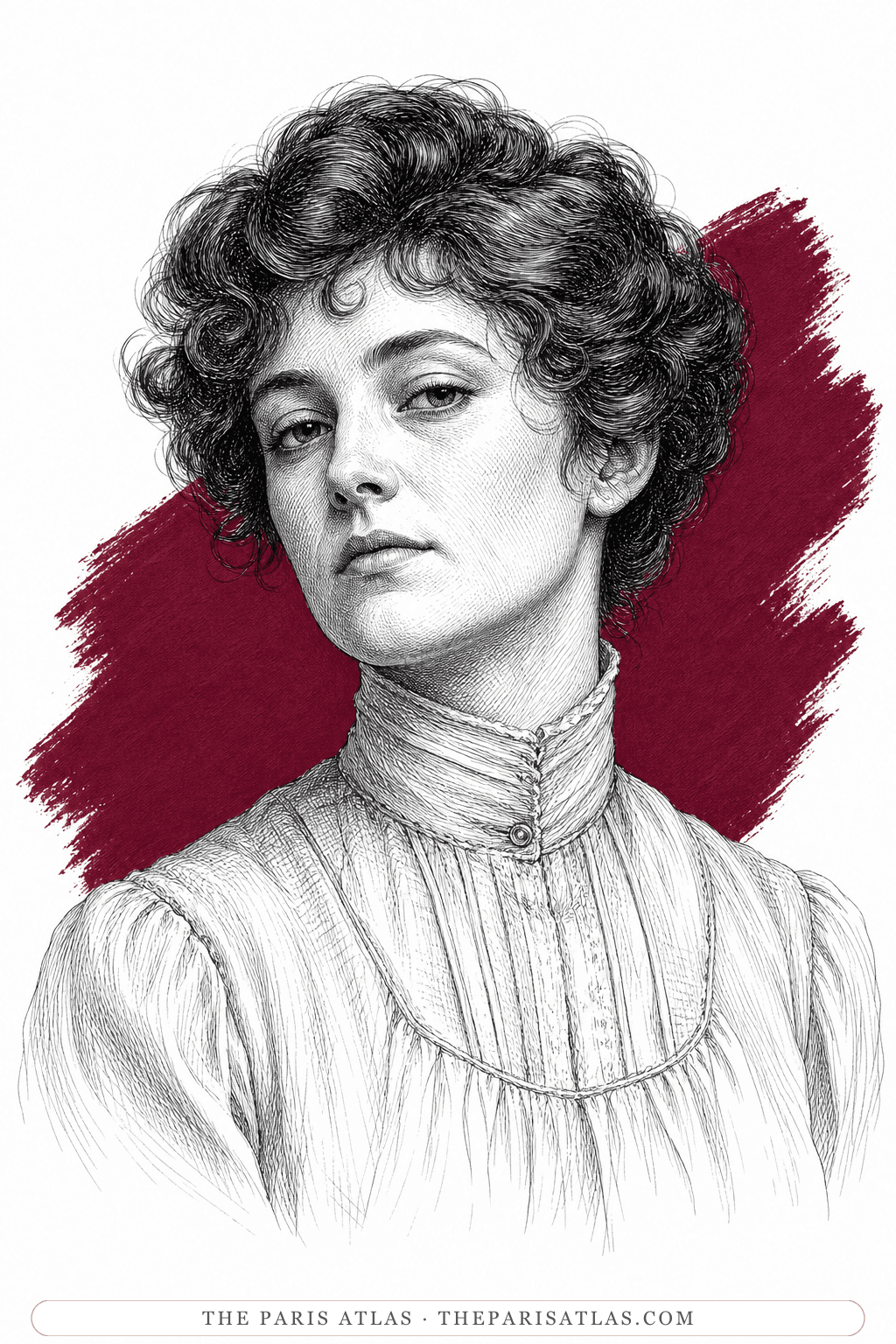
Claudine
Older and disenchanted, withdrawing to the country to reckon with a life of exclusive, dependent love — the heroine at the cycle's close.
Never to be away from Renaud again. Standing at the mirror counting the first lines on her face, she decides that the essential thing from now on is not to leave him for a single day, so that he never has time to compare her with the young girl he still pictures when he thinks of her.
The book

At a glance
- Twenty-eight; Renaud is fifty
- The whole novel is her diary — a prologue and thirty short numbered chapters, all in her voice
- Casamène, a run-down country house belonging to her friend Annie, for almost the entire book
- Renaud, a Paris man of letters, who spends the novel in a sanatorium in the Swiss Engadine
- Marcel, Renaud's grown son, who is exactly her own age and calls her his old pal rather than his stepmother
- A house at Montigny, the village she grew up in, which she keeps and rarely describes to anyone
- Toby-Chien, a bulldog, and Péronnelle, a grey cat, both of which she treats as members of the household
Who they are in the book
Spoiler-freeClaudine tells this novel herself. It is written as her diary, kept across one autumn and winter, and there is no other voice in it. She is twenty-eight and married to Renaud, a Paris man of letters twenty-two years older than she is. He is not with her. He has been sent to a sanatorium high in the Engadine, in the Swiss Alps, to be treated for the nervous exhaustion of a man who has worked too hard, and the book covers the months Claudine spends waiting for him to be discharged.
She waits in a house that is not hers. Casamène belongs to her friend Annie: a low old country house on the shoulder of a small oak-covered mountain, with the boundary wall collapsed into the road, a sundial that reads noon at a quarter to two, and a maze that has gone back to scrub. Claudine says what she feels is not grief. It is closer to an amputation, a physical unease she keeps mistaking for hunger, thirst, a headache or tiredness. She fills the days by taking the place over, ordering the wall rebuilt and the hay brought in, and by walking out into the woods for hours.
The other thing she does is examine herself. A good deal of the book is Claudine at twenty-eight standing at a mirror and cataloguing what has begun to go: the mouth that has lost some of its gaiety, the cheek that is longer now and less full, the crease at the corner of the smile that she cannot yet classify as a dimple or a wrinkle. She notes that nobody else has spotted any of it, that she is the only witness so far, and that she is not bitter about it.
She was, as she puts it, born alone: no mother, no brother or sister, a loud and impractical father she could have been the guardian of, and no women friends. What she has instead is Renaud, whom she loves to the exclusion of everything else, and the countryside, and animals, whose company she plainly prefers to most people's.
How Claudine Is Portrayed
- A month alone in someone else's houseWhen the book opens she has been at Casamène about a month, reading letters from a Swiss sanatorium. She describes the separation as a kind of amputation: short attacks of emptiness, yawning, a sourness she keeps confusing with hunger or a headache.
- She runs a house she does not ownAnnie owns Casamène and will not give an order in it. So Claudine has the fallen wall rebuilt, the dead wood tied into faggots, the trees pruned and the second crop of hay brought in. Annie encourages her: it lets Annie feel that nothing there belongs to her, and that she could get up from her chair and go, leaving nothing behind but an unfinished piece of embroidery.
- The inventory in the mirrorShe keeps her chestnut hair short and in round curls, and she is precise about the rest: the mouth less gay than it was, the cheek thinning and losing its velvet, the eye socket deeper, and the mark at the corner of her smile that she cannot decide about. She imagines the sentence a friend of Renaud's will say about her in a year or two, that Claudine took a terrible knock of old age this summer.
- What she does outdoorsShe is out at seven in the morning in October, soaked with dew, gathering pine cones until her back aches and her fingers are sticky with resin. She shovels a basket of wasps, torpid with cold, out of their nest to burn them on the kitchen range, and offers one to Annie as a hazelnut. In the woods she picks a field mushroom, and instead of putting it in the basket she eats it raw because it smells of truffle and earth.
- The animals are the company she prefersToby-Chien is an elderly bulldog who has decided she is his real mistress and Annie only a branch office. Péronnelle is a grey cat Annie found starving in the grass. There is also a toad under the front steps she has not yet dared to speak to, a hedgehog that eats like a pig and is frightened of the cat, and a bat that brushes her hair at dusk. Lost in the snow one afternoon, she conducts an entire conversation with the dog, writing out his side of it as well as her own.
- Her own account of her characterShe says that if she were a man and knew herself this well she would not much like herself: unsociable, either infatuated or in revolt at first sight, faddish, a fake bohemian who is deeply proprietorial underneath, jealous, honest out of laziness and a liar out of modesty. People who have met her three times, she says, take her for an easy woman to live with, and are wrong.
- Holding Marcel's face in her handsRenaud's grown son Marcel turns up at Casamène on the run from a blackmail racket. One evening Claudine squeezes a blackhead on his temple by lamplight while Annie watches, unable to look away. Holding his closed, powdered face in both hands, Claudine thinks about the phrase Annie has been using at her all winter, fresh flesh, and about how nearly this is the thing that ruins other women, and is calm about it.
- The night she arrangesAnnie has spent weeks staring at Marcel, who is homosexual and has no interest in her. Claudine fills Annie with sweet wine and then punch at dinner, bargains with Marcel until he half agrees, and shoves him into Annie's bedroom in his turquoise pyjamas. Then she listens at the door. It fails badly, Annie cries all night, and Claudine writes afterwards that it was worse than a blunder, it was a bad action.
- Where she comes fromHer father died face-first among his books, and she went from room to room for days afterwards looking for him. Her old servant Mélie and her white cat Fanchette are dead too. The house at Montigny where she grew up is still hers, and she calls it a relic, a burrow, a citadel and the museum of her youth, and says that anyone she showed it to would only see an old house.
Renaud comes home in late winter and Claudine does not recognise him. The sanatorium returns her a man of fifty who looks and moves like an old one, and she refuses to let him touch her, out of a mixture of nerves and shame at the idea of him performing. Neither of them will say so. They lie to each other, she writes, heroically, with the happy smiles of strangers.
About a year later he dies at Montigny, of a stroke, after eight or ten days in bed. Claudine watched it and asked the doctor outright to give him something to make him die faster, and got a horrified look for it.
The last two chapters jump eighteen months. Claudine is living alone at the Montigny house in mourning, with a bulldog, two cats and a magpie, still sleeping in the room he died in, tending the grave without feeling anything at it. Annie arrives with a carload of Paris friends and is scandalised to find her sunburnt, healthy and calm, and asks whether it can have been love at all if she can live after it. Claudine tells her it was the best kind, the kind that lives on its own and outlasts the person, and does not explain further. The novel ends with her sitting out at dusk among her animals, keeping her eyes closed so as to see Renaud better.
If you like The Sentimental Retreat


If you like Colette
Explore authors with a similar voice, perspective, and influence.
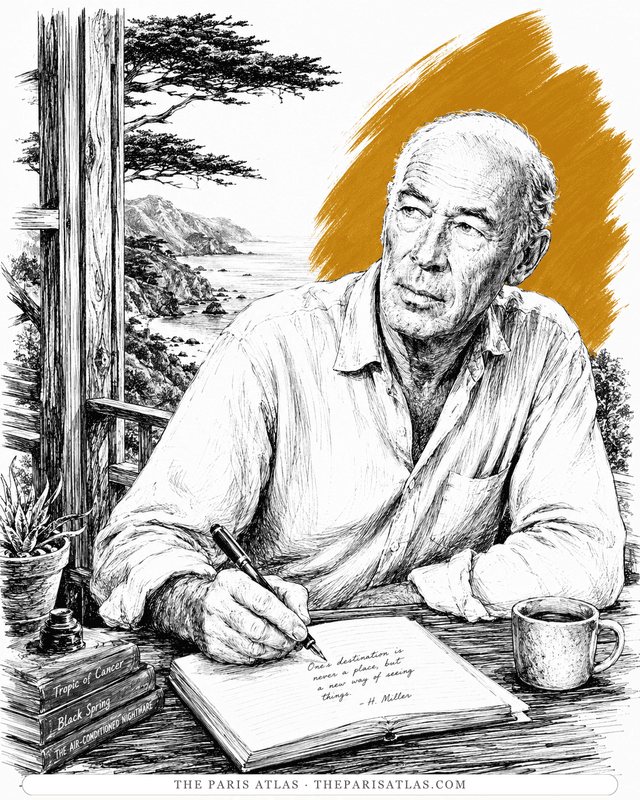
Henry Miller
The Brooklyn dropout who arrived in Paris broke at thirty-eight and wrote the exuberant, banned books that ended American censorship.
View author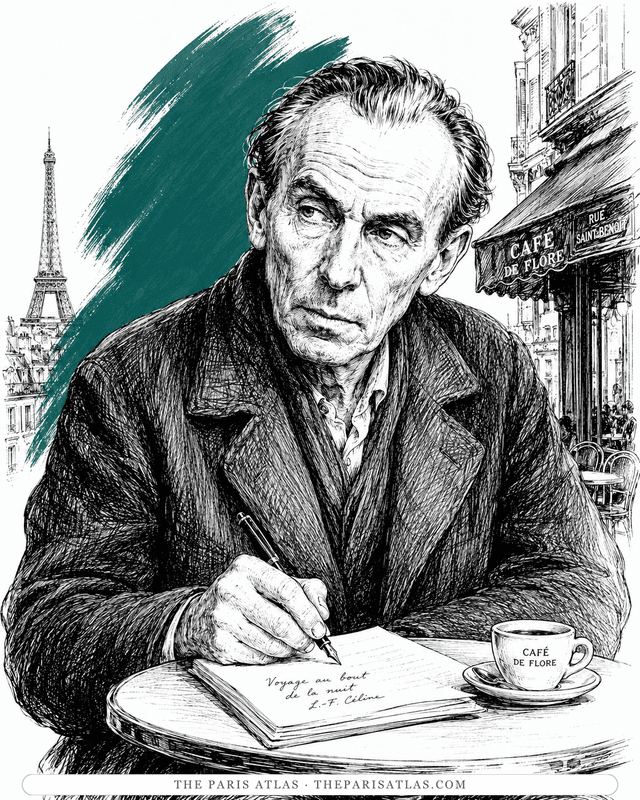
Louis-Ferdinand Céline
The doctor of the Paris slums who wrote the century's blackest, funniest novel — and changed the sound of French prose.
View author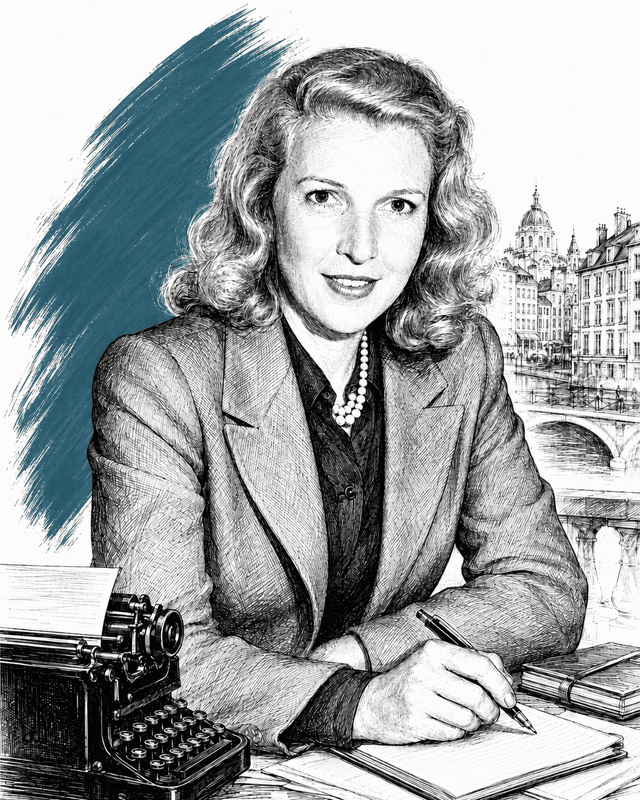
Martha Gellhorn
War correspondent who covered the Spanish Civil War, D-Day, and conflicts across five more decades; Hemingway's third wife, 1940–1945.
View author