May
The dependent young woman whose lover Renée displaces — a glimpse of the smaller fate Renée once refused.
To be taken for someone nobody can push around. She says so constantly — she is a real character, a difficult type who is only led as far as she wants to go — and she says it while sitting in a hotel room waiting for Jean to come and fetch her.
The book

At a glance
- Twenty-five
- On Jean's money, three or four thousand francs a month by his own reckoning. A year together at the sea and in spa towns; she keeps a small place of her own in Paris
- He offered to furnish the boulevard Berthier house for her, and she told him he had a nerve offering her that «boîte à grue» — a house fit for a tart
- «Un vrai type» — a real character, the phrase she uses whenever she wants to be admired
- Cocaine, opium at Masseau's, cigarettes, drink, and no fixed hours: her morning runs from half past twelve to four
- At a club supper about a year before the book opens, where Renée and Brague were performing for a fee
Who they are in the book
Spoiler-freeMay is a character in The Shackle, the 1913 novel by the French writer Colette. She is twenty-five, blonde, and kept: she has no money of her own and lives on what her lover Jean gives her, which he puts at three or four thousand francs a month. Renée Néré, the narrator, met her about a year earlier at a private club supper where Renée and her stage partner were the hired entertainment, and where May dipped her hair in the champagne, threw gold coins down a Spanish dancer's front, cried beautifully for no reason, and then spoiled the effect by asking whether she wasn't a real character.
That phrase is hers. «Un vrai type» — a real character, a proper piece of work — is what she calls herself throughout the book, and most of what she does is done to prove it. She wears her lover's slippers into the hotel corridor so the staff will have something to look at. She says out loud what everything costs. Renée's verdict on her is that she lives beside a man in the most servile condition there is, with every appearance of unbridled independence.
Colette gives her a round child's face, chestnut eyes with almost no white showing, an arched mouth and hardly any nose at all, and then sets out what she is doing to it. She does not go to bed, forgets to eat, smokes, drinks and takes cocaine, and the curling tongs burn her hair a little every day. Renée thinks she has sworn to wreck herself before thirty.
Renée is honest about her own part in it. She has no real affection for May, and she uses her: sitting deliberately still and quiet beside her, so that a girl of twenty-five will look like half-ripe fruit on a shaken branch. Jean says it to Renée's face, and she cannot deny it.
How May Is Portrayed
- How she comes into a roomShe arrives in Renée's room at a quarter to one in the afternoon, in a Romanian shift under a Japanese dressing gown, bare feet in a pair of her lover's enormous slippers. The slippers are on purpose. She shuffles about the corridors in them to startle the other guests.
- The night beforeIt went on until three in the morning, she says, and left six hundred francs' worth of blonde tortoiseshell combs on the carpet. She holds out both arms to show Renée the bruises, one brown band round each. He had also wrecked a dress worth fifty louis, because she felt lucky and wanted to go to Monte-Carlo. Her revenge was to pluck a hair out of his nose while he slept.
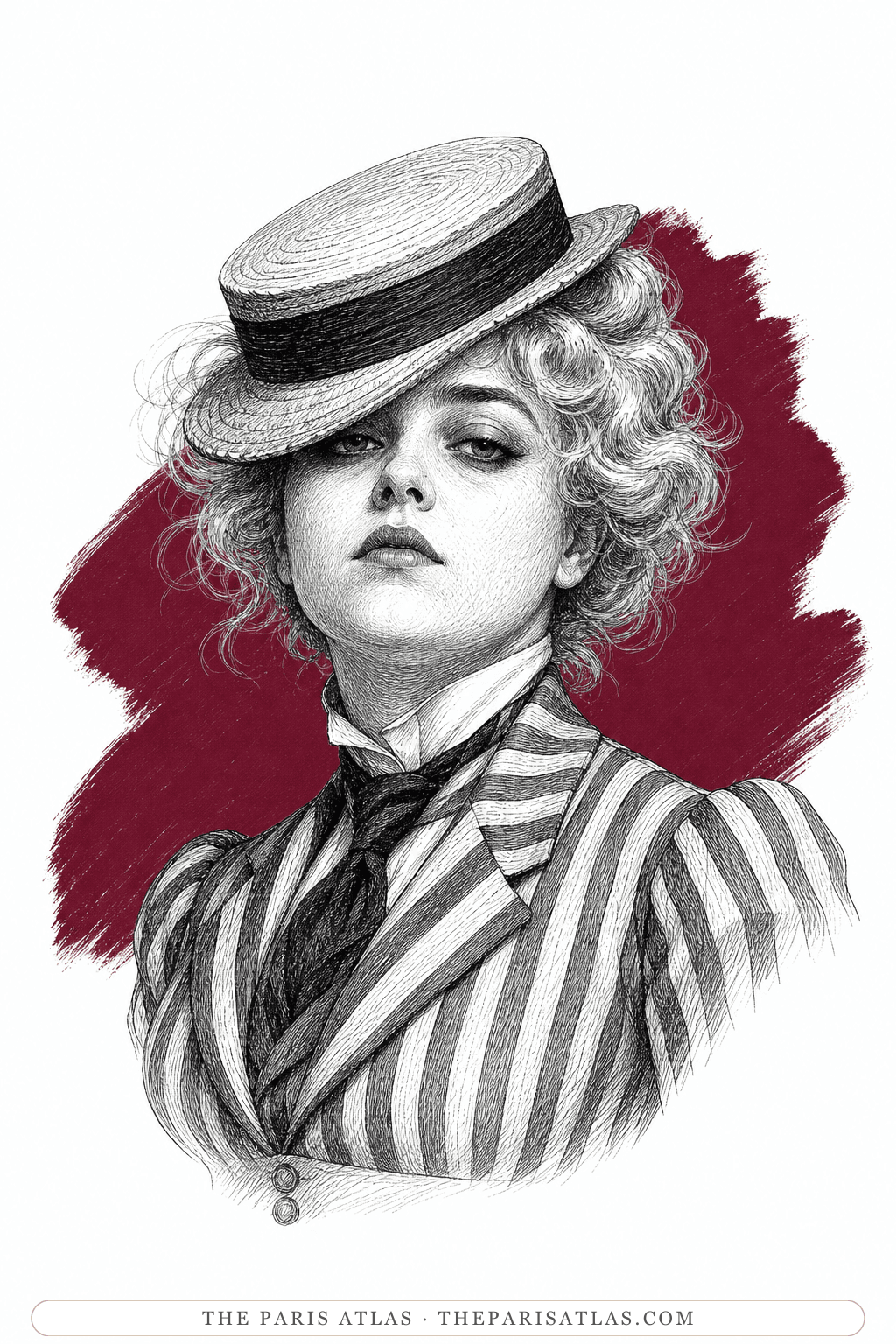
- What she calls a plain suitBroad-striped skirts short enough to show her ankles and calves and her small crushed feet; a waistline that starts at the armpits; a skimpy jacket that never looked as though it had been cut for her; a straw cap over the right eye. Her own name for the outfit is a simple little suit for walking.
- Doing her face in front of everybodyShe scours her ears and the corners of her mouth, turns her eyelids inside out with a fingertip, scrapes her tongue with an ivory knife, works the tweezers, then puts on mauve powder, bright pink under the eyes, grey shadow and carmine. She does all of it in front of Jean, in front of Renée, in front of the wine waiter and the page boy. Asked why she does not hide it, she says she will hide when she is thirty-five or forty. At present she has nothing to cover up.
- How she describes a good eveningComing home from a grand supper she gives the prices rather than the impression: peaches at a hundred sous each, fifty louis' worth of orchids on the table. When Renée asks what the time is, May fines her a gold louis on the spot, and when Masseau asks who the money is paid to she is genuinely surprised by the question: to her, obviously, since she is there.
- Her two doctorsWhen she is grey and shivering and in tears over a word, she sends for the manicurist, or goes to have her hair washed, and lets skilled hands knead and polish and wave her into a half-sleep like a convalescent's. Renée calls those two the great physicians of May's soul. Above them, in May's order of remedies, there is only opium and cocaine.
- The morning Jean ends itHer luggage is open across the bed, there are two boxes of tablets and a squat bottle of white powder beside the tea tray, and she is sniffing rather than blowing her nose, because blowing it would make it red. She swore like a man and called him every name she had. She left his room with a postcard photograph of him and a handful of banknotes lifted out of his waistcoat in the confusion. Then she makes up her face and waits for him to come and get her, and he does not come.
- What she knows about JeanWalking by the Tuileries in a cold wind, she gives Renée the whole man: proud, sly about money, incapable of admitting he is wrong, and impossible to keep. The worst of him, she says, is the way he clears out — in the middle of a sentence, or on his way to buy cigarettes — and afterwards you meet a stranger wearing a suit you recognise.
The walk by the Tuileries is her last appearance. She has come to confide in the only woman she thinks of as a friend, and nothing in the book suggests she ever learns that this is the woman who took Jean. Renée listens to all of it, cannot get out the one honest sentence, and lets May run off through the rain.
May's parting shot is a prophecy, and it is exact. She says she would like to see the face of the woman who displaced her on the day Jean walks out on her too. He does precisely that to Renée a few months later: no scene, no letter, just an absence. Renée spends the last quarter of the novel with May's words running in her head, waiting for the letter saying it is over, which in her case never even arrives.
If you like The Shackle


If you like Colette
Explore authors with a similar voice, perspective, and influence.

Henry Miller
The Brooklyn dropout who arrived in Paris broke at thirty-eight and wrote the exuberant, banned books that ended American censorship.
View author
Louis-Ferdinand Céline
The doctor of the Paris slums who wrote the century's blackest, funniest novel — and changed the sound of French prose.
View author
Martha Gellhorn
War correspondent who covered the Spanish Civil War, D-Day, and conflicts across five more decades; Hemingway's third wife, 1940–1945.
View author