The Paris AtlasCharting the artists, works, and places worth returning to.
  • Filmmaker
· American · 1903–1986

Vincente Minnelli

American director of the MGM musical — Meet Me in St. Louis, An American in Paris, and the 1958 Gigi, adapted from Colette's novella, which won the Academy Award for Best Picture.

Details

Lived
1903–1986
Born
28 February 1903
Birthplace
Chicago, Illinois
Birth name
Lester Anthony Minnelli
Died
25 July 1986 · aged 83
Place of death
Beverly Hills, California
Nationality
American
Profession
Film director and designer
Major works
Cabin in the Sky, Meet Me in St. Louis, An American in Paris, Lust for Life, Gigi, Some Came Running
Married
Judy Garland · married 1945, divorced 1951Georgette Magnani · married 1954, divorced 1958Denise Radosavljevic · married 1962, divorced 1971Margaretta Lee Anderson · married 1980 until his death
Children
Liza Minnelli, Christiana Nina "Tina Nina" Minnelli
Roles
Filmmaker

About Vincente Minnelli

American director of the MGM musical, who came to film as a designer and built the An American in Paris ballet out of six painters

Vincente Minnelli was an American film director, born Lester Anthony Minnelli in Chicago on 28 February 1903. He directed for MGM for more than two decades and is the name most associated with the American film musical at its most visually ambitious. His best-known films are Meet Me in St. Louis (1944), An American in Paris (1951), Lust for Life (1956) and Gigi (1958).

He came to film from design rather than from drama, which is the fact that explains his work. He dressed windows at Marshall Field's in Chicago, designed costumes and sets for a cinema chain, and was chief costume designer and then art director at Radio City Music Hall before he directed anything on Broadway or in Hollywood.

An American in Paris ends with a seventeen-minute danced sequence in which each section is staged in the manner of a different painter of Paris, from Raoul Dufy to Henri de Toulouse-Lautrec. It won six Academy Awards including Best Picture. Gigi, adapted from Colette's novella and shot partly on location in Paris, won all nine awards it was nominated for in 1959, including Minnelli's only Oscar for directing. He died of emphysema and pneumonia at his home in Beverly Hills on 25 July 1986, aged 83.

A tent theatre childhood, 1903–1931

Lester Anthony Minnelli was born in Chicago on 28 February 1903. His father, Vincent Charles Minnelli, and his uncle Frank ran the Minnelli Brothers' Tent Theater, a travelling show, and his mother, Mina LeBeau, acted in it under the name Mina Gennell. He performed with the company as a child. Winters were spent with relatives in Delaware, Ohio, where the family eventually settled, which is why many accounts give that town as his birthplace. It was not; Chicago was.

He later took his father's first name and added an e to the end of it. After high school in Chicago he went to work as an apprentice window dresser at Marshall Field's, the department store, and that job set the direction of everything afterwards. It gave him a lasting interest in costume, colour and decoration, and taught him to build a scene inside a frame for people walking past.

The designer years: Radio City and Broadway, 1931–1940

A. J. Balaban hired him to design costumes and then sets for the Balaban and Katz cinema chain, working at the Chicago Theatre. He moved to New York in 1931. When Radio City Music Hall opened in December 1932 he was its chief costume designer, and he was soon promoted to art director. The Parade of the Wooden Soldiers number he designed there is still performed by the Rockettes.

In 1935 the Shubert brothers signed him to produce and design three Broadway revues in eighteen months, and he began directing as well as designing. At Home Abroad (1935) was his first, and it was well reviewed. The Ziegfeld Follies of 1936 followed, with Josephine Baker, Bob Hope and Eve Arden in the cast, then The Show Is On, which opened on Christmas Day 1936, Hooray for What! (1937), and Very Warm for May (1939), the last work Jerome Kern and Oscar Hammerstein II made together.

The producer Arthur Freed brought him to MGM on 2 April 1940 at $300 a week, into the production unit that became known by Freed's name and made most of the studio's musicals. Minnelli spent two years directing musical numbers inside other people's films before he was given one of his own.

Cabin in the Sky and Meet Me in St. Louis, 1943–1945

His first feature as director was Cabin in the Sky, released in April 1943, with an all-Black cast led by Ethel Waters, Eddie Anderson and Lena Horne, and with Louis Armstrong and Duke Ellington also appearing. It was Horne's only leading role in an MGM musical. Some cinemas in the American South refused to show films with Black performers in leading parts. In one Tennessee town the projection was stopped half an hour in, on the local sheriff's orders.

Meet Me in St. Louis followed in 1944, a Technicolor family picture set around the 1904 World's Fair, and it made his reputation. It also introduced him to its star, Judy Garland, whom he married on 15 June 1945. Their daughter Liza Minnelli was born on 12 March 1946, and the marriage ended in 1951. He directed Garland again in The Clock (1945), in a straight dramatic part, and then made Father of the Bride (1950) with Spencer Tracy.

An American in Paris, 1951: a ballet built from six painters

An American in Paris follows an ex-serviceman who stays on in Paris to paint, played by Gene Kelly, and a young Frenchwoman played by Leslie Caron in her first film. Arthur Freed produced it and the score is George Gershwin's. At the Academy Awards in March 1952 it won six Oscars including Best Picture. Minnelli was nominated for Best Director and lost to George Stevens.

The film is remembered for the danced sequence that closes it, about seventeen minutes long and costing roughly $450,000. Each part of it stages a Paris setting in the manner of a different painter. Irene Sharaff designed the sets and costumes, under the art director Preston Ames, who had studied architecture in Paris. Thirty scene painters worked six weeks on the backdrops, some of which measured 300 feet by 40, and the whole thing was shot across 44 sets.

The painters, in the order the ballet uses them:

  • Raoul Dufy — the Place de la Concorde, in his light line-and-wash manner. The ballet opens here and returns here at the end.
  • Pierre-Auguste Renoir — the flower market, where the two dancers pursue each other among the stalls.
  • Maurice Utrillo — a Montmartre street, nearly monochrome, in the manner of his white period.
  • Henri Rousseau — the fair, staged in his flat and deliberately naive style.
  • Vincent van Gogh — the Place de l'Opéra, under swirling turbulent skies.
  • Henri de Toulouse-Lautrec — the Moulin Rouge at night, with Gene Kelly costumed as the dancer Chocolat from Lautrec's Chocolat dansant dans un bar.

One thing the film is not is a Paris location picture. Almost all of it was shot on the MGM backlot at Culver City. A second unit worked in Paris between 2 and 22 September 1950, and what it brought back amounts to an opening montage and some long shots. The Paris on the screen is a set built by people who had studied the paintings.

Lust for Life, 1956: filming Van Gogh where Van Gogh painted

Lust for Life, taken from Irving Stone's novel, put Kirk Douglas on screen as Vincent van Gogh and Anthony Quinn as Paul Gauguin. Quinn won the Academy Award for Best Supporting Actor, and Douglas was nominated and did not win. John Houseman produced, and said the aim was to integrate the painter's life and his work.

Minnelli shot it between August and December 1955 in the actual places, which was unusual for an MGM production of that period. The locations were The Hague and elsewhere in the Netherlands, the Borinage mining district in Belgium, and Paris, Arles and Auvers in France. He pushed the studio into using Ansco Color rather than its usual stock because he wanted a different range, and MGM bought up the remaining supply of the negative.

He designed the film's palette to track the painter's own, greys through the mining scenes and red accents in Paris. Two hundred enlarged colour photographs of Van Gogh canvases were used on set, along with copies painted for the production. More than twenty museums and private collections gave permission for the originals to be photographed.

Gigi, 1958: nine nominations and nine awards

Gigi is adapted from the 1944 novella by Colette, about a Parisian girl being trained by her family for a career as a courtesan, and the wealthy young man who ends by proposing marriage instead. Alan Jay Lerner wrote the screenplay and lyrics and Frederick Loewe the music. Leslie Caron played Gigi, with Louis Jourdan, Maurice Chevalier and Hermione Gingold. Cecil Beaton designed the costumes and the production.

Unlike An American in Paris, this one really was made in Paris, at Maxim's, in the Bois de Boulogne, at the Palais de Glace and at the Musée Jacquemart-André. It was released on 15 May 1958. At the Academy Awards the following spring it was nominated nine times and won nine times, a clean sweep and a record at the time. It took Best Picture, and gave Minnelli the only Academy Award he ever received for directing.

The last films, and his death in 1986

Minnelli was never only a director of musicals. Some Came Running (1958), with Frank Sinatra, Dean Martin and Shirley MacLaine, and Home from the Hill (1960), with Robert Mitchum, are melodramas, and his standing among critics rests as much on those as on the musicals. He married three more times after Judy Garland: Georgette Magnani, with whom he had a second daughter, Tina Nina, in 1955; Denise Radosavljevic; and in 1980 Margaretta Lee Anderson, who survived him. He published an autobiography in 1974, I Remember It Well, borrowing its title from the Lerner and Loewe duet in Gigi.

His last film was A Matter of Time (1976), with his daughter Liza Minnelli and Ingrid Bergman. The distributor took the film away from him and cut his three-hour version to ninety-seven minutes, releasing it to bad reviews. Minnelli disowned it, and Martin Scorsese criticised the company publicly for how he had been treated.

He died at his home in Beverly Hills on 25 July 1986, aged 83, of emphysema complicated by pneumonia, after a year of repeated stays in hospital. He is buried at Forest Lawn Memorial Park in Glendale. French critics had taken him seriously as the author of his films well before American ones did, and the writers at Cahiers du cinéma interviewed him at length in the 1960s.

Life events

  1. 1903

    Born Lester Anthony Minnelli on 28 February in Chicago, into a family that ran the Minnelli Brothers' Tent Theater.

    Vincente Minnelli: Biography, Movies, Assessment and Facts

  2. 1931

    Moves to New York after designing costumes and sets for the Balaban and Katz cinema chain in Chicago.

    Vincente Minnelli

  3. 1932

    Becomes chief costume designer at Radio City Music Hall when it opens in December, and is later promoted to art director.

    Vincente Minnelli

  4. 1935

    Directs his first Broadway show, At Home Abroad, after the Shuberts sign him to design and produce three revues.

    Vincente Minnelli, Broadway cast and staff credits

  5. 1936

    Directs the Ziegfeld Follies of 1936, with Josephine Baker and Bob Hope, and The Show Is On, which opens on Christmas Day.

    Vincente Minnelli

  6. 1940

    Joins MGM on 2 April, recruited by the producer Arthur Freed into the unit that made the studio's musicals.

    Vincente Minnelli

  7. 1943

    Directs his first feature, Cabin in the Sky, with an all-Black cast led by Ethel Waters and Lena Horne.

    Cabin in the Sky (film)

  8. 1944

    Meet Me in St. Louis, with Judy Garland, establishes his reputation.

    Meet Me in St. Louis

  9. 1945

    Marries Judy Garland on 15 June, and directs her in The Clock.

    Vincente Minnelli

  10. 1946

    His daughter Liza Minnelli is born on 12 March.

    Vincente Minnelli

  11. 1950

    Father of the Bride is released; a second unit shoots the Paris footage for An American in Paris in September.

    An American in Paris (1951)

  12. 1951

    An American in Paris is released, closing with a seventeen-minute ballet staged in the manner of six painters; his marriage to Judy Garland ends.

    An American in Paris (1951)

  13. 1952

    An American in Paris wins six Academy Awards including Best Picture; Minnelli is nominated for Best Director and loses to George Stevens.

    An American in Paris (film)

  14. 1955

    Shoots Lust for Life on location in the Netherlands, the Borinage, and Paris, Arles and Auvers, between August and December; his daughter Tina Nina is born in May.

    Lust for Life (1956)

  15. 1956

    Lust for Life is released on 17 September, with Kirk Douglas as Vincent van Gogh and Anthony Quinn as Paul Gauguin.

    Lust for Life (1956 film)

  16. 1957

    Anthony Quinn wins the Academy Award for Best Supporting Actor for his Gauguin.

    Lust for Life (1956 film)

  17. 1958

    Gigi, from Colette's novella, is released on 15 May, shot at Maxim's, the Bois de Boulogne, the Palais de Glace and the Musée Jacquemart-André; Some Came Running follows.

    Gigi (1958 film); Filming Locations for Gigi (1958) around Paris

  18. 1959

    Gigi wins all nine Academy Awards it was nominated for, a record at the time, including Best Picture and Minnelli's only award for directing.

    31st Academy Awards

  19. 1962

    The Four Horsemen of the Apocalypse and Two Weeks in Another Town are released; he marries Denise Radosavljevic.

    Vincente Minnelli

  20. 1970

    On a Clear Day You Can See Forever, with Barbra Streisand, is released.

    Where to begin with Vincente Minnelli

  21. 1974

    Publishes his autobiography, I Remember It Well, written with Hector Arce.

    I Remember It Well, by Vincente Minnelli with Hector Arce

  22. 1976

    A Matter of Time, his last film, is taken from him by its distributor and cut to ninety-seven minutes; he disowns the result.

    A Matter of Time (1976 film)

  23. 1986

    Dies at his home in Beverly Hills on 25 July, aged 83, of emphysema complicated by pneumonia, and is buried at Forest Lawn Memorial Park, Glendale.

    Obituaries: Vincente Minnelli, 27 July 1986

People they knew

Documented connections — every one carries its source.

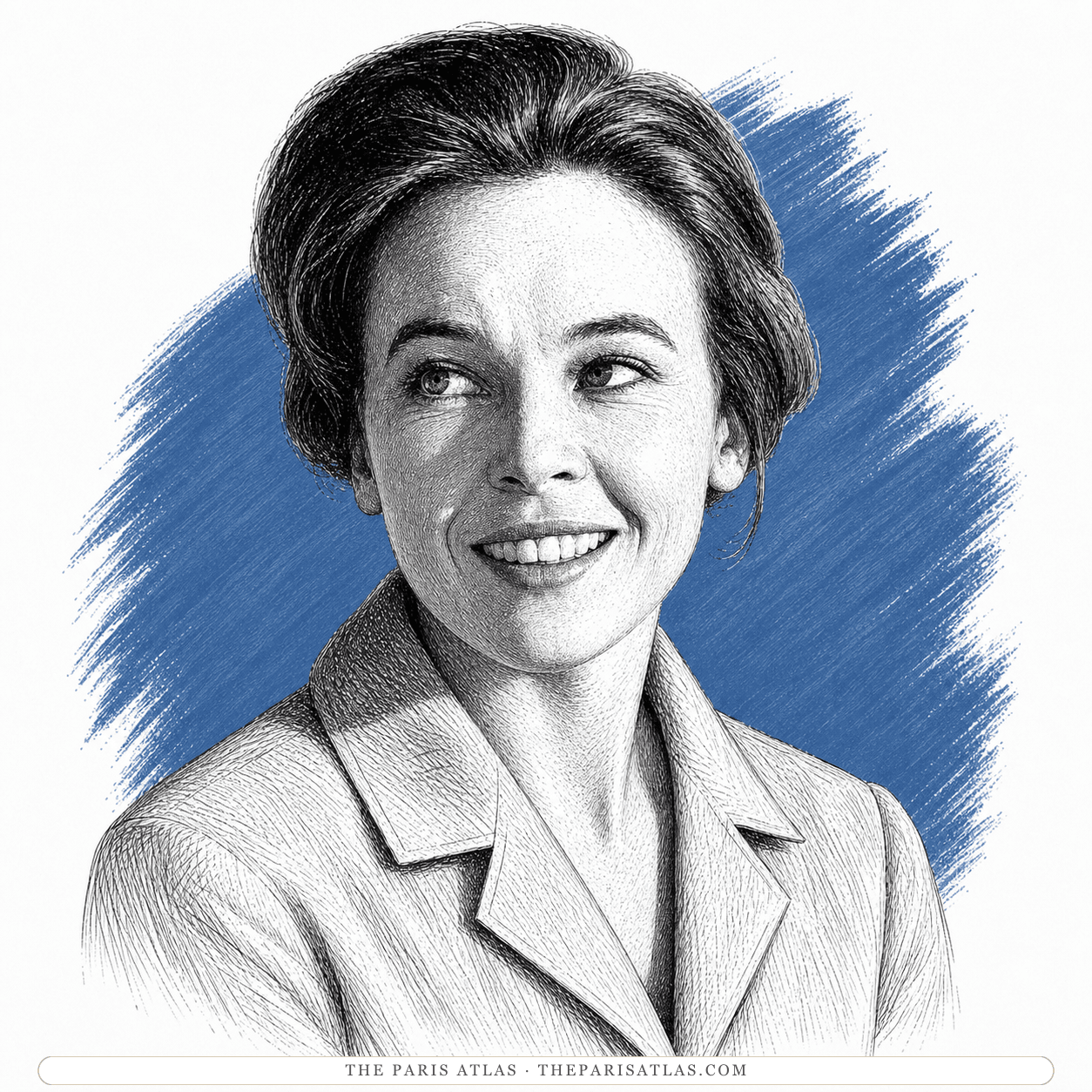
Illustrated portrait of Leslie Caron

Leslie Caron

  • Actor
  • Dancer

Collaborated with · 1951–1958

Minnelli directed Caron twice: as Lise Bouvier in An American in Paris (1951) and in the title role of Gigi (1958), the adaptation of Colette's novella that won him the Academy Award for directing.

An American in Paris (1951); Gigi (1958)

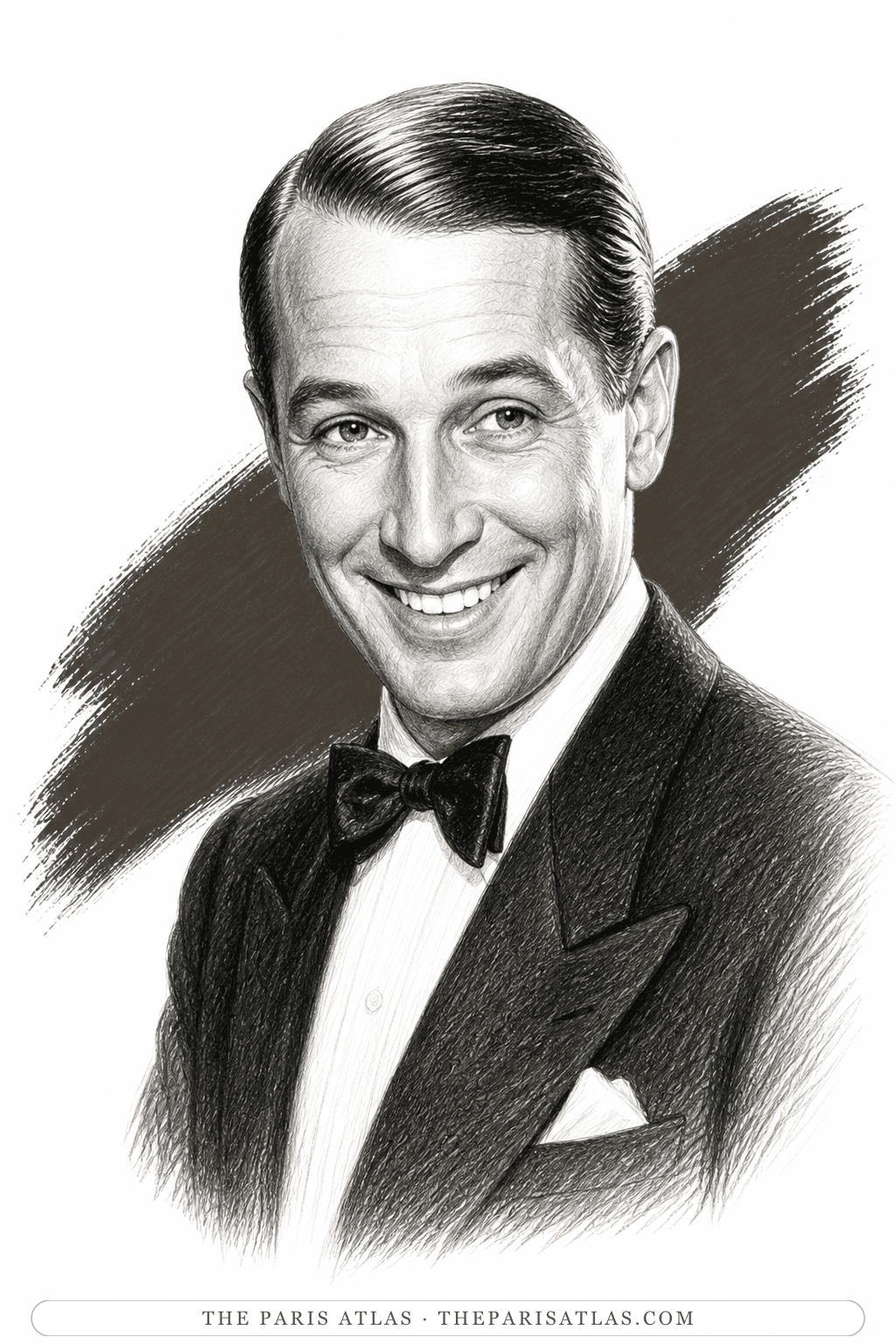
Illustrated portrait of Maurice Chevalier

Maurice Chevalier

  • Singer
  • Actor
  • Dancer

Collaborated with · 1958

Minnelli directed Chevalier as Honoré Lachaille in Gigi, the Paris-set musical that won nine Academy Awards.

The 31st Academy Awards, 1959

Questions about Vincente Minnelli

Who was Vincente Minnelli?

Vincente Minnelli (1903–1986) was an American film director who worked at MGM for more than two decades and is most associated with the film musical. He directed Meet Me in St. Louis (1944), An American in Paris (1951), Lust for Life (1956) and Gigi (1958). He trained as a designer rather than as a dramatist, working as a window dresser and then as art director at Radio City Music Hall before he ever directed a film.

Was An American in Paris actually filmed in Paris?

Almost none of it. The film was shot on the MGM backlot at Culver City, California, across forty-four sets. A second unit worked in Paris between 2 and 22 September 1950, and that footage amounts to an opening montage and some long shots. The Paris on screen was built by scene painters working from paintings.

Which painters are the An American in Paris ballet based on?

Six, each getting a section of the roughly seventeen-minute sequence. Raoul Dufy takes the Place de la Concorde, which opens and closes the ballet. Pierre-Auguste Renoir takes the flower market, Maurice Utrillo a Montmartre street, Henri Rousseau the fair, and Vincent van Gogh the Place de l'Opéra. Henri de Toulouse-Lautrec takes the Moulin Rouge finale, in which Gene Kelly appears costumed as the dancer Chocolat from one of Lautrec's pictures.

Did An American in Paris win Best Picture?

Yes. It won six Academy Awards at the ceremony in March 1952, including Best Picture. Minnelli was nominated for Best Director and lost to George Stevens for A Place in the Sun.

Did Vincente Minnelli win an Oscar for directing?

Once, for Gigi, at the ceremony in April 1959. Gigi was nominated in nine categories and won all nine, which was a record at the time. He had been nominated for An American in Paris seven years earlier and did not win.

Is Gigi based on a Colette story?

Yes. It is adapted from the 1944 novella Gigi by the French writer Colette, about a girl in Belle Époque Paris being trained by her family for life as a courtesan. Alan Jay Lerner wrote the screenplay and lyrics, Frederick Loewe the music, and Cecil Beaton designed the costumes and production.

Who was Liza Minnelli's father?

Vincente Minnelli. He married the actress and singer Judy Garland on 15 June 1945, after directing her in Meet Me in St. Louis, and their daughter Liza Minnelli was born on 12 March 1946. The marriage ended in 1951. He directed Liza Minnelli once, in his final film, A Matter of Time (1976).

How did Vincente Minnelli die?

Of emphysema complicated by pneumonia, at his home in Beverly Hills on 25 July 1986, aged 83. He had been in and out of hospital through his last year. He is buried at Forest Lawn Memorial Park in Glendale, California.

Sourced claims

Every connection the graph holds for Vincente, with the evidence behind it.

Collaborated with · 1951–1958

Leslie Caron

Minnelli directed Caron twice: as Lise Bouvier in An American in Paris (1951) and in the title role of Gigi (1958), the adaptation of Colette's novella that won him the Academy Award for directing.

An American in Paris (1951); Gigi (1958)

Collaborated with · 1958

Maurice Chevalier

Minnelli directed Chevalier as Honoré Lachaille in Gigi, the Paris-set musical that won nine Academy Awards.

The 31st Academy Awards, 1959

References

References

The sources below include biographies, scholarly essays, interviews, and primary materials that informed this page. They reflect both the historical record and ongoing critical conversations about Vincente Minnelli and their work.

  1. 1An American in Paris (1951)

    Website
    AFI Catalog of Feature Films
    Used for

    The American Film Institute's production record for An American in Paris, used for the backlot shooting, the September 1950 Paris second unit, and the painters named in the ballet.

    View source
  2. 2An American in Paris: Art on Film

    Website
    Silver Screen Modes
    Used for

    Design history of the ballet, section by section, with the Sharaff and Ames credits and the scale of the painted backdrops.

    View source
  3. 3An American in Paris (film)

    Website
    Wikipedia
    Used for

    Cross-checked for the awards, the cast and the production budget.

    View source
  4. 4Lust for Life (1956)

    Website
    AFI Catalog of Feature Films
    Used for

    Production record for Lust for Life, the source for the 1955 location shooting and the film's designed palette.

    View source
  5. 5Gigi (1958 film)

    Website
    Wikipedia
    Used for

    Used for the adaptation from Colette, the Lerner and Loewe credits, and the nine awards.

    View source
  6. 6Filming Locations for Gigi (1958) around Paris

    Website
    The Worldwide Guide to Movie Locations
    Used for

    The Paris locations used for Gigi, including Maxim's, the Bois de Boulogne and the Musée Jacquemart-André.

    View source
  7. 7Vincente Minnelli: Biography, Movies, Assessment and Facts

    Website
    Encyclopaedia Britannica
    Used for

    Encyclopaedia Britannica's biography, used to settle the Chicago birthplace and the Broadway years.

    View source
  8. 8Vincente Minnelli

    Website
    Wikipedia
    Used for

    Reference article cross-checked for the chronology, the design career, the marriages and the filmography.

    View source
  9. 9Minnelli, Vincente (1903-1986), film and stage director

    Website
    American National Biography
    Used for

    Web source consulted for documented facts and historical context presented on the Vincente Minnelli page.

    View source
  10. 10Vincente Minnelli, Great Directors, by Joe McElhaney

    Website
    Senses of Cinema
    Used for

    Web source consulted for documented facts and historical context presented on the Vincente Minnelli page.

    View source
  11. 11Where to begin with Vincente Minnelli

    Website
    British Film Institute
    Used for

    Web source consulted for documented facts and historical context presented on the Vincente Minnelli page.

    View source
  12. 12An American in Paris (1951)

    Website
    Filmsite
    Used for

    Web source consulted for documented facts and historical context presented on the Vincente Minnelli page.

    View source
  1. 1331st Academy Awards

    Website
    Wikipedia
    Used for

    Web source consulted for documented facts and historical context presented on the Vincente Minnelli page.

    View source
  2. 14The 31st Academy Awards, Memorable Moments

    Website
    Academy of Motion Picture Arts and Sciences
    Used for

    Web source consulted for documented facts and historical context presented on the Vincente Minnelli page.

    View source
  3. 15Gigi (1958)

    Website
    Turner Classic Movies
    Used for

    Web source consulted for documented facts and historical context presented on the Vincente Minnelli page.

    View source
  4. 16Lust for Life (1956 film)

    Website
    Wikipedia
    Used for

    Web source consulted for documented facts and historical context presented on the Vincente Minnelli page.

    View source
  5. 17Meet Me in St. Louis

    Website
    Wikipedia
    Used for

    Web source consulted for documented facts and historical context presented on the Vincente Minnelli page.

    View source
  6. 18Cabin in the Sky (film)

    Website
    Wikipedia
    Used for

    Web source consulted for documented facts and historical context presented on the Vincente Minnelli page.

    View source
  7. 19A Matter of Time (1976 film)

    Website
    Wikipedia
    Used for

    Web source consulted for documented facts and historical context presented on the Vincente Minnelli page.

    View source
  8. 20Vincente Minnelli

    Website
    Hollywood's Golden Age
    Used for

    Web source consulted for documented facts and historical context presented on the Vincente Minnelli page.

    View source
  9. 21Obituaries: Vincente Minnelli, 27 July 1986

    Website
    The Washington Post
    Used for

    Web source consulted for documented facts and historical context presented on the Vincente Minnelli page.

    View source
  10. 22I Remember It Well, by Vincente Minnelli with Hector Arce

    Website
    Doubleday, 1974
    Used for

    Web source consulted for documented facts and historical context presented on the Vincente Minnelli page.

    View source
  11. 23Vincente Minnelli, Broadway cast and staff credits

    Website
    Internet Broadway Database
    Used for

    Web source consulted for documented facts and historical context presented on the Vincente Minnelli page.

    View source
i
Why these sources are here

These references anchor the page in the documented record and in the scholarly conversations around Vincente Minnelli. Every claim on this page traces back to one or more of the works listed here.

Explore more resources