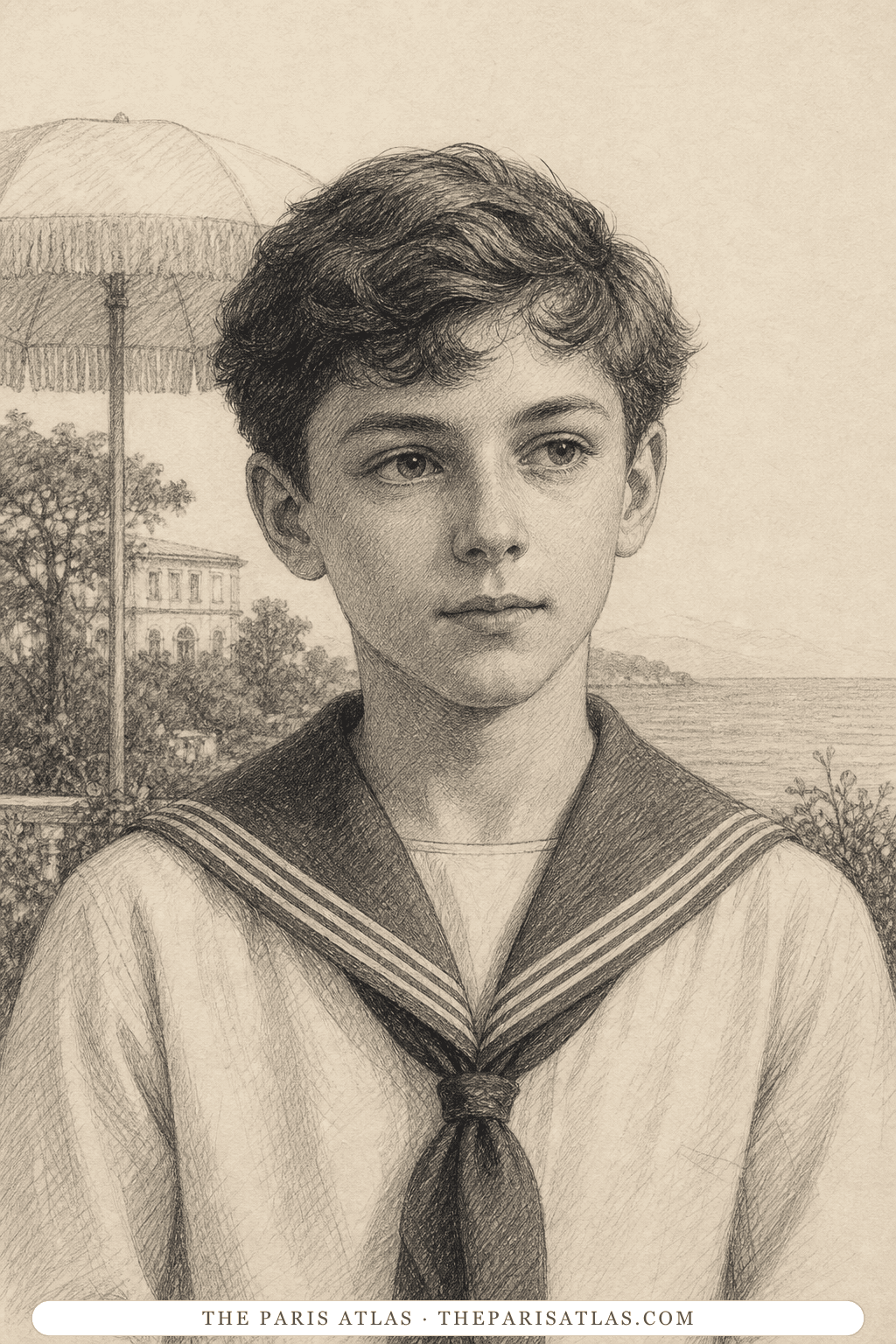
Tadzio
A Polish boy on holiday with his family, seen mainly through the idealizing imagination of an adult stranger.
To enjoy his family holiday and his games with Jashu within the plans the adults make for him.
The book

At a glance
- About fourteen
- Polish
- Jashu
- Family holiday on the Lido
Who they are in the book
Spoiler-freeTadzio is a Polish boy of about fourteen staying at the Lido hotel with his mother, sisters, governess, and friend Jashu. His own life in the story consists mostly of family meals, beach games, and outings.
Aschenbach barely speaks to him. Most descriptions of Tadzio as a perfect work of art come from Aschenbach's idealized way of seeing him, not from an objective account of the boy's character.
Small actions suggest that Tadzio sometimes notices he is being watched. The story never turns that awareness into consent, intimacy, or a relationship.
How Tadzio Is Portrayed
- About fourteenThe novella identifies him as an adolescent, not a young adult.
- PolishHe speaks with his family in a language Aschenbach cannot fully understand.
- Part of a family groupMeals, outings, and departure are organized by his mother and governess.
- PlayfulMuch of his visible life involves games and competition with other children.
- Sometimes watchfulHe appears to notice Aschenbach, though the older man may overread brief looks.
- Not fully knowable hereThe book gives far more space to Aschenbach's ideas than to the boy's thoughts.
Tadzio and Jashu struggle on the beach before the family leaves. After Jashu walks away, Tadzio goes into the shallow water.
Aschenbach believes Tadzio turns and points toward the horizon. Because the moment is filtered through a dying observer, the text does not require readers to treat it as a conscious farewell.
If you like Death in Venice


If you like Thomas Mann
Explore authors with a similar voice, perspective, and influence.
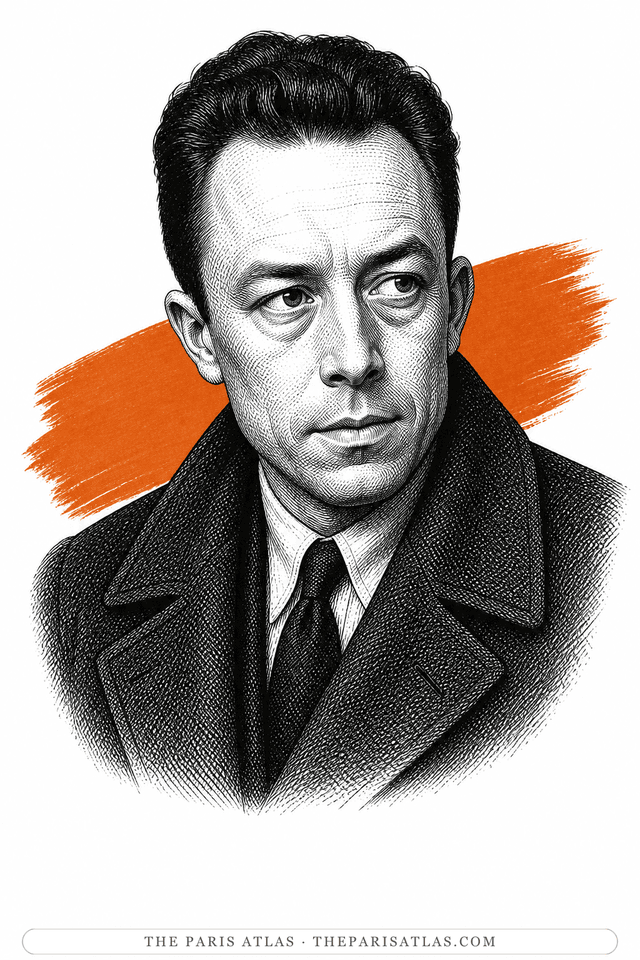
Albert Camus
French Algerian novelist, essayist, journalist and playwright who used the absurd and revolt to ask how people should live without false consolation.
View author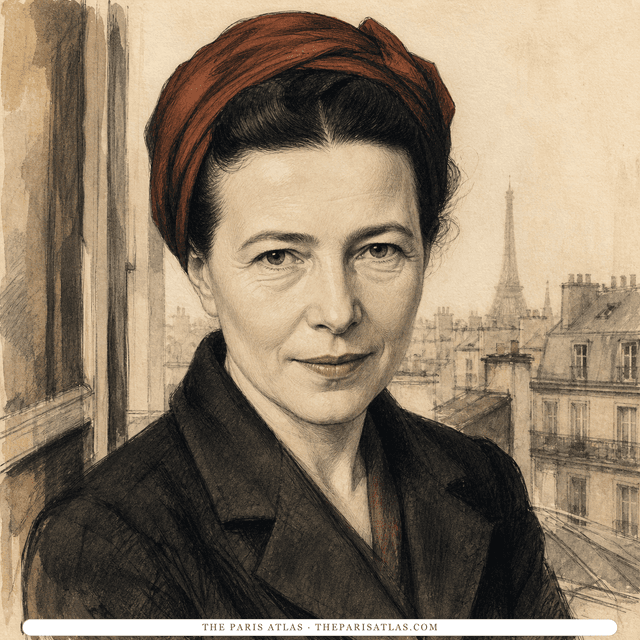
Simone de Beauvoir
French writer and philosopher whose novels, memoirs, and social analysis examined freedom, gender, responsibility, aging, and the material conditions that shape a life.
View author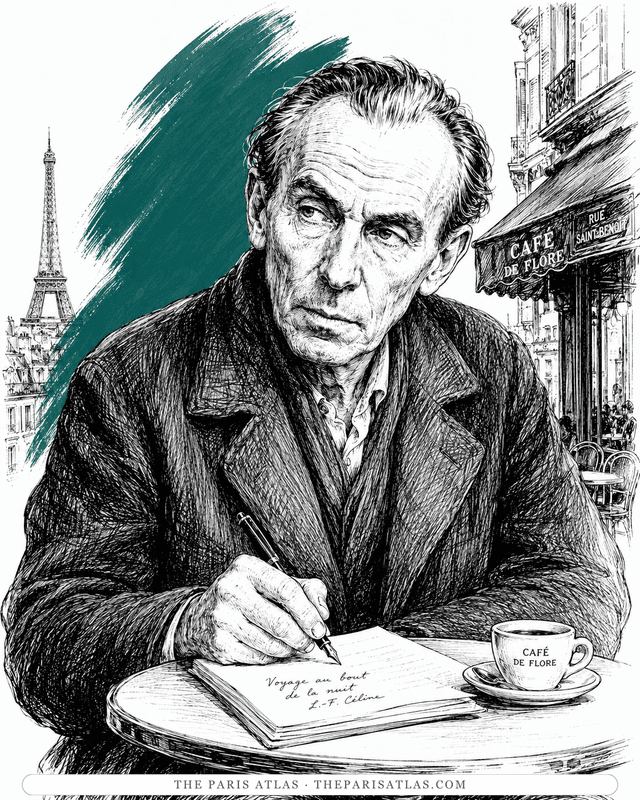
Louis-Ferdinand Céline
The doctor of the Paris slums who wrote the century's blackest, funniest novel — and changed the sound of French prose.
View author