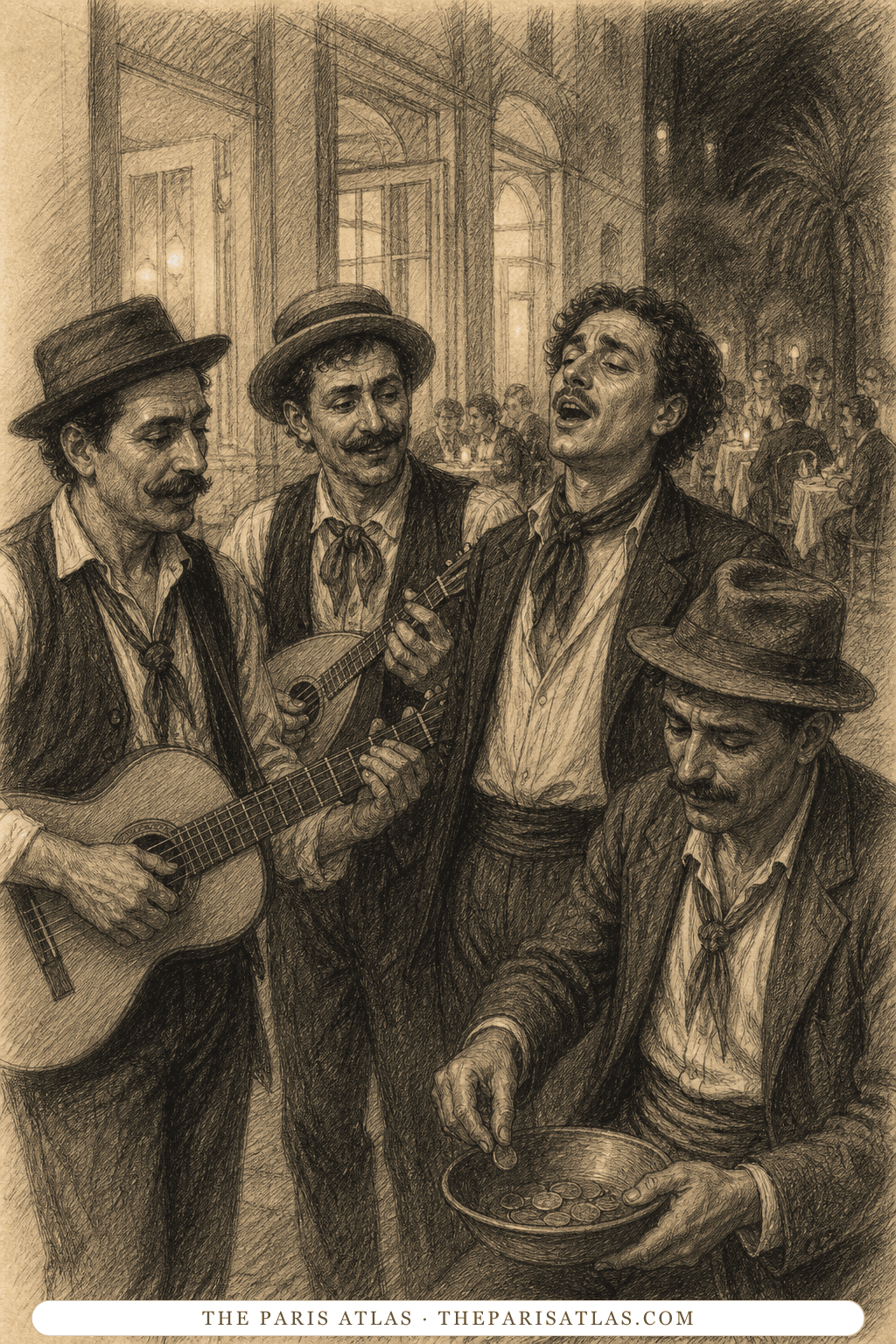
The Street Musicians
A touring group whose hotel performance carries the noise, smell, and nervous denial of the infected city into the resort.
To hold the hotel guests' attention, collect payment, and avoid trouble while performing in an increasingly nervous city.
The book

At a glance
- Street entertainment
- Lido hotel terrace
- Strings and voice
- Not given
Who they are in the book
Spoiler-freeA small group of Italian street performers entertains guests on the hotel terrace with songs, instruments, jokes, and requests for money. Their lively act briefly turns epidemic anxiety into an evening show.
Aschenbach questions the leading performer about Venice's strange smell and health rumors. The man repeats the public denial rather than giving a warning.
The musicians connect the hotel to the city it tries to keep outside. Entertainment cannot prevent the signs of disease from crossing the terrace.
How The Street Musicians Is Portrayed
- Traveling performersThey bring music and comic energy to the hotel terrace.
- Dependent on the crowdTheir income relies on keeping wealthy guests amused.
- Evasive about diseaseThe leader does not confirm the danger when questioned.
- Inside and outsideThey move between the infected city and the protected resort.
The musicians leave after performing and do not take part in Aschenbach's death.
Their evasive answer is one of the last public denials before the English clerk tells him the truth.
If you like Death in Venice


If you like Thomas Mann
Explore authors with a similar voice, perspective, and influence.

Albert Camus
French Algerian novelist, essayist, journalist and playwright who used the absurd and revolt to ask how people should live without false consolation.
View author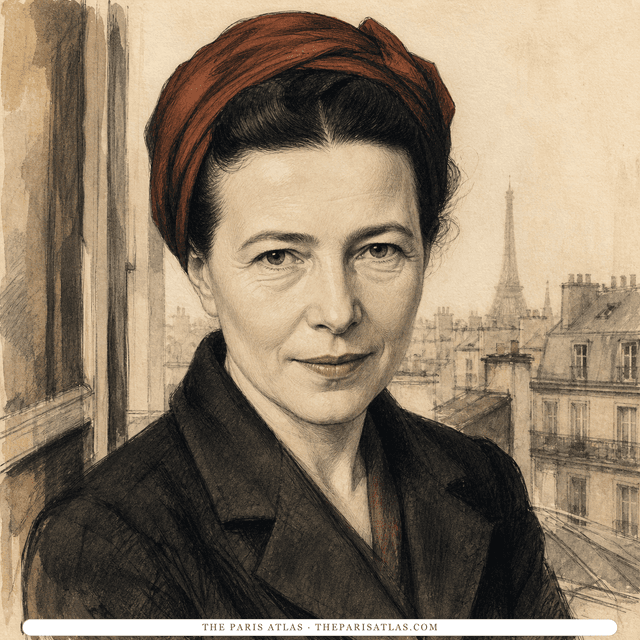
Simone de Beauvoir
French writer and philosopher whose novels, memoirs, and social analysis examined freedom, gender, responsibility, aging, and the material conditions that shape a life.
View author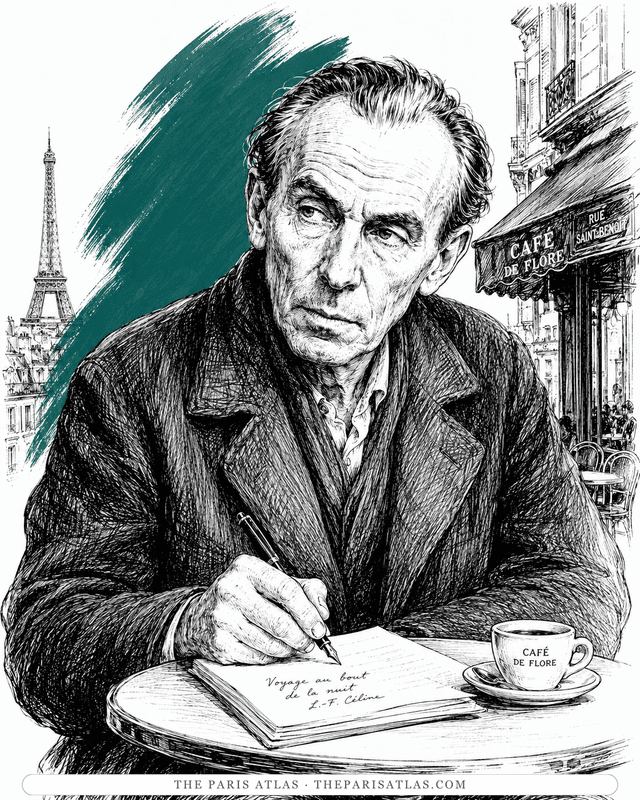
Louis-Ferdinand Céline
The doctor of the Paris slums who wrote the century's blackest, funniest novel — and changed the sound of French prose.
View author