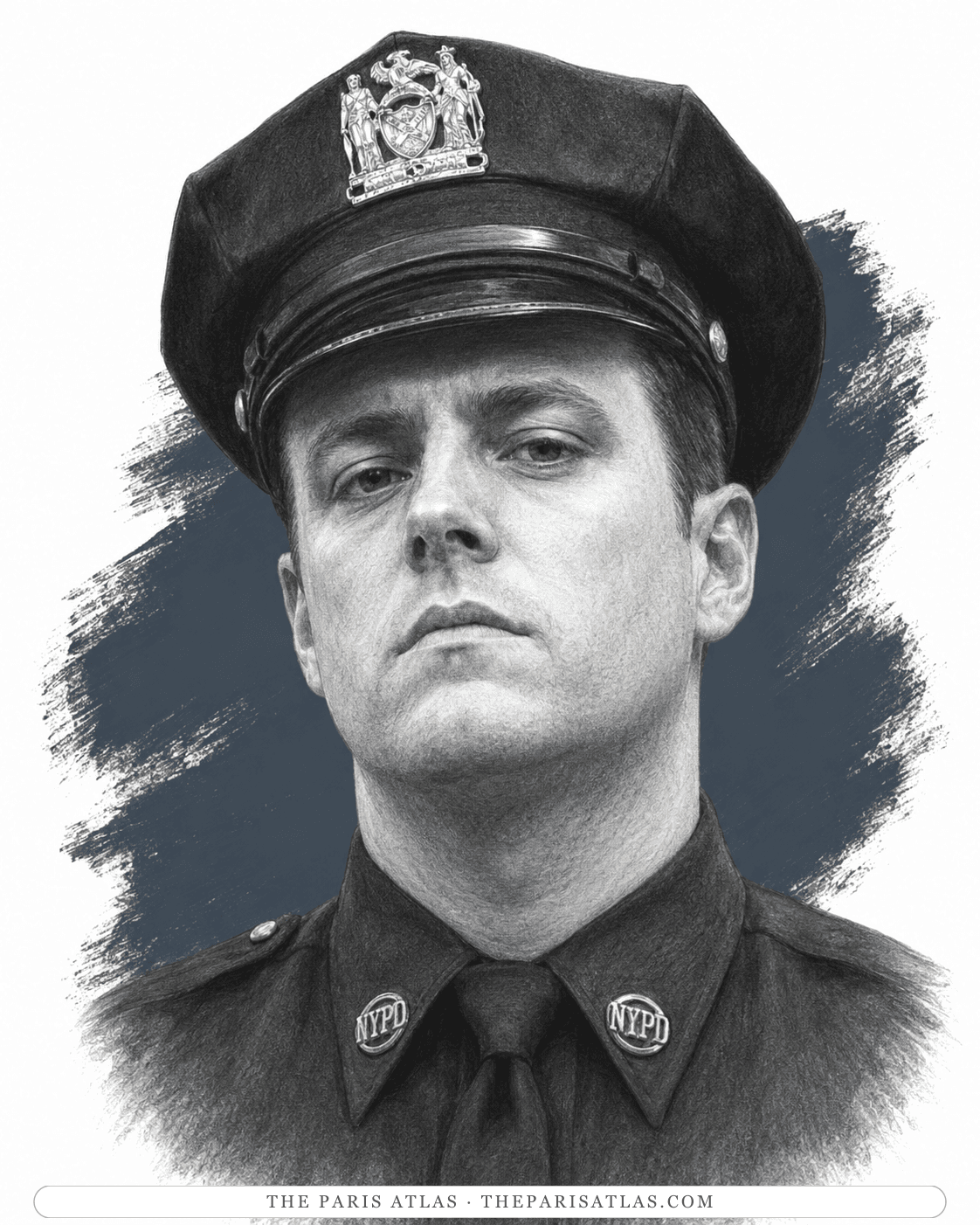
Officer Bell
The policeman who had already crossed Fonny once and had reason to want him gone.
To make Fonny pay for an afternoon when a white witness took a Black man's side in front of a crowd, which is how Fonny reads him and how Tish reports it.
The book

At a glance
- New York City patrolman
- Somewhere in his thirties
- Usually around Bleecker and MacDougal, on the West Side
- Swears he saw Fonny run from the scene, and made the arrest on Bank Street
- Hayward calls him a racist and a liar, and says he has told him so to his face
Who they are in the book
Spoiler-freeOfficer Bell is the New York patrolman whose sworn statement holds the case against Fonny Hunt together in James Baldwin's novel If Beale Street Could Talk. He is invented, like everyone in the book. He swears he saw Fonny running from the scene of the crime, and he is the officer who came to the house on Bank Street and took him.
Tish Rivers, who narrates, had seen him before without seeing him. He became a particular man on the afternoon he crossed the street towards her and Fonny outside a vegetable stand on Bleecker Street, and after that she saw him everywhere. She had memorised his badge number before she learned his name.
Baldwin does not give him an interior life, and Tish's account of him is the only one there is. It is the account of a young Black woman describing a white policeman who has decided about her, and the novel does not ask the reader to discount it. Hayward, who is a lawyer and cautious about most things, calls him a racist and a liar and says he has told him so to his face.
How Officer Bell Is Portrayed
- What Tish sees after that afternoonRed hair, blue eyes, somewhere in his thirties. She says he walks the way John Wayne walks, striding out to clean up the universe, and that he believes it. Pinheaded, heavy-gutted and big in the seat, with eyes she calls as blank as George Washington's.
- Outside the vegetable standHe crosses the street at a run once Fonny has knocked a man into the gutter, and asks Fonny where he was while all this was going on. He tells Fonny they are taking him downtown for assault and battery. The Italian woman who runs the store says she watched the whole thing, that the tomatoes are still on her scale, and that she will swear to it. The crowd laughs, the officer reddens, and there is no arrest.
- Be seeing you aroundWhat he says to Fonny as he leaves. The shopkeeper answers that he will not, if she or they see him first, and tells Tish to take her man home away from these pigs. She adds that she has been in America a long time and hopes not to die here.
- The identificationHe swears he saw Fonny run from the scene. Hayward calls this the really authoritative identification in the case and believes that the account Victoria Rogers keeps repeating is Bell's rather than her own. The complainant's building is at the eastern edge of Manhattan and Fonny's room is at the western edge, and Bell's beat is the West Side.
- The file Ernestine has on himLong, and specific. She says she can prove he murdered a twelve-year-old Black boy in Brooklyn two years earlier, and that the transfer to Manhattan followed. She knows the dead boy's mother, and she knows Bell's wife, who hates him. Her plan is to put both women in the courtroom.
- The evening on Eighth AvenueTish, walking to Bank Street after work with a package of art supplies she has taken from the store, meets him coming the other way. He stops her. She looks into his eyes, and says it was the first time she had ever really looked into a white man's eyes. He stands close enough that she feels him against her, and she is the one who asks him his name. She never tells Fonny, and says she blotted it out.
Bell is never cross-examined. Victoria Rogers cannot be produced, the trial is postponed with no new date, and the evidence Ernestine has assembled against him never reaches a courtroom. The novel ends with his testimony still standing.
If you like If Beale Street Could Talk


If you like James Baldwin
Explore authors with a similar voice, perspective, and influence.

Louis-Ferdinand Céline
The doctor of the Paris slums who wrote the century's blackest, funniest novel — and changed the sound of French prose.
View author
Henry Miller
The Brooklyn dropout who arrived in Paris broke at thirty-eight and wrote the exuberant, banned books that ended American censorship.
View author
Ernest Hemingway
Author of The Sun Also Rises and A Moveable Feast; his pared-down style, developed in 1920s Paris, became the most imitated in American prose.
View author